Video yükleniyor...

Video Yüklenemedi

Ana Sayfaya Dön

💵 MILLION DOLLAR MARATHON 💵 Tuesday, December 2 2pm PT start time $500K minimum buy-in Every player must bring at least $1M $500/1K + $2K BB ante $2K squid game ($5K if 4+ buttons) The target: 24 hours ⏰ The lineup: Mister_Keating Señor Tilt Nik Airball (Code AIRBALL) Brandon...

33,723 görüntüleme • 9 ay önce •via X (Twitter)

0 Yorum

Yorum bulunmuyor

Orijinal gönderinin yorumları burada görünecek

Benzer Videolar

THIS DAY, WE have to complete 100 million Quests every day to get tons of rewards in the #QuestForQuests Community Event! 😱 WHAT? 🔓 Every day a new community bar must be completed in the in-game news 🎲 Complete 100M Quests in 24 hours and a D20 will be rolled, whichever number you get corresponds to a reward! 🤳 All the rolls will be shown on video on our social media channels ❌ If the goal of the day it's not achieved, you won’t get to roll the D20 that day and a new community bar will start 🌟 There will be extra Quests every day to help you progress! 🌭 If you roll a 20 = CRITICAL SUCCESS and you get the KNIGHT DOUG SKIN FOR FREE! 🎁 You can get the same reward multiple times! But if you get the same cosmetic reward twice, you’ll get fallback rewards! 📅 On the last day, if the goal is achieved, the die will be rolled twice and you will get 2 rewards! REWARDS (D20): 1 - 1 gem 2 - Sword Spray (fallback = 100 Coins) 3 - Torch Spray (fallback = 100 Coins) 4 - 200 Coins 5 - Carnaval Player Icon (fallback = 200 Coins) 6 - Critical Failure Icon (fallback = 200 Coins) 7 - Robot Knight Icon (fallback = 200 Coins) 8 - Bling Box Emote (fallback = 500 Coins) 9 - 1000 Bling 10 - 200 Credits 11 - 300 Power Points 12 - 500 Coins 13 - 10 Random Starr Drops 14 - True Gold Doug Skin (fallback = 25000 Coins) 15 - Legendary Starr Drop 16 - 500 Credits 17 - 1000 Coins 18 - Ultra Trophy Box 19 - Hypercharge Drop 20 - Knight Doug Skin (fallback = 100 Gems) 📢 GIVEAWAY 📢 We will give out a free Brawl Pass Plus to 1000 players! The winners will be picked randomly at the end of the event, but the more Quests you complete, the higher the chances of winning! The #QuestforQuests community event starts NOW and ends on August 18th!

Brawl Stars

357,593 görüntüleme • 1 yıl önce

Made $313 → $2,382,780 in 4 Days Using a Claude AI Bot on Polymarket. 26,738 trades. 98% win rate. Full blockchain proof. Every single trade verifiable on-chain. I've made the exact step-by-step guide to build this Claude Polymarket bot from scratch. You've been trading for 3 years. Still red. He gave Claude $313. Woke up rich. Free for 24 hours. To get this Setup guide: 1. Comment "Money" 2. Like and Retweet 3. Follow me Himanshu Kumar (so i can DM you) Full 2-hour video tutorial attached. Every single click and command explained. Beginner to running bot. Now let me break down exactly how this works. Save this post. This is the most important trading breakdown you'll ever read. ↓ Let's start with the number that should make you sick. $313. That's what this wallet started with. Not $50,000. Not $10,000. Not even $1,000. $313. Less than your monthly Netflix + Uber Eats + Spotify combined. 4 months later: $2,382,780.80. That's a 7,942x return. While you spent those same 4 months staring at charts, drawing trendlines, panic selling, revenge trading, and ending the month exactly where you started. Minus the $200 you lost on that "sure thing." Same 4 months. Same market. Same opportunities. He had a bot. You had feelings. Guess who won. Save this post right now. What I'm about to explain is the exact mechanism behind every dollar of that $2.38M. Follow Himanshu Kumar so you don't miss the rest. ↓ How Polymarket actually works and why bots print money on it. Polymarket is a prediction market. Will BTC be higher in 15 minutes? Yes or No. Will the Fed raise rates? Yes or No. You buy shares between $0 and $1. If you're right, your share settles at $1. If you're wrong, it settles at $0. Simple. Now here's where it gets interesting. Polymarket updates its prices SLOWER than the real market moves. When BTC drops 0.6% on Binance, Polymarket still shows old odds for about 2.7 seconds. 2.7 seconds. In those 2.7 seconds, the bot already knows the outcome. It's not predicting. It's not guessing. It's reading information that already exists and trading before Polymarket catches up. That's not trading. That's collecting free money with a 2.7 second head start. And you're over there using a 15-indicator TradingView setup trying to "predict" where BTC goes next. The bot doesn't predict anything. It just reads faster than you. That's the entire edge. Save this post because if you understand this one concept you understand how millionaires are being made on Polymarket right now. Follow Himanshu Kumar for more breakdowns like this. ↓ Let me walk you through one single trade. A new 15-minute BTC contract opens on Polymarket. Odds are 50/50. Fair price. 10 minutes in, BTC drops 0.6% on Binance. Hard, fast move. The real probability of BTC being lower at expiry is now about 78%. Polymarket still shows 54/46. The bot sees this instantly. Binance WebSocket feed. Under 50ms latency. The edge is 24 percentage points. On a binary contract, that's basically free money. Bot calculates position size using Kelly Criterion. Executes via Polymarket's API. Done. Within 2-3 seconds, other participants update the odds. 54/46 moves toward 78/22. Bot either exits for immediate profit or holds to resolution. Either way, the trade was entered with near-certainty of a positive outcome. Now repeat this 200-500 times per day. $313 → $2,382,780 in 4 months. Not magic. Not prediction. Not luck. Industrial-scale exploitation of a market inefficiency that still exists today. And you're still placing one manual trade per day and calling yourself a "trader." This is the mechanism behind every single dollar. Bookmark this post so you can study it again. Follow Himanshu Kumar because I'm breaking down each strategy separately. ↓ There are 4 strategies. Not all Claude bots do the same thing. Strategy 1: Latency Arbitrage. Win rate: 85-98%. What 0x8dxd used. Monitor Binance price feeds. When Polymarket odds lag behind reality by 3-5%, buy the correct side before the market corrects. No forecasting. No model. No sentiment analysis. Pure speed. You're not guessing. You're reading an outcome that has already happened. Strategy 2: Oracle Arbitrage. Win rate: 78-85%. Chainlink oracle price feeds occasionally diverge from Polymarket's implied prices. When they do, the settlement direction is known. Fewer opportunities. Higher certainty when they appear. Strategy 3: News-Driven Trading. Win rate: 60-75%. Claude ingests real-time news. Government filings. Central bank statements. On-chain data. Assesses probability impact before retail traders even finish reading the headline. Lower win rate because interpretation introduces uncertainty. But works on ANY market category, not just crypto. Strategy 4: Market Making. Return: 2-5% per month. Place buy and sell orders on both sides. Capture the spread. No prediction required. Most consistent. Hardest to blow up. Compounds aggressively over time. You didn't even know there were 4 strategies. You thought "trading bot" meant one thing. That's how far behind you are. 4 strategies. 4 different risk profiles. 4 ways to make money while you sleep. Save this post. Follow Himanshu Kumar for the deep dive into each one. ↓ The timeline that should haunt you. December 2025: Bot launches with $313. Nobody notices. January 6, 2026: Wallet hits ~$438,000. 140x in 30 days. 6,615 predictions. 98% win rate. Finbold reports it. Crypto Twitter explodes. March 10, 2026: Head-to-head test. Claude bot: $1,000 → $14,216 in 48 hours. +1,322%. OpenClaw bot: fully liquidated. Same market. Same timeframe. Claude won because of better risk management. OpenClaw died because it overleveraged. March 16, 2026: Someone trains a swarm model on 3 years of NBA data. Result: +$1.49M on Polymarket. April 2026: 0x8dxd final verified balance: $2,382,780.80. 26,738 trades. 4 months. This all happened while you were "waiting for the right time to start." The right time was December 2025. The second best time is right now. But you'll probably wait until it's too late. That's what you always do. Every date on this timeline is a day you could have started but didn't. Save this post. Follow Himanshu Kumar so you at least start today. ↓ Why Claude and not ChatGPT? This isn't opinion. It's data. March 2026 head-to-head: Claude bot: +1,322%. OpenClaw (GPT-based): liquidated. Same prompt. Same market. Same conditions. Researchers found Claude's code included: > More defensive edge cases > More conservative default parameters > Better error handling > More legible code for debugging > Proper Kelly Criterion position sizing > Hard drawdown kill switches ChatGPT's code overleveraged into a losing sequence and couldn't recover. Claude's code sized positions conservatively, stopped trading when drawdown thresholds hit, and survived to compound another day. The difference between +1,322% and liquidation wasn't the strategy. It was the risk management. And Claude writes better risk management than ChatGPT. That's not a debate. That's a $15,216 difference in 48 hours. But sure, keep using ChatGPT because "everyone uses it." Everyone's broke too. Coincidence? Stop using the popular tool. Start using the profitable one. Save this post. Follow Himanshu Kumar for more Claude vs ChatGPT comparisons with real data. ↓ Why humans lose to bots. Every single time. Same strategy. Same market. Same period. Bots: ~$206,000 profit. Humans: ~$100,000 profit. 2x gap. Same strategy. Here's why: 1. Late entries. By the time you identify the lag, verify your reasoning, and click buy, the 2.7 second window is gone. The bot executes in under 100ms. You execute in 30 seconds. The opportunity doesn't exist for 30 seconds. 2. Emotional sizing. You oversize when "confident." Undersize when scared. Exact opposite of Kelly math. The bot sizes based on edge. Every time. No feelings. 3. Fatigue. You make worse decisions at hour 6 than at hour 1. The bot makes the same decision at hour 72 that it made at hour 1. 4. Drawdown psychology. After 3 losses you either panic quit or double down trying to recover. Both destroy capital. The bot has a kill switch. It stops. It doesn't feel anything. You're not competing with other humans anymore. You're competing with machines that don't sleep, don't feel, don't flinch. And you're losing. The data doesn't lie. Humans lose to bots 2x on the same strategy. Save this post. Follow Himanshu Kumar for the complete bot setup that removes you from the equation. ↓ What can go wrong. Because I'm not going to lie to you. Most people who build this bot will NOT 7,942x their money. Some will lose their initial capital. Here's what can kill you: Edge compression. The arbitrage window was 12 seconds in 2024. It's 2.7 seconds now. It's shrinking. At some point it hits zero for retail operators. This is a time-limited opportunity. Not a permanent income stream. Rule changes. Polymarket can change contract mechanics, settlement rules, or API terms overnight. What worked yesterday can lose money tomorrow. Risk management bugs. A 98% win rate strategy with broken position sizing will blow up your account on the one losing trade. The March 2026 experiment proved this. Claude survived. OpenClaw got liquidated. Same strategy. Different risk management. That's why the 2-hour video tutorial walks through every single risk parameter. Because the strategy doesn't kill you. Bad risk management kills you. This is the section most "gurus" delete. I'm keeping it because I'd rather you make money safely than blow up and blame me. Save this post. Follow Himanshu Kumar for honest breakdowns, not hype. ↓ The step-by-step to build your own. Step 1: Set up a Polymarket wallet. Fund with USDC via Polygon network. Start with $100-$300 for testing. Step 2: Generate API credentials. CLOB API key from docs.polymarket .com. Store private key in environment variable. Never hardcode it. Never share it. Step 3: Prompt Claude to build the bot. Use Claude Code for best results. It reads your filesystem, executes code, and iterates on errors autonomously. Step 4: Paper trade for at least one week. Minimum 200 completed trades. Win rate must be above 70% before going live. This step is NOT optional. Step 5: Configure risk management. Max single position: 8% of portfolio. Daily loss limit: -20% with auto halt. Kill switch at -40% drawdown. Telegram alerts on every threshold. Step 6: Go live small. $1-5 per trade. Watch every trade for first week. Compare to paper results. Scale only on evidence. Skip steps 4 and 5 and you will lose your money. That's not a warning. That's a guarantee. This is your complete build guide. Save this post. Follow Himanshu Kumar because I'll be posting the exact Claude prompts for each strategy. ↓ The edge exists right now. Not next month. Not "when you're ready." Right now. The arbitrage window is 2.7 seconds. It was 12 seconds in 2024. It's shrinking every week. Every day you wait, more bots enter the space. The window gets smaller. Your potential returns get smaller. The bots already running have a compounding advantage. They're making money today that they'll use to make more money tomorrow. You're reading about it and telling yourself "I'll look into this next weekend." That's what you said last weekend. And the weekend before that. The best time to start was 6 months ago. The second best time is today. But you already know you're going to bookmark this and never open it again. Prove me wrong. ↓ Full 2-hour video tutorial attached. Every single click. Every command. Every parameter. From zero to running bot. Beginner friendly. Nothing skipped. A similar bot has already earned $2,382,780. Full blockchain proof in the article below. The video is free. The tools are free. The edge still exists. The only thing that costs money is another month of doing nothing while bots eat every opportunity you're too slow to catch. Follow Himanshu Kumar for the complete series covering every automated income stream using Claude. Prediction markets are just the beginning. Save this post. Bookmark it. Screenshot it. Whatever you need to do so you actually watch the video and build the bot instead of just reading about people who did. You Must Follow me Himanshu Kumar, so i can send you DM.

Himanshu Kumar

53,768 görüntüleme • 5 ay önce

MODI SARKAR'S BIG SURGICAL STRIKE ON CYBER CRIME🔥 Modi Govt frames new rule that makes it impossible to use WhatsApp or ANY messaging app without an 'Active Sim'! How does it help Bharat's Security- detail explanation👇 Modi Sarkar's DoT has issued the Telecommunication Cybersecurity Amendment Rules, 2025, on Nov 28, 2025, mandating that app-based communication services (classified as Telecommunication Identifier User Entities or TIUEs) like WhatsApp, Telegram, Signal, Snapchat, ShareChat, JioChat, Arattai, and Josh must remain continuously linked to an active SIM card registered to the user's mobile number. This means: -Apps will stop functioning if linked SIM is removed, deactivated, or swapped without re-verification. -Web/desktop versions must auto-logout every 6 hours, requiring QR code re-authentication tied to the active SIM. -Platforms have 90 days to implement this, with compliance reports due within 120 days. HOW IT HURTS CYBER CRIMINALS: 1. Ends “Ghost Accounts” – Scammers buy/register a Bharatiya SIM once, then remove it and run WhatsApp/Telegram from Dubai/Cambodia. Now the app stops working the moment the SIM is taken out or deactivated. Most overseas scam call-centers instantly crippled. 2. Forces them to keep an active, traceable Bharatiya SIM every Second– That SIM leaves location, IMEI, call records, and KYC trail. Police can track & block in real time instead of chasing dead numbers. 3. Kills bulk fraud operations – Running 1,000 scam accounts now needs 1,000 active physical SIMs inside Bharat→ logistically impossible and insanely expensive. 4. Web/desktop versions log out every 6 hours – No more leaving accounts permanently logged in on cloud servers or bots for 24×7 fraud. Result: 90% of current “digital arrest”, sextortion, investment, and task scams become too risky or too costly to run at scale. HOW IT BOOSTS NATIONAL SECURITY: 1. Every active account on WhatsApp/Telegram/Signal is now tied to a KYC-verified Bharatiya SIM – Instant identity + location trail for any terror, espionage or disinformation account. 2. Foreign actors (ISI, PLA-linked groups) can’t activate once and operate SIM-free from abroad – They must keep a Bharatiya SIM active 24×7 → easily detectable and blockable. 3. Real-time shutdown possible – If intelligence flags a number for terr0r/recruitment, the linked messaging account dies immediately (no more powerful than just blocking the SIM). 4. Aligns OTT apps with the same security rules as phone calls/SMS – Closes the biggest loophole terr0ri$ts & foreign agencies were exploiting. Summary: Criminals and hostile agencies lose anonymity and mobility; Bharat gains a kill-switch on every dangerous account without touching end-to-end encryption. A real game-changer for Cyber Security. Well done Modi Sarkar 🫡

BhikuMhatre

99,832 görüntüleme • 9 ay önce

losers spend money on club tables and take home zero girls buying bottles at liv miami trying to impress models who make $500/night when you could be recruiting them for onlyfans with 0% apr tables and take 90% of their revenue... $300k/month from girls you met at clubs here's the onlyfans mafia system destroying simps: every weekend desperate mfs drop $50k cash on tables models pretend to care for 3 hours everyone goes home alone money wasted meanwhile smart operators run different game: THE CREDIT CARD TABLE HACK: get $150k in business funding at 0% apr book owner's tables at tier-1 miami clubs never spend cash - everything on cards earn 300k points while recruiting cards to get approved for today: - chase ink preferred: $30k typical - amex business gold: $50k typical - capital one spark: $40k typical - wells fargo business: $30k typical $150k at 0% in 30 days if you're not stupid THE RECRUITMENT PSYCHOLOGY: table attracts 10-15 models per night they think you're a whale you're not you're a businessman the pitch that converts 40%: "i manage content creators everything's handled - photographer, editor, marketing creators keep 10% pure profit most make $3-5k/month passive here's my portfolio..." show them your roster: girl #1: was bartending at bodega now: $50k/month on OF her take: $5000 your take: $45,000 girl #2: was bottle service at e11even now: $31k/month her take: $3,100 your take: $27,900 they all say yes THE MIAMI CLUB RANKING: recruit here in exact order: 1. liv (fontainebleau) - international models 2. e11even (24/7) - party girls who need money 3. story (south beach) - college girls 4. space (downtown) - underground scene 5. basement (edition) - high-end escorts transitioning wednesday-thursday better than weekends less competition from actual rich guys girls more desperate for attention THE ONLYFANS ASSEMBLY LINE: week 1: professional shoot ($500) week 2: launch with 50 posts ready week 3: tiktok spam campaign week 4: instagram reels push month 2: optimize pricing month 3: $15-30k/month steady your only job: - recruit - manage photographers - collect 90% THE BUSINESS MODEL MATH: monthly costs: - tables: $40k (on 0% cards) - photographer: $8k - editors: $5k (philippines) - shoot apartment: $4k total overhead: $57k 20 girls at $15k average: $300k your 90% cut: $270k monthly profit: $213k started with credit cards ending with empire THE SCALE FORMULA: month 1-3: recruit 20 girls month 4-6: optimize content month 7-12: $300k/month automated year 2: expand to NYC/LA year 3: sell for $20m to PE fund 3-year exit from credit cards THE DARK PSYCHOLOGY: these girls could do this alone but they won't they need leadership need someone to blame when dad finds out need the infrastructure you're not exploiting you're organizing they were already selling bottle service now they're CEOs making 10x more THE EXACT RECRUITMENT SCRIPT: "hey i know this is random you're exactly the type my agency represents we manage exclusive content creators everything's handled professionally creators keep 10% pure profit most hit $3-5k/month within 90 days here's my card, let's talk monday" success rate: 40% they all call THE CREDIT TO CASH CONVERSION: $150k in business cards approved liquidate through: - plastiq for "rent": 2.85% fee - paypal "consulting": 2.9% fee - square "services": 2.75% fee $150k credit becomes $145k cash fund entire operation at 0% pay minimums from profits THE COMPETITION ELIMINATION: other "managers" take 50% and provide nothing you take 90% but provide everything: - professional content - daily posting - fan management - marketing strategy girls make more with you at 10% than alone at 100% that's why they stay THE EXIT REALITY: building "talent management agency" 30 active models = $500k/month revenue $6m annual agencies sell for 3-5x exit value: $18-30 million from credit cards to 8 figures in 36 months you're either buying bottles like a sucker or building an empire with bank money choose your side Get $100K at 0% APR guaranteed Link in bio → Scale With Credit

hunter

15,066 görüntüleme • 9 ay önce

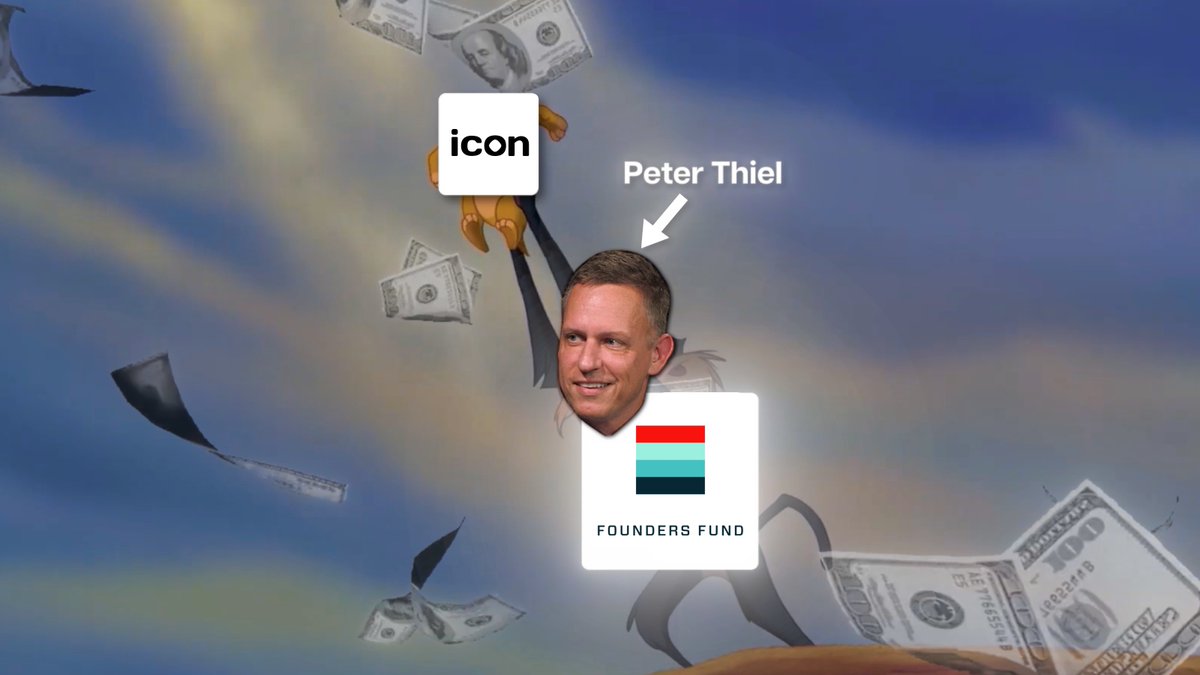
Peter Thiel’s Founders Fund just led a 2nd round into Icon. To celebrate, I'll give you $69,420 if you refer someone I hire. We’ve gone from $0 to $5M+ ARR in 30 days, are extremely profitable, & will beat every company ever on the $1M to $100M ARR record (<12 months). Our team also went from 8 to 16 people. We were founded less than 6 months ago & our 1st launch was a failure. I don't have a trust fund like other founders so failure is unacceptable: we quickly pivoted to being The AI Admaker & this time we didn’t miss. Our 2nd launch got 5000+ inbound demos, 1M+ website visits, 10M+ views across socials, 50K reactions/comments, & Fortune 500 customers. Here’s how we did it: * Only hire top 0.01% engineers with no life. This results in the best product. If your GitHub isn’t a dark green carpet (3000+ commits per year including weekends), it’s a red flag. * 7 day work week. The 4 day work week leads to defeat. 996 also results in defeat (why do 6 when you can do 7). It’s a cope to think working more hours doesn’t help you get more done. * Pay 2-5x above market because someone working this hard deserves it. On a personal note: this has been a journey full of ups & downs & I’m extremely grateful to be here. I grew up in Portland, Oregon & found school extremely boring. I slept through every class because of this. If I’m being real, no one expected me to go anywhere. This all changed when I was 18. I had a big wakeup call & had to start supporting myself. I started skipping class to code 100 hours a week & combined with my hate for school, I dropped out after 1 year to join Pinterest. Pinterest paid very well, but was very boring. After too long of this, I started my 1st company, Skio, & got into YC. I ate shit during the batch & had to pivot. Thankfully, post-pivot Skio is killing it: $15M+ ARR & profitable on seed funding in just a few years. All these up-and-down adventures led to Icon. Icon is the culmination of every lesson I've learned (I made so many stupid mistakes) in these 10 years of grinding. Thank you from the bottom of my heart to our customers, my team, & our investors. Again, I’m extremely grateful to have this opportunity & will work 24/7 to honor your trust in me by becoming a trillionaire. Icon’s $10T+ vision is simple: Part 1 is Cursor for Ads: we’ll set the world record for time from $1M to $100M ARR. Part 2 is Cursor for Marketing: when we pull this off, we’ll be a $10T+ company that creates generational wealth for everyone involved. I know $10T is crazy, but with inflation we got this. If you’re top 0.01%, extremely hungry, & seek generational wealth, I’d love to chat. I'm sure everyone knows 1 person like this. Especially recruiters. If you do, I’ll give you $69,420 for referring someone we hire ($69,420 for Founding Engineers & $30,000 for Marketers / Sales / Ops / CX / Anything Else). Comment “refer” & I’ll send you our referral form.

Kennan Frost

833,084 görüntüleme • 1 yıl önce

🚨 We are repeating 1995 dotcom bubble pattern literally 1:1 Over a decade in markets and I've never seen this many crash indicators flashing at once Start with the biggest one: the IPO wave. Everyone thinks the SpaceX trade is over, but it hasnt even started. Aug 6 will change everything. $SPCX did the largest IPO in history on June 12. $135, $1.77T valuation, $75B raised. Then it ripped to $225 in 4 days and dumped 35% back to $147. The crowd that bought the hype is already underwater. And here's the thing: an IPO is not the start of the run. It's the exit. The day insiders + early backers turn paper into cash. This time they built the buyer out of millions of retail accounts. Fidelity cut its IPO minimum from $500k to $2k, a 99.6% cut. Robinhood, SoFi: no minimum at all. Retail got 30% of the offering when the standard is 5-10%. They dropped every barrier to get u IN. Then bolted the exit: sell in the first 15 days and ur flagged a flipper, with bans escalating up to a lifetime one tied to ur SSN. You dont build a one-way door unless u already know which way the crowd has to run. History shows the ending every time. Truist studied 30 major tech IPOs since 2012: Median year-1 drawdown: -54% Only 43% green 6 months in 11 of 30 fell 64-90% $FB, $SNAP, $UBER, $HOOD: same script. Huge debut, endless hype, lockups expire, early money hands u the bag. Now price SpaceX into that: over 110x sales, $4.9B loss last year, $41.3B accumulated deficit. CFRA rated it a SELL under an hour after open. Morningstar fair value: $63. It trades at $162. And the real distribution event is still ahead: Aug 6. First earnings report = insiders finally unlock 20% of their stock, +10% more if price holds high. At the same time $SPCX enters the Nasdaq-100, so index funds are FORCED to buy it near the top. Forced buyers meeting real sellers. That's the window. Moreover, this is just IPO #1. OpenAI (~$850-900B) and Anthropic (~$965B) already filed. No dates yet, but the window is open and they'll fly through it. 3 of the biggest listings in history, all AI-linked, all landing into the same indexes. Which brings us to what actually holds all of this up: the AI money-loop. $800B+ in circular financing rn: 1/ $NVDA invests in OpenAI 2/ OpenAI signs $300B in cloud deals w/ $ORCL 3/ Oracle buys billions in Nvidia chips to fill them 4/ Nvidia books the revenue, stock pumps, funds more deals Same dollars circling between a handful of names, dressed up as organic demand. The cracks are already showing. OpenAI is on track to lose ~$14B this year. Nvidia's $100B OpenAI deal was reported "on ice". $ORCL dumped 30% in a quarter on fears OpenAI cant pay its bills. Michael Burry, the guy who called 2008, is shorting $NVDA and comparing this to Enron-style vendor financing. And here's how 1 crack becomes a cascade: Microsoft AI revenue disappoints -> cuts Azure spend -> hits Nvidia revenue -> tanks CoreWeave valuation -> chokes OpenAI funding -> Oracle left holding $300B in commitments nobody pays for. Pull 1 card and the whole circle tightens. This is exactly the dotcom script. Back then Nortel and Lucent financed their own customers to fake demand. The loop looked unbreakable, until one link missed a payment. Then the entire thing unwound in months. Insiders rich, retail wrecked. Same in 2021 SPAC mania. Same now, just 10x the size. How to max profit on it? I have an idea... I already made 6 figs shorting SpaceX publicly, posted it all in real time. And I'm not stopping there. Soon I'm sharing my biggest trade ever, confident it makes me millions. Dropping it in my free private group: (btw I'll stop accepting new requests soon, so hurry up) A lot of people are going to wish they joined before the doors close.

𝗰𝘆𝗰𝗹𝗼𝗽

86,494 görüntüleme • 2 ay önce

you saved up $3,000 to fly out some mid girl in economy while telling yourself you're a player i flew out 5 dubai models in emirates first class last month and it cost me exactly $0 not because i'm rich. because i understand math that you don't let me explain how to turn your business expenses into a harem marketing system that prints money: most dudes are out here sending $500 cashapps for "uber money" to girls who screenshot it and laugh in the group chat. flying them spirit airlines if they're lucky. splitting the fucking holiday inn. acting like they did something meanwhile i'm converting facebook ad spend into first class tickets here's what actually happened. i had $100k in ad spend coming up this quarter. was gonna pay it anyway, money straight to zuckerberg's pocket. instead i put it all on my amex platinum. boom, 150k points instantly plus another 150k from the signup bonus 300k amex points = 3 emirates first class tickets to dubai retail value of those tickets? $45,000 what i actually paid? nothing. zero. fuck all but i didn't fly out one girl. i flew out five when you fly one girl out, she owns you. she's doing you a favor. you're just another trick trying to impress her. but when you fly FIVE girls out? the entire dynamic flips. they're competing for your attention. they're creating content for you. they're selling you without even knowing it the psychology is fucking beautiful. these girls have never been in first class. probably never will be again. fourteen hour flight with champagne and caviar, their own private suite. they're taking 50 instagram stories before the plane even takes off and they're all tagging me girl #1 posted 52 stories from the flight alone. her 30k followers all sliding in asking who the fuck i am. girl #2 made a whole reel about the experience that hit 2.3 million views. the comments are just hundreds of dudes trying to figure out what i do by the time they landed in dubai i had 400+ dm requests here's where shit gets disgusting. they think this is a "brand trip" because i position it as a creator collaboration. technically they're right. they're creating content. i'm collaborating. the brand just happens to be me lmfao five models, seven days in dubai. they're posting from the villa, from the restaurants, from the yacht. every single post tags me. their combined reach? 4.8 million impressions. organic, authentic, impossible to buy those dudes sliding in their dms asking about me? they find my profile. see i teach funding and travel hacking. realize i'm giving away the exact system. they buy my program last dubai trip generated 42 clients at $5k each. that's $210,000 in revenue from a trip that cost me nothing. actually less than nothing because i was gonna spend that money on ads anyway you think this is about girls but you're missing the entire fucking point every expense in your business can be arbitraged. every dollar you spend can work twice. ad spend becomes points. points become experiences. experiences become content. content becomes clients. clients become more ad spend. infinite loop the girls aren't the product, they're the distribution channel and before you get all moral about it, everyone knows what this is. these aren't naive girls getting tricked. they're influencers who want content. i want marketing. we both get what we want. they fly first class to dubai, i get organic reach. capitalism at its finest the funniest shit is when they go back to dating regular dudes. guys taking them to cheesecake factory, splitting the bill, flying them southwest if they're lucky. they're comparing every experience to dubai first class i own real estate in their head forever and it didn't cost me a fucking dollar your favorite guru is doing this. every dude with a lambo is doing this. they just pretend they're above it while running the exact same game difference is i'm telling you exactly how it works q1 miami trip, 7 models, 300k points, resulted in 31 new clients q2 mykonos, 5 models, 250k points, 27 new clients q3 dubai, 5 models, 300k points, 42 new clients q4 planning maldives with 10 models, gonna break the fucking internet this isn't about flexing, it's about understanding leverage. you're trading time for money. i'm trading points for time for money for more points. every dollar does multiple jobs. every expense becomes an asset stop thinking linearly. your ad spend shouldn't just buy ads. your business expenses shouldn't just buy things. everything should compound i learned this from a 55 year old real estate developer who's been flying models to his properties since the 90s. he calls it "animated marketing material" and swears it's the only advertising that actually works he's worth $500m now so maybe the old fuck knows something anyway, keep saving up your pennies to impress one girl who doesn't even like you. keep flying coach. keep wondering why successful dudes seem to have infinite resources or realize that money isn't real, points are infinite, and everything is marketing if you're smart enough to see it the game is rigged but at least now you know the rules ps. if this triggered you, you're thinking too small. this isn't about women. it's about understanding that everything is leverage and nothing costs what you think it does. your competition doesn't know this. that's your advantage. fucking use it

hunter

598,205 görüntüleme • 10 ay önce

A study proved that $40 million was extracted from Polymarket in one year using a single mathematical formula I found a wallet that is using it right now on Iran war markets and made $1.4M in one week. Most people on Polymarket try to predict the future. Will there be a war. Who will win the election. What will happen next. I spent months doing the same thing. Reading news. Watching debates. Building my little models of what I thought should happen. And losing money. Not because I was wrong about events. Because I was wrong about the game itself. The game is not about predictions. And the wallet I'm about to show you is living proof. Three weeks ago I pulled the full trade history of this wallet: What I saw at first didn't make sense. He was opening the same market more than 30 times. US strikes Iran by January 11. US strikes Iran by January 12. January 13. January 14. January 15. January 16. January 17. The same event. Different dates. Over and over. First thought: this person is obsessed with Iran. Second thought: this person doesn't care about Iran at all. Here's what he's actually doing. Polymarket creates separate markets for the same event with different deadlines. Will the US strike Iran by March. By April. By June. These are not independent questions. If the strike happens in March then April and June automatically resolve to YES as well. But Polymarket prices each market separately. And the crowd prices them emotionally. Fear spikes on Tuesday night because someone tweeted something. One market jumps. The others lag behind. For a few minutes and sometimes hours prices on related markets stop converging. When you buy NO across multiple dates and the total cost is 94 cents and the guaranteed payout is $1 regardless of what happens you're not betting. You're collecting a 6% return on mathematical inevitability. That's the entire strategy. He buys dollars for 94 cents. I checked his numbers. On the Iran series alone he pulled $247,000 in realized profit across seven markets with different dates. Average purchase price of NO positions from 72 to 95 cents. Each one resolved at $1. The biggest hit was the government shutdown market. $88,000 in profit. Same logic. Buy both sides when the total cost is less than a dollar. One side pays. Math does the rest. 85% of his capital is in political markets. Wars. Elections. Geopolitics. Not because he has strong geopolitical convictions. Because political markets on Polymarket are where the math breaks most often. Why political markets specifically? Because they generate the most emotion. When CNN runs breaking news about Iran at 11 PM thousands of people rush to buy YES on the nearest date. They overbid the price. They panic. They push one market out of line with the rest. That panic is his paycheck. And now the part that actually matters. I dug deeper into how this type of arbitrage works at scale and found a study that made everything click. A team analyzed every trade on Polymarket over 12 months. They found 17,218 market conditions. 41% of them had an exploitable pricing error. And the total profit extracted by arbitrageurs was $40 million. The top single wallet made $2 million using one algorithm. The Frank-Wolfe method. I'll explain without math because the concept is simple even if the calculations aren't. Imagine you walk into a store that sells lottery tickets for 7 different drawings. Each ticket is priced separately. The store doesn't coordinate prices between drawings. You notice that if you buy a certain combination of tickets across all 7 drawings the total cost is $94 but you're guaranteed to win exactly $100 no matter which drawing hits. You don't need to predict which drawing will win. You just need to notice that the store mispriced the tickets. Here's Frank-Wolfe in one sentence. It scans thousands of related markets simultaneously and finds combinations where the total price is less than the guaranteed payout. Then it calculates the exact amounts to buy on each side to maximize the spread. The reason a human can't do this manually is scale. There are hundreds of active markets on Polymarket. Many are connected by logic. If event A happens then event B must also happen. If candidate X wins state Y then the national result shifts. The number of possible combinations grows exponentially. While you're checking 10 markets by hand the algorithm has scanned 17,000. What anoin123 does is a manual version of this. He picks one cluster of related markets like the Iran date series and runs the logic in his head. Buy NO across seven dates. Total cost less than a dollar. Wait. Collect. The automated version does the same thing but across all markets on the platform simultaneously. My personal takeaway after three weeks of studying this. I spent months trying to be smarter than the crowd. Reading polls. Watching news. Forming opinions. And the whole time there was a category of traders who had zero opinions about anything. They just waited for the crowd to misprice related markets and collected the difference. The uncomfortable realization is that prediction markets are not actually about predictions for those who make the most money. They're about math. And the math breaks every day because people trade on emotions and the platform prices markets independently of each other. I don't have the infrastructure to run Frank-Wolfe at scale. But I don't need to. Wallets like anoin123 do this in plain sight. Every trade on the blockchain. Every entry price. Every exit. Every timestamp. I stopped trying to predict events. I started watching wallets that make money regardless of what happens. The difference in my results is so stark it's uncomfortable to think about. If you want to understand the full math behind this the study is publicly available. Search for Arbitrage in Prediction Markets on arXiv. But the short version is this. Every time the crowd panics about a war or an election and pushes one market out of line with its related markets someone on the other side quietly buys dollars for 94 cents. The question is not whether they'll strike Iran. The question is whether you noticed that seven markets about the same event are priced as if they have nothing to do with each other. That gap is where the money lives.

Blaze

31,373 görüntüleme • 7 ay önce

The 40,000% ROI "Bug": How Claude Code Cracked the TradingView Holy Grail most people think the elite traders at the top of the mountain have some secret indicator or a hidden math formula that gives them a forty thousand percent return. they assume the game is rigged against the small player and that you need a multi million dollar budget just to get a seat at the table. the truth is that the holy grail of trading is actually hidden in plain sight inside a community tab that most people scroll past every single day i spent years losing money to liquidations and over trading because i thought i had to manually predict where the price was going next. i even spent hundreds of thousands of dollars on developers to build apps for me because i was convinced that i would never be able to code the systems myself. it turns out that once you stop trying to be a genius and start using the tools that are already available you can crack the code to unlimited trading strategies the secret is not in a single indicator but in the process of research back test and implement. if you go to the community section of trading view you will find an endless stream of source code for indicators that people have built over decades. most traders just slap these on a chart and hope for the best but if you are a data dog like me you know that a chart is just a pretty picture that lies to you i believe that code is the great equalizer because it allows us to take these public ideas and turn them into fully automated systems that trade for us while we sleep. i decided to learn to code live on youtube to show everyone that you can iterate your way to success without being a math wizard or a stanford graduate. now i have fully automated systems that manage my capital instead of getting liquidated by emotional decisions in the middle of the night the biggest trap in the trading world is something called repainting and it is the reason why so many strategy back tests look like they are printing money when they are actually just a scam. repainting happens when an indicator looks at future data to tell you what happened in the past which makes every buy and sell signal look like a perfect entry at the top and bottom. if you trust a back test on a basic chart without understanding the logic underneath you are just building a house on a foundation of sand this is why i transitioned all of my serious work into python because python does not lie to you. in python you can control the data flow tick by tick and bar by bar to ensure that no future data is leaking into your strategy. i built a back test architect which is a specialized sub agent that knows exactly how to take a simple idea and test it against twenty five different data sources all at once when you run a strategy across btc eth apple google and tesla you start to see the real truth about whether a strategy has an edge or if it was just a lucky fluke on one chart. i saw one strategy this week that showed a one million percent return which sounds like a total lie but the data does not have an ego. even if a number looks insane you have to investigate it and incubate it with tiny size to see if it holds up in the live market you must treat your trading like a business where you are the manager and the code is your team of tireless employees. i have sub agents running for me right now that act as masters of specific tasks like converting pine script into python or optimizing exit logic. if you are not using these specialized ai assistants in your workflow you are essentially trying to build a skyscraper with a hand saw while everyone else is using heavy machinery most people get stuck in the beginner phase because they think they need to write every single line of code from scratch. the reality is that the best developers are just really good at importing the hard work of others and connecting it like lego blocks. i use a library called ccxt that allows my bots to communicate with every major exchange in the world with just a few lines of script which saves me months of development time the reason i show everything live is because the industry is filled with gatekeepers who want to keep the secrets of automation to themselves. they want you to stay as a manual trader who pays high fees and provides liquidity for their algorithms. once you learn to automate you are no longer a victim of the market but a participant in the architecture of the financial system if you are sitting there right now feeling defeated because you just got smoked on a trade or you missed a massive pump you have to realize that those emotions are your greatest enemy. a computer does not feel fomo and it does not get tilted after a loss; it just waits for the next signal that fits the parameters you defined. my mission is to help you get to a place where you can walk away from the screen and let the machines do the heavy lifting learning to code is actually much easier than learning a second language because the syntax is logical and the feedback is immediate. i spent ten years in tech scared to touch a keyboard for anything other than emails because i thought i was not smart enough for engineering. once i realized that code is just logic i was able to build my first profitable bot within a few months and i have never looked back the transition from a manual trader to an algorithmic expert is about building a robust framework for testing your ideas as fast as possible. you want to be able to find an indicator on trading view convert it to python and run it against years of historical data in less than five minutes. if you can do that you have a higher chance of success than ninety nine percent of the people who are just drawing lines on a screen one of the most powerful strategies i found recently combines the squeeze momentum indicator with smart money concepts. when you test these individually they might show a decent return but when you combine them and add a filter like the adx you can find setups that have a massive expectancy. the key is to look for strategies that show positive returns across multiple different asset classes and time frames simultaneously even if a strategy looks like it is printing a forty thousand percent return you must always remain skeptical and look for the catch. i always incubate my new ideas with tiny capital for at least a few weeks to see how they handle real world slippage and fees. a back test is a map of the past but the live market is a wilderness that changes every single day this is why i believe in the rbi method which stands for research back test and implement. you spend your mornings looking for new ideas your afternoons stress testing them with ai and your evenings deploying the winners to the market. it is a systematic approach to wealth that removes the need for luck or guessing what a celebrity is going to tweet next the most successful traders in history like jim simons did not sit around looking at rsi levels on a fifteen minute chart. they built systems that identified mathematical edges and then scaled those systems until they were managing billions of dollars. you do not need thirty one billion dollars to change your life but you do need the discipline to stop trading like a human and start thinking like a system i give away so much for free on youtube because i want to build a community of data dogs who are all chasing the same goal of financial freedom through automation. when we work together and share our findings we can collectively identify edges that nobody else is looking at. the world is moving towards an ai dominated economy and if you are not learning to control the machines you are going to be controlled by them the road to automation is not a straight line and you will run into bugs that make you want to throw your computer out the window. but every time you fix an error and every time you optimize a script you are getting one step closer to a life where you own your time. code really is the great equalizer and it is waiting for you to pick it up and start building your own future if you can fly then run and if you can run then walk but whatever you do you must keep moving forward in this journey. trading can be heartless but the logic of code is always fair and consistent. stop being the liquidity for someone else's bot and start building the walls that will protect your capital forever

Moon Dev

245,471 görüntüleme • 7 ay önce

Stop Gambling, Start Engineering: The Ultimate Guide To CCXT Algorithmic Trading most traders are essentially walking into a high stakes casino with a blindfold on while the house has a high speed laser aimed directly at their bankroll. if you have ever felt the soul crushing weight of a liquidation notification at three in the morning then you know the market is a 24/7 beast that eats human emotion for breakfast there is a hidden bridge that connects your laptop to almost every major crypto exchange in existence and once you cross it the game changes forever. my name is moon dev i believe that code is the great equalizer because through losing money with liquidations and over trading i knew i had to automate my trading so i learned to code as in the past i spent hundreds of thousands on devs for app, thinking i would not be able to code myself w/ bots you must iterate to success so i decided to learn live on youtube, and now we are here, fully automated systems trading for me instead of getting liquidated. the secret weapon behind this transition is a library called ccxt which acts as a universal translator for exchanges like binance, bybit, and kucoin most people think they need to spend years studying computer science just to place a single trade via code but that is a lie designed to keep you on the sidelines. the reality is that once you understand how to initialize a connection you can control your entire portfolio with just a few lines of logic. it starts with importing the library and setting up your credentials in a way that doesn't leave your keys exposed to the world the first mistake that bankrupts most manual traders is the inability to act fast enough when the trend shifts. when you build a bot the first thing you need to master is the market order because it allows you to enter or exit a position instantly regardless of the price. it is the ultimate panic button for when a strategy goes south or a massive opportunity presents itself while market orders are great for speed they are the fastest way to get eaten alive by fees if you are not careful. this is where the limit order comes into play allowing you to dictate exactly what price you are willing to pay for an asset. by using a create limit order function you can place your bids and asks in the order book and wait for the market to come to you most traders forget that once an order is placed it stays active until it is either filled or manually removed. i have seen countless accounts go to zero because a bot kept piling on buy orders without ever checking to see if the previous ones were canceled. the cancel all orders function is the invisible shield that prevents your algorithm from accidentally over leveraging your account the real magic happens when you realize you can cancel more than just basic limit orders. there are untriggered conditional orders like stop losses and take profits that often hide in the background of an exchange waiting to ruin your day. by passing specific parameters into your cancel function you can wipe the slate clean and ensure your bot is starting from a neutral state every single time if you want to know what the whales are doing before it shows up on a candle chart then you need to be looking at the raw order book. fetching the order book gives you a direct view of every single bid and ask currently sitting on the exchange. this is the most honest data you can get because it represents real money waiting to be filled at specific price levels you can actually parse this data to find the exact top of the bid and the bottom of the ask to ensure your bot always gets the best possible entry. most retail traders are looking at delayed charts while your bot is reading the tape in real time and calculating the spread. this allows you to place orders that are optimized for the current liquidity rather than just guessing where the price might go one of the biggest hurdles in automation is managing the sheer volume of data that an exchange throws at you. when you fetch open high low close volume data you are getting the historical heartbeat of an asset across any timeframe you choose. this data is the foundation of every technical indicator from simple moving averages to complex machine learning models the problem is that raw data is often a mess of lists and dictionaries that are impossible for a human or a simple script to read efficiently. this is why we use pandas to convert that garbage into a structured data frame that looks exactly like a clean spreadsheet. once your data is in a data frame you can calculate rsi or macd with a single line of code and visualize the entire market structure the path to becoming a successful automated trader is not a sprint but a series of iterations toward a system that works. i chose to learn this live in front of the world because i wanted to prove that anyone can escape the cycle of over trading. you don't need a million dollars to start but you do need a system that removes the human element from the equation if you are still clicking buttons on a website then you are competing against machines that can process thousands of data points per second. it is time to stop playing a rigged game and start building your own edge in the market. the code is there for anyone to grab and the only thing standing between you and a fully automated portfolio is the willingness to sit down and write the first line every algorithm you build is a brick in a wall that protects your capital from the emotional swings of the crypto market. i spend my days refining these systems and sharing the process because i know how lonely it feels to lose everything to a flash crash. we are building a community where code is the tool and financial freedom is the goal the final step is realizing that your balance is just a number that your bot needs to manage with cold logic. by fetching your balance frequently your bot can calculate position sizes based on your total equity ensuring that no single trade can ever wipe you out. this is the difference between gambling and systematic trading and it is accessible to anyone with an internet connection i hope you take these tools and start building something that allows you to sleep peacefully while the markets do their thing. the industry is secretive for a reason but we are breaking those walls down one line of code at a time. the journey is long but the reward of never having to worry about a liquidation again is worth every second of the struggle

Moon Dev

14,105 görüntüleme • 7 ay önce

My last post about starting a stump removal business went viral, and my DMs filled up with the same question: how do I actually get started in this business? This is a great blue collar hedge against AI if you are worried about losing your white collar job in tech or otherwise. I've made $12,000 in the first 3 months and here's everything I have learned in that time: The machine is the big check. Everything else is small. I bought a Bandit SG-40 tracked stump grinder for $33k and financed it at about $1k/month. The catch is the interest, roughly $100/month at a high rate, so I'm just paying it off next month to make the interest go away. I also have a $1M general liability policy that costs about $100 per month. Plus the finance company made me get insurance on the machine for about $100 per month. You need a way to haul it. That's a trailer, not a new truck. I got a Big Tex trailer for $4,000. I already had a 4Runner, so I didn't need a truck to start. I'm buying an F-350 diesel with the 7.3L for $6k, but only because a close friend is selling it to me and that's an insane deal. Do not go buy a $60k truck to start a stump business. Haul it with something cheap if you have to buy a truck just to get things started. Pricing: $5–$8 per inch, and you feel it out. I charge $5 to $8 per diameter inch and I read each job. A stump sitting high off the ground or one they want ground deep costs more. A flush little stump in soft dirt costs less. Measure the diameter, pick your per-inch number based on difficulty. And set a minimum. Mine is $200 for me to even show up. Below that it's not worth the drive and setup. Referrals from tree services are the whole game. Tree companies cut trees down. They usually don't grind the stump. That leftover stump is your job, and they're standing right next to it. Go build relationships with every tree service in your area. When they hand you their stumps, you have a pipeline you didn't have to advertise for. But try every channel, because they all work. I've landed a paying job from every single marketing channel I've tried so far. Not one dud yet: Flyers on community boards Business cards I hand out locally at the cafe and the dog park Posts in the local Facebook groups Nextdoor Yelp Google Business Profile Corrugated cardboard road signs None of it is fancy. It's just showing up where people already look when they've got a stump in the yard. The next one I'm testing: post office mailers. You make a flyer, pick a route, and the post office lets you see the demographics of that route, age, household income, how many people live there. Then it's about 27 cents to mail each one. You aim it at neighborhoods that own homes with yards. I'll report back on how it does. Support local, and local supports you. Use the local businesses. Buy from them, show up, be a regular. They turn around and send business your way. A small town runs on who knows you, and stump removal is a local business. Yes, it's a one-man job. Yesterday I ran two jobs, made $300 and $375. From leaving my house to pulling back in was about 4 hours, and I burned maybe $20 in fuel between my car and the machine. That's a good day when you've got two small ones. Three months in I've made $12,000, averaging about $4k/month. I expect that to climb as more people in the area know my name. The math is simple: low overhead, cash jobs, work that has to be done in the real world. Bonus: this is a business AI can't take from you. I spent 10 years in an office. With everything up in the air around AI and jobs, there's something I like about owning a business where the work physically has to happen. A stump doesn't grind itself. You show up, it's there, you leave, it's gone. And after a decade at a desk, I forgot how good it feels to see exactly what you accomplished at the end of the day. I've shared a vid of a job I did yesterday 👇

smokey

34,218 görüntüleme • 1 ay önce

MrBeast found four other lunatics online. Three college dropouts. One high school dropout. One guy who quit his job. They talked on Skype every day for 1000 days straight. 7am to 10pm. Then sleep. Then do it again. One of them became the biggest YouTuber on the planet. He spent 10 minutes explaining what they studied: Here's why having the right people accelerates everything. "Imagine working solo. 12 hours a day for a year. You make a mistake, you learn from it. You grind." "Now imagine four friends equally grinding on something similar." "Friend one makes a mistake on Friday. Teaches the other four. Friend two makes a mistake the next week. Teaches everyone." "You're all learning from each other's mistakes. Constantly studying 24/7. Downloading each other." "After a year, you're like 2 years ahead of the guy who was solo." They studied thumbnails obsessively. "We'd take a thousand thumbnails and see if there's a correlation between the brightness and how many views it got." "Something a lot of people forget: on phones, thumbnails are really small. People edit thumbnails full-blown on their computer. When you shrink it down, you can't see anything." Your title and thumbnail set expectations. Then you must exceed them. "At the very beginning of the video, to minimize drop off, you want to assure them that those expectations are being met." "If you're putting a million Orbeez in a pool, don't start the video with you shopping for your mom's birthday present." "Just say: this is 100 million Orbeez. We're going to fill this pool and this entire backyard with them." "Match the expectations. Then exceed them. Blow their mind. Be like: you're also getting even more." Anyone can clickbait. The difference is delivery. "We say we put 100 million Orbeez in the backyard. We put 100 million Orbeez in the backyard." Here's the algorithm truth no one wants to hear. "Anytime you say the word algorithm, just replace it with audience." "The algorithm didn't like that video? No. The audience didn't like that video." "If you're not retaining a viewer, would it make sense to promote it? Why would you promote a 10-minute video that people watch on average a minute and a half?" "Literally all the algorithm does is reflect what the people want. If you deny that, you just make terrible videos and are trying to find a scapegoat." His reinvestment strategy was relentless: "For the last eight or nine years, every dollar I've made, I just spent it the next month on content." "I just did that every single month. It just kept getting bigger and bigger. And here we are." Meanwhile, he lived in a $700/month duplex. Split with a roommate. $360 each. "Living your life chasing a nicer and nicer car and a bigger and bigger box to live in is kind of a dumb way to go about life." He only moved because someone broke in and stole everything. "I had to get a little nicer house for security reasons." On obsession: "Since I was 13, there probably hasn't been a single hour that's gone by that I've been awake where I haven't thought about YouTube." "I'm just focused on making the best videos possible, period." "I don't care about making money. I don't care about time. I just want to make the best videos on the planet." The effort is insane. "Sometimes we're filming for 3 or 4 days. 10 hours a day. 30, 40 hours of filming plus months of setup." "Most creators probably film for a couple hours and set up for a day." "We brainstorm video ideas relentlessly. Hours every day." "By always doing all those things, it just distinctively sets it so far apart that in my head it's like: why would you not watch it?" Viewers aren't stupid. "They can tell when you half-ass a video or if you really put in effort." "If they can tell you're putting in a lot of effort, they're going to be more likely to click on future videos." "Once you build that trust, they get to a point where it doesn't matter what you upload. They just know it's high effort. They're just conditioned to watch because you have a good track record." On why most creators burn out: "A lot of people aren't willing to put in 10-hour days because they don't like what they're doing." "If you don't enjoy it, you're going to burn out. You're doing this for years, not months." "I just had the blessing of finding what I loved at a young age." "To get to this level, it takes a decade. Most people don't find what they love till their young 20s. So they'd be where I'm at in their 30s." "I just lucked out and found it when I was really young." One insight changed everything: "Only 10% of the world speaks English. 90% of the world can't even watch your content." "When I realized that, I was like: wait a minute." "We started doing dubs like 6 months ago. It's crazy how viral some of these videos go. 51 million views in Spanish." "The guy who does my dubs is the same guy who dubs Spider-Man." Here's the math most creators get wrong: "It's much easier to get 5 million views on one video than 50,000 views on 100 videos." "Takes way less effort." This 10 minute video will teach you more about content, obsession, and why most creators stay small than every course combined. Bookmark & give it 10 minutes today, no matter what.

Jaynit

71,945 görüntüleme • 4 ay önce

What if the U.S. starts buying Treasury bonds with ripple:native or RLUSD and puts them on the XRP Ledger? South Korea’s YTN just asked a question that sounds wild at first: “Buying U.S. Treasury Bonds with Crypto?” But when I started connecting it with what Scott Bessent, Ripple, RLUSD and the XRP Ledger are already doing, this stopped looking like some random crypto theory. The pieces are already sitting right in front of us. The United States has now crossed roughly $40 trillion in federal debt. That means the government constantly needs buyers for enormous amounts of Treasury securities. Not once. Again and again. Old debt matures. New debt gets issued. Short-term bills need buyers. Interest keeps getting paid. The whole system depends on keeping demand for U.S. government debt strong. And this is exactly where stablecoins suddenly become much more important than most people realize. Scott Bessent has already talked about stablecoins creating more demand for U.S. Treasuries. The logic is actually simple. A regulated dollar stablecoin needs real assets behind it. Under the GENIUS Act framework, stablecoins are backed 1:1 by eligible high-quality reserves such as cash, short-term Treasuries, Treasury-backed repo and government money-market funds. So when stablecoins grow, their reserve pools grow too. And when those reserves include Treasury bills, stablecoin adoption can create another source of demand for U.S. government debt. That means crypto growth does not have to weaken the dollar. It can actually create another global buyer base for dollar assets. That completely changes how I look at RLUSD. RLUSD is not just another dollar token sitting beside USDC and other stablecoins. Ripple’s own RLUSD reserve structure already allows short-term U.S. Treasury bills with three months or less remaining maturity, overnight reverse repos backed by Treasuries, U.S. government money-market funds and bank deposits. Think about what that means. If RLUSD grows, the pool of assets backing RLUSD grows. If RLUSD becomes a major institutional stablecoin, Ripple’s ecosystem can become a major holder of the same short-term government assets the U.S. Treasury needs constant demand for. Imagine RLUSD at $10 billion. Then $25 billion. Then $50 billion. Then $100 billion. The bigger the supply becomes, the bigger the reserve base behind it becomes. And part of that reserve base can be short-term U.S. government debt. That already gives Ripple a direct connection to the exact stablecoin-Treasury thesis Scott Bessent has been talking about. But this is where it gets even more interesting. Ripple is not stopping at Treasuries backing RLUSD. Treasuries themselves are already being brought onto the XRP Ledger. Ondo Finance launched OUSG on XRPL. OUSG gives qualified institutional investors exposure to short-term U.S. government Treasuries. And what can institutions use to mint and redeem that Treasury exposure on XRPL? RLUSD. That means this architecture already exists: RLUSD ↓ tokenized U.S. Treasury exposure ↓ OUSG ↓ XRP Ledger This is the part that really gets me. We are not imagining some future where Ripple eventually connects stablecoins with U.S. Treasuries. That connection is already being built. You have Treasury assets sitting behind the digital dollar. Then you also have Treasury products represented directly on the blockchain. And both can interact through the same ecosystem. That gives Ripple two different positions inside the Treasury market. First: Treasuries can back RLUSD. Second: Treasuries can themselves be tokenized on XRPL. That means Ripple could potentially sit on both sides of a new digital Treasury market. Digital cash on one side. Digital U.S. government debt on the other. XRP Ledger between them. And ripple:native sitting underneath the network as the native asset and potential bridge between different pools of liquidity. That is a much bigger story than “Ripple has a stablecoin.” Ripple has also committed $10 million to OpenEden’s tokenized U.S. Treasury-bill product on XRPL. That tells me Ripple clearly understands where this is going. They are not waiting for tokenized Treasuries to become a trend. They have already put capital behind bringing those products directly onto XRP Ledger. Then you have Guggenheim Treasury Services. Ripple highlighted digital commercial paper administered by Guggenheim Treasury Services on XRPL. That instrument is secured by U.S. Treasuries and carries a Prime-1 Moody’s rating. Now step back and look at what is forming. RLUSD. Ondo OUSG. OpenEden Treasury bills. Guggenheim Treasury Services. Tokenized fixed income. Institutional custody. Ripple Prime. Ripple Payments. XRP Ledger. ripple:native. All of these pieces are starting to sit inside the same financial stack. That is why I think people are looking at the $40 trillion U.S. debt problem from the wrong angle when they only ask: “How will America ever pay this?” The more interesting question for me is: How will America keep finding buyers for trillions of dollars of government debt while modernizing the financial system at the same time? Stablecoins can help create buyers. Tokenization can help create distribution. Blockchain can help create 24/7 settlement. And Ripple is building in all three areas. Imagine how Treasury investing works for a normal global institution today. You may need banking relationships. Custody. Brokerage. Settlement infrastructure. Different accounts. Different systems. Different operating hours. Now imagine Treasury exposure existing directly on XRPL. The investor can hold RLUSD. Move into tokenized Treasury exposure. Redeem back into RLUSD. Move the dollar liquidity somewhere else. Do it around the clock. That is a completely different experience. Treasuries stop being something that only sits inside old databases. They become programmable financial assets. That matters because America does not just need Treasuries to exist. America needs Treasuries to remain attractive. Liquid. Easy to buy. Easy to hold. Easy to use. Easy to move. And eventually, easy to use as collateral. That is where tokenization becomes much bigger than simply putting a bond onchain. Imagine buying a tokenized Treasury and then using it as collateral. Borrowing against it. Moving it between institutions. Settling it against digital dollars. Redeploying that liquidity instantly. Now a Treasury is no longer just something you buy and wait for. It becomes a working financial asset. And the more useful Treasuries become, the more reasons global institutions have to hold them. This is why the XRP Ledger piece matters. XRPL can become infrastructure where those assets move. RLUSD can become the digital cash side. Then ripple:native can become the neutral liquidity layer between all the different assets and currencies touching that network. Because the future XRPL does not have to contain only RLUSD and Treasury products. Imagine it contains: RLUSD. Tokenized Treasuries. EUR stablecoins. MXN stablecoins. Tokenized deposits. Money-market funds. Commercial paper. Foreign government debt. Private credit. Different institutions will hold different assets. Different countries will use different currencies. That creates a liquidity problem. You cannot expect every possible asset pair to have a massive direct market. A Japanese institution may start with yen liquidity. A European institution may need euros. A Mexican institution may need pesos. A U.S. institution may need RLUSD. A Treasury fund may need to move into cash. This is where ripple:native becomes much more interesting. XRP can potentially sit in the middle as the bridge. Asset A → ripple:native → Asset B. So imagine a Japanese bank wants $1 billion worth of tokenized U.S. Treasury exposure. It starts with Japanese liquidity. The route could eventually become: JPY ↓ ripple:native ↓ RLUSD ↓ tokenized Treasury Then later that institution wants to exit. Tokenized Treasury ↓ RLUSD ↓ ripple:native ↓ JPY Now imagine the same thing happening from Europe. -South Korea. -Singapore. -Hong Kong. -UAE. -Mexico. -Brazil. The United States gets another global distribution channel for its debt. Ripple gets institutional activity. XRPL gets settlement volume. RLUSD gets dollar demand. And ripple:native can become part of the liquidity connecting all of those markets. That is where this gets much bigger than payments. Because once tokenized Treasuries become collateral, you are no longer only talking about buying and selling government debt. You are talking about credit. -Repo. -Margin. -Working capital. -Liquidity management. -Treasury management. -Institutional trading. Imagine a company holds $2 billion in tokenized Treasuries on XRPL. It suddenly needs $500 million of liquidity. Instead of selling everything and moving through multiple systems, it uses the Treasury position as collateral. Receives RLUSD. Then converts part of that liquidity into another currency through ripple:native. Now ripple:native is sitting in the middle of: -money -government debt -FX -credit -collateral That is a completely different role from people simply trading XRP on an exchange. And Ripple has been building the institutional infrastructure around that role. Ripple Prime gives Ripple a connection into professional capital markets. Ripple Custody gives institutions infrastructure for holding digital assets. Ripple Payments handles movement. RLUSD provides regulated dollar liquidity. XRPL handles tokenization and settlement. ripple:native sits natively underneath the ledger. When I put all of that beside what Scott Bessent is saying about stablecoins and Treasuries, I cannot ignore the alignment. The U.S. wants stronger global demand for dollars. Stablecoins can extend dollars onto digital rails. The U.S. wants buyers for Treasury bills. Stablecoin reserves can become buyers. The U.S. wants more efficient capital markets. Tokenized Treasuries can make those assets easier to move and use. Ripple already has a regulated stablecoin. RLUSD already has Treasury-eligible reserve assets. XRPL already has tokenized Treasury products. RLUSD already interacts with OUSG. Ripple has already backed OpenEden Treasury infrastructure. Guggenheim Treasury Services already has Treasury-secured digital commercial paper on XRPL. This is not one random announcement. It is a system starting to form. And there is another point I think is being missed. The bullish XRP thesis does not require the U.S. dollar to fail. I actually think the opposite scenario is much stronger. Imagine the dollar becomes even more dominant because regulated stablecoins make it easier for anyone in the world to hold and move digital dollars. Those stablecoins create more demand for U.S. Treasuries. Treasuries themselves become tokenized. Global investors buy them 24/7. And ripple:native becomes one of the liquidity assets connecting those digital dollars and Treasury products to currencies around the world. In that world: the dollar wins. Treasuries win. Ripple wins. XRPL wins. And ripple:native gets a much bigger liquidity role. That is why the GENIUS Act matters here too. The framework is pushing stablecoins toward regulated 1:1 reserve structures. Bessent has talked about stablecoins strengthening dollar dominance. Ripple already has RLUSD. RLUSD is issued through a New York-regulated structure. BNY is the primary custodian for RLUSD reserves. That is serious financial infrastructure. It means Ripple is not building some completely separate parallel monetary system. It is building directly around the same regulated dollar and Treasury framework Washington is encouraging. And that is what makes this thesis so powerful to me. The path does not need to be: America abandons the dollar. America adopts XRP. That sounds unrealistic and honestly misses the point. The much bigger setup is: America keeps the dollar. America keeps Treasuries. Stablecoins make the dollar more digital. Tokenization makes Treasuries more accessible. Ripple builds the infrastructure around both. And ripple:native connects them to the rest of the global financial system. That is a completely different level of adoption. Now take this to the highly bullish scenario. Imagine the global stablecoin market reaches $3 trillion. RLUSD becomes one of the major institutional stablecoins. Maybe it reaches $100 billion or more in circulation. That means an enormous reserve pool exists behind it. Part of that reserve base holds short-term Treasury securities, Treasury-backed repo and government money-market instruments. Ripple becomes a major private-sector participant in short-term U.S. government debt demand. At the same time, tokenized Treasury products on XRPL grow from where they are today into tens of billions. Then hundreds of billions. Global asset managers start holding Treasury exposure directly on XRPL. Banks use RLUSD to enter and exit those positions. Treasuries get used as collateral. Institutions borrow against them. Ripple Prime connects the professional market. Ripple Custody holds the assets. XRPL settles them. Then currencies from around the world need to enter and exit that system. That is where ripple:native can explode in importance. Market makers need XRP inventory. Liquidity providers need deeper XRP books. Banks need larger settlement capacity. More XRP sits inside institutional liquidity operations. The amount of financial value that needs to move through the system keeps increasing. And suddenly the market has to ask a very different question: Is the current dollar value of ripple:native large enough to provide liquidity for this kind of financial system? Imagine $100 billion of tokenized Treasuries. Then $500 billion. Then trillions of tokenized fixed income across XRPL and connected markets. Imagine RLUSD at $100 billion. Imagine global currencies continuously moving in and out. At that point, the amount of liquidity required looks nothing like today's crypto market. A higher ripple:native price means every unit can represent more dollar value. That gives liquidity providers more settlement capacity without needing absurd quantities of XRP for every transaction. That is why I see price and liquidity eventually becoming connected. The bigger the financial system that XRP is asked to connect, the deeper the dollar value of XRP liquidity needs to become. The full loop could look like this: U.S. debt keeps growing ↓ Treasury needs more buyers ↓ stablecoins expand ↓ stablecoin issuers buy more short-term Treasury assets ↓ RLUSD grows ↓ Treasury products become tokenized ↓ XRPL captures more of those assets ↓ global investors enter through RLUSD ↓ more global currencies connect ↓ ripple:native bridges fragmented liquidity ↓ market makers need more XRP inventory ↓ Ripple Prime expands institutional liquidity ↓ XRPL becomes deeper financial infrastructure ↓ ripple:native represents more value inside that system ↓ price reprices higher. That is the scenario I keep coming back to. Because the wild part is that the starting pieces already exist. RLUSD already has Treasury-eligible reserves. Scott Bessent already sees stablecoins as a potential source of Treasury demand. The GENIUS Act already created the regulatory direction. Ondo OUSG already exists on XRP Ledger. RLUSD already provides an entry and redemption path for that Treasury exposure. Ripple already committed $10 million to OpenEden Treasury products. Guggenheim Treasury Services already has Treasury-secured fixed income on XRPL. BNY already sits behind RLUSD reserve custody. Ripple already has Prime, Payments and Custody. So when YTN asks: “Buying U.S. Treasury Bonds with Crypto?” I do not read that as some distant fantasy anymore. I look at the infrastructure being built and think: What happens when the world's largest government debt market meets regulated stablecoins, tokenized securities and 24/7 blockchain settlement? And what happens if XRP Ledger becomes one of the rails carrying it? That is the part people should be thinking about. Because the real ripple:native thesis may not be about replacing the dollar at all. It may be about becoming the liquidity layer underneath a stronger, more digital dollar system. RLUSD can bring dollars onchain. Tokenized Treasuries can bring U.S. debt onchain. XRPL can become the marketplace and settlement layer. And ripple:native can connect that system to the rest of the world. If that scales into trillions, we are no longer talking about XRP as just another crypto asset. We are talking about ripple:native sitting inside the liquidity architecture connecting digital dollars, U.S. government debt, FX, collateral and global institutional capital. That is the scenario I am watching. You?

X Finance Bull

237,245 görüntüleme • 21 gün önce

Alex Hormozi revealed exactly what business to start if you are broke: 1. Every business idea comes from one of three sources, what Hormozi calls the three P's: pain you personally overcame, your profession, or your passion. There is no fourth category. 2. A pain-based business often starts with something you already solved for yourself. A woman managing lunch for nine kids built an entire organized system around it, and that system itself became the seed of a business. 3. A profession-based business comes from a specific skill you already get paid for. A registered dietitian who learned how to bill insurance during a brutal 12-hour, six-day workweek turned that narrow skill into teaching other dietitians, and now earns close to a million dollars a year with only 5,800 Instagram followers. 4. A passion-based business comes from what you cannot stop consuming in your free time. Hormozi's own obsession with fitness content eventually led coworkers to literally offer to fund his first gym because his passion was so obvious to everyone around him. 5. You do not need the perfect idea on the first try. Picking something, even a flawed version, starts the iteration process. He calls this finding your best bad idea, because a bad idea that keeps getting refined eventually becomes a good one. 6. Once you have your what, you choose your who from three groups: people like you, people you have already helped before, and underserved markets. Most successful businesses come from the first two. 7. Sara Blakely built Spanx by solving her own personal frustration with underwear. Mark Zuckerberg built Facebook by solving a problem inside his own dorm room. Personal problems scaled into billion-dollar businesses more often than people assume. 8. Hormozi's first ever dollar came from casually helping a woman at his gym with her food choices. After an hour and a half of conversation at a pizza shop, she handed him a $100 check without him ever naming a price. 9. Narrowing your audience using at least three specific traits, age, profession, and a specific pain or interest, makes your message land far more powerfully than vague targeting ever will. 10. Getting more specific does not shrink your income potential, it grows it. A generic time management PDF might sell for $19. The same idea narrowed down to outbound sales reps in the garden and power tools industry could sell for $10,000. 11. The narrower and more specific your niche, the fewer competitors you face. Hormozi describes this as having the only lifeboat in an ocean full of people struggling to stay afloat, which means you can charge whatever you want. 12. Every offer needs two halves: the good stuff your product delivers, and the bad stuff it helps people avoid. Motivation only comes from one of these two forces, gaining something wanted or escaping something hated. 13. Vague promises like "lose weight fast" stopped working decades ago. Specific pain points, like the exact sensation of your thighs chafing in the sun, bypass people's skepticism because the specificity proves you actually understand their problem. 14. If you are not the target customer yourself, interview real people using direct questions: what are you struggling with, how long have you struggled with it, what have you had to give up that you loved, and what have you had to start doing that you hated. 15. The entire offer collapses into one simple formula: I help to get a good outcome without a bad outcome. Hormozi's own example: "I help 45-year-old women who just had kids get back into their high school jeans without giving up time with their family." 16. A unique mechanism is the special process or system that makes your solution feel different from every competitor's, even if the underlying mechanics are similar. P90X built an empire on the concept of muscle confusion. Weight Watchers built theirs on a points system. 17. A unique mechanism does not need to be scientifically revolutionary. It simply needs to feel like the missing piece that makes everything else finally click into place for the person buying it. 18. The simplest way to get your first five customers requires no funnel and no ad spend. Greet someone, compliment something specific and genuine about them, insert your one-sentence offer, and ask if they know anyone who might benefit from it. 19. Repeat that outreach process for four hours a day or until you have contacted 100 people, whichever comes first. Consistency in this single action is what produces the first five paying customers, not perfect marketing or branding. Follow Brad if you want more content on business, mindset & life changing ideas.

Brad

57,942 görüntüleme • 2 ay önce

BREAKING: The biggest investor in the Trump family's crypto company just turned on them publicly. He claims they built a "trap door" into the code to freeze investor money at will. And they just secretly borrowed $75 million against tokens that aren't theirs. Here's the crypto scandal unfolding right now: World Liberty Financial launched in 2024 during Trump's third presidential campaign. Co-founded by Donald Trump Jr., Eric Trump, Barron Trump, and Zach Witkoff, the son of US envoy Steve Witkoff. Donald Trump was listed as "co-founder emeritus." The Trump family company was structured to receive 75% of net revenues from token sales. On Trump's 2025 financial disclosure form, he listed more than $57 million in income from World Liberty alone. By December 2025, the family had booked roughly $1 billion in profits. And held another $3 billion in unsold tokens. Now that empire is cracking open from the inside. One of the first, largest, and loudest investors in the project was Justin Sun. The Tron founder. Chinese-born crypto billionaire. He put in between $30 million and $75 million starting in late 2024. Sat as an advisor. Attended Trump's memecoin gala dinner. Held roughly 545 to 595 million WLFI tokens at peak, worth over $100 million. He was the whale the project pointed to as validation. On April 12, he went to X and publicly torched them. He called World Liberty "a trap masquerading as a door." He accused the project of building hidden controls into its smart contracts. Controls that let the company unilaterally freeze any wallet without notice, without warning, without due process. His own wallet was frozen last September, after he moved $9 million in tokens to a new address. He says he was running routine exchange deposit tests. No buying. No selling. No market impact. The wallet got blacklisted anyway. Hundreds of millions in tokens, locked for months. And according to Sun, the ability to do this was never disclosed to investors before they bought in. "This is the opposite of decentralization," he wrote. He called the Trump family "bad actors." He accused them of treating investors as a "personal ATM." World Liberty's official account fired back within hours. "Does anyone still believe Justin Sun?" "Justin's favorite move is playing the victim while making baseless allegations to cover up his own misconduct." "We have the contracts. We have the evidence. We have the truth." "See you in court pal." The biggest backer of a Trump family crypto venture. Publicly accusing them of a scam. Being told "see you in court" by the company. In public. On X. But the timing is the part nobody's putting together. In February, blockchain data later reported by CoinDesk showed something that never made it into a press release. World Liberty took out a $75 million loan from a crypto lending platform called Dolomite. The collateral? Five billion WLFI tokens. That's 5% of the entire supply. Borrowed against, quietly, while the same company was blocking regular holders from selling their own tokens. Think about what that means. Investors like Sun were told their tokens were locked. Couldn't be sold. Couldn't be moved. Meanwhile, the company was taking 5 billion of its own tokens and using them as collateral to borrow $75 million in stablecoins. Austin Campbell, a crypto consultant and NYU instructor, told NBC News: "If you took this conduct and translated it to traditional markets, you would have some problems." That is as close as a sober industry voice gets to saying "this is not supposed to be legal." Then on Tuesday, April 15, it escalated again. World Liberty filed a new governance proposal. It would unlock 62.3 billion WLFI tokens that were previously locked with no vesting schedule. Early supporters holding 17 billion tokens would keep all of theirs, with a two-year cliff. Founders, team, advisors, and partners would see 10% of their 45.2 billion tokens burned. The remaining 40.7 billion would unlock over five years. Sun called it a "trap door" the second it hit the forum. He warned that the proposal involves billions of dollars in assets. That it could reshape vesting rights, burn billions of tokens, and shift governance power permanently. All without the minority protections or independent review a public equity would require. His words: "These steps would never pass in traditional markets, where investors expect clear legal rights and due process." Meanwhile the token itself is bleeding. WLFI has lost 74% of its value since August. As of this week, it trades at around 8 cents. Down from a high of 40 cents at launch. But the Trump family has not been hit the way retail investors have. A Wall Street Journal analysis found the Trumps have cashed out at least $1.2 billion in real dollars from World Liberty Financial over the past 16 months. Not paper wealth. Not locked tokens. Actual cash. The separate TRUMP memecoin, launched days before the second inauguration, has crashed roughly 90% from its high. It now trades around $2.81. It was once $45. And there's the foreign money trail. Days before the inauguration, an investor linked to the UAE government paid $500 million to acquire nearly half of World Liberty Financial. A UAE government fund later used $2 billion of World Liberty's USD1 stablecoin to invest in the crypto exchange Binance. Allowing the Trump-linked entity receiving those dollars to hold them in bonds or money market funds and keep the interest. Shortly after, the Trump administration reversed a Biden-era restriction and gave the UAE access to advanced US chips. Binance's founder, Changpeng Zhao, received a presidential pardon despite his prior guilty plea for failing to stop illicit money flows tied to terrorism and trafficking. World Liberty publicly denied any connection between the UAE deal and the chips policy. But the paper trail is a paper trail. And now add this: Justin Sun's own SEC fraud case from 2023, charging him over crypto trades and illicit promotion, was quietly dismissed in March. He paid a $10 million fine. The case disappeared. One of the first investors in a Trump family crypto venture, under SEC fraud charges, had his case dropped months into the new administration. That same investor is now the loudest public critic of the company. Because he believes they built a kill switch into the code to lock him out of his own money. Here's the broader picture: World Liberty Financial holds a stablecoin, USD1, that ranks among the 10 most heavily used in the world. It runs on Binance and Kraken. It settles billions in transactions. The project's governance token, WLFI, has now collapsed in value while the company borrows against its own supply. The biggest institutional backer is calling it a trap. The House Judiciary Committee has published a report accusing the family of running a multi-billion-dollar self-dealing machine. The Committee documented $11.6 billion in Trump family crypto holdings and over $800 million in crypto income in the first half of 2025 alone. Democrats have accused the administration of dismantling the DOJ's National Cryptocurrency Enforcement Team to shield these ventures from exactly this kind of scrutiny. The White House denies any wrongdoing. The Trump Organization has not responded to media requests. World Liberty is threatening its biggest investor with a lawsuit over his public accusations. This is not a crypto story anymore. This is an ownership story. About who owns the tokens. Who owns the code. Who owns the switch that freezes the wallets. And who owns the 75% cut of every dollar that flows through it. Retail investors are holding an 8-cent token down 74% from its high. The biggest whale is publicly accusing the company of a scam. The company just announced it secretly pledged billions of its own tokens as collateral for a $75 million loan. And the founding family has already cashed out $1.2 billion in real money. One of these things is not like the others. The question now is not whether this ends in court. Justin Sun vs. World Liberty is coming. The question is which courtroom. A civil dispute between two crypto parties? Or the first real securities case testing whether a sitting president's family business structure qualifies as a legal enterprise at all? Because "see you in court pal" works both ways. And Sun's lawyers have been waiting for him to give them something to file. He just did.

Insider Trackers

79,896 görüntüleme • 5 ay önce

This episode is about a once-in-a-generation mind working on what may be the most important problem in history. It's based on the new book The Infinity Machine: Demis Hassabis, DeepMind, and the Quest for Superintelligence by Sebastian Mallaby. (0:00) This is the most crazy, ferocious corporate battle that we've ever seen. (2:21) Intelligence is fundamental; it is the root of all else. (3:27) When Demis founded DeepMind almost every investor turned him away. (4:50) Demis is a missionary entrepreneur and out-of-the-box scientist who, through brilliance and extraordinary drive, emerges as the right person for a particular moment. (6:20) I sit at my desk at 2 a.m., and I feel like reality is staring at me, screaming at me, literally screaming at me, trying to tell me something if I could just listen hard enough. That's how I feel every day, so you can see why I'm trying to build AI. I've felt that since I was very young that there's a deep, deep mystery about what's going on here. (7:10) Demis, who blazed the trail followed by rivals, is decent and public-spirited and wants the best for humanity. He has ego; he is fearsomely competitive, but his goal is scientific enlightenment, not money or power. (9:49) Demis has an extraordinary level of determination, unlike pretty much anybody. Astonishing, incredible determination. That's his most defining characteristic: just unbelievable determination. He works, sleeps, eats, breathes the mission 24 hours a day to a degree that I haven't seen with other people. (10:48) There is no 50% mode in Demis. There is not even a 99% mode in Demis. There is only 100%. (14:39) The slightly warped way I took that was: how do you know you've done your best? The only way I could know is basically if I push myself to the point just before death, because that is literally when you have done your best. (19:07) When he signed up for a game he liked to feel that he could win. (20:44) He saw no reason not to start a company and so he did. (22:40) Demis on what losing feels like to him: It's like my soul is on fire. (25:34) Demis was an extreme case of an authentic entrepreneur, not a mercenary who starts with a desire to get rich from a startup then casts around for a plausible idea, but rather a missionary who feels compelled to work on a particular challenge then starts a company as a way of tackling it. (25:57) The good thing about missionaries is that they never quit. Even if they have to work around the clock and pay themselves nothing. They will keep obsessing about the problem. (26:08) Peter Thiel on Demis: “I always say that people aren't really entrepreneurs in the abstract, but there's maybe one great company that somebody has in them. It was Demis's destiny to build this one.” (26:30) "If you invent a breakthrough in artificial intelligence so machines can learn, that would be worth 10 Microsofts." — Bill Gates (32:09) We only wanted hardcore believers. We would go to conferences and tell people we are starting an AGI company. 80% of the people would roll their eyes at us, literally roll their eyes at us and turn around and walk away. We figured that this was a very efficient way to discover who we should be talking to. (32:50) Blessed are those who believed before there was any evidence. (34:17) The way Demis saw things, true general intelligence would make almost anything possible, surpassing the internet, the printing press, or even the industrial revolution in importance. (35:22) Elon had declared that humans needed to colonize Mars in case disaster struck Earth. Demis had countered that killer AI robots might be one such disaster, but that the AI could obviously follow humans to Mars if it wanted to. (36:25) Peter Thiel felt instinctively suspicious of a fellow chess player. A man who had spent his formative years mentally crushing opponents should be treated with caution, Thiel reckoned. (37:07) I'm talking about the biggest invention ever, and investors keep coming back to "Where's the widget?" and I'm like, "I'm going to revolutionize all widgets, so I can pick you a random widget if you want me to, but you obviously haven't got the point if you're asking me this." (37:42) He [Larry Page] was basically telling me, maybe you could build a company like Google, but it would take the best part of your career. If my real mission was to build AGI, then why don't I use all the resources that he's accumulated? I thought that was a pretty good argument. (38:50) Elon tries to buy DeepMind (42:33) Sam Altman emails Elon: "I've been thinking a lot about whether it's possible to stop humanity from developing AI. I think the answer is almost definitely not. If it's going to happen anyway, it seems like it would be good for someone other than Google to do it first." (43:18) If you have powerful people who are able to understand the impact of the technology, they're not just gonna sit on the sidelines. (44:08) Humans had not understood how little they had understood. (44:31) As Peter Thiel said of Demis, "Geniuses are seldom brilliant in a general way. They tend to be brilliantly suited to a particular mission." (46:50) Demis was far more original and far more of a contrarian than most of the self-identified contrarians of Silicon Valley. (48:11) When Demis solves something big, he doesn't pause to spend much time savoring the achievement. (48:49) You definitely can't crack a hard problem if the person leading the team thinks it's not possible. (54:05) This is my whole life's work. I have to do what's necessary. The mission is in me; it's infused in me. You can't separate it from me. (54:28) Demis's core theme is that money and power were not ends in themselves. They were a means to scientific knowledge.

David Senra

255,708 görüntüleme • 5 ay önce

here's what most app founders don't tell you about scaling your app on tiktok here's the actual playbook, not the generic level "just post consistently" advice: accounts use personal/creator accounts, not business. business locks you out of trending sounds entirely, you get stuck with a library of 40 generic royalty-free tracks nobody's ear recognizes as "tiktok sound," and sound is half the algo's read on your content don't buy an aged account unless you can post from the exact location it was created in. mismatch the vpn/location and you'll watch views crater to single digits within days, tiktok resets your trust score fast pick one avatar, one template, one visual style. lock it in for at least 15-20 posts before you touch it. switching every few videos tells the algo you're a different account every time, you never build a consistent signal views aren't what you think they are 30-200 views is not a shadowban. shadowbanned means 0 views, full stop, nothing gets pushed. 30-200 means the hook, pacing, or format just isn't landing yet "i copied that viral video frame for frame" — you didn't. the millisecond pause before the reveal, the exact caption position (top third vs center), font size relative to screen, all of it is doing more work than the concept itself. people copy the idea and skip the 200 micro-decisions that made it work good content still won't always go viral. a 5:1 view-to-like ratio is genuinely strong signal, it just doesn't guarantee reach. the algo rewards volume of good attempts, not one perfect video cal ai didn't get one viral hit and coast. they ran hundreds of videos in the same format on repeat, and kept posting through videos that flopped at 1000 views. the winners paid for the losers views ≠ downloads, and this trips up everyone 1M views with almost no installs is extremely common. prank format, funny skit format, anything built for pure entertainment gets massive reach and contributes basically nothing to your install numbers because nobody's thinking about your product, they're thinking about the joke tutorial format does a fraction of the views and converts 10x better. screen recording of the actual app, green screen walkthrough, finger literally tracing where to tap. it's less entertaining and it's the format that pays your bills if you only chase views you'll optimize yourself into a wall of engagement with no revenue behind it content that doesn't scream "ad" don't slide the app into every single post, most of what you post should just be good standalone content bad: "here's why my app has 15 features your current app doesn't" good: "i saved $500 last month and used it to buy my kid a ps5" walks into walmart, grabs a ps5 off the shelf "had no idea i was burning $500/mo on subs i forgot to cancel" the app name/logo shows up after the value hit lands, never before. the viewer needs to feel the outcome first, the brand is just the explanation for how they get it too zero ideas? screenshot your competitors' top 20 tiktoks and study exactly what they're doing in the caption text, the hook, the pacing. copy the format, not the literal video. nobody's reinventing organic distribution from scratch, everyone's remixing what already works working with creators without torching your budget skip influencers at the start unless you've got real spend to burn. you'll pay a few hundred bucks, get 10k views, feel nothing happened, and quit the whole channel cheap ugc reaction clips ($2-5 for a 3-5 second reaction) stitched onto your own tutorial footage gets you dozens of usable videos in a day, this is the highest leverage move for a small budget pay per view if you can get creators to agree to it. rpm between $0.5-$2 depending on how "tutorial-ish" the content is, cap payout at $200-500 per video so you're not exposed. hard to find creators who'll take this deal but they exist, worth asking posting without tripping the flags skip the phone farm, skip the expensive 4g/5g proxy setup. you'll burn a month building infrastructure and still end up throttled a vpn is fine if you're targeting a country you're not in. tiktok can see the vpn, that alone doesn't flag you what actually gets you flagged: → reposting pinterest images hoping tiktok won't recognize them → posting 4+ times within an hour → random disconnected content with no pattern between posts → switching phones or vpn servers constantly → running more than 3 accounts from one setup → posting immediately on a brand new account with zero warmup batch a full month of content in one or two sessions. you already know you won't "post again tomorrow" once life gets in the way connect the vpn first, then open tiktok, so the algo resets to your target country before you touch anything. schedule max 2-3 posts a day with something like hootsuite, set it to drafts instead of auto-publish, review each one before it actually goes live link in bio is quietly killing your conversions tiktok's in-app browser doesn't carry the user's saved logins or cookies. they tap your link, hit "sign in with google," nothing autofills, nothing's remembered, they bail in 3 seconds fix: detect when your link is opened inside tiktok's in-app browser and show a quick prompt telling them to tap the three dots → open in browser. gets them into safari or chrome where their session actually persists, this single fix recovers conversions most people don't even know they're losing

Mufasa

17,518 görüntüleme • 1 ay önce

Warren Buffett turns 93 today! To celebrate, I'm sharing the greatest lecture he ever gave together with his 94 (!) best investment quotes. 1. Rule No. 1 is never lose money. Rule No. 2 is never forget Rule No. 1. 2. Diversification is a protection against ignorance. It makes very little sense for those who know what they're doing. 3. Do not take yearly results too seriously. Instead, focus on four or five-year averages. 4. All there is to investing is picking good stocks at good times and staying with them as long as they remain good companies. 5. American business - and consequently a basket of stocks - is virtually certain to be worth far more in the years ahead. 6. An investor should act as though he had a lifetime decision card with just twenty punches on it. 7. And so the important thing we do with managers, generally, is to find the .400 hitters and then not tell them how to swing. 8. The most important quality for an investor is temperament, not intellect. You need a temperament that neither derives great pleasure from being with the crowd or against the crowd. 9. Bitcoin has no unique value at all. 10. Buy a stock the way you would buy a house. Understand and like it such that you'd be content to own it in the absence of any market. 11. The years ahead will occasionally deliver major market declines - even panics - that will affect virtually all stocks. No one can tell you when these traumas will occur. 12. I insist on a lot of time being spent, almost every day, to just sit and think. That is very uncommon in American business. 13. Buy companies with strong histories of profitability and with a dominant business franchise. 14. For the investor, a too-high purchase price for the stock of an excellent company can undo the effects of a subsequent decade of favorable business developments. 15. I believe in giving my kids enough so they can do anything, but not so much that they can do nothing. 16. The world went mad. What we learn from history is that people don’t learn from history. 17. The key to investing is not assessing how much an industry is going to affect society, or how much it will grow, but rather determining the competitive advantage of any given company and, above all, the durability of that advantage. 18. Among the various propositions offered to you, if you invested in a very low cost index fund - where you don't put the money in at one time, but average in over 10 years - you'll do better than 90% of people who start investing at the same time. 19. Because if you're wrong and rates go to 2 percent, which I don't think they will, you pay it off. It's a one-way renegotiation. It is an incredibly attractive instrument for the homeowner and you've got a one-way bet. 20. Cash is to a business as oxygen is to an individual: never thought about when it is present, the only thing in mind when it is absent. 21. Don't get caught up with what other people are doing. Being a contrarian isn't the key but being a crowd follower isn't either. You need to detach yourself emotionally. 22. For 240 years it's been a terrible mistake to bet against America, and now is no time to start. 23. I never attempt to make money on the stock market. I buy on the assumption that they could close the market the next day and not reopen it for five years. 24. I have no views as to where it (gold) will be, but the one thing I can tell you is it won't do anything between now and then except look at you. Whereas, you know, Coca-Cola will be making money, and I think Wells Fargo will be making a lot of money, and there will be a lot -- and it's a lot -- it's a lot better to have a goose that keeps laying eggs than a goose that just sits there and eats insurance and storage and a few things like that. 25. I just sit in my office and read all day. 26. I won't say if my candidate doesn't win, and probably half the time they haven't, I'm going to take my ball and go home 27. If returns are going to be 7 or 8 percent and you're paying 1 percent for fees, that makes an enormous difference in how much money you're going to have in retirement. 28. We want products where people feel like kissing you instead of slapping you. 29. If you aren't willing to own a stock for ten years, don't even think about owning it for ten minutes. 30. The most important investment you can make is one in yourself. 31. If you buy things you do not need, soon you will have to sell things you need. 32. If you don't feel comfortable making a rough estimate of the asset's future earnings, just forget it and move on. 33. If you like spending six to eight hours per week working on investments, do it. If you don't, then dollar-cost average into index funds. 34. If you're in the luckiest 1% of humanity, you owe it to the rest of humanity to think about the other 99%. 35. If you're smart, you're going to make a lot of money without borrowing. 36. In the 20th century, the United States endured two world wars and other traumatic and expensive military conflicts; the Depression; a dozen or so recessions and financial panics; oil shocks; a flu epidemic; and the resignation of a disgraced president. Yet the Dow rose from 66 to 11,497. 37. In the 54 years (Charlie Munger and I) have worked together, we have never forgone an attractive purchase because of the macro or political environment, or the views of other people. In fact, these subjects never come up when we make decisions 38. In the business world, the rearview mirror is always clearer than the windshield. 39. Investors should remember that excitement and expenses are their enemies. 40. It is a terrible mistake for investors with long-term horizons to measure their investment 'risk' by their portfolio's ratio of bonds to stocks. 41. It is not necessary to do extraordinary things to get extraordinary results. 42. It takes 20 years to build a reputation and five minutes to ruin it. If you think about that, you'll do things differently. 43. The one thing I will tell you is the worst investment you can have is cash. Everybody is talking about cash being king and all that sort of thing. Cash is going to become worth less over time. But good businesses are going to become worth more over time. 44. It's been an ideal period for investors: A climate of fear is their best friend. Those who invest only when commentators are upbeat end up paying a heavy price for meaningless reassurance. 45. It's better to hang out with people better than you. Pick out associates whose behavior is better than yours and you'll drift in that direction. 46. It's better to have a partial interest in the Hope diamond than to own all of a rhinestone. 47. It's far better to buy a wonderful company at a fair price than a fair company at a wonderful price. 48. Just pick a broad index like the S&P 500. Don't put your money in all at once; do it over a period of time. 49. Keep things simple and don't swing for the fences. When promised quick profits, respond with a quick "no”. 50. Lose money for the firm, and I will be understanding. Lose a shred of reputation for the firm, and I will be ruthless. 51. Many management teams are just deciding they're gonna buy X billions over X months. That's no way to buy things. You buy when selling for less than they are worth. ... It's not a complicated equation to figure out whether it is beneficial or not to repurchase shares. 52. The difference between successful people and really successful people is that really successful people say no to almost everything. 53. Most people get interested in stocks when everyone else is. The time to get interested is when no one else is. You can't buy what is popular and do well. 54. Never invest in a business you cannot understand. 55. Your premium brand had better be delivering something special, or it’s not going to get the business. 56. One can best prepare themselves for the economic future by investing in your own education. If you study hard and learn at a young age, you will be in the best circumstances to secure your future. 57. The most important thing to do if you find yourself in a hole is to stop digging. 58. One thing that could help would be to write down the reason you are buying a stock before your purchase. Write down "I am buying Microsoft at $300 billion because..." Force yourself to write this down. It clarifies your mind and discipline. 59. Only when the tide goes out do you discover who's been swimming naked. 60. Opportunities come infrequently. When it rains gold, put out the bucket, not the thimble. 61. Price is what you pay. Value is what you get. 62. Read 500 pages like this every day. That's how knowledge works. It builds up, like compound interest. All of you can do it, but I guarantee not many of you will do it. 63. Risk comes from not knowing what you're doing. 64. If a business does well, the stock eventually follows. 65. Since I know of no way to reliably predict market movements, I recommend that you purchase Berkshire shares only if you expect to hold them for at least five years. Those who seek short-term profits should look elsewhere. 66. Someone's sitting in the shade today because someone planted a tree a long time ago 67. The best thing that happens to us is when a great company gets into temporary trouble... We want to buy them when they're on the operating table. 68. Speculation is most dangerous when it looks easiest. 69. Stay away from it. It's a mirage, basically...The idea that it has some huge intrinsic value is a joke in my view. 70. The best chance to deploy capital is when things are going down. 71. The stock market is a no-called-strike game. You don't have to swing at everything -- you can wait for your pitch. 72. There is nothing wrong with a 'know nothing' investor who realizes it. The problem is when you are a 'know nothing' investor but you think you know something. 73. This does not bother Charlie and me. Indeed, we enjoy such price declines if we have funds available to increase our positions. 74. Too-big-to-fail is not a fallback position at Berkshire. Instead, we will always arrange our affairs so that any requirements for cash we may conceivably have will be dwarfed by our own liquidity. 75. There are all kinds of businesses that Charlie and I don’t understand, but that doesn’t cause us to stay up at night. It just means we go on to the next one, and that’s what the individual investor should do. 76. You can’t buy what is popular and do well. 77. We never want to count on the kindness of strangers in order to meet tomorrow's obligations. When forced to choose, I will not trade even a night's sleep for the chance of extra profits. 78. We will reject interesting opportunities rather than over-leverage our balance sheet. 79. We've long felt that the only value of stock forecasters is to make fortune tellers look good. Even now, Charlie and I continue to believe that short-term market forecasts are poison and should be kept locked up in a safe place, away from children and also from grown-ups who behave in the market like children. 80. What is smart at one price is stupid at another. 81. What we learn from history is that people don't learn from history. 82. When stock can be bought below a business's value it is probably the best use of cash. 83. When trillions of dollars are managed by Wall Streeters charging high fees, it will usually be the managers who reap outsized profits, not the clients. 84. When we own portions of outstanding businesses with outstanding managements, our favorite holding period is forever. 85. When you have able managers of high character running businesses about which they are passionate, you can have a dozen or more reporting to you and still have time for an afternoon nap. Conversely, if you have even one person reporting to you who is deceitful, inept or uninterested, you will find yourself with more than you can handle. 86. Whether we're talking about socks or stocks, I like buying quality merchandise when it is marked down. 87. Widespread fear is your friend as an investor because it serves up bargain purchases. 88. You are neither right nor wrong because the crowd disagrees with you. You are right because your data and reasoning are right. 89. You can't borrow money at 18 or 20 percent and come out ahead. 90. You can't produce a baby in one month by getting nine women pregnant. 91. The most important quality for an investor is temperament, not intellect… You need a temperament that neither derives great pleasure from being with the crowd or against the crowd. 92. You don't need to be a rocket scientist. Investing is not a game where the guy with the 160 IQ beats the guy with 130 IQ. You only have to be able to evaluate companies within your circle of competence. 93. The size of your circle of competence is not very important; knowing its boundaries, however, is vital.

Compounding Quality

621,097 görüntüleme • 3 yıl önce

Ten Takeaways From 10/21/25 ONE) NBA on NBC Hello, friends. Welcome to the 2025-26 NBA season. It’s been a minute, hasn’t it? A whole lot has changed since we last spoke. We were reintroduced to the NBA on NBC. Can’t believe it’s been almost 25 years, but here we are again. They absolutely crushed it after having some early audio difficulties. I get how cliché it is, but I seriously got chills once “Roundball Rock” started playing. Thought Carmelo Anthony, Vince Carter, and Tracy McGrady had contagious energy in the pre-game coverage. The graphics are clean and straightforward. Really like the team fouls tracking in the score bug—just a very pleasant experience. Looking forward to the “Prime” experience. God, can’t believe it costs $650 to watch basketball now. We need to talk about the MJ segment, though. If you’ve been living under a rock, NBC shocked the world and somehow convinced Michael Jordan to sign on as a “special contributor”. “Insights to Excellence” is sadly everything I thought it would be… nothing. He wasn’t in the studio or anything. Looked like some pre-recorded interview with Mike Tirico from who knows when at his house, talking about why he’s come out of hiding. The thing lasted about three and a half minutes. “To pay it forward. I had the obligation to basketball.” - MJ on the decision to join NBC Okay Mike. Hoping for some actual insight in future recordings. TWO) Champs Are Here OKC received their rings and raised their banner before the game. Vibes were immaculate. Dillon Jones was even in attendance. Good thing the Wizards waived him just in time for him to make his flight. Rockets weren’t having it, though. Ime Udoka said that they didn’t watch the ceremony and were instead focused on trying to ruin their night. Kevin Durant came out for warmups to loud boos, and so he booed them back. Everyone laughed. Meanwhile, Steven Adams still gets loud cheers because, well, who doesn’t love Steven Adams? It was a rough go-around for all Thunder not named Chet Holmgren (28 points, 11-17 FG) to start, especially SGA. He had just five points at the half on 40.0% shooting (2-5 FG), but you can only contain the league and Finals MVP for so long. He scored 24 of his 35 points in the 4th quarter and overtimes. What’s up with the four missed free throws (10-14 FT)? "I'm glad the guys enjoyed the ceremony. That's a great, great life event they had." - Mark Daigneault "It was surreal. I don't know how to describe it besides that. Seeing the banner raised was cool too... I'll remember it for the rest of my life." - SGA on the pregame ceremony THREE) Thunder Starters One of the more critical questions going into Opening Night was, “Who’s the 5th Thunder starter?” as we wait for JDub’s wrist to get right. SGA, Dort, Chet, and IHart felt obvious. Between Alex Caruso, Aaron Wiggins, and Cason Wallace, I leaned Cason mainly because of the bigger picture. Didn’t make sense to start Alex after managing him all last year, but then he started in every preseason game he played. Had to give that some sort of credit (and we did). Well, they ended up doing what they did a lot last year: change it up midway. Wallace started, and then Caruso started the second half… for Hartenstein. Here we go again. Cason’s playmaking looks improved. Daigneault went 11 deep (!!!) in the first quarter. Rookie, Brooks Barnhizer was the fourth sub off the bench, played about two minutes, and was never seen again. Part of that reason is Ajay Mitchell, who checked in after him (for Shai). There’s been some buzz, going back to his standout Summer League (19.8 ppg, 5.3 apg, 4.8 rpg, 1.5 spg). He scored 12 of his 16 points in the second quarter. “Not surprised. He was playing like this before he got hurt last year.” - Mark Daigneault on Ajay Mitchell FOUR) Jumbo Lineup It’s not much of a surprise to see Udoka start with the Steven Adams/Alperen Sengun pairing after how dominant they looked at the end of last season (+29.9 net rating, 162 minutes)—especially given the matchup, with Holmgren and Hartenstein on the other side. The real shocker is how much they leaned into it. Alpi and Adams shared the court for over 30 minutes (+8). LIKE WTF?!!! This was Adams' first time touching 37 minutes since November 9, 2022. They did just sign him to a three-year extension. You’d think they might wanna be careful with their investment. The average height of this Rockets' starting lineup is 6'10 (Thompson, Durant, Smith, Sengun, Adams), LMAO FIVE) Alpi Dominance Continues Maybe what Sengun was doing at EuroBasket 2025 (21.6 ppg, 10.1 rpg, 6.6 apg, 1.0 spg, and 1.1 bpg) translates over? Not gonna lie, I certainly had my doubts, but no… he’s looking just as dominant (I know, one game). Alperen Sengun vs Thunder: 39 PTS 11 REB 7 AST 2 STL 5-8 3P (career-high) 10-11 FT 27.7% USG Yeah, I see it too. Second time in his career, he’s attempted eight threes. Dude averaged 1.2 attempts per game last year. The hitch in his shot appears to be gone, so hey, this could be real (doubt it). All I know is that if it is, it’ll do wonders for his ceiling on sites that reward threes (DK). Also, going 10 of 11 from the line is something worth paying attention to. He was a 69.2% free-throw shooter last season. On the flip side, Amen Thompson (18 pts, 4 reb, 5 ast) had seven attempts from behind the arc and missed them all. Sucks, but his shot still looks flat. There’s no lift. While we’re here on Thompson, he had to leave the game late because of cramps. SIX) The Reed Conundrum I’ll give Reed Sheppard (9 pts, 4 ast, 37.9% TS, 28 min) this; he’s a confident motherfucker, and I love that about him (in a cute way). It’s hilarious how many times he looked off KD in this game. He’s gonna have stretches where he’s feeling it and looks automatic, but is it really gonna be worth it if his defense looks this dreadful? He can’t stay in front of anyone. The Thunder hunted and won that matchup with ease all night. Amen getting cramped up in OT1 really salvaged his minutes, cause I didn’t think he was gonna see the court again. Again, I know it’s only one game, but a couple more performances like this and things could get ugly. SEVEN) KD Gets Away With One Or should that say gets away with none? Kevin Durant (23 points, 9 rebounds) made his Rockets debut, and there’re gonna be two things you take away from it. Why’d you trade for him again? He was pretty much non-existent when they needed him most down the stretch, with a 12.5 USG% in both OT’s. There shouldn’t have been a second overtime. KD was clearly seen calling for a timeout after a rebound with about a second left on the clock. The problem is, they didn’t have any–He Webber’d it. He should have been T’d up, giving the Thunder a free throw to potentially end the game. Zarba and his buddies even got together to talk it over once the buzzer sounded, but did nothing. Strange, but luckily, it didn’t end up mattering much since OKC won in the second overtime. “Kevin definitely called timeout 3 times… They just missed it.” - SGA The Thunder beat the Rockets 125-124. EIGHT) Kuminga Starts Gallagher and I both felt pretty confident (sounds so stupid saying that with Kerr) that had Mosey Moody been available for this one, he would have been named the fifth starter, but his calf’s still bothering him. Steve Kerr decided to start Jonathan Kuminga (17 points, 9 rebounds, 6 assists, 33 minutes) instead, rewarding him for a strong preseason. There might be some more rewards coming because, whew, this is exactly what they’ve been wanting to see from him for the last couple of years, especially the boards. You wouldn’t know it from looking at Luka’s box score, but JK did about as well as you could defending him; he made his threes (4-6 3PT) and consistently found the open man. I’m gonna go ahead and guess that he starts again against Denver on Thursday Let the showcasing begin. “When you ask for opportunity, you must deliver. He’s been very vocal about his opportunity and he delivered.” - Draymond Green on Jonathan Kuminga “I just wanna help JK be great… We’ve been kickin' it. Hanging out. Watching film and just working on our game together. I know how great he wants to be and how great he can be.” - Jimmy Butler on mentoring Jonathan Kuminga NINE) Jimmy Being Jimmy One of the funnier moments of the night came post-game, when Jimmy Butler talked about a bet he made with Draymond Green. The wager is that he’ll have a better free-throw percentage than Steph Curry this season. Deadass, hahaha. He admitted that it’s probably a bad bet but I still love that he does this type of shit. Two years ago, he said he was playfully aiming to shoot 50.0% from three. He obviously didn’t hit that mark, but he did shoot a career-best 41.4% that season. If you’re wondering how the bet is looking to start after Game 1: Jimmy Butler: 16-16 FT (100.0%) Steph Curry: 8-8 FT (100.0%) Will keep you updated as the season goes. Jesus, 16 free throw attempts. “No chance.” - Steph Curry when asked if Jimmy Butler has any shot at winning the bet Before we’re done with GS, a shoutout to Will Richard (5 points, 14 minutes). We tease Kerr all the time about playing these randos, but this kid looks like he can actually play. TEN) All Luka and Austin The Lakers are gonna struggle hard while LeBron’s out. They just don’t have any other guys on the team that can create. Luka Doncic (43 points, 10 rebounds, 9 assists, 34.7% USG) and Austin Reaves (26 points, 9 assists, 30.1% USG) scored or assisted on 97 of the Lakers' 109 points. So wild. Marcus Smart (9 points) was the first sub off the bench. As for DeAndre Ayton’s debut (10 points, 6 rebounds, 4 turnovers), let’s just say it didn’t take long for the Lakers’ fan base to turn on him. Poor guy looked lost out there. "We just started. This is probably the second game we've played together." - Rui Hachimura on what the difference was for the Lakers "The trend I see is that we continue to be a terrible third-quarter team." - JJ Redick The Warriors beat the Lakers 119-109.

Establish The Run NBA

15,570 görüntüleme • 11 ay önce