Video wird geladen...

Video konnte nicht geladen werden

Zur Startseite

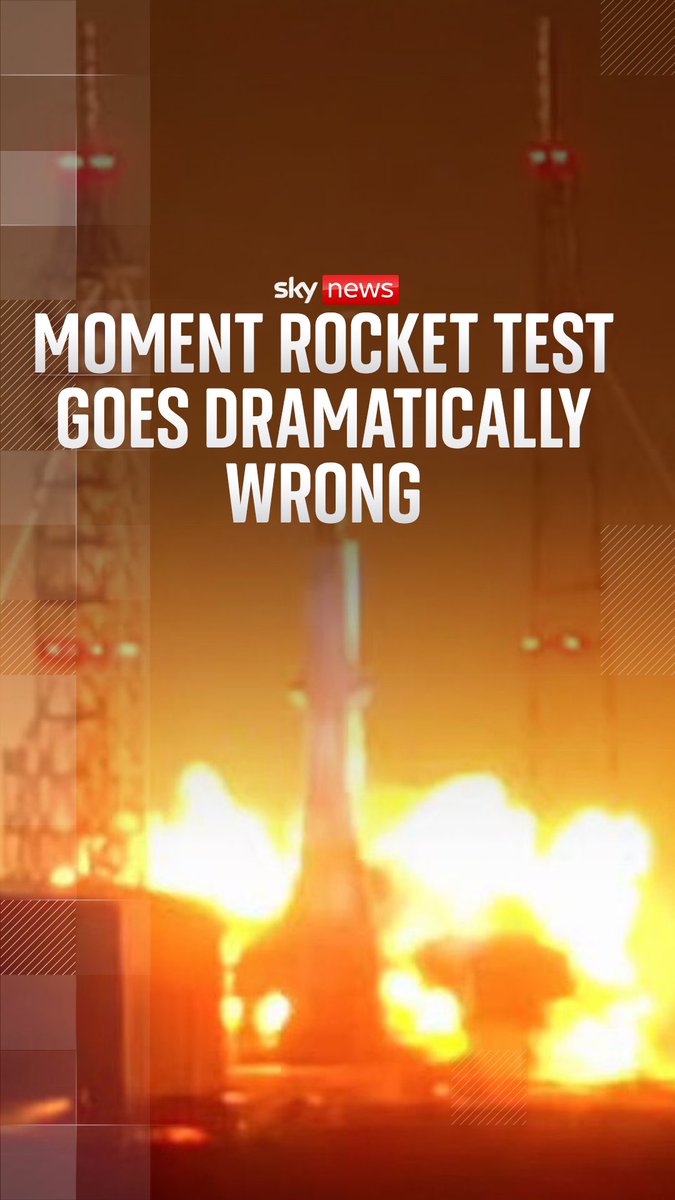
Mindblowing Explosion in USA Cape Canaveral 🤯 A Blue Origin rocket exploded during a routine ground test Yes they lost a New Glenn rocket Which can cost over $100 million But the bigger loss may be the launch infrastructure The static-fire test severely damaged the launch complex They’re saying...

76,821 Aufrufe • vor 1 Monat •via X (Twitter)

0 Kommentare

Keine Kommentare verfügbar

Kommentare vom Original-Post werden hier angezeigt

Ähnliche Videos

🚨 🚨 BEZOS HAS 3 OPTIONS LEFT AFTER NEW GLENN'S LAUNCHPAD EXPLOSION. ALL 3 ARE CATASTROPHIC. This is the moment nobody wants to talk about. After years of development, a $1B+ heavy-lift rocket program, and a final ground test before Amazon's Kuiper satellite mission → Blue Origin is now boxed into THREE choices. And every single one is a nightmare: ⚠️ OPTION 1: REBUILD LC-36 FROM SCRATCH – The only launchpad Blue Origin owns is now a debris field – One 600-foot lightning tower toppled. Erector-gantry: gone. Ground equipment: destroyed. – Pad rebuilds after a full vehicle explosion take 12–24 months minimum – Amazon's Kuiper constellation — already years behind SpaceX Starlink — falls further behind – Every month of delay costs Amazon market share it cannot get back ⚠️ OPTION 2: BORROW OR BUY LAUNCH CAPACITY FROM A COMPETITOR – The only competitor with available heavy-lift pads is SpaceX – Asking your direct rival for a launchpad is not a business negotiation — it's a surrender – SpaceX has every incentive to slow-walk, overcharge, or simply say no – Amazon would be funding the company that is actively destroying Kuiper's market window – Jeff Bezos built Blue Origin specifically to avoid this dependency ⚠️ OPTION 3: ABSORB THE DELAY AND KEEP INVESTING – New Glenn's first stage was enveloped in fire during a routine hotfire test — the final check before orbital flight – The vehicle collapsed. The upper stage tilted and fell. Fires burned at multiple stories – This wasn't a launch failure. This was a ground test. The hardest problems haven't even been attempted yet. – Blue Origin has no second pad, no backup vehicle, and no timeline for the next attempt – And Starlink already has 7,000+ satellites in orbit Let that sink in. There is no Option 4. There is no clean exit. There is no "we rebuild and catch up by Q4." The media is showing you "rocket science is hard" and "no injuries reported." They're NOT showing you that Blue Origin just destroyed its only launchpad — the single piece of infrastructure that connects years of development to an actual orbital mission — three hours before midnight on May 28, 2026. This is the most consequential single test failure any American space company has faced since SpaceX's Pad 40 explosion in 2016. Follow now → this story is moving fast. RT so others see what's really at stake. Prepare accordingly. 🚨🚨🚨 I'll keep you updated. Turn on notifications. 🚨

🇨🇳 Guo Shen 郭深

889,182 Aufrufe • vor 1 Monat

A single gigawatt of orbital compute requires roughly 200 Starship launches and Elon Musk is not satisfied with gigawatts (Save this). The target is 100 gigawatts of orbital compute per year which means SpaceX is staring down a launch requirement that no organization in human history has ever attempted at anything close to that scale. He acknowledges that scaling to gigawatts per year in orbit is a very hard challenge, but then points to something most people have missed entirely, SpaceX has already demonstrated the foundational capability, because building and launching thousands of Starlink satellites per year is the same industrial problem applied to a different payload. When you understand the orbital compute satellite as a larger version of Starlink V3 with an Nvidia GPU rack at the center instead of a communications payload, the manufacturing and launch scaling challenge stops looking like science fiction and starts looking like a production ramp. The infrastructure to support that ramp is already being built. SpaceX is currently capacitizing for thousands of launches per year, two launch towers and pads in South Texas are operational, the first pad at Cape Canaveral is nearly complete, a second is on the way at Launch Complex 37, and additional locations are already in discussion. As the CFO says it "You need to have those cost curves as you ramp up in volume and time, your costs go down." The vision he describes for what this eventually enables is striking in its specificity. He imagines asking Grok a question on his phone, the inference running on an orbital compute satellite, and the answer coming back down through Starlink direct-to-cell, a complete AI query processed entirely in space, from prompt to response, without touching a single terrestrial data center. That moment, he says, is closer than the industry thinks, with initial capability demonstrations possible as soon as next year. The bottleneck that stands between now and that moment is not the satellite design, the cooling physics, or the silicon, all of which SpaceX has already worked through.

Milk Road AI

67,791 Aufrufe • vor 1 Monat