正在加载视频...

视频加载失败

Modi’s India in its lost decades since 2014. Built two greenfield dedicated freight corridors: 1. Western Dedicated Freight Corridor 2. Eastern Dedicated Freight Corridor
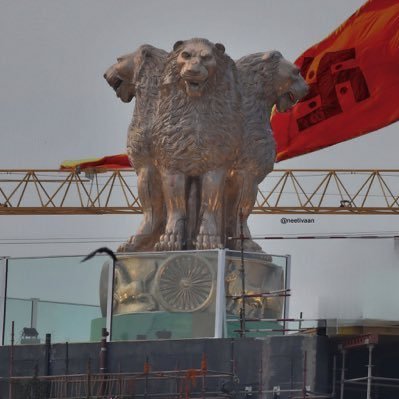
40,028 次观看 • 6 天前 •via X (Twitter)

0 条评论

暂无评论

原始帖子的评论将显示在这里

相关视频

🚄FROM VANDE BHARAT TO KOLKATA TRAMS: JUPITER WAGONS’ BIG BET ON BENGAL’S RAIL FUTURE!🚋 One of India’s leading railway manufacturers, Jupiter Wagons, is making a major leap into passenger rail—and West Bengal is at the centre of its expansion plans. 🏭 New Hooghly coach factory: Jupiter Wagons will establish a dedicated manufacturing facility in Hooghly to build Vande Bharat trainsets, Metro coaches and other passenger rolling stock, making it Bengal’s second Vande Bharat coach manufacturing hub after Titagarh Rail Systems’ Uttarpara plant. 🚆 Entering the Vande Bharat era: The company is expanding beyond freight wagons to compete in India’s rapidly growing passenger rail market, targeting upcoming Vande Bharat, Metro and suburban train opportunities. 🌍 Global technology partnerships: Jupiter is working with international partners, including an existing collaboration with CAF (Spain), as it prepares to bid for major passenger rail projects, including Mumbai’s ₹20,000 crore suburban rail programme. ⚙️ Building the complete ecosystem: A new wheelset manufacturing facility in Odisha, developed with international partners, will supply critical wheels and axles for passenger coaches while also serving export markets. 🚋 Kolkata trams could benefit too: The company has expressed interest in participating in the modernisation of Kolkata’s historic tram network, should the state’s revival plans move ahead. 📈 Ambitious growth plans: Jupiter Wagons is targeting annual revenues of ₹10,000 crore over the next few years, with passenger rail expected to become a major growth driver. If these plans materialise, West Bengal will strengthen its position as one of India’s leading railway manufacturing centres—producing everything from freight wagons and Metro coaches to Vande Bharat trains and potentially even modern trams. #WestBengal #VandeBharat #Railways

West Bengal Diary

32,479 次观看 • 1 个月前

New York and Chicago are two big hubs in the eastern US. Distance: 800 miles or 1300km roughly. Same as Delhi - Mumbai in India. There are 3 ways to travel. You can fly. You can drive. Or you can take a train. Fastest train is Amtrak lakeshore which takes ~19hrs. Driving takes 14hrs but you need to rest as well. I love trains. So I decided to take Amtrak. Their sleeper class. Took a roomette. First of all - American trains run on standard gauge. Which is smaller than Indian broad gauge. The compartments are smaller. And the trains are less comfortable. They shake way more. Second - Americans really don’t understand passenger trains. This train left late and then sat on a random station for 30mins. It’s already running late and usually reaches 2-3 even 5hrs delayed. And this is supposed to be a premium train. Culprit ? Freight. Americans don’t have dedicated fright tracks. The train btw is full. Which means people do want to travel on it. All sorts of people. Old, young. Business travellers. Only 2 coaches are sleeper - rest are coach (chaircars). Then the train reaches Albani and has to merge with another train from boston. Whole process takes 30-45mins. Can you believe a major train just sitting off a closed platform, cutting off its engines and adding more bogies in the middle of its journey in India ? The train had power supply for 30 mins cause it’s powered by diesel engines. Which are cut off. Diesel engine. Yes. The entire route except parts of NYC is non electric. It’s all old school diesel. It slowly chugs after and stops everywhere it can. Like an old Indian passenger train. The cabin is decent as it should be for a $700 price. The food is microwaved prepackaged stuff - ie very bad. There’s a coach attendant but he doesn’t care. I’ve travelled extensively in Rajdhani - and I can tell you it’s high luxury compared to this. And for 1/10th the price. The food, the cabin - all are superior. The reason I’m bringing this up is not to say Indians know it better. Not at all. But that even the most advanced cultures get it wrong. Even the most sorted out people - the one most advanced in tech - somehow don’t know how to run cross-country trains at scale. And this is not even a cross country trip. Hardly 1/4th of it. So what did they get wrong ? They stopped building. Upgrading. Improving. They do a few things right. Like making good highways. Take that learning. They do many things wrong. Like this train. They’ve stopped building. No dedicated freight tracks. No magnificent new stations. No high speed rail. The only lesson to learn is to not make that mistake. Build. And keep building. There’s no substitute to that. Keep building. Keep upgrading. Keep improving.

sphinx

718,224 次观看 • 2 年前

#Bangladesh: India's Reckless Actions Are Worsening the Flood Crisis in Southeast Bangladesh For the first time in generations, Bangladesh's entire southeastern region is facing its worst flooding in history affecting millions of people. The cause? Indian authorities opened the gates of the Dumbur Reservoir in Tripura for the first time in three decades, releasing massive volumes of water into an already rain-soaked region. (Read: Could there have been flooding without India opening the Dumbur Reservoir gates? Perhaps yes, but on a significantly smaller scale. The sudden release of water from the dam has inundated the region to an extent it hasn't experienced in generations. International law obliges India to notify Bangladesh of any actions that could cause significant harm downstream. Yet, India's failure to notify Bangladesh before opening the gates has caused significant distress and damage. Unfortunately, the Dumbur Reservoir is just one of many dams India has built on the rivers that flow into Bangladesh. Of the 54 transboundary rivers shared between the two countries, India has constructed dams on at least 30 of them, with the Farakka Dam being the most infamous for its catastrophic impact on northern Bangladesh. India's unilateral construction of dams and its arbitrary control of water flows have become a constant threat to Bangladesh, causing either drought or flooding downstream. This reckless behavior has devastated millions of lives and wreaked havoc on the environment. For example, over 80% of Bangladesh's 20 million small farmers depend on water flowing through these transboundary rivers to grow rice. (Source: By inflicting such widespread damage, India is effectively breaching international law on a regular basis. Here are some of the key obligations that India is failing to uphold: 1) Under Articles 5 and 6 of the UN Convention on the Law of the Non-Navigational Uses of International Watercourses (1997), upstream and downstream countries have the right to equitably and reasonably utilize shared waters. 2) Article 7 of the 1997 Convention, along with customary international law, obliges upstream countries, like India, to prevent significant harm to downstream nations, such as Bangladesh. 3) The Espoo Convention (1991) and customary international law mandate that upstream countries notify and consult with downstream states before undertaking any activities that could significantly affect shared waters. Yet, India has consistently ignored these obligations and has never acknowledged the rights of Bangladesh and its people under international law. Despite these hostile actions, Indian officials continue to claim that they are friendly neighbors—yet they wonder why Bangladeshis hold such deep resentment against them. Is India truly a friendly neighbor to Bangladesh? Their actions speak louder than their words.

Sultan Mohammed Zakaria

321,050 次观看 • 1 年前

AVALANCHE HAS HAD A MASSIVE 2026 SO FAR Avalanche (Avalanche🔺) is having its best year of institutional traction since launch. Grayscale's Avalanche Staking ETF (GAVA) listed on Nasdaq with 0% fees in March, with VanEck and Bitwise launching their own AVAX staking ETFs alongside. AVAX One (NASDAQ: AVX) reported Q1 revenue of $2.4M, more than double the prior quarter, and signed an LOI for a 10MW Tier 3 AI/HPC site in Alberta. Enterprise pipelines moved in parallel. Japan's Progmat is migrating its $2 Billion+ tokenization platform from a private Corda network to a public Avalanche L1. Korea's largest credit card arm announced a stablecoin payment system on a dedicated Avalanche L1. Galaxy Digital settled a $75 Million tokenized CLO. Animoca Brands signed an ecosystem partnership, and FIFA continued issuing World Cup tickets onchain. The onchain numbers back the institutional story. The network closed 2025 with 75 active subnets, up 158% YoY, and Q4 hit 38.2M daily transactions with DeFi TVL growing 41.9% QoQ to 102.8M AVAX. Active addresses jumped 242% from January into early February 2026, reaching 1.6 to 1.7M. Avalanche led all chains in net inflows in early February at $135 Million. The Octane upgrade cut base C-Chain fees by roughly 99.6% in April 2025. Granite added dynamic block times and biometric signing in November for sub-2-second finality. Binary Holdings, a South Asia telco loyalty L1 on Avalanche, reports around 36M daily active addresses on its own. That is the scale Avalanche's enterprise-infrastructure thesis has been promising. Price is the disconnect. avalanche-2:native trades around $9 to $9.50, well off the October 2025 peak near $30. If institutional adoption converts to sustained fees and staking demand, AVAX has structural room to catch up.

BSCN

16,067 次观看 • 3 个月前

🚨🇮🇷🇹🇷Is the Iran War Accidentally Rebuilding the Ottoman Empire? The Ottomans didn't dominate the world through conquest alone. They dominated by controlling Eurasian land trade routes and large swathes of the Mediterranean. The Iran war may be positioning Turkey to rebuild that same combination. For decades, the Strait of Hormuz carried nearly 20% of global oil and LNG supply. The Iran war has created an opening for alternative routes — and Turkey sits at the intersection of several plausible ones: 🔸 Turkmen gas via Trans-Caspian into the TANAP network — through Turkey to Europe, bypassing the Gulf entirely. 🔸 The Iraq-Turkey pipeline extended to Basra — up to 1.5 million barrels daily to Mediterranean markets, outside Iranian reach. 🔸 Qatar gas via Saudi Arabia, Jordan, Syria, and Turkey — directly to European LNG terminals, entirely overland. For 400 years, the Ottoman Empire sat at the crossroads of East and West not because it conquered everything, but because everything valuable traveled through it. If these three routes are built, a significant share of energy moving from the Gulf to Europe would pass through Turkish territory. The Ottomans understood this formula: control the routes, control the trade. And they backed it with a navy that, at its height, dominated the Mediterranean. Turkey is now rebuilding that same combination. 41 warships are under simultaneous construction, and 120 ships with 15,000 personnel recently completed the Blue Homeland-2026 exercises across three seas. This growing fleet allows Turkey to project power across the Eastern Mediterranean — a region already crowded with competing energy interests. Why does that matter? The Eastern Mediterranean is becoming a gas hub in its own right. 🔸Major discoveries (Leviathan, Tamar, Aphrodite, Zohr) have turned Israel, Egypt, and Cyprus into potential suppliers for Europe. 🔸Those countries are developing offshore LNG terminals and subsea pipelines. 🔸98% of Israeli foreign trade depends on Mediterranean navigation — including its ability to export gas. Turkey now actively contests this sea. By positioning itself as both an energy corridor and a naval power in the Eastern Mediterranean, Ankara could in the long run influence who ships what, where, and under what terms.

NewRulesGeopolitics

61,559 次观看 • 3 个月前