正在加载视频...

视频加载失败

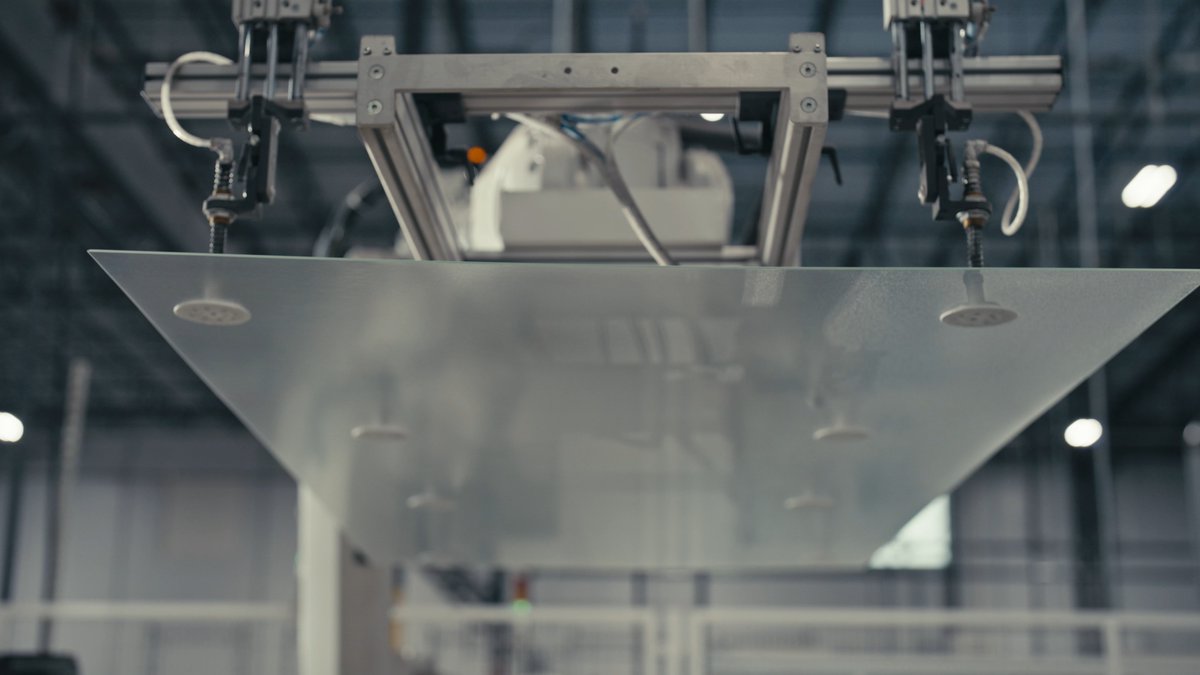
Money notes are printed in large sheets before being cut with high-speed precision machines ,each sheet holds multiple notes, and powerful blades slice them into individual pieces in seconds 🏧💵

1,031,988 次观看 • 8 个月前 •via X (Twitter)

0 条评论

暂无评论

原始帖子的评论将显示在这里

相关视频

Researchers at Northwestern University have developed "legged metamachines," a new class of modular robots whose unique physical forms were evolved entirely by artificial intelligence. Rather than following traditional human-engineered blueprints, the researchers used AI to "grow" novel body configurations in a computer simulation, resulting in strange new "species" that move like seals, lizards, or kangaroos. These AI-driven designs bypass standard dog- or human-like structures to create machines that no human engineer would have conceived. The machines are composed of autonomous, Lego-like modules, each containing its own motor, battery, and computer. While individual modules can move on their own, their true agility and near-indestructibility emerge through the AI-evolved architecture that allows them to function as a collective. Because the design is inherently modular, these robots can survive catastrophic damage that would be fatal to traditional machines. Broken parts do not become dead weight; instead, the AI-designed system allows them to keep rolling or crawling independently to rejoin the team. Lead researcher Sam Kriegman notes that these are the first robots to step outdoors after evolving inside a computer. They can survive being cut into pieces, as every separated module remains an individual agent capable of continuing its journey. The study, conducted at the McCormick School of Engineering, was co-authored by Kriegman and PhD students Chen Yu, David Matthews, and Jingxian Wang.

Michał Podlewski

14,954 次观看 • 4 个月前

WATCH | We managed to get photos of the two men who have been scamming people using fake money. The men drive around in a Silver Toyota Hilux Double cab. The person who sent us the video was also one of their victims, and his colleague recorded the men’s faces while they were trying to scam someone else. The victim said that in October 2025, the two men scammed him of US$1,600 in Mt Pleasant, Harare. He explained that the men came to the service station where he works and asked him to help them exchange their money. They told him they had between US$1,500 and US$2,000 in US$20 notes, and they wanted solid cash in US$50 and US$100 notes. He said that after he got US$1,600, the men gave him US$20 notes worth the same amount. While he was counting the money, the men started arguing with each other, saying their money was short by US$20. They asked him to return all the money so they could count it again together. He said that at that moment, it felt like they used some trick on him, because he agreed to give the money back without thinking. When they counted the money again, everything looked correct, and one of the men tied the money with a rubber band. The victim said he did not understand what trick they used, because later he realised that he was only left with US$20 and the rest of the notes were bond notes. The men then ran away in their car. He also said the car’s number plates were being changed often, and at his workplace the car had plates AFP 0516. Zimbabwe Republic Police

𝐂𝐫𝐢𝐦𝐞 𝐖𝐚𝐭𝐜𝐡 𝐙𝐖

60,450 次观看 • 8 个月前

Andrej Karpathy keeps his entire second brain in Obsidian 1 folder of plain text files, nothing else. Here’s the exact setup, free, that turns 1 vault into a brain you can actually query. Why most “second brains” die: Notion is a database you forget to open, ChatGPT memory wipes itself after 30 messages, and both lock your notes inside their cloud. Karpathy rule is the opposite: your notes are the 1 dataset nobody else on earth has, so keep them in plain markdown, own them forever, and let the AI read them later. 3 phases. Phase 1 — Capture with 0 friction. Install Obsidian free, local, 1 hotkey to a daily note. Dump everything into it: ideas, links, quotes, 2-line thoughts, no folders, no tags, no system. Target is 5 notes a day. Phase 2 — Let the graph connect itself. Install Smart Connections and it runs embeddings on every note you’ve ever written, so 2 notes you wrote 4 months apart and never linked by hand suddenly surface as neighbors. That’s the fireworks in the 3D graph each burst is a cluster of ideas your brain forgot it owned. Phase 3 — Query your brain. Point Claude at the vault and ask: “What did I actually think about X across all my notes?” It answers from 1,200 of your own notes, not the internet your taste, your edge, your dataset. The realistic curve looks like this: Week 1 — 40 notes, graph looks empty, feels like a waste. Month 1 — 300 notes, first real cluster forms. Month 3 — 1,200 notes, and the embeddings start surfacing links you’d long forgotten. Month 6 — you stop googling your own past ideas and just ask the vault. Before — 9 tabs, 3 note apps, 0 memory. After — 1 folder, 1,200 notes, 1 brain that compounds. The gap between people who consume and people who compound isn’t talent, it’s architecture. You build your own life so choose the right path.

Spike 1%

16,390 次观看 • 1 个月前