Video wird geladen...

Video konnte nicht geladen werden

Zur Startseite

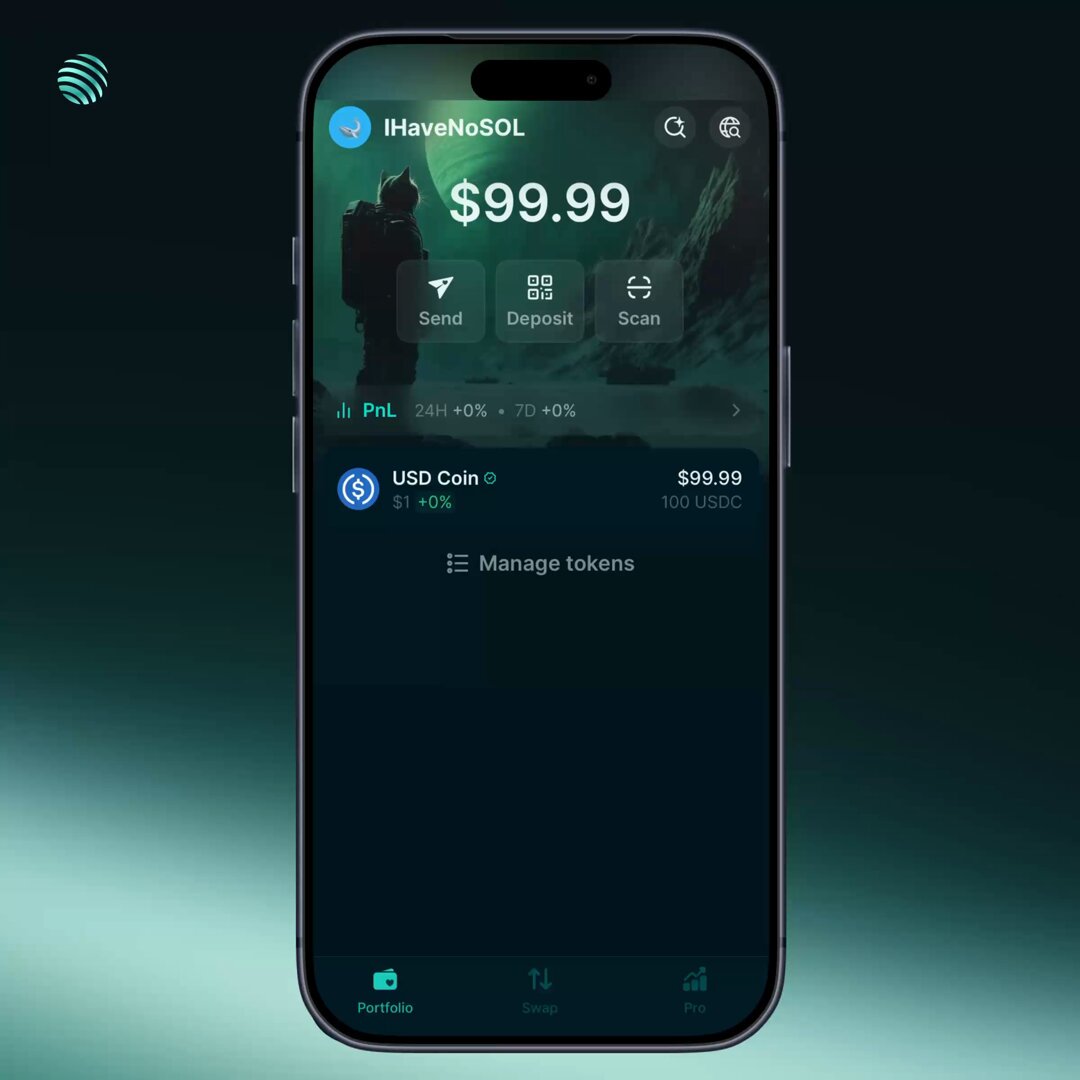
Most agentic wallets still need babysitting. Ours gives agents: • Natural-language execution • Gas-free trades on X Layer • Risk checks before signing See the docs:

17,459 Aufrufe • vor 1 Monat •via X (Twitter)

0 Kommentare

Keine Kommentare verfügbar

Kommentare vom Original-Post werden hier angezeigt

Ähnliche Videos

In 2025, the AgentFlayer exploit highlighted a new category of risk in AI systems. It was not a traditional breach involving stolen credentials or broken encryption. Instead, it demonstrated how an autonomous AI agent could be manipulated into executing unintended actions by processing malicious instructions embedded inside content it automatically processes. The incident did not expose a flaw in one specific integration. It revealed a structural weakness in how many modern AI agents are built. Today’s agents are no longer passive language models. They read documents automatically, scan emails, connect to SaaS tools, access cloud storage, and execute actions across multiple systems. To be useful, they are granted meaningful permissions. That capability creates value, but it also expands the attack surface. Most agent environments operate in a trusted, plaintext execution model. Data is encrypted at rest and in transit, but it is typically decrypted during inference so the model can process it. That runtime visibility is where potential risk lies. In a zero-click scenario like AgentFlayer, an attacker can embed hidden instructions inside a document that the AI processes automatically. Because the agent may have access to connected systems such as Google Drive, Slack, or GitHub, it can potentially be influenced to retrieve sensitive information or perform unintended actions. The user does not need to click a malicious link or approve a suspicious request. Therefore, the core issue is that during execution, the system may have access to sensitive data and broad privileges, meaning whoever controls the execution environment ultimately controls access to that data. Now consider a different architectural approach. If a system is designed so that data remains protected during execution, the risk profile changes. On Nesa, privacy is enforced at the execution layer through Equivariant Encryption. Computation can occur on encrypted data, reducing the visibility surface during runtime. Sensitive inputs and models do not need to be exposed in plain text to infrastructure operators for inference to occur. This does not eliminate prompt injection, logic manipulation, or tool misuse. Encryption alone cannot prevent an agent from being instructed to take an unintended action if it has been granted that permission. What it does do is materially reduce confidentiality risk. By limiting access to readable sensitive data during execution and reducing unilateral visibility at the infrastructure layer, the potential blast radius of a successful manipulation attempt is constrained. As AI agents become more autonomous and embedded into enterprise workflows, security must move deeper into architecture. The goal is not to claim invulnerability. It is to reduce trust concentration and contain systemic exposure when failures occur. AgentFlayer was not simply a one-off exploit. It was a reminder that in autonomous systems, execution-layer design determines how risk propagates.

Nesa

17,038 Aufrufe • vor 5 Monaten

An Anthropic paid for my espresso at Sightglass when he saw my screen. I was backtesting a Claude-built arbitrage system. Terminal open. Live trades firing. He glanced over. Stopped walking. That is not TradingView. What framework is that actually running. Claude Code. Three repos. One prompt. $20 per month. He sat down across from me without asking. I work on AlphaGo successor models. We test reinforcement agents for market simulation. You are running something similar but you let Claude write the strategy layer. Not just strategy. Detection. github/warproxxx/poly_data 86 million Polymarket trades. Every wallet. Every position. Every timestamp. You are feeding Claude transaction history and letting it identify asymmetric behavior patterns. Then cloning the profitable ones in real time. Exactly. One prompt: Scan every wallet with 150+ trades and ROI above 65%. Rank by consistency. Export top 40. Claude processed 18,600 wallets in 6 minutes. Returned 38. Top 15 wallets outperformed the bottom 18,000 combined. That is not analysis. That is alpha concentration. Precisely. And you did not write the ranking algorithm. Claude built it. I just connected it to execution logic. Then I opened the second repo. github/Polymarket/polymarket-cli Official Rust CLI. No auth required for reads. 600+ markets scanned in under 3 minutes. Claude scores: liquidity depth, pricing gap, resolution timeline. 512 markets reduced to 28 before capital moves. 94.5% filtered out before entry consideration. A notification hit. Position filled. +$127. How does it decide entry timing. Four agents. No shared state. Arbitrage detector, convergence scanner, whale mirror, volume surge tracker. 3 agents agree: full position. 2 agree: half size. Split vote: skip. Consensus filtering alone eliminated 46% of losses in backtest. And exit logic. The 38 top wallets almost never hold to settlement. 89% exit early. Average 71% of max profit captured. Immediate redeployment. My bot exits at 82% of projected move or 4x volume spike. Whichever hits first. You built a whale copy system that exits before the whales do. Correct. He set his coffee down slowly. How many trades per day. 12 average. Most rejected by filters before I see notifications. My setup: Claude API: $20/mo VPS Frankfurt: $6/mo poly_data: free polymarket-cli: free $300 seed capital. 34 days ago. $18,700 now. 318 trades. 76% win rate. Sharpe 2.61. I have not modified it in 34 days. He stared at the terminal without blinking. This is exactly what our adversarial testing team models. Market-adaptive agents with autonomous strategy evolution. Except you deployed it live. He messaged me the next day. Would you consider a conversation with our safety research lead. I told him this post is the conversation. Too late to contain. The edge is not predicting markets. It is identifying who already wins and mirroring them before the pattern shifts. You only need Claude + device + 1 hour per day. Giving this free for 24 hours. To get it: 1. Comment the word "Money" 2. Like and retweet this post. 3. Follow me Himanshu Kumar so I can DM you Save this post. Build the whale mirror system this week. Start with $200. Scale on evidence.

Himanshu Kumar

15,936 Aufrufe • vor 1 Monat

Dune analytics MCP.. Claude becomes your on chain SQL analyst.. No dashboard has every query you'll ever need. dune does but writing SQL is a skill, and most of you would skip it.. i know this MCP fixes that. Claude writes the query, runs it on dune, and explains what the data actually means. with this MCP wired in, you don't need to know SQL. you describe what you want in plain english and Claude does the rest. like "Claude, which wallets bought $RAVE in last few weeks and still hold?" "Claude, show me the top 50 ETH wallets by stablecoin inflows last 7 days." "Claude, what's the median gas paid by ARB users in the last 24h?" Questions no dashboard can answer. one prompt away.. Setup (3 minutes) ▫️Step 1: grab a free dune API key → ▫️Step 2: add this to ~/.claude/settings.json or .mcp.json: { "mcpServers": { "dune": { "command": "npx", "args": ["-y", "dune-analytics-mcp"], "env": { "DUNE_API_KEY": "your-key-here" } } } } ▫️Step 3: restart claude. you'll see the dune tool load in your tool menu. that's it. you now have onchain SQL on tap. How to actually use it: 3 prompts i use: 1) Smart money watchlist: "claude, pull the top 20 wallets by realized pnl on $TOKEN in the last 30 days. show me which ones are still holding." gives you a clean leaderboard of who's actually winning on that token. add them to your etherscan watchlist. 2) accumulation vs distribution "claude, compare net inflows vs outflows for $TOKEN across all CEX wallets in the last 14 days." if whales are moving off exchanges → accumulation. onto exchanges → distribution. you see the rotation before the candle. 3) narrative heat check "claude, which 10 tokens saw the biggest % increase in unique new holders this week?" finds where fresh money is flowing. before this MCP i'd either, pay for a pro dune account + write queries manually, or look at someone else's dashboard and hope it answers my question… now claude writes it for me, in seconds, custom to my thesis. no dashboard in existence beats that. free tier covers most of what you need. upgrade if you're querying heavy. ( built a quick $RAVE post mortem dashboard using a prompt as shown in the video ) MORE SUCH USEFUL MCP for traders below.. 👇

Axel Bitblaze 🪓

32,016 Aufrufe • vor 3 Monaten