Loading video...

Video Failed to Load

Go Home

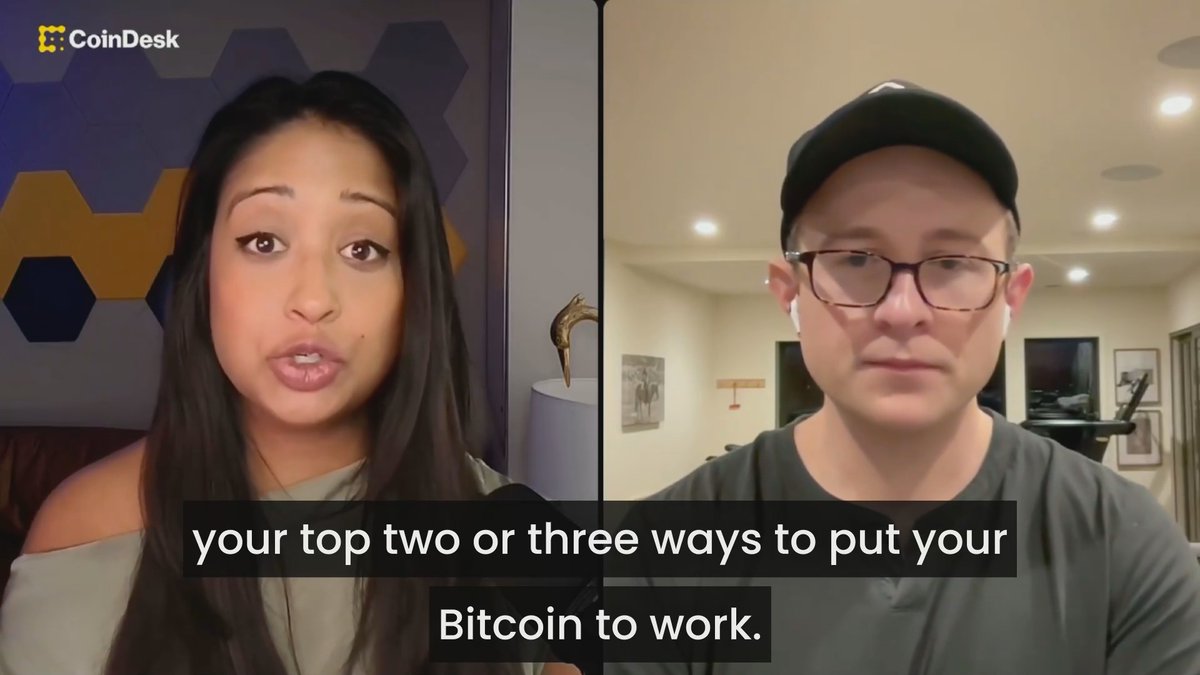
Most chains rely on one consensus layer. Satoshi Plus uses three: Bitcoin staking, CORE staking, and Bitcoin mining hashpower. It’s a system built for decentralization and Bitcoin alignment. 🔶

12,870 views • 1 year ago •via X (Twitter)

10 Comments

Th€Báb£ü 🇧🇩's profile picture
Th€Báb£ü 🇧🇩1 year ago

Love the ecosystem $CORE 😍

MoiniCore🔶's profile picture
MoiniCore🔶1 year ago

Just Use Core

Isah Sunday ❤️'s profile picture
Isah Sunday ❤️1 year ago

The core price has become poor everyday

CRYPTO_ENTHUSIAST 🔶's profile picture
CRYPTO_ENTHUSIAST 🔶1 year ago

Aligning with the principles put forth by Satoshi Nakamoto CORE 🔸

Jeffrey 🕳️'s profile picture
Jeffrey 🕳️1 year ago

how are other self proclaimed BTC sidechains reacting to this, cause let's face it, if they don't have this type of consensus they're really not BTC aligned

Adedeji ADERINTO MD 🔸's profile picture
Adedeji ADERINTO MD 🔸1 year ago

That is why #Core is the best in the industry 💎

F⬡M⬢°🔸's profile picture
F⬡M⬢°🔸1 year ago

#JustUseCore 🔶 #Core = #BTC × #ETH

0xSaif.core🔶's profile picture
0xSaif.core🔶1 year ago

Satoshi plus Consensus solves the blockchain trilemma.🔥

Sanpreneur 🔶's profile picture
Sanpreneur 🔶1 year ago

..over 7,000 btc staked and.. Edited

HawkinsHw🔸's profile picture
HawkinsHw🔸1 year ago

It adds Blockchain Trilemma also 🔥🚀

Related Videos

Core, ‌the Bitcoin-first ‌chain, and how it’s trying to stretch BTC’s usefulness Core DAO (Core DAO 🔶) brands itself as “The Bitcoin Everything Chain.” The pitch is simple: take Bitcoin’s strengths and push them beyond the usual buy-and-hold story. The protocol centers on one main idea: BTC shouldn’t sit still. Core wants idle Bitcoin to earn, but without giving up the properties people care about most: safety, decentralization, and full self-custody. To get there, Core leans on a mix of Satoshi Plus, timelocks, and a quick Layer 1 EVM chain. Satoshi Plus folds in Delegated Proof of Work (so Bitcoin miners can participate), self-custodial Bitcoin staking, and staking of the $CORE token. Core frames the relationship with Bitcoin as mutualistic. It borrows security and incentive alignment from Bitcoin, then tries to send value back through extra miner rewards, trustless yield opportunities for BTC holders, and infrastructure that makes it easier for Bitcoin products to plug in and scale. Key ways Core aims to expand Bitcoin utility: 1.) Self-custodial Bitcoin staking Lock BTC with timelocks directly on the Bitcoin network (CLTV) and earn CORE yield, no wrapping, no bridges, and no handing custody to anyone else. 2.) Dual staking Stake $BTC and $CORE together to reach higher yield tiers. 3.) Tapping Bitcoin’s hash power Miners can delegate hash power to earn extra CORE rewards, while Core itself is secured using a majority share of Bitcoin’s hash rate. 4.) The “Bitcoin Power Grid” A set of rails Bitcoin products can connect to, built around yield, collateral, payments, and DeFi use cases. 5.) Scalable Bitcoin DeFi An EVM-compatible network designed for faster, cheaper BTCFi apps. 6.) Two-way value flow The goal is to strengthen Bitcoin’s security budget over time, while also turning dormant BTC into something that can actively do work. In plain terms, Core DAO’s broader mission is to make Bitcoin more productive without piling on trust assumptions, converting energy and capital tied up in Bitcoin into yield, DeFi activity, and scalable infrastructure.

BSCN

27,044 views • 20 days ago