Loading video...

Video Failed to Load

Go Home

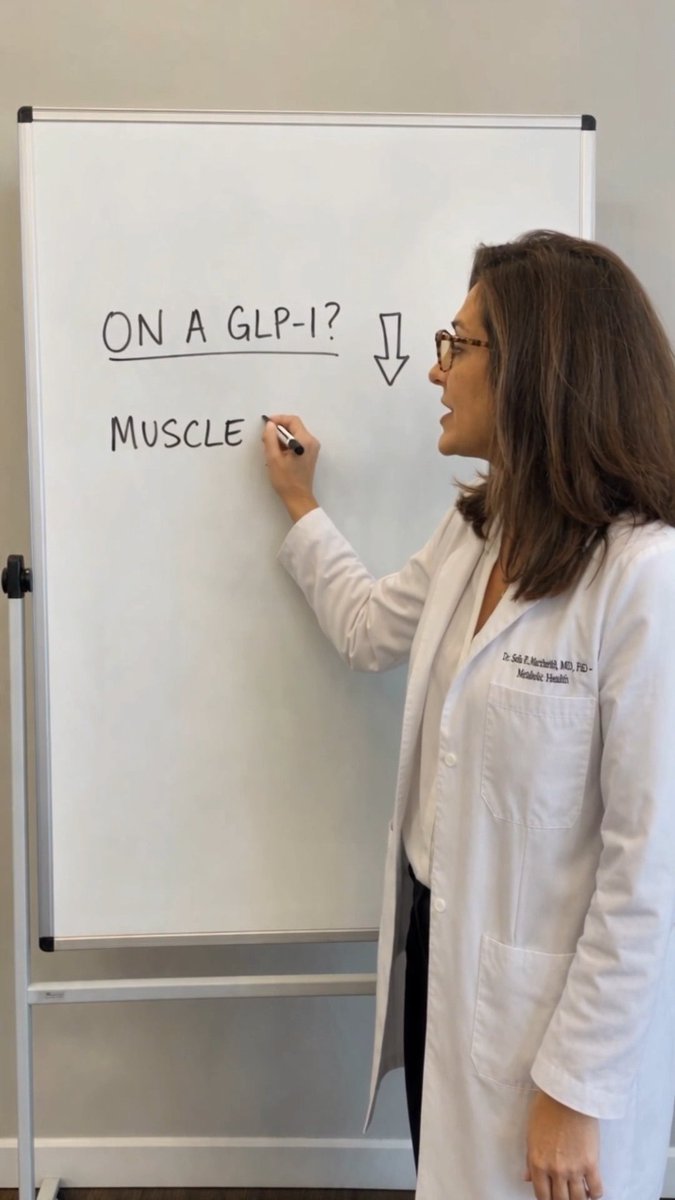
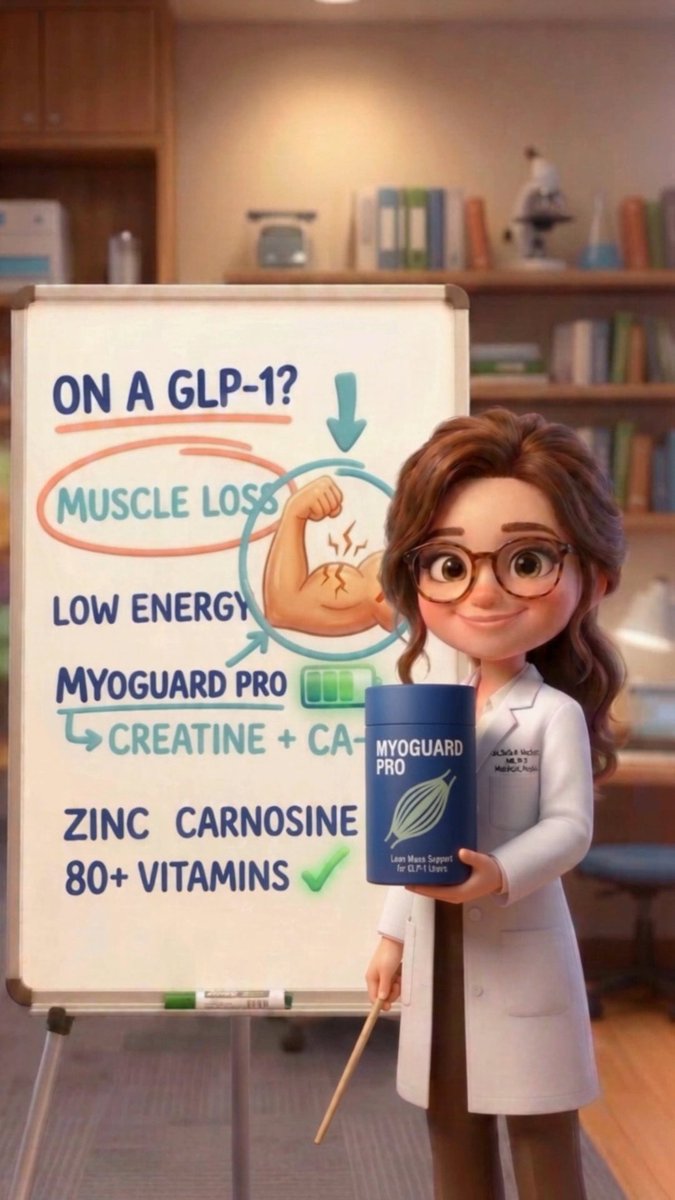
most people still don't comprehend how far AI video has come. no memory between clips used to mean every cut reset the scene, drifted, redrew itself. that's basically solved now if you build around it right this whole ad is one continuous WHITEBOARD, 9 chained clips, and the marker...

78,404 views • 1 month ago •via X (Twitter)

13 Comments

Lad's profile picture
Lad1 month ago

join my telegram for more free knowledge

Riskmaxxer's profile picture
Riskmaxxer1 month ago

SO FIRE

D4bid's profile picture
D4bid1 month ago

Wow amazing work. Never thought about this

Dani's profile picture
Dani1 month ago

Feel like this style of ads would absolutely rip

MAX's profile picture
MAX1 month ago

fire

synthesis's profile picture
synthesis27 days ago

Did you use the same reference frame across all 9 clips to keep the board from drifting?

Lad's profile picture
Lad27 days ago

i used omni to chain clips together by screenshotting the end frame the whole workflow is posted in my telegram if u wanna see

Santiago Gonzalez's profile picture
Santiago Gonzalez1 month ago

Bro just use your own arm lol

Weird Internet Businesses's profile picture
Weird Internet Businesses1 month ago

Keeping one whiteboard coherent across nine chained clips is impressive. Commercially, the question is whether the chain stays cheaper after corrections. If a typo in clip six forces clips six through nine to be rebuilt, continuity is solved visually but revision margin is still fragile.

Felipe Monteiro's profile picture
Felipe Monteiro1 month ago

Quadro

Sam sherif. AI marketing and creative strategy.'s profile picture
Sam sherif. AI marketing and creative strategy.1 month ago

thanks for sharing the prompt is it seedance 2.5?

Lad's profile picture
Lad1 month ago

omni flash

Yano's profile picture
Yano1 month ago

Chaining nine clips while keeping the same visual memory is the real achievement here; continuity matters more than a flashy single shot. I’ve been exploring image-to-video motion and camera control here too:
Related Videos

Seedance 2.5 just got an upgrade with 1080p only on Higgsfield... you can now ONE SHOT commercials like this here's exactly how to do it (with a gift at then end): 1/ write the prompt as a timestamped breakdown > split the spot second by second > put the exact dialogue inside each window in quotes, the model speaks it word for word with lip sync > match the generation length to your timestamps, a 21 second script generated at 15 compresses and the delivery desyncs 2/ composition is named - never hoped for > name the camera: "handheld front camera, chest-up framing, natural micro shakes" for UGC, "35mm, slow push-in, product centered" for a produced spot > name the light: "golden hour through the windshield" or "ring light with slight reflections in the eyes" > name the grade: "high contrast, cool tones, warm skin" > whatever you leave unstated gets invented and locked for the whole clip 3/ characters hold when you anchor them > generate a first frame image before any video: real skin texture, visible pores, one fixed imperfection like freckles so drift becomes instantly visible > feed it in as the reference and open every prompt with "the same person as the reference, identical face, hair and outfit" > the @ system locks it harder: @.character for the face, @.style for the look, @.audio for the voice > then write the micro behaviors: a glance away and back, a pre-line breath, fingers adjusting grip... small involuntary movement is what reads human, and you get it by naming it 4/ sound is written - not defaulted > end every prompt with an audio block: "clear phone-mic voice with light room tone" for UGC, "clean studio voice, no echo" for a produced spot > name the music under the dialogue: "soft upbeat synth instrumental running quietly underneath" > one delivery word for the read: "delivery: fed up" produces a performance, an adjective stack produces nothing 5/ sharp text is quoted text > write the exact label or on-screen text in quotes with its style > unquoted text gets invented typography that garbles between frames > print brand names big, a bold label survives every shot while a small tag melts 6/ the consistency laws > repeat the product description verbatim in every prompt, faces anchor but products drift > count objects scene-wide: "exactly one bottle in the entire scene, no duplicate on any surface" > close the wardrobe: "small gold studs, no other jewellery, no rings, no watch" > every state change happens across a cut: the swatch on her hand in shot one, blended in shot two, no clip contains the transition... the viewer's brain supplies it and the shortcut for UGC: take an ad that already converted, ask gemini for a 1:1 timestamped breakdown of everything on screen, swap in your product and script -> that breakdown is your prompt set 9:16 for shortform, 16:9 for the spot, generate straight at 1080p and ship RT + reply to this post and i'll send you my full guide to make your own creatives

Machina

12,785 views • 1 month ago

someone cut a 40 second clip of a stream this week. it did 3.8 million views. he got a notification the platform kept the traffic, the streamer kept the clout, and the clip itself paid nothing so i built CUT, open source, on Robinhood Chain chat knows a moment is happening before any dashboard does. CUT listens to that and turns it into money for the person who posts the clip what it does, and all of it sits in the repo in plain text: → joins Twitch and Kick chat and measures speed against each stream's own 5 minute baseline → fires a moment when chat runs 3x over that baseline, or when enough people type "clip it" → calls the Twitch clip API in the same second, because a clip only keeps the 90 seconds before the call → puts every moment on a live board: stream, chat speed, the words chat used, the clip → splits trading fees in a contract with no owner and no setters, then pays clippers weekly by views through a merkle round the boring parts are the point: no key needed to run the watcher, chat is read anonymously it cannot post for you. no auto post, no auto reply, ever launch scripts are dry run by default and refuse to send if the deployed contract is not the one they expect 52 contract tests, MIT, runs on your own machine one command replays three minutes of recorded chat and fires a real moment on your screen without touching the network, so you can watch it work before you trust it the thresholds are 12 messages per 10 seconds and 3x baseline. tell me which one you would move first, i want to argue about it repo in the first reply

Carver

13,019,620 views • 17 days ago

I just cracked the code on AI UGC ads 🤯 51 seconds long. One creator across the entire ad: same face, same voice, same product packaging in every single shot. Talking-head delivery, b-roll cutaways, voiceover running over the b-roll, and the creator moving through different settings. A fully edited, multi-shot ad that actually holds. If you've been stuck generating 8-second clips that look fine but fall apart the second you try to string them into a real ad, no character that holds, no voice that stays the same clip to clip, no product that survives more than one shot, this is the workflow you're missing. Here's exactly how I did it: → Pull a winning authority ad and rewrite the script for your product → Build your creator in ChatGPT Images 2.0 to match the exact buyer demographic → Lock the creator + product as reusable Elements so they stay identical across every shot → Break the script into single-scene shots so each one is a clean generation → Lock the voice on the first clip, then carry that same voice through every shot after → Tag your b-roll shots as voiceover so the line plays over the cutaway instead of lip-syncing → Edit in CapCut: cut the dead air, nudge to 1.1x → Drop the final cut in Captions, add subtitles, export Consistent character, consistent voice, consistent packaging — across talking head, b-roll, voiceover, and multiple settings. No character drift. No robotic voice swap. No disconnected 8-second clips. I put together the full step-by-step playbook with the exact ChatGPT Images 2.0 and Seedance prompts, the element-tagging setup, and the voice trick most people miss. Want it? > Like this post > Comment "UGC" And I'll send it over (must be following so I can DM)

Mike Futia

38,044 views • 3 months ago

-- What holds it together -- ✂️PAPER CUTS.- When the image is the end ⤵️ What you bring to life is the journey towards the image: how the pieces come to be as they are. The movement is the idea, and your image in Seedance is the final frame. ---------------------------------------------------- What happens to the object? 1⃣ By the time the object TRANFORMS into something else. It takes place in a continuous shot, a single camera that zooms in slowly and never cuts away. A cut would break the transformation; the hypnotic effect lies precisely in the fact that it doesn’t flicker. Template.- [@.RE IMAGE] is the LAST frame. [GLOBAL] [Technique + light + backdrop + focus]. [Real materials]. One continuous hypnotic transformation — a single take, no cuts. The same [OBJECT A] does not appear in pieces; it [VERB: melts / folds / blooms / dissolves] into [OBJECT B]. Slow surreal dreamlike drift, one unbroken slow push, slight stop-motion shimmer, no snapping. 0-1s: [state A, intact and recognizable]. 1-2.5s: [the change begins — "the same material begins to..."]. 2.5-3.5s: [the change at full — "...becomes..."]. 3.5-5s: [it settles]. The push eases to rest. Locked, exact match to the last frame. [LOGIC RULE] one continuous same-lens push, never cutting. [A] morphs into [B], [details that must not deform] stay legible, no warping. hypnotic drift. SFX: [a sound that also transforms]. no music, normal speed. 2⃣ When one thing LEADS to another, we need each step to be a link in the chain of causality. Template.- [@.RE IMAGE] is the LAST frame. [GLOBAL] [Technique + light + backdrop + focus]. [Real materials]. Hypnotic stop-motion paper cadence, slight frame-step, brisk causal montage, ~1.5s per shot, no naturalistic motion, no slow-mo. [cut] [shot + camera] / [carries on from previous cut] / [ACTION: what it DOES, not how it looks]. SFX: [beat-anchored hit]. [cut] ... (link 2 — chains from link 1) [cut] ... (link 3) [cut] ... (link 4) [cut] ... ease back to reveal / [link 5]. Locked, exact match to the last frame. SFX: ... [LOGIC RULE].- [materials], [what must NOT happen], no warping, [text legible if any]. ~1.5s per shot, no slow-mo. no music.

AlexandrIA

41,804 views • 2 months ago

This guy got Claude to take control of Arcads and generate hyperrealistic UGC ads with a consistent AI actor, from a 7-word prompt, and now e-com brands pay him $1,500 per video to clone the setup. He got tired of watching DTC brands burn $4K on a photoshoot that dies the second a product angle changes, so he built a 2-prompt workflow that turns one product photo into scroll-stopping UGC without a single model, camera, or casting call. Here's the exact breakdown: → Claude is the director, Arcads is the studio. You never write a real prompt, you write one sentence → Type 7 words: "create a character sheet of a UGC actress on Arcads." Claude expands it into a 40-line spec: warm skin tone, high ponytail, gold hoops, white AirPods, athletic build, then takes control of Arcads itself → Arcads renders a 6-angle character sheet: front, back, profile, 3/4, two portraits, one consistent face locked across all of them → You download the grid and drop it back into Claude with one product photo → Second prompt, 8 words: "use Seedance 2.0 on Arcads to create natural UGC" → Claude writes the full shot list: timecodes, "1:03 AM clock zoom," the trackpad scroll, the arm pull that drags the product into frame, "delivery: casual, energetic," "ends on a wink + air kiss" → Arcads cuts the yellow Vans print onto an actor who was wearing all black in the grid. Real fabric folds, real light, zero warping → Final render: lip-sync locked to consonants, head not glued to the camera, a girl filming at 1am on her bed The key move 96% of people skip: you can't put the product on the actor before you lock the character sheet. If you drop a product photo onto a face that isn't locked across angles, the identity drifts frame to frame. The jaw resets. The skin tone shifts. The print slides off the fabric. The whole thing screams "AI" and your CTR dies in the first 2 seconds. His system locks the 6-view sheet first, so Arcads has one real human to dress, and the top lands with natural folds even though the grid never had it. One apparel brand ran 20 variants off a single product photo and found a winner in 36 hours, because the clips read like organic UGC, not a studio ad. Brands now pay him $1,500 per avatar build + $340/month to keep dropping fresh video batches on every new product. The entire thing runs on two prompts and one laptop. No photographer. No model agency. No product samples on set. Just two sentences, one product photo, and the discipline to lock the character before you render a single second of movement.

Shade

15,227 views • 3 months ago

save this post to get the most out of unlimited Seedance 2.5 for up to 33 days on Higgsfield i'm going to show you how to use loops to produce ANY video format: ads, cinema, vlogs, UGC, music videos... with one system idea > vault > agent > references > images > script > video > montage > upscaling Seedance 2.5 one-shots a full 30 second video, audio generated in the same pass, carrying up to 30 image, 10 video and 10 audio references into a single generation here's a full breakdown of the setup: > idea: steal taste from work that already worked: - frameset․app and shotdeck․com for film stills - savee․com and cosmos․so for boards - eyecannndy․com for transitions then have a vision model name the lens, light, palette and grain of your picks in one locked paragraph you paste into every prompt > vault: an obsidian folder as your reference bible, one page per asset (idea, locked style, character sheets, reference images, the exact prompts that worked) plus one index page, reviewed after every session so it never rots into dead files > agent: three commands make every model callable from Claude Code: - npm install -g @ higgsfield/cli - higgsfield auth login - npx skills add higgsfield-ai/skills and your agent now submits, polls, retries and logs every job > references: build reference images by hand first, midjourney for cinema and stylized shots, nanobanana pro or gpt images 2 for realism use one locked style across the whole project, recurring characters turned into full sheets (front, side, back, blank background), and once locked you never regenerate them, you fix the motion prompt instead > images: frames before motion, always, a frame costs seconds and a clip costs minutes, so exploration happens at the cheap layer and only winners get animated > script: every shot gets the same six details, subject, action, place, camera, style, rules, and the 30 seconds splits into four timed beats inside one prompt, 0-6 set the scene, 6-14 build it out, 14-24 the turn, 24-30 the end > video: every reference gets a job and a boundary, "Video 1 defines motion and pacing" is half the instruction, "do not use the person's identity, clothing or scene" is the half that stops one reference leaking into shots it was never meant to touch > montage: the cut is a text file, one line per clip with its duration and an audio flag, ffmpeg renders the film from it, so the whole edit reruns in seconds > upscaling: once, at the end, on the finished cut, 720p while exploring, 1080p for keepers, 4K only for the master (use Topaz) for UGC ads, the same loop with two changes render the hook clip alone first, approve the face and the voice before anything else inherits them, then anchor every later clip with the approved hook's audio so one voice carries the whole ad and the script math is fixed, about 3.5 words per second, a 30 second ad is roughly 105 words, counted before anything renders unlimited means every loop above costs nothing to run... start one tonight

Machina

39,183 views • 1 month ago

REAL ESTATE PEOPLE WILL HATE HIM FOR THIS. HE BUILT A CLAUDE AGENT THAT TURNS ANY LISTING INTO A SELLABLE VIDEO ON ITS OWN Playbook: connect Claude to a video generator, paste a listing, get a cinematic tour of every room, sell it to the agent But typing the prompt for every listing doesn't scale. He turned it into a skill his Claude runs on its own Here's how to build the automated version: 1. Connect the video engine once. In Claude, go to Customize, Connectors, Add Custom Connector, name it Higgsfield, and paste the server URL from higgsfield. ai/mcp. Authenticate through your account. No API keys. Now Claude can generate video straight from chat 2. Turn the workflow into a skill. Instead of pasting the same prompt every time, have Claude build a skill. Tell it: "Create a skill called listing-to-video. When I give it a listing URL, scrape the room photos, generate a cinematic clip of each room with Higgsfield, and save them to a folder." Now the whole process is one command, not a wall of text 3. Let the agent run the listing. Hand it a URL and say "run listing-to-video on this." It pulls the photos, fires each room through the video model, and brings the clips back. You wrote the prompt once, inside the skill. You never write it again 4. Stitch and deliver. Drop the clips together into one tour. Send a free sample to the listing's agent, then charge per video or a monthly rate for ongoing listings 5. Scale it with your team. Add a skill that drafts the outreach email and one that builds a simple landing page for the agent. Now one operator runs sourcing, production, and pitching from a single Claude session The edge isn't generating one video. It's building the skill once so every future listing runs itself Bookmark this

Yarchi

54,840 views • 3 months ago

steal my full workflow to create ultra-realistic AI videos with GPT-6 Astra... higgsfield just released their API, so i took it into real conditions i generated a vlog-style video set in Paris... it looks like raw footage a friend shot on a phone here's the workflow, step by step: > step 1: steal the structure, not the pixels i captured 3-5 scenes from a hotels and river views, then pulled character inspiration from pinterest and real vlogs > step 2: analyze the reference with Gemini i sent Gemini everything i'd collected... videos, audio, keyframes and it gave me a shot-by-shot breakdown, i turned that into instructions > step 3: swap the world, keep the bones i changed a lot on the character and the environment until it felt like something of my own, not a copy > step 4: build reference images first, this is where you iterate images are cheap, video is expensive so i built a character sheet, one image per location in the same mood, then the exact start frame the video opens on, all Nano Banana Pro > step 5: one 30-second video run, not ten 3-second clips the full timestamped script goes to Seedance 2.5 through the API as ONE generation start frame as the anchor, one action per beat, camera and audio described concretely, identity locks at the end so her face, outfit and makeup is locked in Seedance handles the cuts internally > step 6: revise like a director, not a gambler the first cut came back good but not right instead of re-rolling the whole 30 seconds i regenerated only the scenes that needed changes as short clips from their own start frames, then cut them into the master with ffmpeg change one variable at a time, never re-roll what already works > step 7: finish like normal footage i assembled the final cut with ffmpeg from the best takes, added ambient music from a free library and done the rules that made it work: - the reference's structure is the asset, prompt archaeology beats prompt writing - iterate on images, commit on video, the start frame decides 80% of the shot - one action per timestamped beat, crowded beats get skipped or invented - lock identity explicitly or it drifts between cuts - fix failed shots by changing one variable, redo scenes, never the whole video - the last 10% is boring editing: trim, splice, music, encode (save this workflow)

Machina

24,863 views • 7 days ago

if we fuck up the ad, why should you pay? notch is the one place that doesn't charge for regenerations or edits. one price. one ad. however many tries it takes us to get it right. every "generate" is a slot pull. miss = re-roll = more credits gone. these tools don't sell you ads. they sell you chips. and the house wrote the odds. here's the math nobody runs before they load their card. a 30-second ai ad is never one generation. it's 30 to 40 pulls. → wrong face. re-roll. → hands melt. re-roll. → lip sync drifts a frame. re-roll. → b-roll doesn't match the brand. re-roll. every pull bills you. the winning clip and the garbage clip cost the exact same. you're not paying for the ad. you're paying for the misses on the way to it. the casino model (higgsfield, runway, kling, every per-credit tool): → buy credits up front → pull the lever → pay whether the clip is usable or trash → the agent loops to fix itself? your meter runs faster → you ration generations like chips at a table the finished-ad model (notch): → you direct the ad, not the generations → the agent re-rolls, iterates and fixes itself on its own dime → the misses are our cost, not your wallet → one price for the deliverable. however many pulls it took. per-credit pricing isn't pricing. it's a casino floor. the meter is the product. the ad is just the bait. you should pay for the thing you can actually run. not for the privilege of pulling the lever 40 times to find it. comment your brand below. i'll ship you 10 winning ad variations. on us. no credits. no meter. no catch. or try notch for free today.

Vinay Jain

300,164 views • 4 months ago