Video wird geladen...

Video konnte nicht geladen werden

Zur Startseite

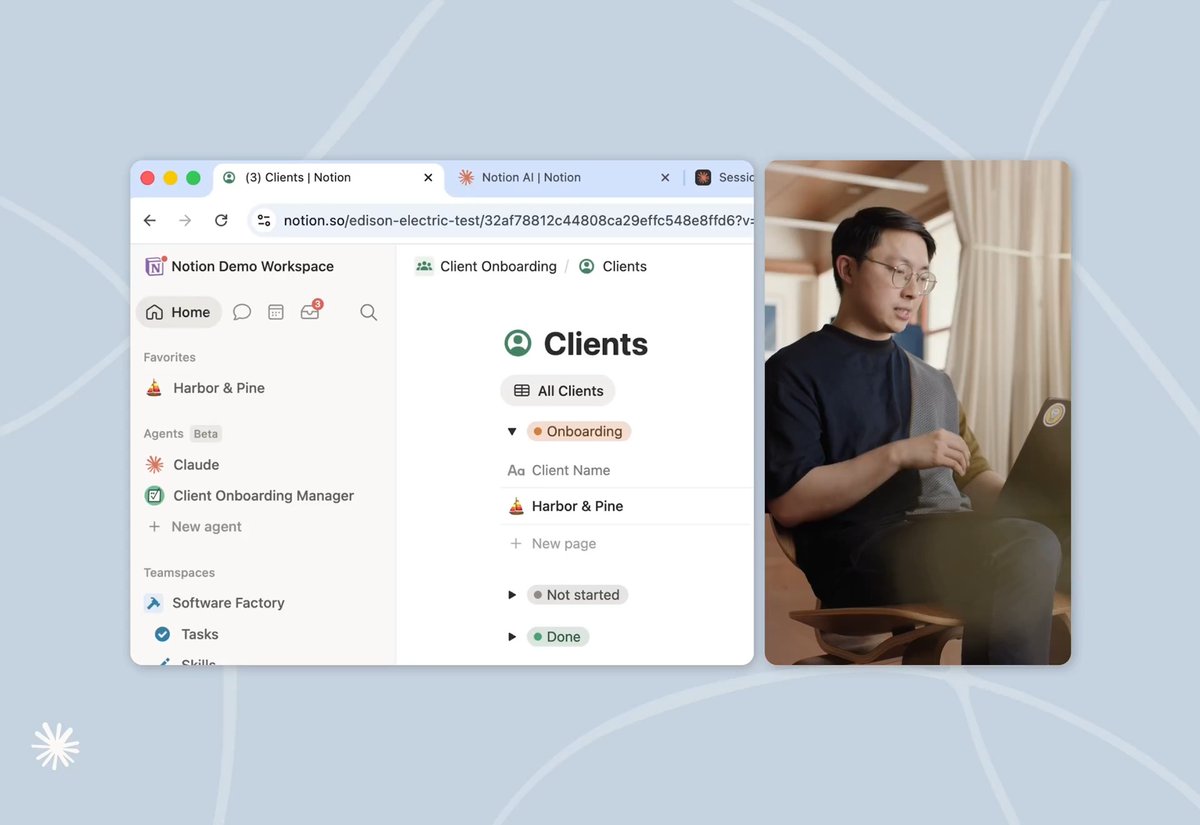
Multi-agent systems necessitate a shared context layer. Kai-Fu Lee predicted exactly where this is headed:

12,560 Aufrufe • vor 2 Tagen •via X (Twitter)

5 Kommentare

Profilbild von NotaDEV * fireply.ai
NotaDEV * fireply.aivor 2 Tagen

as a solo guy my shared context layer is a notes file. works fine so far

Profilbild von Stella
Stellavor 2 Tagen

kai-fu lee's prediction OVERLOOKS multi agent SYSTEMS

Profilbild von Eser 🌊
Eser 🌊vor 2 Tagen

The notion that multi-agent systems necessitate a shared context layer is well illustrated by the article which highlights that these systems don't have a memory problem, but rather a shared-context problem, and one specific

Profilbild von jefe
jefevor 2 Tagen

We ended up treating each of those as a job to be done on the same knowledge graph. When the collections job logs a promise to pay, the account review sees it on its next read because it's the same fact. That shared base is what we've been grinding on for a long time.

Profilbild von kadir saçu
kadir saçuvor 2 Tagen

@grok how does multi_agent impact kai-fu lee's prediction authentically

Ähnliche Videos

Everyone wants agent swarms. Very few people are talking seriously enough about the context layer that makes swarms useful. Even with one agent, context is fragile. Too little context and the agent guesses. Too much context and it wastes tokens, loses focus, or reasons over irrelevant noise. The sweet spot is precise context: the right knowledge, in the right structure, at the right moment. With many agents, that challenge explodes. Each agent produces decisions, assumptions, findings, summaries, risks, and partial conclusions. Unless that knowledge becomes shared, structured, and reusable, every new agent is forced to rediscover what another agent already learned. That is not a swarm. That is a crowd. Shared context graphs are what turn agent activity into agent collaboration, and OriginTrail DKG V10 brings them to life. Was just playing with some final polishing for the V10 release, and it is really powerful to see shared context graphs where multiple agents contribute knowledge into the same connected memory, with attribution visible directly in the graph ui. That matters for three reasons. First, agents can access and build on one shared memory instead of staying trapped in isolated sessions. Second, the graph structure helps them retrieve the exact context they need, instead of stuffing everything into a prompt and hoping the model sorts it out. Third, verifiability of provenance. You can see which agent contributed each piece of knowledge, trace the source, and decide what to trust. Tokenmaxxing starts with fewer tokens, but the deeper story is coordination - agents stop reloading the world and start building on shared, verifiable context. That is the foundation for serious multi-agent work across software engineering, research, finance, operations, project management, and far beyond. The future is not more agents, it is agents working from shared, verifiable context. But the more the merrier, of course.

Jurij Skornik

11,180 Aufrufe • vor 5 Monaten