Загрузка видео...

Не удалось загрузить видео

На главную

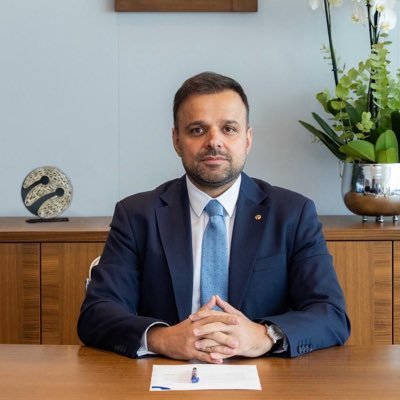
MWC25 Doha’da Mobile World Live programına konuk oldum. Programda Turkcell’in 5G, veri merkezleri, bulut iş birlikleri, enerji yatırımları ve yapay zeka alanındaki güncel çalışmalarını paylaştım. I was a guest on the Mobile World Live program at MWC25 Doha. I had the opportunity to share Turkcell’s latest developments in 5G,...

155,554 просмотров • 9 месяцев назад •via X (Twitter)

Комментарии: 0

Нет доступных комментариев

Здесь появятся комментарии из оригинального поста

Похожие видео

Yönetim kurulu üyesi olmaktan mutluluk duyduğum Dünya GSM Birliği’nin düzenlediği Mobil Dünya Kongresi MWC25’i geride bırakırken, Turkcell olarak Türkiye’yi uluslararası arenada temsil etmenin gururuyla ülkemize döndük. Kongre boyunca hem Turkcell’in öncü çalışmalarını dünyayla paylaştık hem de küresel teknoloji markalarıyla stratejik iş birliği anlaşmaları imzaladık. Milli itibarımızın gücünü her daim hissettiğimiz bu dört günü detaylarıyla kaleme alacağım ve sizlerle paylaşacağım ama şu üç gelişme çok kıymetli; ✔️Ulaştırma ve Altyapı Bakanımız Sayın Abdulkadir Uraloğlu’nun katılımlarıyla gerçekleştirdiğimiz imza töreniyle, ULAK Haberleşme ile stratejik bir iş birliği anlaşmasını hayata geçirdik. ✔️İtalyan denizaltı fiber kablo şirketi Sparkle ile ülkemizi global veri akışının merkezi haline getirecek “deniz altı fiber kablo projesi” için iş birliği protokolü imzaladık. ✔️Teknoloji ekosisteminin en önemli şirketlerinden Samsung ile Türkiye’de 5G destekli akıllı telefonların yaygınlaştırılması için çok önemli bir anlaşmaya imza attık. Turkcell olarak 30 yılı aşan birikimimizle, Türkiye’nin bağlantı teknolojileri alanındaki taşıyıcı kolonu olmaya devam edeceğiz! Büyük bir emekle hazırlandığımız Kongre’de milli duygularla çalışan tüm Turkcell’li arkadaşlarıma, iş ortaklarımıza ve tüm paydaşlarımıza çok teşekkür ederim.💛 ——— As we conclude MWC25, organized by the GSMA, where I am honored to serve as a board member, we return to Türkiye with great pride, having represented our country on the international stage as Turkcell. Throughout the congress, we not only showcased Turkcell’s pioneering initiatives to the world but also forged strategic partnerships with global technology brands. I will be sharing a detailed account of these four days, during which we deeply felt the strength of our national reputation. Most notably, three key developments stand out: ✔️ We signed a strategic cooperation agreement with ULAK during a signing ceremony attended by our Minister of Transport and Infrastructure, Mr. Abdulkadir Uraloğlu. ✔️ We signed a cooperation protocol with Sparkle, an Italian submarine fiber cable company, on an undersea fiber optic cable project that will establish Turkey as a key hub for global data flow. ✔️ We partnered with Samsung, one of the most influential companies in the technology ecosystem, to accelerate the adoption of 5G-enabled smartphones in Türkiye. With over 30 years of experience, Turkcell will continue to be the backbone of Türkiye’s connectivity technologies! A heartfelt thank you to all my Turkcell colleagues, business partners, and stakeholders who worked tirelessly with great dedication and national pride to make this congress a success. 💛

Ali Taha Koç

69,843 просмотров • 1 год назад

Bugün hem ülkemizin hem de Turkcell’in teknoloji tarihinde bir dönüm noktasındayız. San Francisco’da dünyanın teknoloji devlerinden Google Cloud ile uzun vadeli ve güçlü bir ortaklığa imza attık. Türkiye’de bir ilki gerçekleştirerek küresel ölçekte bir cloud region’ı Google Cloud’la birlikte, ülkemizde hayata geçirmenin gururunu yaşıyoruz. Bu hamleyle Avrupa, Asya ve Orta Doğu arasındaki dijital köprü konumumuzu güçlendirerek dünya teknoloji sahnesindeki yerimizi sağlamlaştırıyoruz. Hedefimiz net: Ülkemizin dijital egemenliğini korumak. Bu hedef doğrultusunda Google Cloud ile yaptığımız anlaşmayla Turkcell olarak 1 milyar dolarlık yatırımla en az 3 yeni veri merkezi kuracağız. Anlaşmamız sadece veri merkezleriyle de sınırlı değil. Google Cloud’un ileri teknolojilerini kendi altyapımıza entegre ederek operasyonlarımızda verimliliği, dayanıklılığı ve ölçeklenebilirliği daha da artıracağız. Bunun yanı sıra, Google Cloud’un servislerini Türkiye’deki kurum ve işletmelere ulaştırarak ülkemizin dijital dönüşümüne liderlik edeceğiz. Kullanıcılarımız bu anlaşmayla, küresel ölçekte en ileri yapay zeka ve bulut teknolojilerine anında erişim sağlayabilecek. Turkcell olarak, Türkiye’nin verisini, bilgisini ve gücünü yine Türkiye için korumaya, büyütmeye ve geleceğe taşımaya devam edeceğiz. Süreçteki tüm destekleri için Google Cloud CEO’su Thomas Kurian’a, Google Cloud ekibine ve tabii ki bu yatırımın ülkemize gelmesinde çok büyük emeği olan tüm çalışma arkadaşlarıma teşekkür ederim. Ülkemize hayırlı olsun 🇹🇷 //////////////////// Today marks a turning point in the technology history of both Türkiye and Turkcell. In San Francisco, we have signed a long-term and powerful partnership with one of the world’s leading technology giants, Google Cloud. For the first time in Türkiye, we are proud to bring to life a global-scale cloud region together with Google Cloud. With this step, we are strengthening our position as a digital bridge between Europe, Asia, and the Middle East — and solidifying Türkiye’s place on the global technology stage. Our goal is clear: to safeguard our nation’s digital sovereignty. Under this agreement with Google Cloud, Turkcell will invest 1 billion USD to establish at least three new data centers across Türkiye. But our partnership goes far beyond building data centers. We will integrate Google Cloud’s advanced technologies into our own infrastructure, further enhancing the efficiency, resilience, and scalability of our operations. At the same time, we will bring Google Cloud’s services to enterprises and organizations across Türkiye, playing a key role in advancing our country’s digital transformation. Through this collaboration, our users will gain instant access to world-class artificial intelligence and cloud technologies. At Turkcell, we remain committed to protecting Türkiye’s data. I would like to extend my heartfelt thanks to Google Cloud CEO Thomas Kurian, the entire Google Cloud team, and all my colleagues whose dedication and hard work have made this investment possible for our country. May this milestone bring prosperity to Türkiye. 🇹🇷

Ali Taha Koç

100,936 просмотров • 9 месяцев назад

#WATCH | North Goa | At the India Energy Week, Tim Hodgson, Minister of Energy and Natural Resources of Canada, says, "... I don't need to tell India what it means when people use their economic integration with your country for coercion. I don't need to tell you what it means when hegemons use tariffs as leverage. We live in a changing world, and energy is at the centre of it. I'm here because like you, the way to resist that change is to build multilateral relationships and to double down on diversification of supplies. You just did, with the EU signing the mother of all deals, was a perfect example of saying, no, we're not going to live in a world where might makes right. We're not going to live in a world where the strongest put tariffs on everyone else. We're going to live in a world where we believe in free trade and trusted relationships... Canada is a great supplier of those critical minerals and will be talking about that and a number of our companies are here at this conference to both help you develop your own critical minerals but where we have ones to share to help you with energy transition, we will be doing that... We need to diversify our supply. Canada used to provide 98 % of its energy to one customer. We are committed to diversifying our supply. We see the opportunity to work with India as was said to the fastest growing demand for energy in the world will be in India, whether it's LNG, LPG, uranium, or oil..."

ANI

81,642 просмотров • 7 месяцев назад

Yasiin Bey fka Mos Def went on IG live earlier to clear up his recent comments on Drake: “that was not an opportunity to slander him or clown on him…the young man is very talented….I do feel that some of criticism that he’s received has been mean-spirited and unfair…” BUT THE second part of his message is what I want to share, “I wish that there was this much energy about human rights and real justice and resolving real life or death conflicts, where blood is happening. Some of that blood is the blood of innocents and children.” “…where we put our focus matters. So, I encourage you all to not be distracted by the arcade lights of faux conflicts… and to direct your focus to what really matters.” Whenever there is conflict or drama, I know we are quick to start talking about it and having conversations, which I don’t think is wrong. But, Yasiin Bey is very right about the energy we should be putting in to learning and speaking the truth about what’s happening around us and around the world. These things don’t need to be mutually exclusive, but if we collectively put more effort into talking about the tragic violence around the world, at the very least some good comes from it. I just wanted to use this as an opportunity to share a side of his message you probably won’t see much of, but y’all should go watch the full video on his IG. “free Palestine, free Sudan, free Congo” - Yasiin Bey 🙏🏽

SK⚡️

1,157,443 просмотров • 2 лет назад

“11 O’Clock Tick Tock” is an early U2 single from 1980, their first release on Island Records. It was not on a studio album, but appeared live on Under a Blood Red Sky. It could be considered the Constitution of U2, the basis of their rebellion against the world at the time. Bono wrote the lyrics after attending a concert by the punk band The Cramps at the Electric Ballroom in London during the peak of the goth scene. From the balcony, he observed a “lifeless, goth-style” crowd with pale makeup, dark eyes, and a detached, almost apocalyptic vibe—“sepulchral” and full of “lostness.” He described it as feeling like “the night of the tragically hip” or “the end of the world.” The song captures disillusionment with the punk/goth scene of the era: the artificial poses, the colliding bodies on the dance floor, and an underlying sense of emptiness or impending doom. Bono was searching for something more authentic or meaningful “outside his bubble”—a cry against superficiality, lost youth, and a scene that felt hollow despite the energy. Key lyrics reflect this: • “It’s cold outside / It gets so hot in here / The boys and girls collide / To the music in my ear” — The contrast between the external world and the intense but artificial club environment. • “I hear the children crying / And I know it’s time to go” — A sense of innocence lost or a call to escape the scene. • “A painted face / And I know we haven’t long / We thought that we had the answers / It was the questions we had wrong” — Critique of the posed, made-up appearances and misguided rebellion or philosophy in the subculture. • “Call out your name / Call out in shame” — Critique of lack of humility, lack of uniqueness, lack of biblical foundation. The song builds urgency with its driving rhythm, and The Edge’s otherworldly guitar, and a feeling of time running out (“tick tock”). It’s youthful and anxious, typical of U2’s early post-punk sound—energetic yet at the end of the world.

Bono’s Bible

18,128 просмотров • 5 месяцев назад

Billion-Dollar Data Centers Are Taking Over the World | Lauren Goode, WIRED When Sam Altman said one year ago that OpenAI’s Roman Empire is the actual Roman Empire, he wasn’t kidding. In the same way that the Romans gradually amassed an empire of land spanning three continents and one-ninth of the Earth’s circumference, the CEO and his cohort are now dotting the planet with their own latifundia—not agricultural estates, but AI data centers. Tech executives like Altman, Nvidia CEO Jensen Huang, Microsoft CEO Satya Nadella, and Oracle cofounder Larry Ellison are fully bought in to the idea that the future of the American (and possibly global) economy are these new warehouses stocked with IT infrastructure. But data centers, of course, aren’t actually new. In the earliest days of computing there were giant power-sucking mainframes in climate-controlled rooms, with co-ax cables moving information from the mainframe to a terminal computer. Then the consumer internet boom of the late 1990s spawned a new era of infrastructure. Massive buildings began popping up in the backyard of Washington, DC, with racks and racks of computers that stored and processed data for tech companies. A decade later, “the cloud” became the squishy infrastructure of the internet. Storage got cheaper. Some companies, like Amazon, capitalized on this. Giant data centers continued to proliferate, but instead of a tech company using some combination of on-premise servers and rented data center racks, they offloaded their computing needs to a bunch of virtualized environments. (“What is the cloud?” a perfectly intelligent family member asked me in the mid-2010s, “and why am I paying for 17 different subscriptions to it?”) All the while tech companies were hoovering up petabytes of data, data that people willingly shared online, in enterprise workspaces, and through mobile apps. Firms began finding new ways to mine and structure this “Big Data,” and promised that it would change lives. In many ways, it did. You had to know where this was going. Now the tech industry is in the fever-dream days of generative AI, which requires new levels of computing resources. Big Data is tired; big data centers are here, and wired—for AI. Faster, more efficient chips are needed to power AI data centers, and chipmakers like Nvidia and AMD have been jumping up and down on the proverbial couch, proclaiming their love for AI. The industry has entered an unprecedented era of capital investments in AI infrastructure, tilting the US into positive GDP territory. These are massive, swirling deals that might as well be cocktail party handshakes, greased with gigawatts and exuberance, while the rest of us try to track real contracts and dollars. OpenAI, Microsoft, Nvidia, Oracle, and SoftBank have struck some of the biggest deals. This year an earlier supercomputing project between OpenAI and Microsoft, called Stargate, became the vehicle for a massive AI infrastructure project in the US. (President Donald Trump called it the largest AI infrastructure project in history, because of course he did, but that may not have been hyperbolic.) Altman, Ellison, and SoftBank CEO Masayoshi Son were all in on the deal, pledging $100 billion to start, with plans to invest up to $500 billion into Stargate in the coming years. Nvidia GPUs would be deployed. Later, in July, OpenAI and Oracle announced an additional Stargate partnership—SoftBank curiously absent—measured in gigawatts of capacity (4.5) and expected job creation (around 100,000). Microsoft, Amazon, and Meta have also shared plans for multibillion-dollar data projects. Microsoft said at the start of 2025 that it was on track to invest “approximately $80 billion to build out AI-enabled data centers to train AI models and deploy AI and cloud-based applications around the world.” Then, in September, Nvidia said it would invest up to $100 billion in OpenAI, provided that OpenAI made good on a deal to use up to 10 gigawatts of Nvidia’s systems for OpenAI’s infrastructure plans, which means essentially that OpenAI has to pay Nvidia in order to get paid by Nvidia. The following month AMD said it would give OpenAI as much as 10 percent of the chip company if OpenAI purchased and deployed up to 6 gigawatts of AMD GPUs between now and 2030. It’s the circular nature of these investments that have the general public, and bearish analysts, wondering if we’re headed for an AI bubble burst. What’s clear is that the near-term downstream effects of these data center build-outs are real. The energy, resource, and labor demands of AI infrastructure are enormous. By some estimates, worldwide AI energy demand is set to surpass demand from bitcoin mining by the end of this year, WIRED has reported. The processors in data centers run hot and need to be cooled, so big tech companies are pulling from municipal water supplies to make that happen—and aren’t always disclosing how much water they’re using. Local wells are running dry or seem unsafe to drink from. Residents who live near data center construction sites are noting that traffic delays, and in some cases car crashes, are increasing. One corner of Richland Parish, Louisiana, home of Meta’s $27 billion Hyperion data center, has seen a 600 percent spike in vehicle crashes this year. Major proponents of AI seem to suggest that all of this will be worth it. Few top tech executives will publicly entertain the notion that this might be an overshoot, either ecologically or economically. “Emphatically … no,” Lisa Su, the chief executive of AMD, said earlier this month when asked if the AI froth has runneth over. Su, like other execs, cited overwhelming demand for AI as justification for these enormous capital expenditures. Demand from whom? Harder to pin down. In their mind, it’s everyone. All of us. The 800 million people who use ChatGPT on a weekly basis. The evolution from those 1990s data centers to the 2000s era of cloud computing to new AI data centers wasn’t just one continuum. The world has concurrently moved from the tiny internet to the big internet to the AI internet, and realistically speaking, there’s no going back. Generative AI is out of the bottle. The Sams and Jensens and Larrys and Lisas of the world aren’t wrong about this. It doesn’t mean they aren’t wrong about the math, though. About their economic predictions. Or their ideas about AI-powered productivity and the labor market. Or the availability of natural and material resources for these data centers. Or who will come once they build them. Or the timing of it all. Even Rome eventually collapsed.

Owen Gregorian

55,427 просмотров • 8 месяцев назад