Video wird geladen...

Video konnte nicht geladen werden

Zur Startseite

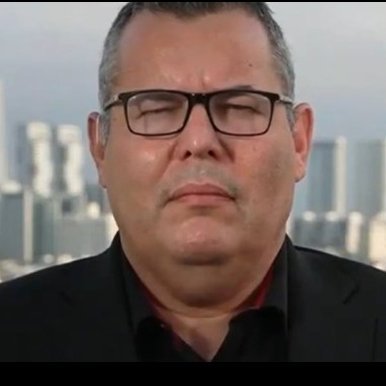
My interview CNN International with Becky Anderson regarding the latest escalation between the United States: First, if President Trump is determined to secure freedom of navigation through the Strait of Hormuz by force, he will eventually confront a fundamental reality: Iran is highly unlikely to relinquish control over the...

29,074 Aufrufe • vor 1 Monat •via X (Twitter)

0 Kommentare

Keine Kommentare verfügbar

Kommentare vom Original-Post werden hier angezeigt

Ähnliche Videos

Mu interview BBC News (World) regarding the situation at Hormuz Straits: The renewed tensions in the Strait of Hormuz should not come as a surprise. While President Trump argues that the United States emerged victorious from the conflict, Tehran appears to believe that it also achieved its core strategic objectives. From Iran's perspective, maintaining leverage in the Strait of Hormuz is essential. Iranian leaders understand that U.S. sanctions can be imposed or lifted at Washington's discretion, making control over or the ability to threaten maritime traffic one of the few enduring sources of strategic leverage available to Tehran. The current situation also reflects the limitations of a hastily negotiated understanding that, did not fully address two of the most significant potential spoilers: Lebanon and the Strait of Hormuz. The fundamental question is what the administration's long-term strategy toward Iran actually is. Washington may ultimately face difficult tradeoffs between pursuing a durable diplomatic agreement and seeking to fundamentally alter the balance of power in the Strait of Hormuz. If the objective is merely to conduct limited punitive strikes, they may have only a temporary effect on Iranian behavior while increasing the risk of undermining diplomacy. If, however, the objective is to fundamentally change the strategic reality in the Strait, that would likely require a far larger and more sustained military commitment, with significant costs and risks. The administration will therefore need to determine which objective it prioritizes most, because these different approaches may not be fully compatible. #IranWar‌

Danny (Dennis) Citrinowicz ,داني سيترينوفيتش

17,349 Aufrufe • vor 1 Monat

🚨🇺🇲🇮🇷🚢⚠️ The proposed Iran-Oman transit plan for the Strait of Hormuz is facing growing skepticism from the global shipping industry. Maritime executives warn that, in its current form, the arrangement could prove commercially and legally unworkable. According to Reuters, shipping industry representatives believe the proposed transit framework for the Strait of Hormuz is virtually impossible to implement as currently designed. Under the reported proposal, Iran would retain the authority to intervene in inbound vessel traffic, while outbound ships would travel along a route jointly administered by Iran and Oman. Oman would issue transit clearance only after notifying Iran. Industry officials say the biggest obstacle is Iran's reported demand for a transit fee equivalent to 5-7% of a vessel's cargo value. They warn that paying such a fee could be interpreted as violating U.S. sanctions and could also invalidate war-risk insurance coverage, exposing shipowners to significant legal and financial liabilities. Meanwhile, Iranian media report that, alongside the proposed transit fees, Tehran is also seeking to prohibit all commercial vessels linked to the United States and Israel from transiting the Strait of Hormuz as part of the ongoing negotiations with Oman. If implemented, the proposed measures would represent one of the most significant changes to commercial navigation in the Strait of Hormuz in decades, with potentially far-reaching consequences for global energy markets and international shipping. See the latest updates with us: Visioner

Visioner

31,059 Aufrufe • vor 25 Tagen

🇺🇸🇮🇷⚠️ Trump hoped reopening the Strait of Hormuz would give him an opportunity to declare victory and wind down the war with Iran, even without securing a nuclear agreement. Tehran, however, has dramatically raised the price of a deal. According to The Wall Street Journal, Iran is demanding the withdrawal of U.S. forces from the region, an end to the naval blockade, the lifting of sanctions, the release of frozen Iranian assets, and billions of dollars in war reparations before fully reopening the Strait of Hormuz. Those demands have significantly narrowed the Trump administration’s room for maneuver. Tehran reportedly believes Washington is increasingly eager to find an exit from the conflict and is therefore using its ability to disrupt the Strait of Hormuz, and consequently a crucial portion of global oil flows, as leverage at the negotiating table. The pressure is also growing inside the United States. Gasoline prices are hovering around $4 per gallon, while the approaching midterm elections give the Trump administration a strong political incentive to stabilize energy markets and reach an agreement with Iran. The situation leaves Washington facing an increasingly difficult calculation. Accepting Tehran’s sweeping demands would represent a major concession, while renewed military escalation risks further disruption of Hormuz and another surge in global energy prices. Iran appears to understand that pressure on the Strait directly translates into economic and political pressure on Washington, and Tehran is attempting to exploit that leverage to extract concessions it could never obtain under normal circumstances.

NSTRIKE

19,620 Aufrufe • vor 22 Tagen