Video yükleniyor...

Video Yüklenemedi

Ana Sayfaya Dön

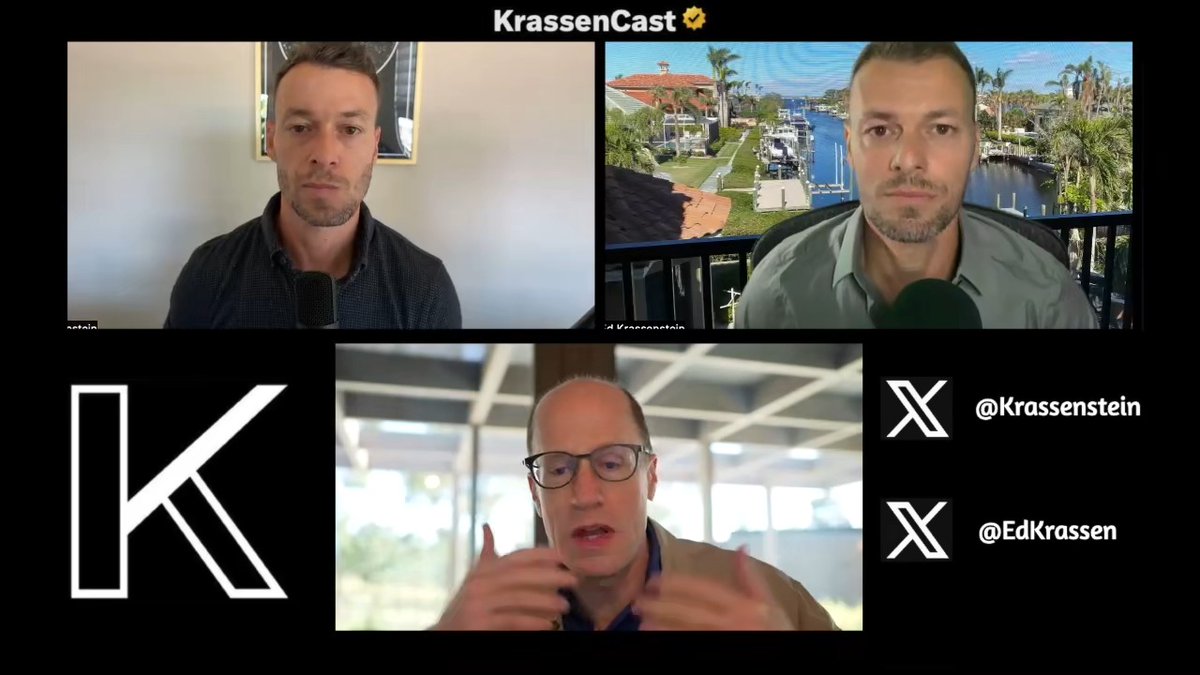
My interview with Dan Primack for the Axios dealmaker summit yesterday 0:44 We are in an LLM bubble 🫧🫧 2:13 Does it create risks for AI in general 2:57 Why is open-source important? 4:33 Why haven't we raised recently? 6:45 Is China winning not only in open-source but also...

20,127 görüntüleme • 9 ay önce •via X (Twitter)

0 Yorum

Yorum bulunmuyor

Orijinal gönderinin yorumları burada görünecek

Benzer Videolar

We interviewed Nick Bostrom, The author of NYT’s Bestseller “Superintelligence,” and one of the most influential experts on AI Risks. Timestamps: 2:11 - Will AI be used for Extreme Bad? What are the odds? 4:44 - What are the biggest concerns with AI? 6:16 - People are greatly underestimate what Super-intelligence will be. 7:19 - Can we trust anyone with creating a Super-Intelligent AI? 8:49 - Are the big AI companies taking AI safety serious enough? 10:39 - Are multiple AI systems undergoing the transition to super-intelligence at the same time a good or bad thing? 13:10 - How do we prevent AI from becoming biased like we saw with Google Gemini? 16:17 - Is there a danger of AI being too truthful or too opinionated? 18:10 - When do AI’s gain a moral status? How do we know? 19:40 - What is Truth for an AI? 22:37 - What has surprised Bostrom the most regarding AI in the past 10 years? 26:13 - Is AI moving faster or slower than Bostrom imagined 10 years ago? 26:38 - Do we see another AI Winter or AGI first? 28:21 - Is energy a limiting factor in AI? 30:00 - What is Deep Utopia? 33:18 - When will we reach Super-intelligence and Deep Utopia? 36:00 - Can a Deep Utopia be a problem for humanity? 39:29 - Could a Utopian society lead to the creation of a simulated reality as a way to escape? 42:28 - If we are in a simulation, is our consciousness simulated? 47:48 - Elon Musk or Sam Altman? 48:17 - Artificial Super-Intelligence before or after 2035? 49:40 - How can you get Nick Bostrom’s book “Deep Utopia?”

KrassenCast

380,725 görüntüleme • 2 yıl önce

AI models currently have a 50% chance of doing something that takes a human expert one hour. This doubles every 7 months. In 2 years? They could automate full workdays. In 4 years? A full month. I discuss the most important graph in AI today with Beth Barnes, the CEO of METR, which uncovered this rule of AI progress. Her bottom line: "It really doesn't seem like 2 years would be surprising for recursively self-improving AI." Beth also explains: where company safety testing fails, why there are no true closed-weight models, AI undermines leading powers, why she's come around on open weighting, and why models might be about to start playing dumb much more often. Enjoy! Available on the 80,000 Hours Podcast in all apps. Links below. 1:51 Can we see AI scheming in the chain of thought? 12:50 Alignment faking 17:33 We have to test models before they're even used inside AI companies 31:56 Each 7 months models can do tasks twice as long 51:31 METR's research finds AIs are solid at AI research already 58:18 AI may turn out to be strong at novel and creative research 1:07:55 Recursively self-improving AI might even be here in two years 1:14:29 Could evaluations backfire? 1:39:55 Do we need external auditors doing AI safety tests? 1:54:09 Why not work at AI companies 2:08:40 The new more dire situation has forced changes to METR's strategy 2:21:49 Overrated: Interpretability research 2:32:55 Overrated: Major AI companies' contributions to safety research 2:39:15 Could we ban using AI to enhance AI, or is that just naive? 2:45:31 Open-weighting models is often good 2:50:22 What we can learn about AGI from the nuclear arms race 3:10:43 AI is more like bioweapons because it undermines the leading power 3:42:09 What research METR plans to do next

Rob Wiblin

93,669 görüntüleme • 1 yıl önce