Video yükleniyor...

Video Yüklenemedi

Ana Sayfaya Dön

My script turned $100 into $60,535 in one month I decided to build my own script with the help of Claude It took me exactly one day and the result was worth it Literally overnight the script made $2,542 The average win rate of the script is 68% Copytrade:...

10,547 görüntüleme • 3 ay önce •via X (Twitter)

0 Yorum

Yorum bulunmuyor

Orijinal gönderinin yorumları burada görünecek

Benzer Videolar

My OpenClaw agent woke me up at 3:47 AM with one message: “6 markets resolving in the next 90 minutes. Need approval for $12K.” I typed “yes” and went back to sleep. Woke up to +$43,800. For the past 9 days I’ve been running an agent that hunts timezone arbitrage on Polymarket. The setup is simple. I gave the agent access to global sources: • Japanese government RSS • EU parliament streams • Australian financial wires • Middle East flight trackers • Asian central bank announcements Then told it: “Alert me when a market resolving during US sleep hours (2–6 AM EST) shows >30% edge.” At 3:47 AM it detected 6 markets where the outcome was already clear in local sources — but Polymarket prices hadn’t moved yet. Copytrade → wallet: Examples: • Japan rate decision — official signals showing ~68%, market at 23¢ • EU emergency vote — livestream showing YES ahead, market 31¢ • Korea policy update — government RSS confirmed, market 19¢ • Australia trade deal — minister quote out, market 27¢ • UAE production cut — OPEC notes public, market 15¢ • Singapore regulation vote — parliament session live, market 22¢ Total capital deployed: $12,000 By 7:30 AM all six markets had resolved. Entries between 15¢–31¢ Payouts 95¢–$1 Final result: +$43,800 The edge is simple: Most Polymarket traders are in the US. But global events resolve while the US is asleep. By the time America wakes up — the markets are already closed.

Philanthrop

67,835 görüntüleme • 3 ay önce

my OpenClaw woke me up at 3:47 AM with one message: "found 6 markets resolving in next 90 minutes while US is asleep, need approval for $12K deployment" i typed "yes" and went back to sleep woke up to +$43,800 been running an agent that hunts timezone arbitrage for 9 days never thought it would actually wake me up the setup: gave OpenClaw access to global news feeds in different timezones: > Japanese government RSS > European parliament calendars > Australian financial wires > Middle East flight trackers > Asian central bank announcements told it: "find markets that will resolve during US sleep hours (2 AM - 6 AM EST), alert me if edge exceeds 30%" what happened at 3:47 AM: agent detected 6 markets resolving between 4 AM - 6 AM across different timezones all had same pattern: > crowd priced them like normal markets > but resolution would happen while americans sleep > official sources in those countries already showing signals the alert: > "Japan rate decision - 68% YES per BOJ leak, polymarket at 23¢" > "EU emergency vote - live stream shows YES winning, polymarket at 31¢" > "South Korea policy - government RSS confirmed, polymarket at 19¢" > "Australia trade deal - minister quoted 2 hours ago, polymarket at 27¢" > "UAE production cut - OPEC meeting notes public, polymarket at 15¢" > "Singapore regulation - parliament session live, polymarket at 22¢" - total edge detected: $43K potential - window: 90 minutes before -capital needed: $12,000 my phone buzzed i opened telegram half asleep saw "approve or miss" typed "yes" closed my eyes 7:30 AM - woke up to notifications: all 6 markets resolved during asian/european morning > US traders woke up to already-closed markets > my positions entered at 15¢-31¢ > all resolved at 95¢-100¢ profit breakdown: - Japan: $8,200 - EU: $6,900 - Korea: $11,400 - Australia: $7,100 - UAE: $5,800 - Singapore: $4,400 - total: +$43,800 checked the logs: agent had been watching these markets for 8-14 hours tracking official sources in real-time waiting for US to go to sleep then finding the moment when: > outcome is basically confirmed overseas > but US crowd hasn't updated prices > resolution is imminent the edge is stupid simple: polymarket is 70% american traders world events don't care about EST timezone while you sleep, markets resolve if you want to copy wallets running this 24/7: am i the only one making money while literally unconscious?

ZER

3,082,998 görüntüleme • 3 ay önce

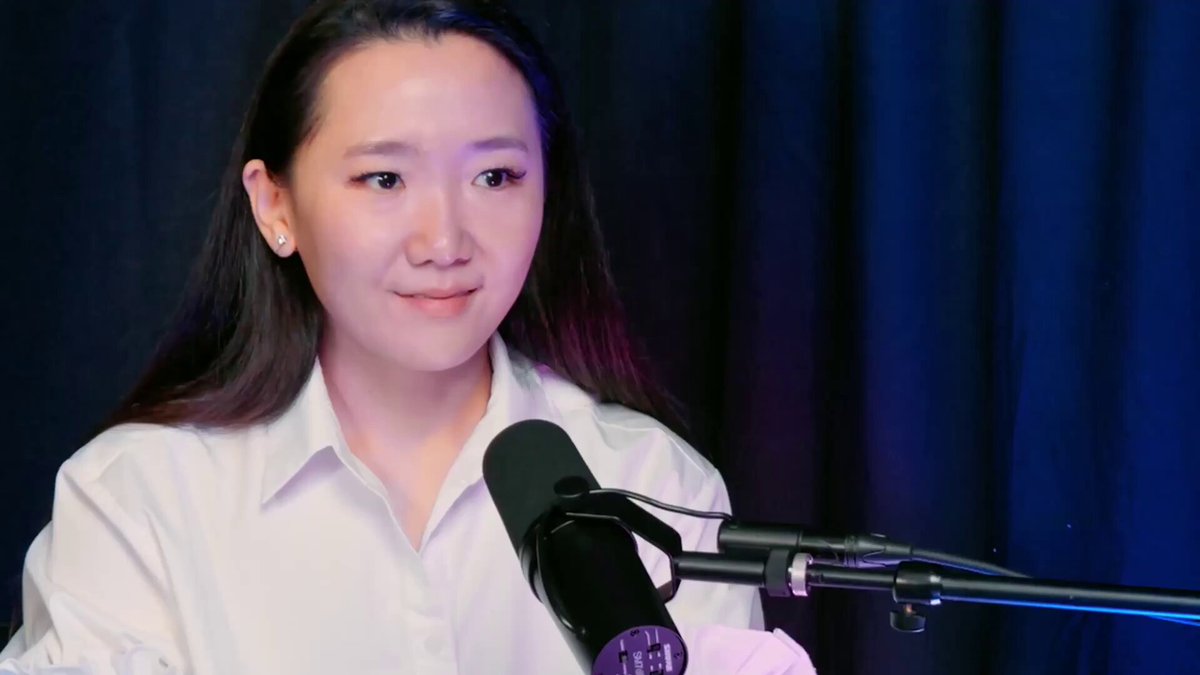
When I was 8 years old, growing up in Taipei, I called my aunt in San Francisco and asked: What is the best science and technology school in the world? She said MIT. I went on the internet, found it, and decided that was where I was going. All because of a Steven Spielberg movie about a little robot boy who wanted to find his mom. I grew up as an only child. What stayed with me from that movie was not just the technology. It was the possibility that one day, an artificial companion could understand how I felt. That was the first time I remember being moved by a technology that could change how humans experience reality. Years later, I did get to MIT. I studied AI before it became obvious. I became a machine learning engineer, built my first company, joined a $3.5B VC fund, left to build again, failed, started again, moved to New York alone, and built through one of the hardest crypto markets as a solo founder after the collapse of FTX. I kept going because I have always been drawn to technologies that change how humans understand the world. AI was the first version of that. Crypto and prediction markets are the next. I believe the future I am building toward is inevitable. The only question is whether I get to be one of the people who helps realize it. That future is a world where markets become information-first. The old model of trading was asset-first. It rewarded people with capital, financial education, institutional access, and better tools. But the next generation of markets will be shaped by information flow, narrative, attention, politics, culture, sentiment, and collective belief. Prediction markets make this shift obvious. They are one of the first asset classes where the value is informational, not purely financial in the traditional sense. Your edge does not have to come from technical analysis or a traditional finance background. Your edge can come from knowing something before it becomes consensus. From seeing reality shift before the market prices it in. Someone with firsthand knowledge of an unfolding event can have more alpha than an institution with a much bigger balance sheet. They turn belief into price. But price alone is not enough. Polymarket shows what the market thinks will happen. ARES is built to understand why the market is changing. We are building an information-first trading platform for prediction markets and other narrative-driven assets. One that does not just show traders what is moving, but helps them understand why odds are shifting, why narratives are forming, and why the future is moving in a certain direction. But the bigger vision is not just a better trading terminal. We want to turn every trade into an information object. Every position can become a piece of content. Every market view can become a signal. Every trader can build a reputation around conviction and accuracy. Most feeds rank information by engagement. Who got the most likes. Who already has the biggest audience. Markets allow us to rank information differently. How much are you willing to stake on what you believe? How often have you been right? That creates a fundamentally different kind of media feed. One powered by conviction, track record, and market incentives. One that becomes harder to fake. One that can help people understand not just what the market thinks will happen, but why reality is changing. I also believe prediction markets are one of the few markets where humans can still have a real edge over AI. AI knows what is already on the internet. But humans experience reality before it becomes data. We see things before they become headlines. We hear things before they become reports. We feel shifts before they become consensus. If those signals can be priced, organized, and made legible, then more people can gain access to financial opportunity, information agency, and power. That is what Ares is building toward. I spent years watching founders from the VC side of the table, always thinking: I wish that was me. Now it is. I talked about this journey and the thesis behind Ares in my conversation with Dmitry on Predict Time If you are building, trading, investing, or thinking deeply about prediction markets and information markets, I would love for you to watch it. And if you want to collaborate on what we are building, contribute to the vision, or join the team, we are always open to exceptional people across functions. DMs are open.

Morgan Lai

302,663 görüntüleme • 2 ay önce

Debunking Coffeezilla’s prediction market claims In his recent video “prediction markets aren’t just gambling,” Coffeezilla made the three untrue or misleading claims below: 1) “The only way you get the news early, by the way, is if it’s insider trading.” 2) “All these prediction markets are doing is aggregating sentiment on the news.” 3) “The only way you can get something not in the news from these markets is if someone with non-news information trades, which is AKA inside information.” I want to start by saying that I’ve really enjoyed Coffeezilla’s content in the past, and I appreciate him blacking out my name in the tweet he screenshared. I also watched the full video and agreed with parts of it (and disagreed with other parts). That said, these three claims are egregiously incorrect, and I want to correct the record. I hope Coffeezilla reads this and reconsiders these points 1) “The only way you get the news early, by the way, is if it’s insider trading.” Merriam-Webster defines insider trading as “the illegal use of information available only to insiders in order to make a profit in financial trading.” This claim is wrong because it is clearly possible to get information early in entirely legal ways. For example, in CPI inflation markets, someone might notice prices rising on goods they regularly buy, or a sophisticated trader might aggregate pricing data across many products and form a forecast before the CPI release. Journalists may later report on inflation, but the information existed beforehand. Markets also react faster to sudden events, like a Trump Truth Social post or an earthquake, than journalists do. Traders are financially incentivized to react in seconds; journalists are not. Recent high-profile examples include Nobel Peace Prize, Spotify, and Time POTY markets, where traders had information before the news broke. In the Nobel case, there was disinformation claiming insider trading, but as far as most observers can tell, the information was obtained legally via web-scraping. Even if the Nobel Committee disliked it, legally obtained information is fair game. 2) “All these prediction markets are doing is aggregating sentiment on the news.” This is easy to debunk. Prediction markets do aggregate information, but not merely sentiment or headlines. That’s likely why CNN and CNBC partnered with Kalshi. News is filtered through editors, incentives, and bias. Taking headlines at face value is not a winning trading strategy. Savvy traders treat news as one input among many variables. If a headline says “Poll X shows Clinton up 10 points,” markets may adjust, but they don’t blindly price the headline. They factor in other variables. I’d argue markets are often smarter than the news. Domer❤️‍🔥 has even argued that Fed markets on Kalshi are more accurate than CME due to traders like himself making them more efficient, and I think he’s right. 3) “The only way you can get something not in the news from these markets is if someone with non-news information trades, which is AKA inside information.” Merriam-Webster defines insider information as “information not known to the public that one has obtained by virtue of being an insider.” You can obtain non-news information without being an insider. This overlaps with point one, but here’s a concrete example. For the recent TN-07 special election, I traveled to TN-07 and spoke with voters leaving early-voting sites and with everyday residents. I learned how little awareness there was that a special election was even happening, and how voters were thinking about the race. That information wasn’t in the news, but it informed how I traded. I’m not an insider. This was “alpha hunting” through firsthand observation. Almost every serious prediction market trader has similar stories. This is certainly not "insider trading." I’m genuinely curious to hear your thoughts, Coffeezilla, and hope for a good-faith dialogue. I hope you are doing well!

Benjamin Freeman

80,021 görüntüleme • 7 ay önce

On Polymarket this bot outperforms luck. In 3 weeks it turned -$82 into $67K. A single algorithm executed 524 trades in one 10-min window. → Account: When I first analyzed the trade history I thought the API was malfunctioning. You never see over 500 orders in one candle unless the system is broken. But I checked the timestamps. It was not a glitch. It is a flawless mathematical strategy. While most traders panic about where Bitcoin is going next, this bot plays a superior game. It buys the Yes side and the No side simultaneously. It sounds impossible to make money this way but here is the logic. During the first 5 minutes the market is confused and spreads are wide. It buys Yes at 47 cents. It buys No at 48 cents. It sells them back seconds later for a tiny profit. It acts as a Market Maker. It harvests the chaos. It does not care about the direction yet. It is just collecting the dust from your hesitation. But then the real move happens. Around minute five the Bitcoin trend becomes obvious on the spot market. The bot instantly changes behavior. It stops hedging. It dumps the loser immediately. Then it aggressively loads the winner. It starts buying massive clips. 120 shares here or 500 shares there. It chases the price all the way up to 85 cents or 93 cents. By the end it holds 7,000 shares of the winning outcome. The stats are ridiculous. It climbed out of debt to generate $67K pure profit. 95% win rate. Normal traders try to guess. This bot waits for certainty and then extracts maximum value. You need to stop staring at the charts and start tracking the flow. Is this the new reality of trading or just an overly aggressive script?

Blaze

43,480 görüntüleme • 6 ay önce

🚨 THIS IS CRAZY — someone turned $6 into nearly $4 MILLION in one week. This is not fake. Not clickbait. If you trade on Polymarket, you have to see this. He started with roughly $6–$7 and somehow scaled it to ~$4M. No insider access. No Trump or Musk connections. Just a developer who wrote his own trading script. Profile - Copytrade - I went through his code and honestly — it surprised me. No massive datasets. No insane infrastructure. Nothing even close to rocket science. I spent about 4–6 hours breaking down the entire setup. His full strategy: 1. “Free money” via NO bets The bot targets near-impossible outcomes and stacks countless tiny, high-probability wins. Not gambling — more like systematic risk harvesting. 2. Logic arbitrage If event A clearly implies event B and the market hasn’t adjusted yet, the bot enters instantly. While you’re still reading the news, the edge is already gone. Humans can’t compete with that speed. 3. The real edge: sports & politics These markets are flooded with retail money and emotional reactions. The bot feeds on inefficiencies, clipping small profits from every mismatch. Scale is everything Tens of thousands of micro-trades every month. Each worth cents. Together, they compound into seven figures. Bottom line There’s a silent bot war already happening on Polymarket. Crypto markets are crowded, slow, and fee-heavy. Sports & politics are still chaotic — and chaos is where bots print money.

Discover

537,116 görüntüleme • 5 ay önce