正在加载视频...

视频加载失败

NASA's solar sail spacecraft is testing a new way to navigate the solar system using the power of sunlight. The spacecraft was launched aboard a Rocket Lab rocket and moves without conventional fuel. In the future, this technology could allow spacecraft to reach Mars in as little as 26 days.

38,100 次观看 • 5 天前 •via X (Twitter)

0 条评论

暂无评论

原始帖子的评论将显示在这里

相关视频

So did Neil deGrasse Tyson’s mentor, Carl Sagan prefer non-government exploration and colonization of space? A robust and emphatic, yes. But Neil has somehow concluded a private company funding to space is of no financial value and should be done through government programs that has kept humans grounded since Apollo. Neil has done significant damage to himself and popularization of science in general and I am more than disappointed. So I am speaking up. Here are the receipts: Sailing The Seas Of The Cosmic Oceans The Planetary Society’s Solar Sail Launch was a private funded space launch. I know Nevis not only did I donate to make this happen a number of us met with the team to think out the process. Carl Sagan, the renowned astrophysicist, cosmologist, and science communicator, made significant waves in the scientific and space exploration communities when he announced his intention to pursue the development of solar sail technology using private funds in collaboration with Russian spaceflight capabilities. Solar sails, which harness the momentum of photons from sunlight to propel spacecraft, had long been a topic of interest for Sagan, who recognized their potential for enabling long-term, low-cost exploration of the solar system and beyond. The concept of solar sailing dates back to the early 20th century, but it gained public attention during the 1970s and 1980s, thanks in part to Sagan’s advocacy. He often discussed the promise of solar sails in making space exploration more sustainable and accessible. His vision for a solar sail program crystallized in the 1990s, during a period of renewed interest in private-public partnerships and international collaboration in space exploration. Sagan’s announcement marked a major turning point in the movement to make solar sail technology a reality. In the early 1990s, Sagan began to explore the idea of privately funding a solar sail spacecraft. At the time, NASA and other national space agencies were constrained by tight budgets, making it difficult to prioritize experimental technologies like solar sails. Sagan and supporters, proposed that private financing could circumvent these limitations and accelerate progress. Sagan reached out to Russian space agencies, which had decades of expertise in rocketry and a surplus of launch vehicles following the dissolution of the Soviet Union. By 1994, Sagan had partnered with the Planetary Society, an organization he co-founded in 1980, to spearhead the development of a solar sail mission. The project: a lightweight spacecraft equipped with reflective sails that could demonstrate the feasibility of solar propulsion. With funding secured from private donors and philanthropic organizations, the program quickly gained momentum. In parallel, Sagan and his team negotiated with Russian aerospace contractors to secure a launch vehicle. The Russian space program, eager to find new applications for its technology, agreed to provide a converted missile as the launch platform for the solar sail mission. By 1995, initial designs for the solar sail spacecraft had been completed. The spacecraft, later named "Cosmos 1," was designed to use ultra-thin reflective materials to capture the momentum of sunlight. Testing of the sail and deployment mechanisms took place in the mid-1990s. Tragically, Carl Sagan passed away in December 1996, before he could see the project come to fruition. By 1999, construction of the Cosmos 1 spacecraft was completed, and the launch was scheduled to take place in 2001 using a Russian Volna rocket. While the initial launch attempt failed due to a malfunction in the rocket’s booster, the project inspired further advancements in solar sail technology with successful missions by organizations like NASA and JAXA in subsequent years. Carl’s vision lives on with the private funding efforts of Elon Musk. We endeavor to be bold to venture past humanity’s largest mountain on promethean fire. With Godspeed…

Brian Roemmele

669,665 次观看 • 1 年前

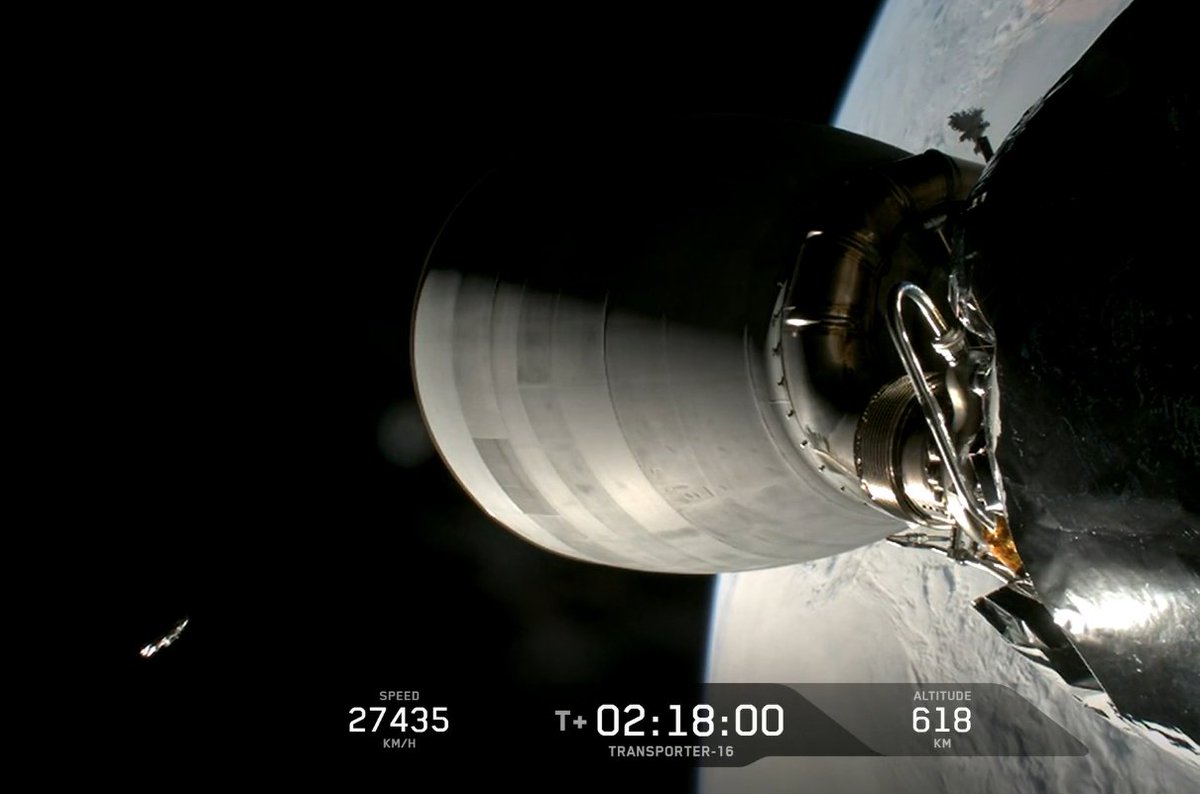
I'm excited to announce we have achieved our Tier 1 mission success criteria and have begun gathering a tremendous amount of data on how this brand new spacecraft performs. On March 30th, 13:17:08Z, the Gravitas spacecraft separated from the SpaceX Transporter-16 stack to begin its mission as one of the highest power free-flying satellites ever launched. Immediately after separation, the spacecraft autonomously: - Executed detumbling maneuvers - Established two-way communications with the ground (on our very first ground station pass) - Deployed its 20kW solar arrays - Slewed to a safe and stable attitude to await further ground commands These actions alone are a testament to the incredible work of our in-house engineering, software, and GNC teams to build a robust spacecraft. Since then, our operations team completed all initial system activations and checkouts, confirming the vehicle is in a power positive and thermally stable state with no major anomalies observed at this time. We completed this phase of the mission ahead of schedule. Next up we will be powering up and downlinking data for all payloads aboard the Gravitas spacecraft in support of our customers and partners while continuing to put the spacecraft through its paces. As we noted ahead of launch: The goal of this mission is to experiment and push our systems to the limit to inform future missions. I look forward to sharing more on our successes and challenges as the mission proceeds. Video of our satellite below; link to full T-16 webcast:

Neel Kunjur

89,704 次观看 • 3 个月前