Loading video...

Video Failed to Load

Go Home

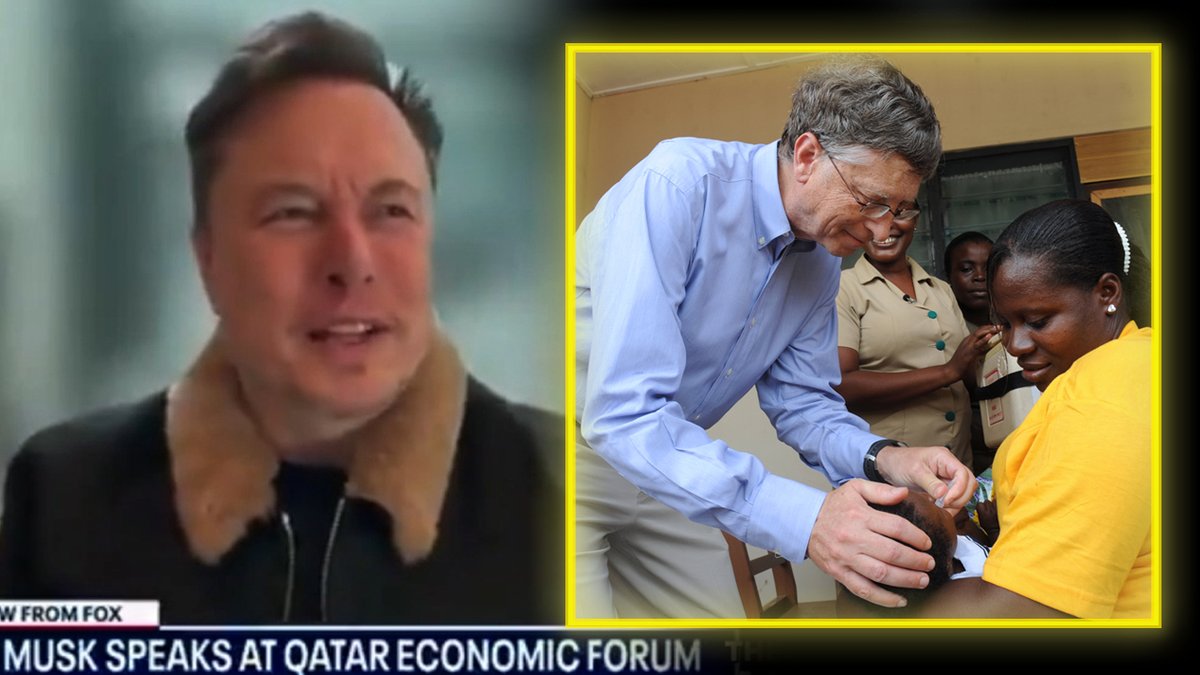
Naval Ravikant once shared a story about Elon Musk confronting Bill Gates after learning that Gates had shorted Tesla, a position amounting to roughly 1% of Tesla’s total shares Over time, that bet may have already cost Gates more than $10 billion. If Tesla becomes the world’s most valuable...

326,798 views • 7 months ago •via X (Twitter)

0 Comments

No comments available

Comments from the original post will appear here

Related Videos

Naval Ravikant tells his favorite Elon Musk story “There was a story that I read about [Elon] that really affected me,” Naval begins. “He was talking to Bill Gates, and Bill Gates had just taken out some huge short on Tesla.” “Why would you do that? Why would you short Tesla?” Elon asked. Bill Gates replied, “I talked to my financial advisors, looked at the math, and it’s overvalued. So I’m going to make money on the short.” To which Elon responded: “What do you care about making money? I thought you were into electric cars and climate change and saving the world?” Elon walked away in disgust and never talked to Bill Gates after that. Naval comments: “That’s when I realized Elon is a purist. He means what he says. Money is a tool for him to get to where he’s trying to go. And so I take him at face value… A lot of people set these audacious goals to inspire people, but they don’t really mean it. Elon I take at face value. I really do think he intends to get to Mars. I don’t think he’s joking about that.” He continues: “Elon doesn’t want to go down in history as the electric car guy or even the guy who saved America. He wants to go down as the guy who got humanity to the stars. And I’ll give him more credit than that. I don’t even think he wants to go down as the, ‘I got humanity to the stars guy.’ He’s just like, ‘I want to get to the stars, and I have to make it happen in this lifetime’… That’s so inspirational. I think that drives everything. And I think the government was just a thing that got in his way.” Video source: Scott Adams (2024)

Startup Archive

95,825 views • 11 months ago

Naval Ravikant tells his favorite Elon Musk story “There was a story that I read about [Elon] that really affected me,” Naval begins. “He was talking to Bill Gates, and Bill Gates had just taken out some huge short on Tesla.” “Why would you do that? Why would you short Tesla?” Elon asked. Bill Gates replied, “I talked to my financial advisors, looked at the math, and it’s overvalued. So I’m going to make money on the short.” To which Elon responded: “What do you care about making money? I thought you were into electric cars and climate change and saving the world?” Elon walked away in disgust and never talked to Bill Gates after that. Naval comments: “That’s when I realized Elon is a purist. He means what he says. Money is a tool for him to get to where he’s trying to go. And so I take him at face value… A lot of people set these audacious goals to inspire people, but they don’t really mean it. Elon I take at face value. I really do think he intends to get to Mars. I don’t think he’s joking about that.” He continues: “Elon doesn’t want to go down in history as the electric car guy or even the guy who saved America. He wants to go down as the guy who got humanity to the stars. And I’ll give him more credit than that. I don’t even think he wants to go down as the, ‘I got humanity to the stars guy.’ He’s just like, ‘I want to get to the stars, and I have to make it happen in this lifetime’… That’s so inspirational. I think that drives everything. And I think the government was just a thing that got in his way.” Source: Scott Adams (Nov 2024)

Startup Archive

32,145 views • 2 months ago

THE EPSTEIN-GATES CONNECTION. Elon calls out Bill Gates making comments about children when Gates himself had an extensive relationship with Jeffery Epstein and sets the record straight about the amount of fraud occurring through USAID and how no programs were cut that help people around the world. Elon makes a point stating that he would never want Bill Gates to even babysit his own kids. The relationship between Epstein and Gates is long, odd, and mysterious, to say the least. First, like Elon said, Gates has no room to talk when it comes to children. Bill Gates has used almost every 3rd world country as his own scientific laboratory, testing out numerous drugs and vaccines, which has injured and unalived numerous children all across the world. Next, you have this odd relationship with Epstein and gates that goes beyond "business." First of all, why was Bill Gates taking multiple trips on his plane and to the island more than 6x, which has been confirmed on the flight logs? Also, why did Gates continue his relationship with Epstein long after he was first arrested and convicted of sexual crimes against a minor? Gates was also in multiple business dealings with Epstein and in the process of starting a multi-billion dollar foundation as well. This also comes well after Epstein was confirmed to be a convicted child sexual predator. Everything is highly suspicious between Gates actual activities and business dealings with Epstein. The pieces start adding up as to a major contributing factor as to why Bill and Melinda Gates got a divorce. You can bet multiple Epstein island visits played a major role in that. Then you have Epstein's "suic*de," which Gates also made a very strange comment about at the end of the video. Did he have something to do with it? The writing is on the wall. One thing is for sure, there are no coincidences between Epstein and Bill Gates relationship, especially when traveling to Little St. James, not once, but 6 times. No wonder Bill Gates "donated" $50 million to the Harris campaign. He knew if Trump won the election, his time was up. Well, it looks like Trump won. Guess what Bill? Your time is up.

The SCIF

48,265 views • 1 year ago

.Naval: There was a story that I read about Elon Musk that really affected me, which was when he was talking to Bill Gates, and Bill Gates had just taken out some huge short on Tesla. It was like a billion dollar short or something. And, Elon was like, “Why would you do that? Why would you short Tesla?” And Bill goes, “Well, you know, I talked to my financial advisors and I looked at the math and there’s no way it’s overvalued. And so I’m going to make money on the short.” And Elon goes, “What do you care about making money? I thought you were into electric cars and climate change and saving the world. What are you doing trying to save a few bucks and betting against Tesla?”. And he just walked away in disgust. And I think he never talked to Bill Gates after that. And that’s when I realized, like, Elon’s a purist. He means what he says. The money is a tool for him to get what he’s trying to do. And so I take him at face value, which is the crazy thing, because a lot of people who set these audacious goals to inspire people, you kind of know they don’t really mean it. Elon, I take at face value. So I really do think he intends to get to Mars. I don’t think he’s joking about that. And I think he means to get there within a defined window of time. And I don’t think it’s just like an inspirational, faraway goal. I think he’s very, very concretely going to do whatever it takes. Because Elon doesn’t want to go down in history as the electric car guy or even the guy who saved America guy. He wants to go down as a guy who got humanity to the stars. Again, I’ll give him more credit than that. I don’t even think he wants to go down as the “I got humanity to the stars” guy. He’s just like, “I want to get to the stars, and so I have to make it happen in this lifetime. The only way that I get to experience the science fiction world in my head is if I get to the stars.” And so that’s so inspirational. I think that drives everything. So I think the government was just a thing that got in his way.

Arjun Khemani

2,736,337 views • 1 year ago

The smartest men in the world bet everything on the right idea. They went bankrupt. Elon Musk had the same idea and built a monopoly. Marc Andreessen just explained why. Starlink crossed 10 million subscribers. Consumer satellite internet was a graveyard before Musk ever touched it. Bill Gates tried it at the peak of Microsoft’s power. Teamed up with Craig McCaw and launched Teledesic. Andreessen: “Complete catastrophe, total bankruptcy, complete disaster.” Then Motorola. The company that built American cellular telephony. They created Iridium. Andreessen: “Classic business school case study of just complete disaster, capital destruction.” Unlimited capital. The best engineers money could buy. A vision of the future that turned out to be dead right. Both went to zero. When Musk announced Starlink, the industry waited for the funeral. Andreessen: “Elon’s like, ‘I know, I’m going to do number three of those.’ Starlink. As a side project at the rocket ship company.” They missed the inversion. Musk wasn’t building a satellite company. He was building a railroad. Andreessen: “If the rockets are reusable, we’re going to be launching them all the time. And then the question becomes, what’s going to go in the rockets?” This is the fracture line between a bankruptcy and a monopoly. Gates paid someone else to reach orbit. Motorola paid someone else to reach orbit. The cost of the rocket killed the economics before a single customer ever logged on. Musk owned the rocket. If he didn’t fill it with his own cargo, the trains ran empty. So he invented the cargo. Starlink was never the product. It was the freight. He didn’t build infrastructure to serve a business. He invented a business to feed his infrastructure. That is the inversion no one studied. Andreessen: “It’s a formula that captures both sides of it, and it may be like the least studied and understood thing I know of in the world right now.” Three men. Same vision. Same ambition. Same bet. Two are case studies in destruction. One owns a global monopoly. The idea was identical. The physics underneath it were not. Gates wasn’t wrong about the future. He was standing on the wrong floor of it. Musk didn’t build a better satellite. He built the floor it rose from. Right now, across every frontier that matters, the floor of the next century is being poured. Almost nobody is looking down.

Dustin

52,021 views • 3 months ago

Bill Gates walked into the Tesla Gigafactory and declared the long-range electric semi impossible. The truck was already in production. Pepsi was running it on live routes. Musk: “I was like, well, but we literally have them. And you can drive them. And Pepsi is literally using them right now.” Gates was standing inside the factory that built the vehicle he was dismissing. It existed. It was moving freight. Musk: “He’s like, ‘No, no, it doesn’t work, it doesn’t work.’ And I’m like… I’m kind of stuck here.” Musk didn’t argue. He asked for the math. Musk: “You must think we can’t achieve the energy density of the battery pack, or that the watt-hours per mile of the truck is too high. Which one of those numbers do you think we have wrong, and what numbers do you think are correct?” Gates didn’t have wrong numbers. He had no numbers. Musk: “He didn’t know any of the numbers.” The co-founder of Microsoft walked into an operating factory, stood next to a truck hauling Pepsi’s freight, and declared it impossible without a single figure. No energy density. No efficiency metric. No math. Just conviction wearing a $130 billion net worth as a credential. Musk: “Doesn’t it seem that it’s perhaps premature to conclude that a long-range semi cannot work if you do not know the energy density of the battery pack or the energy efficiency of the truck chassis?” One question. Nowhere left to stand. Musk: “You’d think he’d be really quite strong in the sciences. But actually, he is not strong in the sciences. It is really surprising.” Gates built his empire on software. Abstraction. Code that never has to satisfy a physics equation. Musk builds in atoms. Battery cells have energy densities. Truck chassis have drag coefficients. A semi either makes the route or it doesn’t. There is no patch. Physics does not negotiate. Thirty years inside abstraction and a man starts believing his intuition applies everywhere. It doesn’t. The truck exists. The routes are logged. Pepsi is running them. Gates declared it impossible and couldn’t produce the math to prove it. The truck already had.

Dustin

609,676 views • 4 months ago