Loading video...

Video Failed to Load

Go Home

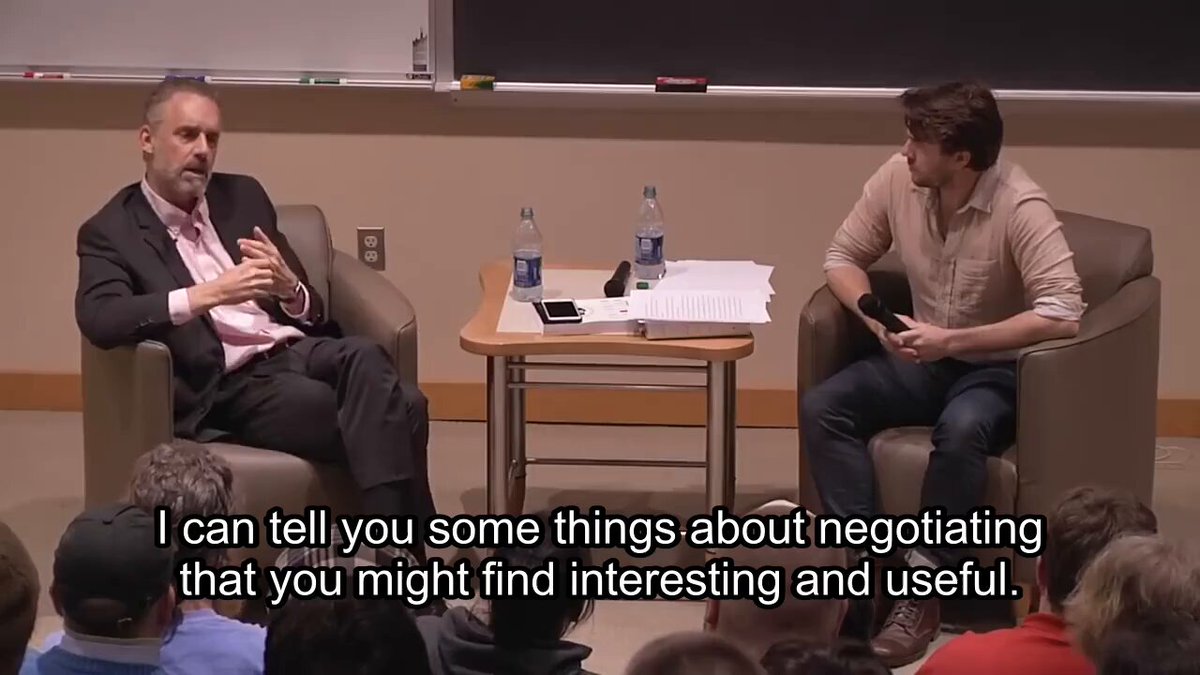
Naval Ravikant reveals the framework for finding the life you were actually built for "2,000 years ago you're born on a farm. Your choices are very limited. Now you can wake up and move to a different city. You can switch careers, switch jobs, change the people you're with"...

49,318 views • 1 month ago •via X (Twitter)

0 Comments

No comments available

Comments from the original post will appear here

Related Videos

Naval Ravikant: "The only true test of intelligence is if you get what you want out of life" "There are two parts to that. One is getting what you want, so you know how to get it. The second is wanting the right things, knowing what to want in the first place. I could want to be a 6'8" basketball player and I'm not going to get that. That's wanting something you can't get. But there's also wanting something that's a booby prize, prizes that are just not worth having, or that create their own problems." Naval explains how people end up in places they never meant to be: "If you're not careful, you can end up in a place in life not only that you don't want to be, but one you didn't even mean to get to. Usually people end up there because they're going on autopilot with societal expectations. Or out of guilt. Or out of mimetic desire, our desires are picked up from other people. Go to law school, go to med school, go to business school. Or it might be what your parents expect. Guilt is just society's voice speaking in your head so you'll be a good little monkey." He shares a problem most people have: "We run on these four-year cycles. You join a startup, you vest over four years. College is four years. High school is four years. You go to law school, that's a 5-year cycle. You become a lawyer, that's a 40-year cycle. These are very long cycles. But the amount of time we spend deciding what to do and who to do it with? Very short. We spend one month deciding on a job where we're going to be for 10 years." Naval's rule: "If you're making a four-year decision, spend a year thinking it through. Really thinking it through. 25% of the time." He explains the Secretary Theorem: "It turns out the optimal time to search is about a third. By a third of the way through, you've seen enough to know what the bar is. Then anybody who meets or exceeds that bar is good enough. But here's the key: it's not time-based. It's iteration-based. You need to take opportunities quickly and bail out quickly. If you look at failed relationships, the biggest regret is usually staying after you knew it was over." Naval reframes the 10,000 hour rule: "Malcolm Gladwell popularized 10,000 hours to mastery. I'd say it's actually 10,000 iterations to mastery. Iteration is not repetition. Repetition is doing the same thing over and over. Iteration is modifying it with learning and doing another version. That's error correction. If you get 10,000 error corrections in anything, you will be an expert." On pessimism vs. optimism: "You want to be skeptical about specific things, every specific opportunity is probably a fail. But you want to be optimistic in the general. Something in here is going to work out. If something fails, it was a learning experience. It was an iteration. As long as you learned something, it's a win. You don't want to jump into the first thing. But once you find the match, you have to be willing to go all in. Move your chips to the center of the table." He concludes: "Most people are stuck in this gray bit. 'I'm half in, but I don't really know.' That doesn't work. It's a barbell strategy, black or white. Explore quickly, cut losses fast. Then when you find the right thing, compound into it."

Jaynit

74,340 views • 4 months ago

Naval Ravikant on why it's 10,000 iterations, not 10,000 hours: "The only true test of intelligence is if you get what you want out of life. And there are two parts to that: one is getting what you want, so you know how to get it. And the second is wanting the right things, knowing what to want in the first place." Naval believes most people are proceeding unconsciously through life. As he puts it: "If you're not careful you can end up in a place in life not only that you don't want to be, but one that you didn't even mean to get to. Usually, people end up there because they are going on autopilot with societal expectations or people's expectations. Out of guilt or mimetic desire, our desires are picked up from other people." On how little time we spend deciding: "We run on these four-year cycles. You go join a startup, you vest your stock over four years. College you go for four years, high school you go for four years. These are very long cycles, the amount of time we spend deciding what to do and who to do it with? Very short. Very, very short." He continues: "We spend three months deciding, one month deciding on a job where we're going to be for 10 years or 5 years. People decide frivolously which city to live in and that's going to decide who their friends are, what their jobs are, their opportunity, their weather, their food supply, their air supply, quality of life. It's such an important decision but people spend so little time thinking it through." His rule: "I would argue that if you're making a four-year decision, spend a year thinking it through. Like really thinking it. 25% of the time." On the secretary theorem: "The optimal time to search is somewhere around a third of the way through. You take the best person you've worked with and try to find someone that good or better. By the time you've got about a third of the way through, you have seen enough that you now have a sense of what the bar is. Then anybody who meets or exceeds that bar is good enough." But here's the catch: "It's actually not time-based; it's not based on one-third of the time, it's iteration-based. The number of candidates, the number of shots you took on goal. So you want to have lots and lots of iterations. You need to bail out quickly, and you need to be decisive quickly." On failed relationships: "If you go back and you look through failed relationships, probably the biggest regret will be staying in the relationship after you knew it was over. The moment you knew it wasn't going to work out, you should have moved on." His reframe of Malcolm Gladwell's 10,000 hours: "I would say it's actually 10,000 iterations to Mastery. It's not actually 10,000; it's some unknown number, but it's about the number of iterations that drives a learning curve. Iteration is not repetition—repetition is doing the same thing over and over. Iteration is modifying it with a learning and then doing another version of it. That's error correction." On modern society: "Modern society is far more forgiving of failure. Once you find the one business you're meant to plow into and compound returns, it's okay if you had 50 small failed ventures or 50 small failed job interviews. The number of failures doesn't matter." His approach: "You want to be skeptical about specific things—every specific opportunity is probably a fail. But you want to be optimistic in the general. Something in here is going to work out. You want to investigate and explore very, very quickly until you find the match. And then you have to be willing to go all in." On labels: "Labels like pessimist, optimist, cynic, introvert, extrovert, these are very self-limiting. Don't define yourself by trauma or PTSD because then you lock it into your identity and you're just going to loop on it. It's better to stay flexible because reality is always changing and you have to be able to adapt to it." Spend a year deciding. Take 10,000 iterations. Then go all in.

Jaynit

68,707 views • 6 months ago

Brian still spends over two hours a day on recruiting and personally hires the top 200 people at Airbnb. I loved this idea of being in the flow of talent to find the best people: "Don't do searches. Build pipelines. I try to map out all the best people in the Valley. So let's say I need to hire really good engineers. I don't do searches. I just informationally meet the best engineers in the world. Every meeting, the job is to get the next meeting, meet someone else. The mistake people make when they hire. They go, "I need to hire a blank." So they hire a search firm. They give you 50 profiles, and you pick the best one. That is the wrong way to do it. The best way to do it is pipeline recruiting. You're constantly recruiting, you're constantly meeting people. in advance of searches. And all of it is referral based. The two ways to find out if people are good – is to start with the results and work backwards to the people. Find an ad you like and figure out who made that ad. Start with the results. Work backwards to people. Don't start with the resume. The other thing to do is just keep asking people to build your Rolodex. The moment I find somebody that's really good, I ask them who all the best people they know are. And I build these little mafias and they tell you who the other good people are. I am the co-hiring manager for the top 200 people in the company. This is very radical. A lot of CEOs think it's their job to hire their executive team, and their executive team hires their team. I think that is fatal. You always want to be marrying up, hiring people of the future. It should be like we're reaching. If you can hire them without my help, we're not reaching far enough. You want to hire the very best person you can."

Patrick OShaughnessy

316,842 views • 2 months ago

.Alex Marlow reacts to the clip of rising left-wing star Jennifer Welch calling evangelical Christians "a cancer" and "the worst people in our country": "Those of you who are on the right, who are conservatives, you likely have a God-based life, a Bible-based life. Because of that, your faith is the most important thing to you. Then after that, probably your family, and then maybe your career or politics kind of coming in at three or four. When you're on the left at this moment in time, the secular left in the United States of America, particularly embodied by these middle-aged white liberal women -- who are leading the party, they're guiding the whole party. That is their core demographic. That is the most dependable Democrat demographic right now. Then you're living a life where politics is above all else. And when that happens, the ends start justifying the means for you. If you're going to if you believe that you can get closer to political victory by completely demonizing, smearing, slandering people with whom you disagree, even people of faith. And we know in this country that Christians donate the most to charity. They donate their most the most time to volunteer work. They have better criminal records. I mean, like every single thing imaginable, demographically. You want to be, borrowing from my friend Dennis [Prager], if you see people coming down the street walking towards you and you know that they just came from a Bible study, are you feeling better or worse? You're feeling better. But they vote wrong, according to Jennifer Welch. And that's the problem. They think that you are other. You deserve cancellation, smearing, slandering, lying, maybe even death. Maybe even being hung, as Rick Wilson said from the clip I played yesterday, so long as you're a Christian. And why is that? because you vote for conservatives. That's what they think of you. They hate you. Don't forget that."

Breitbart News

51,547 views • 5 months ago