正在加载视频...

视频加载失败

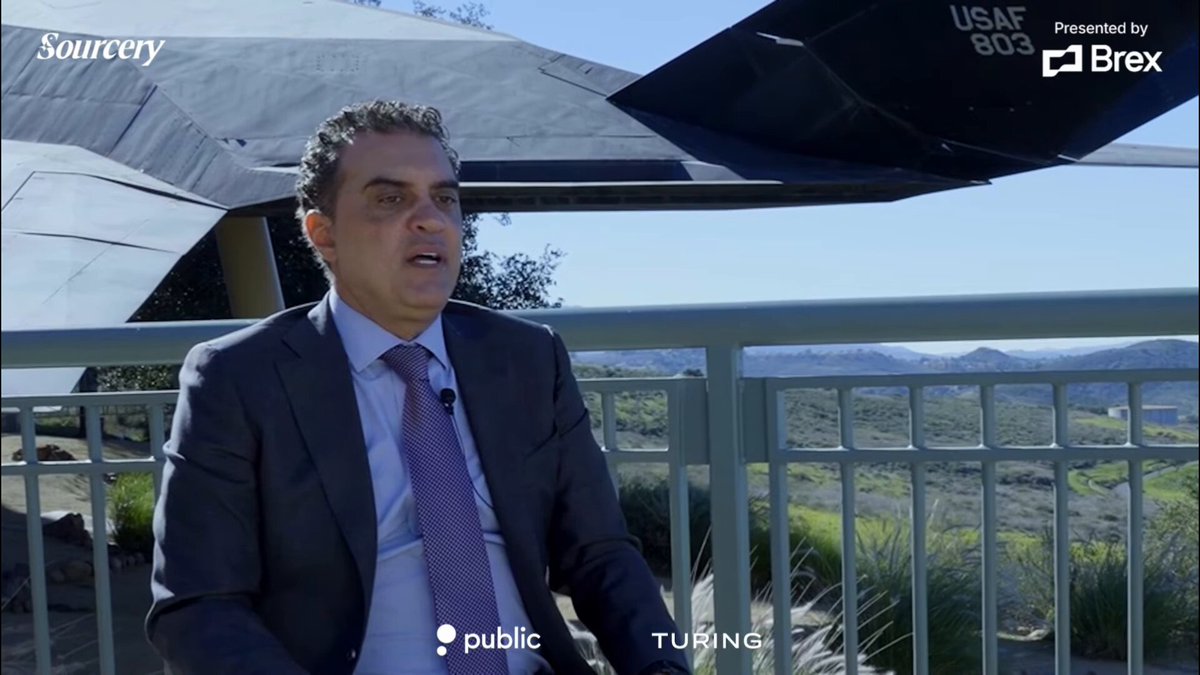
.Neros Technologies just won a $500M-ceiling US Army contract for its Archer FPV drones. CEO Soren Monroe-Anderson (Soren Monroe-Anderson) on why scaling drone production is the hard part and why very few are doing it well. "I think a lot of drone companies or just a lot of companies...

17,606 次观看 • 1 个月前 •via X (Twitter)

0 条评论

暂无评论

原始帖子的评论将显示在这里

相关视频

Zack Snyder discusses virtual production technology with the Russo Bros. and explains why he chose to build practical sets for Rebel Moon: "The idea of this sort of virtual production that's really interesting is that it does come back around. The green screen environment is an exclusive world, right? "Like there's not a lot of guys that can make a movie with no sets. Because as it is now, there's a thousand visual effects artists between that green screen and it being in your movie. "In the virtual production version, anybody who walks in there with a camera... The desert is there. And they can go and film it. So in a lot of ways it's kind of... it demystifies visual effects a little bit. "The thing that I've always found a little off-putting about a big green screen environment is it's not really engaging for anybody. Even for us, even for the filmmakers. We've been looking at the concept, we know what it is. "And the actors especially are like, 'I don't know where the hell I am.' Like, 'I guess... Okay, whatever you guys say, I'll do it.'" Anthony Russo: "But for camera operators too, right? It's just like there's nothing to grab on to." Snyder: "Yeah, I don't know, tilt up to the mountain. What mountain?" Joe Russo: "No, no, it's a little higher." Snyder: "Yeah, exactly. I think it's a small mountain. "Anyway, but I do think that the introduction of this kind of virtual productions as a concept really brings sort of physicality back to visual effects. And sort of a fantastic world. "You really can, you know, you can feel it and see it. They can put Atmos in, it can really feel like you're in a place. Which is really just... You're more passionate about it, you know, filming it. "Like I did a small thing that we were just really more of an experiment. And I was really fascinated by like, you know, they're like, 'Okay, here's, we have a cave set with light shafts coming through these holes in the ceiling.' And then we were like, literally, you know, 'Okay, now we're in like this forest.' "And it was the same rocks, but suddenly they didn't look like- they worked in both spots. It was just, I was like, 'Wow, this is really...' And even the focus and everything, the wall understood the depth of field as well. "So like everything, like especially in the eyepiece was like, 'Wow, that's scary.' That's like, feels like I'm there. So I think there's huge potential and hugely exciting future for that technology. "You know, as it becomes more available to like, and also scale, I think, you know, from this to like also being able to have, you know, 100 guys standing around inside of, you know, a giant environment would be just, it's just cool. Which they're doing now anyway, everyone's doing it. "But what was funny, because like on the movie that we're working on now, we ended up, we took a deep dive into it. And it just, the reason why we ended up not doing it in the end was because we just, we have these big war scenes. "And I had like 100 guys, you know, and we were just like, I don't even like, the amount of French reverses I have to do, everyone's brains were exploding. "Because, you know, you're always like, I'm like, 'Oh, just flip the set again and flip the set again.' And then for his reverse, we flipped the set that way and we flipped the set that way. "And so we had to build all the, all in the design, everything was symmetrical, right? Like the bridges and the houses were kind of symmetrical. "So you could always be flipping and not tell... because the sets were all symmetrical. You could shoot them from both sides and it was kind of the same. But the audience couldn't tell because the backgrounds were not symmetrical. "So it was only the immediate stuff, you know. It was, so it was a bit of a brain teaser for everyone. And then in the end, we were like, because of the scale of the fighting, I was like, 'Oh, let's just...' "So now we're just building it up the road. "But it's cool. "It's fun to build a giant thing as well. Just to go there and like, 'Oh my God, we made a village.'

Zack Snyder Film

23,149 次观看 • 7 个月前

BREAKING: Neros Raises $250M Series C at $2.5 Billion Valuation FULL INTERVIEW "America should have the capability to have factories that can make millions of drones per year because that's what modern conflict demands." Co-Founder & CEO Soren Monroe-Anderson (Soren Monroe-Anderson) takes us inside the new 250K sq ft Torrance factory. Currently shipping ~1,250 drones a week. Sized for 1 million a year by 2028. Fresh off a $500M Army IDIQ for 100,000s of drones over 5 years This round was led by Shaun Maguire of Sequoia Capital & American Strategic Technology Fund w/ participation from Interlagos, Valor Equity Partners, Allen & Company, Thiel Capital, Spark Capital, & Mantis With this capital Neros Technologies is now going multi-product with: › Archer AI — Autonomous strike drone › Bandit — Counter-drone interceptor › Marksman — Ruggedized operator handset › Useful Autonomy — Framework for evaluating autonomy claims ICYMI: China builds an estimated tens of millions of drones a year & arms both sides in Ukraine. America is way behind, representing just 1% of the world's small drones. Neros was the first FPV maker to win Blue UAS certification, meaning a fully NDAA-compliant supply chain with no reliance on China. "You can look at our boards, you can look at all of the chips that go onto our boards. Those will not have ever touched China." 𝐓𝐈𝐌𝐄𝐒𝐓𝐀𝐌𝐏𝐒 (00:00) Soren Monroe-Anderson, Co-Founder & CEO at Neros Technologies (01:02) $250M Series C at a $2.5B valuation (03:34) Working with Shawn Maguire (04:25) Inside the Army's $500M drone contract (05:38) How the Ukraine war rewrote modern combat (08:05) The Interceptor drones taking over the battlefield (10:31) How many drones China really makes in a year (12:55) Is it even possible to build a drone without China? (16:09) China is arming both sides of the war (17:08) What actually separates Neros from every other drone company (19:55) The biggest BS claims in defense tech right now (20:51) Why most defense startups never actually deploy? (22:58) Neros’s growth to over 250 employees (24:00) Why defense startups need to screen for spies (25:29) The Talent bottleneck slowing down American manufacturing (26:51) How AI is quietly reshaping engineers (29:43) The biggest myth about re-industrializing America (30:50) Neros's plan to build drones with U.S. allies (32:53) The brutal tradeoff between speed and scale (34:51) Why Neros keeps a permanent office in Ukraine? (35:52) What actually happens on a modern battlefield? (37:41) How Starlink is changing drone warfare (39:14) What happens when a drone loses its signal (40:41) Soren’s learnings from Kelly Johnson

Molly O’Shea

343,317 次观看 • 14 天前