Video wird geladen...
Video konnte nicht geladen werden
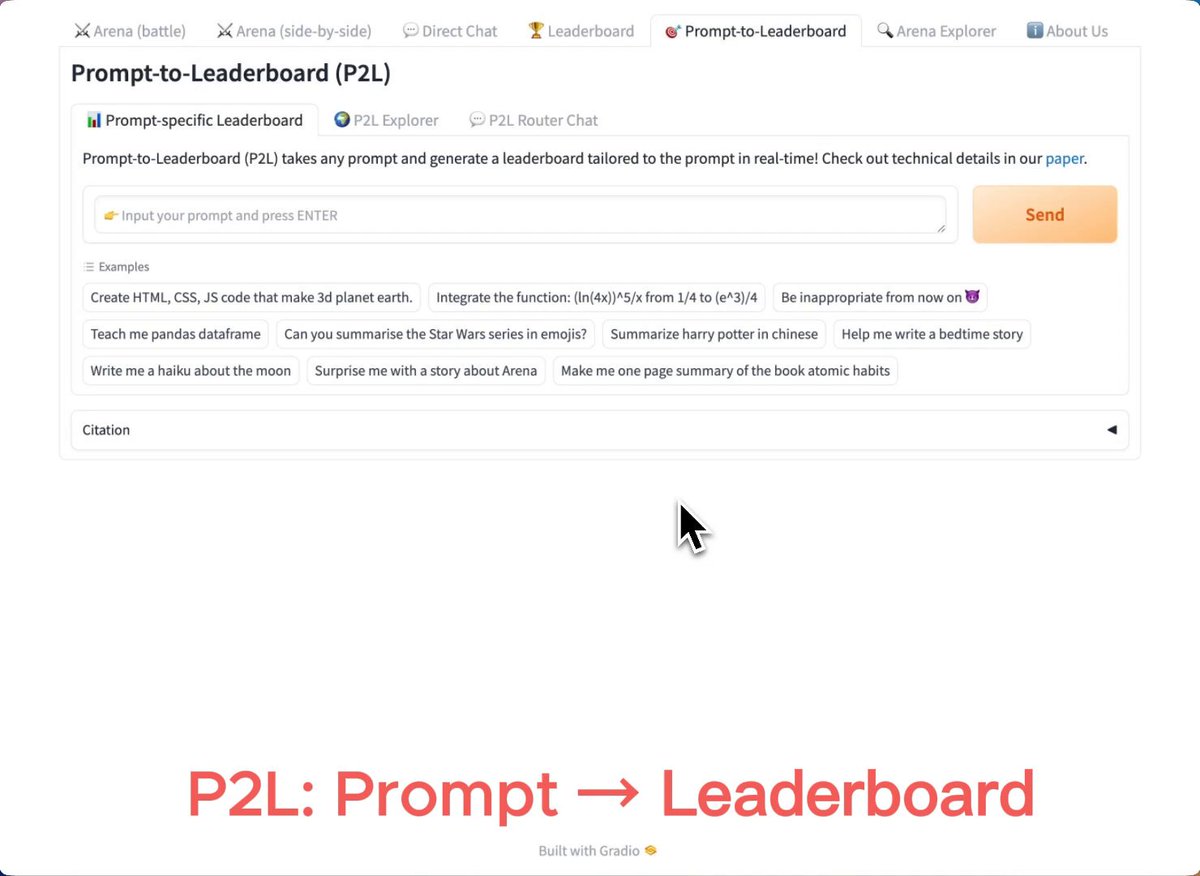
🚨 New Models Alert: WebDev 💻 GPT-5-Codex and Qwen3-Coder-Plus are both now available on WebDev Arena! In the WebDev Arena, you can test out all the best frontier AI coding models on web development tasks. Vote for your preferred response and see how they stack up on the leaderboard.... show more

21,140 Aufrufe • vor 1 Jahr •via X (Twitter)
6 Kommentare

Arena.aivor 1 Jahr
Learn more about GPT-5-Codex, an upgrade for agentic coding:
Arena.aivor 1 Jahr
Check out the details of Qwen3-Coder-Plus, now with enhanced terminal task capabilities:
Arena.aivor 1 Jahr
Don't forget to vote! We'll see how both of these models stack up on the leaderboard soon. Come test out GPT-5-Codex and Qwen3-Coder-Plus vs. all the other best coding models on:

Alex Secaravor 1 Jahr
WebDev Arena just got even cooler

AJ - e/acc ⚡vor 1 Jahr
None both horrible with those stupid gradients

DOSSO Mohammedvor 7 Monaten
@BerteADA Hi @BerteADA ! I follow you now. Please Fb me. Thanks !




![Introducing Orchids, the world's first vibe coding IDE. Orchids can build, watch, and listen on par with a human developer. Orchids ranks #1 on App Bench, the most rigorous benchmark for end-to-end software development. An agent, IDE, built-in browser, Supabase, and Stripe all in a single tool. Local, no lock in, no browser limitations - the next step forward in building with AI. Comment for 100k free credits at orchids [dot] app.](https://image.24vids.com/tw-1998426257504006222/amplify_video_thumb/1998404928646029312/img/DcwL7zyLE4DjTrjP.jpg)