正在加载视频...

视频加载失败

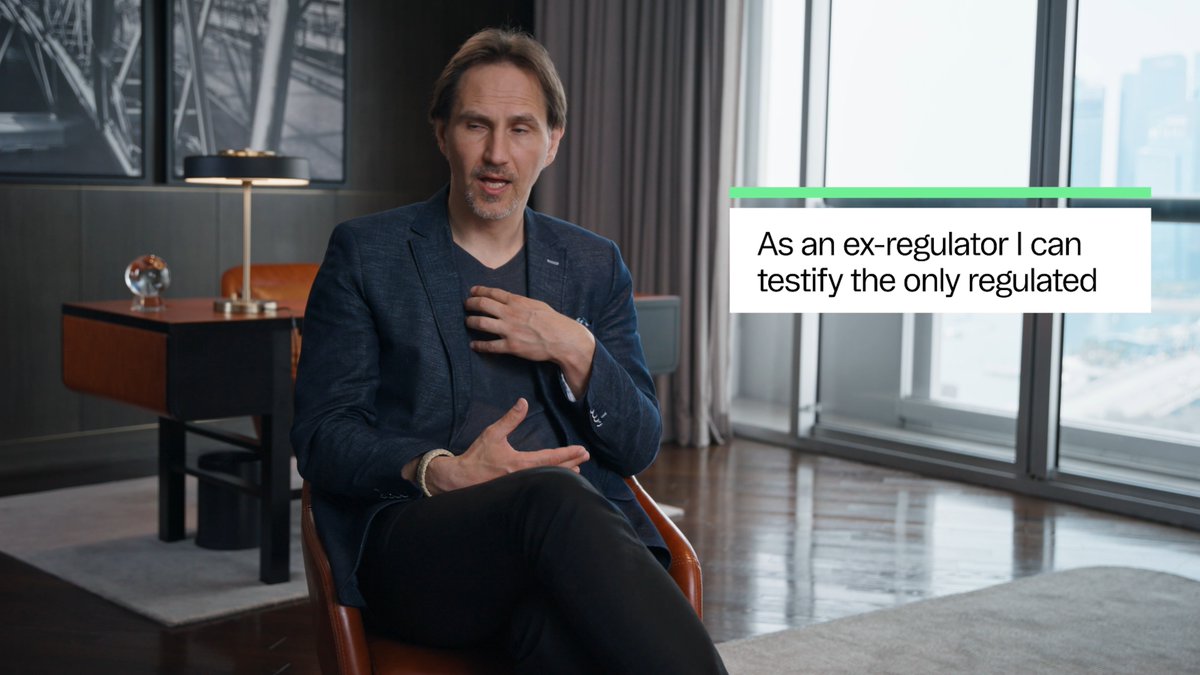
🤝NEW: QUANT NETWORK INTEGRATES WITH MUREX MX.3 Quant has announced a strategic partnership with Murex, embedding institutional-grade digital asset capabilities directly into MX.3, one of the most widely deployed capital markets platforms globally. Banks can now issue, settle, and manage tokenized deposits and digital bonds within their existing trading,...

12,188 次观看 • 7 个月前 •via X (Twitter)

8 条评论

Dutch Alchemist 的头像
Dutch Alchemist7 个月前

@quantnetwork Dare I say the biggest move in Web3 for institutional finance so far? In real live production setting, not a pilot, proof of concept or experiment. $QNT

Niccolò Machiavelli 的头像
Niccolò Machiavelli7 个月前

@quantnetwork Quant Network just plugged into Murex MX.3? 😳 Banks can now issue and trade digital assets straight on one of the biggest institutional platforms. This is lowkey massive for real adoption fr

ℤ∊ⓟℏ൮ṙ 🌬️🍃 的头像
ℤ∊ⓟℏ൮ṙ 🌬️🍃7 个月前

@quantnetwork

The Daily Block 的头像
The Daily Block7 个月前

@quantnetwork Infrastructure quietly evolving.

Exploitless 的头像
Exploitless7 个月前

@quantnetwork Wild that nobody's talking about the API security between Quant and MX.3 rn. Bank-grade trading platforms integrating blockchain rails need rigorous penetration testing on every new connection point

Dick 的头像
Dick7 个月前

@quantnetwork This is good to hear.

ELON MUFF “ Parody “ 的头像
ELON MUFF “ Parody “7 个月前

@quantnetwork Let’s gooo

CryptoWood 的头像
CryptoWood7 个月前

@quantnetwork

相关视频

DTCC is leading the adoption of the new financial system, and I’m getting even more bullish on $XLM, $XRP, $HBAR and $QNT. Understand what’s happening here. DTCC isn’t building tokenization around one chain or one form of digital cash. It wants institutions to choose how assets settle: Stablecoins. Tokenized deposits. Another tokenized asset. Even asset-for-asset settlement. That changes the game. DTCC’s depository subsidiary already custodies more than $114 trillion in assets, and its Tokenization Service is moving toward stocks, ETFs and U.S. Treasuries becoming programmable across multiple blockchain networks. Now look at the infrastructure already lining up around that future. $XLM This one has the direct connection. DTCC officially selected Stellar for its Tokenization Service, with DTC-tokenized assets expected on Stellar in the first half of 2027. Stellar already has stablecoins, native asset issuance, a DEX, liquidity pools and path payments. That means tokenized assets can potentially move directly against digital money instead of sitting idle. $XRP XRPL brings another piece: liquidity. CSD BR is already using XRPL with regulated BTG Pactual fund shares. And XRPL’s auto-bridging can route: Asset A → XRP → Asset B when XRP provides the better liquidity path. The more tokenized assets exist, the more valuable that becomes. $HBAR Hedera already has regulated tokenized funds, government securities, institutional collateral movements and stablecoin cash flows through Archax, Lloyds and Aberdeen. Real assets are already being used as working capital. $QNT Then comes the money layer. The Clearing House selected Quant to power interoperability and orchestration for U.S. tokenized bank deposits connected to RTP and CHIPS. So DTCC builds the digital assets. Banks build digital money. Quant connects the money. Stellar distributes assets. XRPL provides liquidity. Hedera handles institutional tokenization and collateral. I think we are watching separate pieces of the same financial machine being assembled. And it’s happening much FASTER NOW!

X Finance Bull

64,723 次观看 • 29 天前

Most people look at $QNT and ask, “How high can the price go?” I start with a completely different question: what happens if banks in different countries start issuing tokenized money on different systems and all of those systems need to talk to each other? Warning: this one is LONG. Probably one of my deepest $QNT posts yet. Give me a few minutes and read the whole thing. It’ll be worth it. That question led me straight back to The Clearing House. And once you understand the architecture The Clearing House is building, the entire Quant thesis starts making a lot more sense. The Clearing House is one of the most important pieces of U.S. banking infrastructure. It is owned by 25 banks. Its CHIPS network has 43 direct participants. CHIPS settles more than $2T in average value each business day. During 2025 it processed around $2.014T in average daily payments. Its liquidity efficiency was around 26:1. So when I talk about The Clearing House moving toward tokenized deposits, understand the scale. This is not a crypto company trying to get banks interested. These are banking rails banks already use. Now they are preparing those rails for tokenized commercial bank money. On August 24, 2026, The Clearing House published a discussion with Chief Strategy Officer Sal Karakaplan. The message was simple but extremely important. Banks using CHIPS and RTP already have their settlement infrastructure. They already maintain funds. They already have liquidity processes. They already have payment connectivity. So tokenized deposits should not force them to rebuild everything. Instead, tokenized transactions can be tightly connected with the systems they already use. That one idea is massive. Because the biggest obstacle to institutional blockchain adoption has always been disruption. Banks do not want to throw away working infrastructure. They want new capability without destroying the old system. Now fast-forward one month. September 24, 2026. The Clearing House selects Quant. Quant becomes the announced technology provider for: Interoperability. Orchestration. Transaction management. Quant also brings Tokenized Deposits-as-a-Service. So imagine the future banking system. Bank A issues tokenized dollars on one ledger. Bank B uses another private network. Bank C wants programmable deposits but has not built its own blockchain system. A tokenized-securities platform needs cash settlement. A treasury platform needs programmable payments. A public blockchain contains tokenized assets. CHIPS remains the regulated high-value dollar settlement network. RTP handles real-time payments. These systems are different. But the money still needs to move between them. Quant’s job is to coordinate that complexity. I think this is much bigger than “blockchain interoperability.” This is financial-system interoperability. And the banks around The Clearing House initiative show how serious it is. JPMorgan Chase. Citi. Bank of America. HSBC. BNY. Wells Fargo. Santander. TD Bank. Then: BMO. Citizens. Fifth Third. Huntington. KeyBank. PNC. Regions. Truist. The comments from these institutions focused on exactly the problems Quant wants to solve. Tokenized-deposit clearing. Interbank connectivity. Trusted financial infrastructure. Interoperability. Programmable payments. Connecting blockchain capability with existing payment rails. The Clearing House subsequently chose Quant. That gives Quant a completely different distribution opportunity. Instead of selling software one bank at a time, Quant is now inside an initiative connected to an institution already serving major banks. That can shorten the path to institutional adoption dramatically. Then look at what Quant has already done in Britain. The Great British Tokenised Deposit initiative gives us a preview. Quant was selected in September 2025. One year later, seven banks had completed live customer transactions. The names: Barclays HSBC UK Lloyds Banking Group Monzo Nationwide NatWest Santander These transactions involved real money. Mortgage completions. A marketplace purchase. Funds could be reserved and released when conditions were met. This is programmable commercial bank money doing actual work. Now compare the timeline. UK Quant selection: September 2025. UK live customer transactions: September 2026. U.S. Quant selection by The Clearing House: September 2026. U.S. network targeted for availability: H1 2027. I see a pattern. Quant builds. Banks test. Transactions go live. Then the model expands to another market. Now layer international interoperability on top. In October 2026, Quant participated directly in the UK Finance Tokenised Markets and Money Conference. The discussion involved how tokenized-deposit initiatives from countries including the UK, Japan, the U.S. and Germany could connect. The industry is talking about: Standards. Rulebooks. Overlapping bank participation. Commercial corridors. Synchronized settlement. Payment-versus-payment. That is the future Quant has been preparing for. People sometimes think tokenization will simplify finance because everything moves onto one blockchain. I think the opposite can happen. Tokenization can create even more systems. Every major bank may have its own approach. Countries may build national frameworks. Central banks may support separate settlement infrastructure. Private asset ledgers will exist. Public blockchains will exist. Commercial bank deposit tokens will exist. Stablecoins will exist. Digital securities will exist. The technology becomes more diverse. The need for coordination becomes bigger. That is where a “network of networks” becomes valuable. Think about U.S.-UK payments. The U.S. bank has tokenized dollars. The UK bank has tokenized sterling. Both have domestic rules. Both have their own settlement rails. Both need foreign exchange. Both need confirmation. Both need compliance. Both need the cash and asset legs synchronized. Quant already has technology connected to both banking environments. I think that gives it an incredibly interesting strategic position. And I am not stopping at deposits. Look at Murex. Murex runs MX.3, widely used in institutional trading, risk management and post-trade operations. In March 2026, Murex and Quant announced an integration. Quant’s programmable money infrastructure can work alongside MX.3. Now banks can potentially handle tokenized deposits and digital bonds without changing the core institutional workflow they already use. This matters because tokenized assets need money. A digital bond cannot settle itself. A tokenized fund still needs subscriptions and redemptions. Tokenized collateral still needs financing. Tokenized securities still need delivery-versus-payment. If the asset moves but the cash cannot move with it, the system is incomplete. Quant is working across both sides. Asset systems. Money systems. Institutional software. Interoperability. That creates more commercial opportunities. Now I want to talk about token utility because this is where a lot of crypto research gets lazy. The Clearing House settling $2T does not mean $2T buys QNT. I care about a different mechanism. QNT is documented as an access and licensing token. Overledger subscribers can pay platform fees in USD or QNT. Historical licensing models used QNT for annual mainnet licensing. The 2026 MiCA disclosure also describes QNT utilization and locking in licensing arrangements. So institutional growth can potentially create token demand through access rather than through the gross dollar value of payments. That model makes more sense to me. If one bank moves $100B using Quant infrastructure, QNT does not need to absorb $100B. Quant needs commercial contracts. Licensing. Platform access. Network services. Potential token commitments. If the number of institutions keeps increasing, those commitments can compound. I care even more about locking. One-time purchases can come back to market. Locked tokens cannot. If enterprise arrangements require QNT to remain committed for periods of time, liquid supply can tighten. Then incoming demand has fewer freely available tokens to compete for. And QNT supply is already small. Roughly 14.56M circulating. Around 14.61M total supply in the data used for this research. That scarcity matters. Then add Fusion. Fusion launched on mainnet in June 2026. It initially connected 74 networks. Its Trusted Node Program gives institutions more control around who processes transactions. QNT has a documented staking role. So now I can see a second demand channel. Overledger and enterprise licensing create one path. Fusion execution and staking create another. If both scale together, QNT becomes much more interesting. Think of the potential progression. Bank joins Quant infrastructure. Bank or service provider needs platform access. Access creates licensing economics. Some licensing arrangements involve QNT usage or locking. Meanwhile, institutional networks connect through Fusion. Trusted nodes stake QNT. Network execution grows. More QNT becomes tied to productive use. Supply stays around 14.6M. That is the flywheel I want. We are not fully there yet. The exact QNT economics attached to The Clearing House contract have not been publicly disclosed. But the general utility already exists. That makes public confirmation of recurring institutional QNT demand one of the biggest catalysts I am waiting for. Now do the valuation math. Using about 14.61M tokens: $5B valuation = ~$342 QNT $10B = ~$684 $20B = ~$1,369 $30B = ~$2,053 $50B = ~$3,422 Again, these are valuation scenarios. They are useful because they show what QNT’s scarcity does when the market cap expands. The question becomes: What valuation would investors assign to a token if Quant becomes recurring infrastructure for bank-issued digital money? I think $10B becomes much easier to discuss if we see meaningful commercial bank onboarding, recurring QNT-linked revenue, rising activity and token commitments. Higher scenarios need even more. International usage. Multiple national banking systems. Cross-border network connectivity. Large-scale Fusion adoption. Material staking. Recurring institutional contracts. That is what I want to watch. And the catalysts are already lined up. 1. The Clearing House network opening in H1 2027. The partnership moves closer to real commercial usage. 2. U.S. bank onboarding. More institutions can mean more Quant products being used. 3. Tokenized Deposits-as-a-Service. Banks that do not want to build token infrastructure themselves can still participate. 4. QNT-linked enterprise licensing. This is where institutional adoption can begin translating more directly into token demand. 5. Great British Tokenised Deposit expansion. The UK already has live transactions. More banks and more use cases would strengthen the proof. 6. U.S.-UK interoperability. Both national banking environments already have Quant technology involved. 7. Fusion trusted-node adoption. More nodes can mean more staking. 8. Fusion transaction growth. More execution can increase ongoing QNT utility. 9. Murex MX.3 integration. Tokenized bonds and institutional settlement open another market. 10. Delivery-versus-payment. Tokenized cash and tokenized securities can move together. 11. Corporate treasury automation. Conditional payments and programmable liquidity become real business use cases. 12. International network-of-networks development. This is the monster opportunity. Multiple national financial systems using Quant to coordinate transactions. Now zoom out globally. Britain already has live tokenized-deposit customer transactions. The United States has The Clearing House preparing its initiative with Quant. Europe has launched the first phase of Pontes for wholesale tokenized-asset settlement using central bank money. And international banking discussions are focusing on cross-border connectivity. Pontes is not currently an announced Quant project. I am not claiming it is. But Europe moving in the same broad direction matters. Because every new financial network increases the need for interoperability. The future is not going to be one giant blockchain. It will probably look more like the internet. Different networks. Different systems. Different protocols. Different organizations. Still able to communicate. Quant wants to become part of the layer making that possible for financial institutions. And the thing I like most is that Quant is approaching banks without asking them to abandon what already works. That is a huge advantage. Banks already have CHIPS. They already have RTP. They already have Murex. They already have internal ledgers. They already have compliance systems. Quant can sit between those systems. That is a much easier institutional pitch than saying: “Throw away your current infrastructure and put everything on our chain.” This is why I think Quant has a chance to scale differently from many crypto networks. It is not competing to be the one ledger every bank uses. It is monetizing the fact that banks will use many ledgers. More fragmentation can actually increase the value of Quant. Think about that. If JPMorgan has one system. Citi has another. HSBC has another. A public blockchain hosts an asset. A central bank runs the final settlement layer. Murex manages trading. The Clearing House manages interbank payment infrastructure. Every connection between those pieces becomes an interoperability problem. Quant sells the solution to that problem. That is the business. Now think about $QNT. If those commercial connections increasingly require QNT for access, licensing, locking, execution or staking, the token begins reflecting that business growth. That is the bridge between the technology thesis and the investment thesis. And because QNT supply is small, the potential asymmetry is what keeps me interested. A lot of people saw QNT at $60. Then $100. Then $200. Then over $300. They only started asking questions after price moved. I prefer studying the infrastructure before the crowd starts chasing the chart. Right now I’m watching the next phase. Can The Clearing House deliver the H1 2027 network? How many banks participate? How much transaction activity appears? Does TDaaS expand the customer base? Does the UK system grow? Does cross-border interoperability become commercial? Does Murex bring Quant deeper into digital bonds and securities? Does Fusion gain institutional trusted nodes? Does QNT staking grow? Do enterprise licenses create recurring QNT demand? Those are the questions that matter. And if several of those answers become “yes,” the QNT story gets much bigger. I see Quant’s future in three steps. First: Become infrastructure banks trust. The UK and U.S. partnerships are doing that. Second: Become infrastructure banks repeatedly use. Commercial tokenized deposits, settlement, securities and treasury activity can do that. Third: Convert that usage into measurable QNT economics. Licensing. Locking. Execution. Staking. That final step is where I think the market could dramatically reprice QNT. I am bullish today because stage one is no longer imaginary. Quant has already delivered the UK banking infrastructure. The Clearing House already selected Quant. Murex already partnered with Quant. Fusion is already live. QNT utility is already documented. The banking industry is already talking about a network of networks. Everything does not need to happen tomorrow. I am looking years ahead. I want Quant sitting in the middle as more commercial bank money becomes digital. I want Quant helping banks move between networks. I want Quant coordinating tokenized cash and tokenized securities. I want recurring licensing. I want more QNT locked. I want institutional Fusion activity. I want trusted nodes staking QNT. Those are the things that can turn institutional adoption into sustainable token demand. And if Quant gets there, I think the upside could be much larger than people expect today. The Clearing House already moves trillions. Britain already has live tokenized-deposit transactions. The banks are already building programmable money. Quant is already inside the infrastructure. Now I’m watching how much of that institutional growth eventually reaches $QNT itself. That’s the part that could make the next QNT cycle very different from the last one.

X Finance Bull

48,554 次观看 • 8 天前

HOLY MOLY! 🚨 Ripple just plugged directly into the institutional tokenization pipeline in Asia-Pacific ripple:native holders need to understand how big this setup can become. Ripple Custody is now integrated with SettleMint’s Digital Asset Lifecycle Platform. A financial institution can use the combined system to issue an asset, apply compliance rules, secure it, distribute it, settle it and manage it through its entire life. Bonds. Funds. Equities. Cash. Real assets. Structured products. And the rollout has already started in Asia-Pacific. Here’s where ripple:native enters. Ripple Custody directly supports XRP Ledger and XRP. It can create XRPL issuer accounts, issue tokenized assets, manage trust lines, send XRP and trade XRP against issued assets through XRPL’s native DEX. Then add RLUSD as digital cash. The setup can become: institution → SettleMint → Ripple Custody → XRPL → tokenized asset + RLUSD + XRP liquidity And Ripple has another institutional door through Ripple Prime, already serving 300+ customers and clearing more than $3T annually. What catches my attention is the distribution. Ripple doesn’t have to convince every bank to build tokenization infrastructure from scratch anymore. SettleMint already gives them the lifecycle system. Ripple plugs custody and digital-asset infrastructure directly into it. The companies say the offering is intended to expand into other regulated markets globally. If more institutions choose XRPL for issuance, suddenly XRP is sitting beside a growing market of bonds, funds, stablecoins and other financial assets that all need liquidity. That’s where this gets VERY serious for ripple:native.

X Finance Bull

23,551 次观看 • 1 个月前

So the ECB just went ALL IN on its tokenization push. I did a deep dive, and it made me 100x more bullish on $XRP and $QNT. Why? You’re going to love this long read. Something changed in Europe on September 21 that I think a lot of crypto people are going to underestimate. Pontes is live. The Eurosystem can now connect tokenized markets with its existing TARGET Services so the cash side of a tokenized securities transaction can settle in central-bank money. And Reuters reports the ECB plans to put part of its roughly €23 billion own-funds portfolio into highly rated, euro-denominated blockchain securities issued by public institutions. Read that slowly. The central bank is providing the settlement infrastructure. European financial institutions are connecting to it. And the ECB itself intends to own tokenized securities. I’ve been deep in $XRP and $QNT, and following this whole tokenization shift has made the thesis around both much easier for me to understand. Because the financial world they were built around is starting to become real. Let me make this very simple. Suppose a bank tokenizes a €500 million bond. Putting that bond on a distributed ledger solves only part of the problem. Somebody buys the bond. Money needs to move in the opposite direction. If the bond moves on modern DLT infrastructure but the money still has to leave that environment, travel through separate systems, get reconciled and settle later, you lose a huge part of the advantage. Europe needed a trustworthy cash leg. Pontes gives institutions one. A tokenized security can now connect back into central-bank euro settlement through TARGET Services. The ECB says synchronization can support Delivery-versus-Payment transactions where the asset and money are linked together. That sounds technical. In everyday language: the asset moves and the money moves together. That is a massive step toward making tokenized finance usable by banks and asset managers at scale. And look at the institutions already onboarded: ABANCA, BayernLB, Caisse des Dépôts et Consignations, Cecabank, Deutsche Bank, DekaBank, DZ BANK, European Investment Bank, KfW, Memo Bank, NRW BANK, Santander and Société Générale. The initial DLT operators include Axiology, Cashlink, Clearstream and SWIAT, while Deutsche Bundesbank has also onboarded. These aren’t people gathering around a whiteboard wondering whether tokenization could work someday. The infrastructure is available now. And one comment from Christine Lagarde explains how important that settlement piece really is. The ECB spoke with more than 60 market participants, and Lagarde said the message from the market was clear: they would not commit to issuing digital assets at scale until they could settle in central-bank money. That sentence changed how I looked at Pontes. Europe already had institutions interested in tokenization. The missing piece was confidence in settlement. Now the Eurosystem is providing it. And the ECB has openly described central-bank-money access as one of the conditions needed for tokenized finance to reach critical mass. So I started asking myself: If more European bonds, funds, money-market instruments, deposits, repos and other financial assets begin moving onto DLT because the settlement problem is being solved, who benefits from connecting all those systems and moving liquidity between all those assets? That brought me straight back to $QNT and $XRP. $QNT first. The ECB’s long-term project is called Appia. Pontes handles the bridge into central-bank settlement today. Appia is looking at what the wider European tokenized market should eventually become. And the ECB is openly considering several architectures: one shared European network, multiple interconnected networks, or some combination of both. If Europe ends up with multiple networks, the ECB says a high degree of interoperability will be required to stop assets and liquidity from becoming fragmented. Seriously. Read those words again: multiple interconnected networks. -Interoperability. -Tokenized assets. -Central-bank money. -Private settlement assets. -Legacy infrastructure. -Programmability. I’ve followed Quant for a long time, and that is almost a description of the problem Overledger and QuantNet were created around. A bank already has decades of systems. It cannot wake up Monday morning and throw everything away because blockchain exists. It still has core banking infrastructure. -Payment rails. -Risk systems. -Legacy ledgers. -RTGS connections. -Private DLTs. -Maybe public blockchains. -Tokenized deposits. -Stablecoins. -Tokenized bonds. Potentially several different settlement networks. Quant’s approach is to let those environments communicate and coordinate without asking the institution to replace everything underneath. And this connection to Europe is not coming from nowhere. Quant Network Europe Limited was officially listed by the ECB as a Pioneer in its Digital Euro Innovation Platform. Quant worked on programmability and conditional payments around the ECB’s digital-euro environment. So Quant has already been inside an ECB-led digital-money experiment. Then look at what Quant did with Murex in March. Murex and Quant integrated Quant’s programmable-money infrastructure into MX.3, allowing banks and capital-markets firms to issue, settle and manage tokenized deposits and digital bonds using existing institutional workflows. The setup uses Quant’s Flow and Overledger technology for programmability, cross-rail payment orchestration and interoperability across public and private blockchains. That matters because banks do not want twelve disconnected tokenization systems. They want their existing trading, risk, reporting and post-trade infrastructure to work with the new rails. And Quant is already attacking that problem. Then there is the UK. Quant was selected to provide infrastructure to the Great British Tokenised Deposits project involving Barclays, HSBC, Lloyds Banking Group, NatWest, Nationwide and Santander. Its role includes programmable money and interoperability between bank ledgers, RTGS, Faster Payments, Open Banking and tokenized-deposit platforms. And notice one name: Santander. Santander is also one of the first institutions onboarded to Pontes. I’m not saying Santander uses Quant for Pontes. There is no announcement saying that. The deeper point is more interesting anyway. A bank such as Santander can end up operating across several forms of digital financial infrastructure at the same time. Pontes. -Tokenized deposits. -Traditional banking systems. -DLT markets. -International payment networks. -Potentially public chains. Once large banks operate across multiple environments, connecting them becomes more valuable. That is Quant’s whole addressable problem. And Pontes itself is only going to become more capable. The ECB plans to extend operating hours toward 22.5 hours per business day, then move toward 24/7 service by mid-2028, together with greater programmability, stronger resilience and multi-currency capability. Multi-currency really matters to me. A European tokenized market becomes much more complicated once you move beyond a euro security settling against one euro cash asset. Now you can have different currencies. Different banks. Different networks. Different digital-money forms. Different assets. Different jurisdictions. Somebody has to coordinate the movement. That is exactly the kind of market where interoperability stops being a nice extra and becomes basic financial plumbing. So my $QNT thesis from this ECB move is simple: Europe is starting to build the multi-network financial architecture Quant has spent years preparing to connect. The ECB doesn’t need to announce that it is buying QNT for the underlying opportunity to expand. If interoperability becomes mandatory infrastructure across tokenized banking and capital markets, the market Quant is targeting becomes much larger. And then there is $XRP. The XRP side of this story works differently. Europe now has a trusted central-bank settlement anchor. Great. That can unlock more issuance. -More bonds. -More tokenized funds. -More money-market instruments. -More private money. -More trading. -More collateral. -More digital assets. And Ripple has spent years building inside European finance before that market reached this stage. Ripple received its full MiCA CASP authorization from Luxembourg’s CSSF in July, giving its regulated cryptoasset services coverage across all 30 EEA countries. Ripple also has its European EMI licence and says its global regulatory portfolio exceeds 75 licences. That gives Ripple a serious regulated position as Europe’s tokenized market begins moving from experimentation toward production. Then look at the banks. BBVA Spain uses Ripple Custody technology in its digital-asset custody service. Intesa Sanpaolo uses Ripple Custody in its digital-asset initiatives. DZ BANK uses Ripple Custody for institutional digital assets, including crypto securities such as tokenized bonds under Germany’s electronic-securities framework. And DZ BANK is also one of the first Pontes participants. Again, I’m keeping the connection precise. That does not say Pontes runs on Ripple. It says the same major European bank is participating in the ECB’s new tokenized-settlement infrastructure while already operating Ripple technology elsewhere in its digital-asset business. That overlap matters because these systems are starting to meet inside the same institutional world. Then look at Société Générale. This one is even more interesting to me. Société Générale is among the initial Pontes participants. Its digital-asset subsidiary Société Générale-FORGE launched its regulated EUR CoinVertible, EURCV, directly on the XRP Ledger in February 2026. The XRPL deployment is supported by Ripple Custody, and SG-FORGE has said it intends to explore further uses, including integrating EURCV into Ripple products and using it as trading collateral. So one major European banking group is operating in both worlds: the ECB’s emerging central-bank-money settlement infrastructure, and private regulated euro money on XRPL. You can start to see the market taking shape. -Central-bank euros. -Tokenized deposits. -Private euro settlement assets. -Tokenized securities. -Different DLT networks. -Custody. -Trading. -Liquidity. -Collateral. This is exactly the messy multi-asset financial world where both XRP and QNT become much more interesting. XRPL also has EURØP from Schuman Financial. EURØP is a MiCA-compliant, euro-backed stablecoin issued by a French electronic-money institution regulated by ACPR, and it is natively integrated into XRPL. Its reserves are held through European institutions including Société Générale. Then add Aviva Investors. Aviva is working with Ripple to explore tokenizing traditional fund structures directly on XRPL, with both sides planning to continue the initiative through 2026 and beyond. Then add Ripple’s investments in ZILO and Licuido, which connect transfer-agency, issuance and collateral-mobility capabilities into Ripple’s broader capital-markets strategy. Now think about the kind of European market that can emerge as Pontes removes the settlement bottleneck. A German bond exists digitally. A French money-market fund exists digitally. EURCV sits on XRPL. EURØP sits on XRPL. A tokenized bank deposit sits somewhere else. An Aviva fund sits onchain. A U.S. Treasury exists on another network. Institutions need to move between all of it. Some transactions want central-bank euros at final settlement. Pontes can provide that anchor. But between those endpoints, the market still needs trading liquidity. -FX. -Collateral. -Cross-border movement. -Asset conversion. -Secondary markets. Movement between different forms of money. XRPL was built around exchanging different representations of value on one ledger. And XRP is the issuerless native asset inside that market. That is the XRP opportunity I care about. XRP does not need to become “the euro.” It does not need to replace TARGET. It does not need the ECB to hold XRP. The much more believable long-term utility is liquidity. If a growing European tokenized market contains hundreds or thousands of assets and multiple forms of digital money, liquidity becomes a real problem. Some markets will have direct pairs. Others will not. Some cross-border routes will be deep. Others will be fragmented. Some assets may need a neutral intermediary. That gives XRP a potential economic job. And Ripple has already spent years building the custody, tokenization, regulated access and institutional infrastructure around the ledger where XRP lives. Then Appia makes this even bigger. The ECB wants a blueprint for an integrated European tokenized financial ecosystem by 2028. Its own documents talk about interoperability, asset transfers, collateral mobility, cross-border transactions, central-bank money, private settlement assets and a market where issuance, trading, settlement, custody and servicing evolve together. That is an enormous architecture. In my head, $QNT and $XRP sit in very different places inside it. QNT can matter because all those systems need to communicate. XRP can matter because all those assets need liquidity. Quant handles orchestration. XRPL can host assets and markets. Ripple supplies regulated institutional infrastructure around it. XRP can provide native liquidity where it makes economic sense. And Europe has just made one of the biggest pieces of that whole system operational. The ECB did not announce XRP or QNT as Pontes components. I actually think the factual setup is more powerful without pretending it did. Pontes validates the market they have been positioning around. The central bank is now giving tokenized securities a trusted cash settlement layer. It intends to invest some of its own portfolio in blockchain securities. Banks are onboarding. Private DLTs are connecting. Appia is planning an interoperable future. Pontes is moving toward 24/7 and multi-currency. Ripple already has European banks, euro assets, custody, MiCA authorization and asset-manager tokenization work around XRPL. Quant already has an ECB Digital Euro relationship, Murex integration and major-bank tokenized-deposit infrastructure. A year ago, people could call all of this a future narrative. Today the rails are switching on. And I’m sitting here thinking about what happens after millions, then billions, then potentially much larger pools of financial assets start living across multiple digital networks. Somebody has to connect the networks. Somebody has to move the liquidity. That is exactly why this ECB move made me even more bullish on $QNT and $XRP. Holding these two? You’re gonna make it.

X Finance Bull

162,977 次观看 • 1 个月前

BREAKING: The ECB just went live with wholesale blockchain settlement. Pontes. Launched September 21. Lagarde's own words: "It's a digital euro made available for banks so that they can transact amongst themselves using tokenized assets and distributed ledger technology." Here's what it actually solves. Tokenized bonds and securities can already trade on DLT platforms. The missing piece was the cash side. Without a risk-free settlement asset, institutions had to rely on stablecoins or tokenized commercial-bank deposits. Both carry credit risk big banks don't want. Pontes settles that cash leg in actual central bank money instead. 13 institutions already onboarded. Deutsche Bank, Santander, Société Générale, the European Investment Bank, KfW, and four DLT infrastructure providers including Clearstream. Here's the part most headlines are missing. This is wholesale-only. Banks and market infrastructure providers. Not retail. The retail digital euro is a separate track entirely. A one-year pilot starting in the second half of 2027. Possible issuance in 2029. The ECB is even putting its own money behind Pontes. Starting to invest a portion of its own funds in tokenized government debt, settled through this exact system. Full implementation targeted for 2028. Europe's central bank just built the plumbing for tokenized markets. Retail crypto users won't touch it directly. Banks moving trillions in bonds and securities just got their bridge.

Crypto Tice

22,824 次观看 • 1 个月前

🚨 Ep. 76 of Tokenized Podcast: How Do Tokenized Equities Work? Ft. BlackRock’s Head of Digital Assets Pet is joined by: 👉 Rob Hadick >|<, GP, Dragonfly >|< 👉 Robbie Mitchnick, Head of Digital Assets, BlackRock 👉 Noah Levine, Partner, a16z To discuss: 🗝️ Tokenization as an access story for investors 📊 Three categories of tokenized equity structures 💸 Transferability limits of whitelisted tokenized assets 🤝 NYSE and Securitize partner for 24/7 trading 🌐 Stablecoins evolving into new financial infrastructure 🏦 US regional banks build tokenized deposit network 🥊 Stablecoins vs tokenized deposits serve different users 📈 Privacy demand grows for capital markets onchain 🔮 Future market structure with fewer intermediaries *** Timestamps: 00:00 Introduction 02:17 Tokenization as an access story for investors 05:51 Three categories of tokenized equity structures 08:41 Transferability limits of whitelisted tokenized assets 11:21 NYSE and Securitize partner for 24/7 trading 15:00 Stablecoins evolving into new financial infrastructure 18:58 US regional banks build tokenized deposit network 24:21 Stablecoins vs tokenized deposits serve different users 25:42 Privacy demand grows for capital markets onchain 31:06 Future market structure with fewer intermediaries *** 👉𝘚𝘦𝘢𝘳𝘤𝘩 '𝘛𝘰𝘬𝘦𝘯𝘪𝘻𝘦𝘥 𝘗𝘰𝘥𝘤𝘢𝘴𝘵' 𝘖𝘯 𝘠𝘰𝘶𝘛𝘶𝘣𝘦. 𝘈𝘱𝘱𝘭𝘦, 𝘚𝘱𝘰𝘵𝘪𝘧𝘺 𝘰𝘳 𝘢𝘯𝘺 𝘗𝘰𝘥𝘤𝘢𝘴𝘵 𝘗𝘭𝘢𝘺𝘦𝘳! 👈

Tokenized Podcast

12,328 次观看 • 7 个月前