Загрузка видео...

Не удалось загрузить видео

На главную

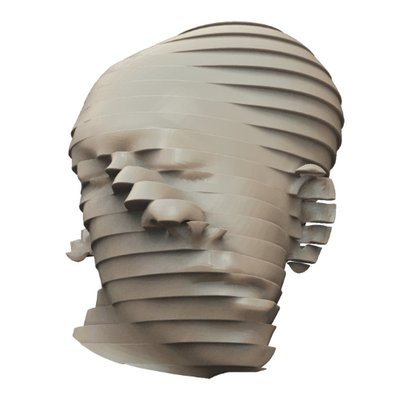
New research project: Lluminate - an evolutionary algorithm that helps LLMs break free from generating predictable, similar outputs. Combining evolutionary principles with creative thinking strategies can illuminate the space of possibilities.
101,737 просмотров • 1 год назад •via X (Twitter)

Комментарии: 0

Нет доступных комментариев

Здесь появятся комментарии из оригинального поста

Похожие видео

Introducing ASAL: Automating the Search for Artificial Life with Foundation Models Artificial Life (ALife) research holds key insights that can transform and accelerate progress in AI. By speeding up ALife discovery with AI, we accelerate our understanding of emergence, evolution, and intelligence–core principles that can inspire the next generation of AI systems! We proudly collaborated with MIT, OpenAI, Swiss AI Lab IDSIA, and Ken Stanley on this exciting project. Full Paper (Website): Full Paper (arxiv): Code: In this work, we propose a new algorithm called Automated Search for Artificial Life (“ASAL”) to automate the discovery of artificial life using vision-language foundation models. Instead of tediously hand-designing every tiny rule of an Alife simulation, simply describe the space of simulations to search over, and ASAL will automatically discover the most interesting and open-ended artificial lifeforms! Because of the generality of foundation models, ASAL can discover new lifeforms across a diverse range of seminal ALife simulations, including Boids, Particle Life, Game of Life, Lenia, and Neural Cellular Automata. ASAL even discovered novel cellular automata rules that are more open-ended and expressive than the original Conway’s Game of Life. We believe this new paradigm may reignite ALife research by overcoming the bottleneck of manually designed simulations, thus advancing beyond the limits of human ingenuity.

Sakana AI

750,756 просмотров • 1 год назад

The Sabotaging Practice of Over Supply and Sameness in the NFT Space. The current zeitgeist of the NFT space is that the same artists are doing the same kind of work five times a year, with project after project leaving a trail of disappointment and discontent among collectors and all of us watching in disbelief as huge resources are extracted from the space over work that feels like it could be left as an "artist study." I understand that you can do what you want with your money as collectors, but we are killing the whole space with this incestuous practice. No artist is that prolific to be able to do 5 collections of 100+ pieces each every year and actually deliver innovation and some kind of creative evolution. Of course, they can pretend play that the work has something new, but there is no precedent nor proof that that has ever happened in the speed that it happens in the NFT space. Again, people are free to through away their resources on whatever they want but with this way of doing things, we more and more are going to start seeing the consequences. Oh! There are consequences? Yes. Maybe unintended, but there are. Let's see. Let's start with the loss of belief in the NFT space as somewhere where emerging artists can come and find support for their experiments. Why even bother to bring experiments, innovation, and new ways to think of art on the blockchain if the same people have all the collectors hypnotized with their magical flutes? Why even try to come to a space where taking risks and challenging the status quo (the mission of art!!!) is overlooked? This makes the NFT space a social club and not a space for art. I guess it is fine, but IMO it is a recipe for disaster. New collectors stay away because the art will slowly but surely become stale and un-challenging. Why even bother to come and see what is happening here if you can't, as a collector, see new weird and up-and-coming artists? The amount of noise emitted by the same artists doing the same art over and over, drowns out any new voices. Again. A recipe for disaster. The NFT space is becoming a space of disappointment and doubt. We think that collections going to zero one after the other, over and over, is not damaging? I feel we are kidding ourselves. Disappointment piles up, and again, the people who will hurt are the emerging artists, the new blood, the ones who are willing to risk the most and, in return, put fire in this cold space of sameness. I love this space—don't get me wrong—it has changed my life, and I believe it has a ton of potential, but things need to change for it to become a beacon of light in art. But we need to support new voices. We need to support new ideas. The challenge is huge. I hope to contribute all I can to this change. I hope more and more see how exciting it is to go out and try to discover what else is out there and move this space forward. But again, I understand the leaps of faith needed, but if there is a space that is based on that, it's the NFT space...so there is hope. We will see. 📺by Boldtron

alejandro cartagena

98,261 просмотров • 2 лет назад

Day 11/90 of Inference Engineering How does vLLM work and how is it used in production? Before we discuss how vLLM works internally, it helps to understand what vLLM is. At a high level, vLLM is an inference engine that is designed to serve LLMs to thousands of concurrent users efficiently while managing scarce compute and memory. The goal for vLLM is to maximize throughput and minimize latency; optimizing for the best inference economics and experience for end users. With every request from the end user, it eventually ends up in the engine core, gets scheduled alongside other requests from other concurrent users, executes on the GPU, and updates the KV cache with the new key and value vectors, and streams the tokens back to the user. The Scheduler decides what requests should execute next while continuously batching requests together to maximize GPU utilization. Continuous batching is an inference optimization that allows new requests to join a running batch as other requests finish generating tokens. This helps with keeping the GPU utilization high instead of letting it sit idle waiting for an entire batch to complete generating. After the scheduler dispatches the selected batch to the Model Executor, the Model Executor prepares the tensors and metadata required for inference, retrieves each request’s block table from KV Cache Manager, launches the optimized transformer forward pass on the GPU, computes the logits, updates the KV cache with the new key and value vectors, and finally returns the results for sampling and streaming. The KV Cache Manager uses the PagedAttention memory layout to allocate fixed-size cache blocks on demand and maintains a Free Block Queue on the CPU that tracks which blocks in the GPU’s Paged KV Cache are currently free. When a request needs additional KV cache space, the KV Cache manager takes a free block from the queue and assigns it to that request, thus avoiding an expensive search through GPU memory for available cache blocks. All of these components form the core of vLLM’s inference engine. The Scheduler determines what requests are executed, the Model Executor determines how those requests are executed, the KV Cache Manager determines where each request’s KV cache lives using the PagedAttention Memory Layout. This architecture enables vLLM to serve thousands of concurrent requests with high throughput, low latency, and efficient GPU memory utilization. Heres a little animation that visualizes everything! - I've also completed the forward pass for my mnist.c project. I had a nice chat with shrey birmiwal, such a knowledgeable guy. Excited to learn more about vLLM and implement a tiny-vLLM one day.

max fu

69,880 просмотров • 12 дней назад

LongWriter Unleashing 10,000+ Word Generation from Long Context LLMs discuss: Current long context large language models (LLMs) can process inputs up to 100,000 tokens, yet struggle to generate outputs exceeding even a modest length of 2,000 words. Through controlled experiments, we find that the model's effective generation length is inherently bounded by the sample it has seen during supervised fine-tuning (SFT). In other words, their output limitation is due to the scarcity of long-output examples in existing SFT datasets. To address this, we introduce AgentWrite, an agent-based pipeline that decomposes ultra-long generation tasks into subtasks, enabling off-the-shelf LLMs to generate coherent outputs exceeding 20,000 words. Leveraging AgentWrite, we construct LongWriter-6k, a dataset containing 6,000 SFT data with output lengths ranging from 2k to 32k words. By incorporating this dataset into model training, we successfully scale the output length of existing models to over 10,000 words while maintaining output quality. We also develop LongBench-Write, a comprehensive benchmark for evaluating ultra-long generation capabilities. Our 9B parameter model, further improved through DPO, achieves state-of-the-art performance on this benchmark, surpassing even much larger proprietary models. In general, our work demonstrates that existing long context LLM already possesses the potential for a larger output window--all you need is data with extended output during model alignment to unlock this capability.

AK

50,995 просмотров • 1 год назад