正在加载视频...

视频加载失败

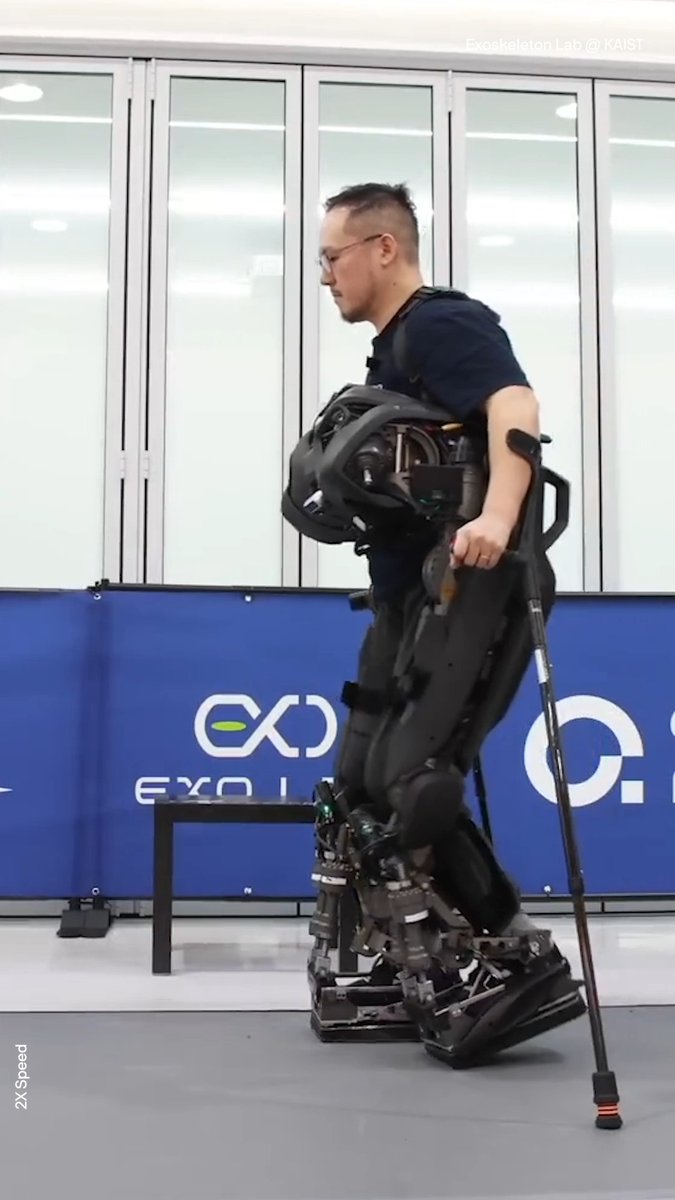
New robotic exoskeleton helping paralyzed people! 🫶🏼 This exoskeleton is developed by KAIST and Angel Robotics. Unlike traditional exoskeletons, it can walk over to a person in a wheelchair, thanks to a front-docking system that enables users to put it on independently. Equipped with advanced balance control, AI integration,...

36,467 次观看 • 1 年前 •via X (Twitter)

11 条评论

Solomon P Byer 的头像
Solomon P Byer1 年前

This is it there is such a big need for this With Elons neuralink this could literally be moving people paralyzed

Lukas Ziegler 的头像
Lukas Ziegler1 年前

Yup this is where @elonmusk steps in with @neuralink

猪狩ともか🌻 的头像
猪狩ともか🌻2 年前

I am in a wheelchair due to an accident that resulted in a spinal cord injury. Even though I have a disability, I try many things. I would be happy if I could bring courage and energy to everyone!

dar 的头像
dar1 年前

incredible

Lukas Ziegler 的头像
Lukas Ziegler1 年前

Pretty cool eeh

Appy Pie 的头像
Appy Pie1 年前

Incredible innovation! KAIST & Angel Robotics are pushing boundaries, making mobility more independent & accessible. Hope to see more breakthroughs like this!

TeslaElon SpaceXFan 的头像
TeslaElon SpaceXFan1 年前

🙏

pcguide.lk 的头像
pcguide.lk1 年前

why hit and poke it! when it's time for the machine - you have no choice!

Chris Jones 的头像
Chris Jones1 年前

I can't imagine what that feeling must have been like for that guy. Excellent use of AI: Keep Going Team!

AUKIfreak 的头像
AUKIfreak1 年前

this looks so good !

NILLOSCH Ni 的头像
NILLOSCH Ni1 年前

What do you think, will Neuralinks technology make such devices obsolete or is it ambitious beyond realistic possibilities. The logic behind their approach seems solid but what do i know ?
相关视频

Novel front-loading exoskeleton gets paralyzed patients up and walking | Paul Ridden, New Atlas Exoskeletons have been helping paraplegic patients to walk for years, but the latest development from KAIST is a little different. The WalkON Suit F1 can amble over to a patient seated in a wheelchair, wrap itself around the legs and body, and get the user up and walking. Professor Kyoung-Chul Kong from KAIST's Department of Mechanical Engineering has been working on exoskeletons for around a decade, with the first WalkON Suit being revealed in 2016. By 2020, the research team had increased the walking speed to 3.2 km/h (1.98 mph) and entered the fourth-generation prototype into the Cybathlon in Switzerland. This "cyborg Olympics" was launched in 2016 by ETH Zurich to drive advances in assistive technologies. The first event was held near Zurich and attracted teams from 25 nations, and saw 66 "pilots" compete for the spotlight. Four years later, pilots wearing KAIST's WalkON Suit 4.0 placed first and third in the Exoskeleton Race event. The third Cybathlon took place this past weekend, with Professor Kong's team fielding the latest development from the WalkON engineers. Where other exoskeletons require helpers to raise paralyzed patients out of their wheelchairs before strapping them to the assistive devices, the WalkON Suit F1 can "walk on its own like a humanoid robot" and approach the patient. It features a front-docking system that means the paraplegic user can remain seated as the exoskeleton installs itself around the body and legs of the patient. There's a system in place "that actively controls the center of its weight against the pull of gravity" to prevent it toppling over as the user is assisted into a standing position. Overall balance has been tweaked to enable the use of both hands while upright, along with short bursts without needing a supporting cane. The powerful motors and control algorithms have been significantly improved compared to previous versions, and the setup even sports vision recognition for obstacle detection. Paraplegic Seunghwan Kim – the engineering lab's staff researcher – served as pilot for the 2024 Cybathlon's exoskeleton competition. Though some teams made the trip to Switzerland to compete, Professor Kong's team elected to live broadcast its attempt from special facilities of the company he set up in 2017 to commercialize wearable robots, Angel Robotics. Teams were challenged with completing various missions within a tight time slot, including "moving by sidesteps between narrow chairs, moving boxes, walking freely unassisted by crutches, passing through a narrow door and closing it behind, and working on food preparation in the kitchen." It took Kim and the WalkON Suit F1 6 minutes and 41 seconds to complete all missions, and secure first place. Second place went to a Swiss team and third to Thai engineers, though neither of these managed to finish all tasks within the allotted 10 minutes. "The various know-how and core technologies accumulated while preparing for this competition is to contribute to further development and propagation of wearable robots, provoking imagination to draw on the future of wearable robots and on how it may change our daily lives," reads a KAIST press release detailing the win.

Owen Gregorian

38,463 次观看 • 8 个月前