正在加载视频...

视频加载失败

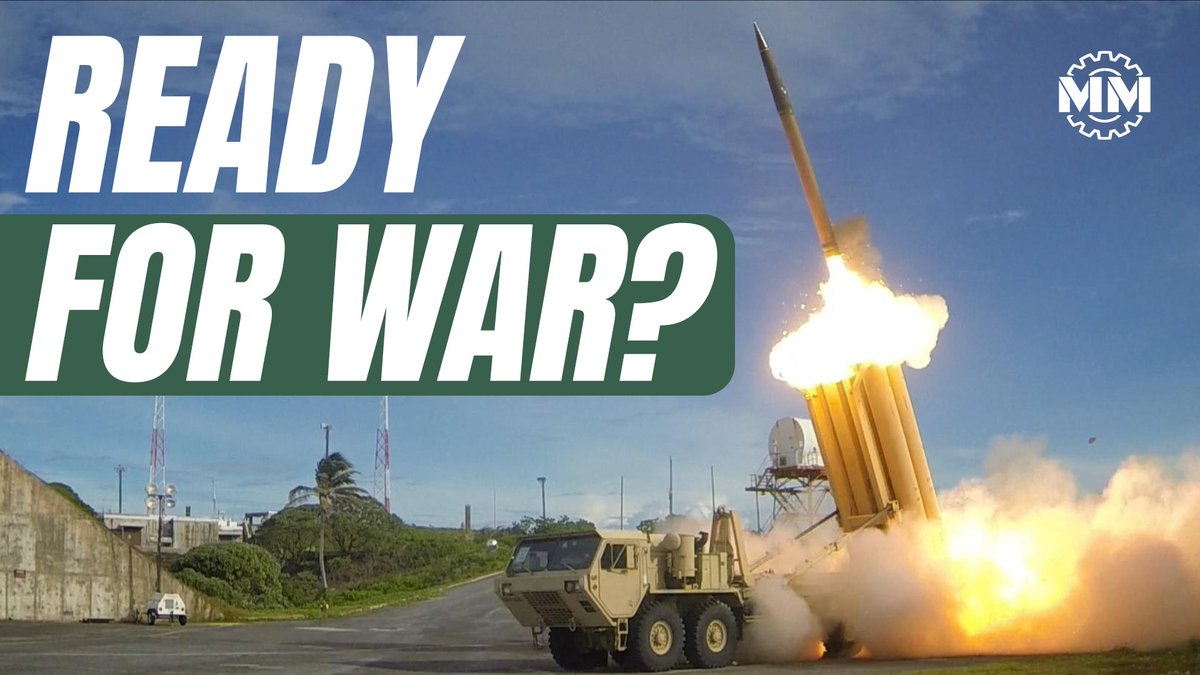
🚨NEW: 🇺🇸🇨🇳🇹🇼 The Iran war has burned through so many U.S. munitions that some administration officials say America couldn't fully defend Taiwan from a Chinese invasion right now. -Over 1,000 Tomahawk cruise missiles fired since Feb 28 -1,500 to 2,000 critical air-defense interceptors expended (Thaad, Patriot, SM-3, SM-6) -80%...

476,664 次观看 • 3 个月前 •via X (Twitter)

0 条评论

暂无评论

原始帖子的评论将显示在这里

相关视频

🇺🇸 The U.S. fired more than 800 Tomahawk missiles in the Iran war, at $2.6 million apiece, and it takes nearly 4 years to replenish a single production run. Here is the full picture: -Nearly half of U.S. Patriot interceptors gone -Between 190-290 THAAD interceptors fired ($15.5 million each) -Up to 80% of long-range ground-launched precision missiles expended And the Pentagon is now scrambling to put the defense industry on wartime footing, with companies that make thermostats and electric bus drives suddenly being asked to manufacture missile components… The replacement timeline is the part nobody is talking about: 4-5 years per weapons system, and that is if everything goes perfectly, which it never does. A CSIS war game simulation found that in a U.S.-China conflict over Taiwan, the U.S. would run out of long-range anti-ship missiles in 3-7 days and air-to-surface missiles within a month. The Heritage Foundation found the same scenario leads to "systemic operational failure" by day 120. The Iran war is not going to deplete the U.S. to the point of losing, nobody is saying that, but it has revealed something that adversaries can see clearly: America burned through years of precision munitions stockpile in 6 weeks against a mid-tier military power. A country that can regenerate combat power quickly is dangerous to fight, a country that visibly cannot is one that invites aggression. China is watching, and they just launched their most extensive military drills around Taiwan in years. Source: CBC News

Mario Nawfal

25,398 次观看 • 3 个月前

🚨🇺🇸 🇮🇷 A new analysis puts hard numbers on America's interceptor crisis: roughly 827 Patriots and 278 THAADs left, down from 2,330 and 452. -Per the Center for Strategic and International Studies, Patriot inventories have fallen under 1,000 and THAAD sits around 250-278, after months of defending bases across the Middle East -The air defense campaign has worked, with high though not perfect interception rates, but the price was burning through more than HALF the Patriot stockpile -The warning attached: diminished stocks may force the U.S. and its partners to take MORE RISKS with interceptions, because there are no good alternatives to Patriot and THAAD against ballistic missiles, and Navy ships are generally too far away -The bigger shadow: the expended munitions create a near-to-medium-term risk for U.S. readiness against CHINA in the Pacific, with rebuilding expected to take YEARS despite expanded production -The administration's budget shows the urgency: $95 billion for munitions in FY2027 plus $21 billion in the war supplemental These are the numbers behind everything that just happened: the pause Caine argued for, the massive attack Trump shelved, and the choice he now faces after Iran's two-night salvo. Every ballistic missile Tehran fires forces million-dollar interceptors out of a magazine that took decades to fill and will take years to refill. Iran can see the same math CSIS published. That may be exactly WHY the missiles keep coming. Source: CSIS / Writer: Daniel

Mario Nawfal

32,201 次观看 • 10 天前

🚨🇮🇷🇨🇳If America Can’t Handle Iranian Missiles, It’s Not Ready for China In just the first 16 days of war against Iran, the United States expended nearly 40% of its THAAD interceptors. If America’s most advanced air defenses are struggling against Iran—a regional power with a fraction of China’s capabilities—there is no plausible scenario in which the US is ready for a showdown with Beijing. The Chinese Arsenal The People’s Liberation Army operates the world’s largest missile inventory, backed by a rapid-action doctrine designed to dismantle U.S. bases and infrastructure in the early stages of conflict. Unlike Iran’s Kheibar Shikan and Sejjil missiles, China’s DF-27 anti-ship ballistic missile and DF-17 hypersonic glide vehicle offer advanced mid-air maneuverability and sustained hypersonic speeds. With an estimated range of 8,000 kilometers, the DF-27 places U.S. naval installations at Pearl Harbor and Everett, Washington within striking distance—allowing China to threaten American assets without deploying a single ship. Strategic Implications According to Dr. Andrew Erickson of the US Naval War College, China is the first nation to operationalize an armed ICBM. These capabilities could cripple U.S. operational effectiveness across East Asia and complicate the defense of American interests in Taiwan, South Korea, Japan, and the Philippines in the event of armed conflict. Depleted Defenses Even as Patriot and THAAD struggle against less sophisticated Iranian missiles, Western analysts warn that a large-scale Chinese attack could overwhelm U.S. defenses by depleting interceptor inventories entirely. With THAAD replenishment not expected until April 2027, the fragility of current stockpiles is increasingly difficult to ignore. The Central Question If US air defenses are depleted in the Middle East after just over two weeks of fighting Iran, how will they withstand a Chinese arsenal that dwarfs Iran’s—particularly when the DF-27 can already reach American soil?

NewRulesGeopolitics

137,298 次观看 • 4 个月前