Загрузка видео...

Не удалось загрузить видео

На главную

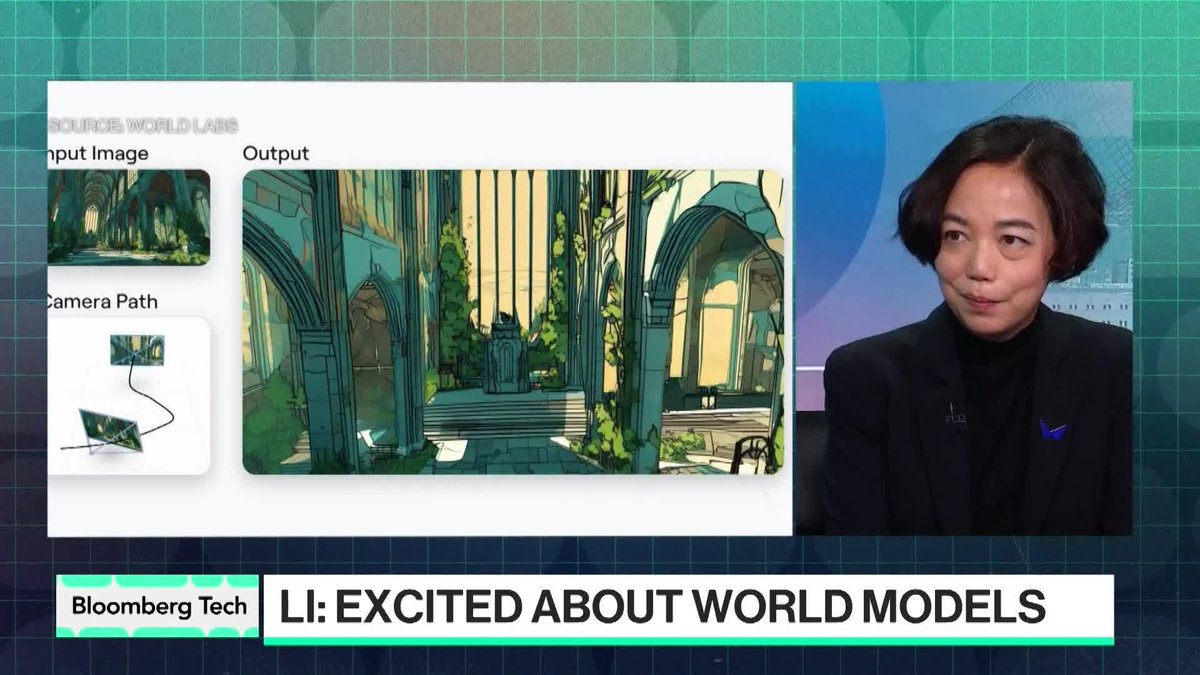
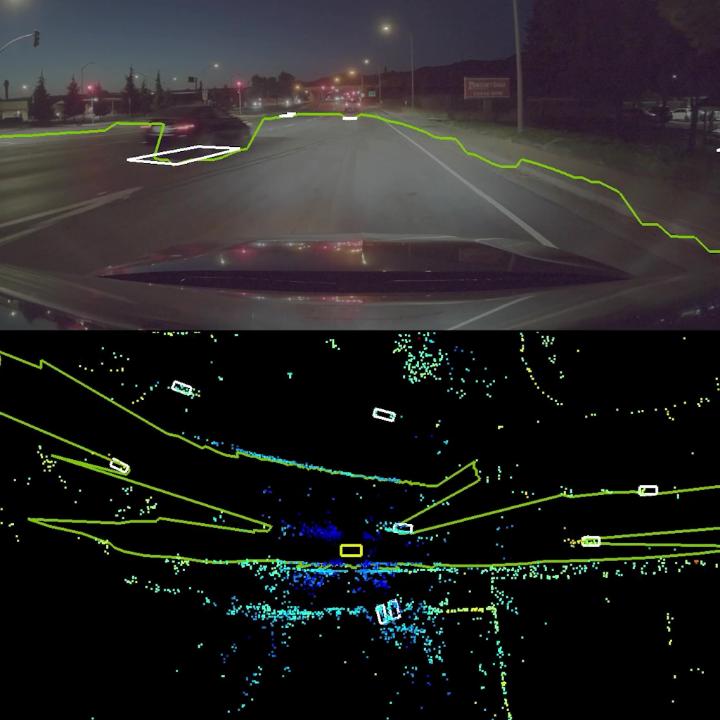
NEWS: Nvidia has just introduced "Cosmos," a world foundation model created to understand the physical world. The model can generate synthetic data to train robotics.

254,296 просмотров • 1 год назад •via X (Twitter)

Комментарии: 11

Фото профиля Troy Teslike
Troy Teslike1 год назад

It feels like Nvidia is using Tesla as inspiration for their new products, which look pretty impressive.

Фото профиля Fast Company
Fast Company1 год назад

“Synthetic respondents are enabling us to create personas that simulate and replicate [human] behaviors with a high degree of fidelity,” says @NielsenIQ’s Ramon Melgarejo. And you can use this technology for your product innovation cycle too. #FCIF #ad

Фото профиля Sam Nissim
Sam Nissim1 год назад

First legit competitor to Tesla real world AI.

Фото профиля Tezlar
Tezlar1 год назад

Umm isn’t Tesla doing this as we speak with the 7 million robots they have roaming around the world?

Фото профиля WeirdNerd⚔️
WeirdNerd⚔️1 год назад

More confirmation Tesla is on the right track (and has been for years)

Фото профиля Jae Kim
Jae Kim1 год назад

Yep. Seems Nvidia is coming after Tesla.

Фото профиля Bradford Ferguson
Bradford Ferguson1 год назад

NVIDIA has been unsuccessfully using synthetic data for many years now. It is a failed approach. Jensen didn't explain what is different now.

Фото профиля Kylead
Kylead1 год назад

The whole presentation is mind-boggling.

Фото профиля YeahGloveSki
YeahGloveSki1 год назад

Nvidia is Microsoft. Tesla is Apple.

Фото профиля Michael Tomlinson ✨
Michael Tomlinson ✨1 год назад

It feels really odd to use an AI to generate photorealistic videos, only to use another AI to ‘learn’ about the world… from those photorealistic videos. (I mean I get why they’re doing it, but…) I wonder if we will soon be able to ’short circuit’ this process and just learn the distilled knowledge? Because this feels horrifically inefficient!

Фото профиля 🇺🇸TRUTH SEEKER FOR THE PEOPLE 🇺🇸
🇺🇸TRUTH SEEKER FOR THE PEOPLE 🇺🇸1 год назад

Nvidia's "Cosmos" isn't just a breakthrough; it's a leap into the future: Physical World Insight: Cosmos deciphers the complexities of our environment, opening new avenues for AI interaction with reality. Robotics Revolution: By generating synthetic data, Cosmos can teach robots to navigate and manipulate our world like never before, accelerating development beyond traditional constraints. This isn't just tech; it's the dawn of a new era where machines understand and interact with our world as naturally as we do.

Похожие видео

This is THE moment of Physical AI! We are officially announcing Cosmos 3: Omnimodal World Models for Physical AI 🚀 - Cosmos 3 is an omnimodal world model: within a unified architecture, it can understand and generate language, images, video, audio, and actions. - It is not just a VLM, not just a video generator, not just an audio-visual generative model, and not just a physics simulator / world-action model. It can understand images and videos, generate images, videos, and audio, simulate future worlds, predict actions, and generate robot policies—enabling models to truly begin to “touch the world.” - Cosmos 3 is the #1 open-weight reasoner / T2I / I2V / robot policy across many benchmarks. Huge thanks to every teammate who fought side by side on this journey—from architecture, data, training, infra, serving, and evaluation to post-training. Every part of this project carries an incredible amount of hard work. This was my first time leading a project as Tech Lead, and I feel truly fortunate. The future of Physical AI needs models that can not only “see” and “describe” the world, but also “imagine,” “simulate,” and “act”—and eventually close the loop with the real world. I hope Cosmos 3 can become an important starting point for this direction, and I’m excited to push Physical AI into its next stage together with the open-source community. Welcome to the era of Physical AI. HuggingFace: Project Website: Code:

Max Zhaoshuo Li 李赵硕

1,078,418 просмотров • 2 месяцев назад

Robotics has a massive, silent bottleneck. It isn’t just data collection—it’s the brutal 1x speed of the physical world. Genesis AI Genesis AI just unveiled Genesis World 1.0, and they are attempting to turn the notorious Sim2Real gap into a pure compute problem. Evaluating a robotics foundation model across edge cases usually means hundreds of hours of physical lab testing. With Genesis World 1.0, what traditionally takes nearly a week of continuous, real-world operation is being compressed into 30 minutes in simulation. What makes this different from just dropping a robot model into an off-the-shelf game engine? 1️⃣ Nyx Renderer: A custom, real-time path-traced engine rendering noise-free 1080p frames in under 4ms. Game engines use rasterization tricks that confuse AI; Nyx uses physically accurate multi-bounce lighting so the model's "eyes" see exactly what real sensors see. 2️⃣ Quadrants Compiler: A custom Python-to-GPU compiler to run heavily parallelized multi-physics simulations (rigid bodies, fluids, deformables) natively across architectures. 3️⃣ Evaluation First: They aren't rushing to train on synthetic data. They are using this purely for closed-loop evaluation to perfect the physics first, currently claiming an impressive 89% correlation with real-world hardware tests. If the industry can accurately evaluate models in simulation without the physical world bottleneck, humanoid development stops moving at wall-clock time and starts scaling with compute.

Humanoids daily

17,240 просмотров • 2 месяцев назад