Sensitive content

This media may contain sensitive content.

正在加载视频...

视频加载失败

Nina casually hitting high notes in IU’s “Good Day” while sitting — catch her on Lee Mujin Service EP.159, April 8 at 18:00 KST. 💙 #NiziU #ニジュー #니쥬 NiziU #LOVELINE #NiziU_LOVELINE #NiziU_Korea_Comeback #니쥬한국컴백

7 条评论

nicole | NEMONEMO² 的头像
nicole | NEMONEMO²1 年前

@NiziU__official I need to watch niziu again bruhhh

Seven Eleven Records 的头像
Seven Eleven Records1 年前

Discover fresh lo-fi, chill songs, and beats from rising artists 🔥🎧 - updated weekly to keep you in the flow. 🎵 Listen now and vibe with us! #Spotifyplaylist ⬇️

MOnick MOstar ≷ Kim SooMin ILY 的头像
MOnick MOstar ≷ Kim SooMin ILY1 年前

@NiziU__official nini 🥹

stfanooo 的头像
stfanooo1 年前

@NiziU__official when will the video be released?

-𝔣𝔦𝔣𝔦- 的头像
-𝔣𝔦𝔣𝔦-1 年前

@NiziU__official nina 😭✨😍👍🏻

Marcelo Andrade 的头像
Marcelo Andrade1 年前

@NiziU__official AHHHHHH , she is insane. Since he pre debut , Love you Nina 😍😍😍❤️

𐙚 bibil 的头像
𐙚 bibil1 年前

@NiziU__official ninaa cocok banget blonde😍and her voice woww

相关视频

Trump got exposed for running the biggest insider trading operation in American history. Nancy Pelosi traded $5 million in stocks and Congress lost its mind. Trump literally executed $750 MILLION worth of stock trades in ONE quarter while being President. His ethics filing just dropped and the numbers are genuinely unprecedented in history: Between January and March 2026, Donald Trump personally executed 3,700 individual stock transactions worth between $220 million and $750 million. That's roughly 60 trades PER DAY. While signing executive orders, meeting foreign leaders, and making policy decisions that directly impact the companies he's buying and selling. Now here's where it gets really insane: On February 10, Trump bought between $1 million and $5 million worth of Dell stock. Three months later, on May 8, he stood at a Mother's Day event at the White House, thanked Michael Dell by name, and told Americans to "go out and buy a Dell." Dell stock surged 14.6% that day to an all-time high of $263.99. Since Trump's February purchase, Dell is up 96%. And 5 months BEFORE Trump bought Dell stock, Michael and Susan Dell donated $6.25 billion to Trump Accounts, one of the largest philanthropic commitments to a sitting president's signature program in modern history. So the timeline goes: Dell donates $6.25 billion to Trump's program -> Trump buys Dell stock ->Trump tells America to buy Dell from the White House podium -> Stock hits all-time high And that's just ONE stock... The same filing shows Trump bought Nvidia stock on February 10. One week later, Nvidia announced a massive chip deal with Meta. He bought more Nvidia stock one week BEFORE his own Commerce Department approved the sale of Nvidia chips to Saudi Arabia. He bought Intel stock starting in March 2026. The US government already owned a 9.9% stake in Intel worth over $41 billion. On April 30, Trump posted on Truth Social praising Intel, writing that "Intel Stock continues to rise." Intel jumped 3% in after-hours and is now up 140% year-to-date. He bought Palantir stock while his administration was actively handing them billion-dollar government contracts for immigration enforcement and defense. He bought Robinhood stock while his own Trump Accounts program uses Robinhood as the broker. He's currently sitting on over 100% profit on AMD, Intel, Bloom Energy, Marvell Technology, and at least 10 other positions. Every single president since Lyndon B. Johnson has used a blind trust to avoid exactly this situation. But Trump didn't. His assets sit in a trust controlled by his own children, and the filings show a broker acted as agent on several trades. The White House says the portfolio is "independently managed." But here's what independently managed looks like: Buy Dell stock. Three months later, publicly endorse Dell from the White House. Stock hits all-time high. Buy Nvidia stock. One week later, your own government approves their chip sales. Stock rips. Buy Intel stock. Post about Intel on Truth Social. Stock jumps. The government you run already owns a 10% stake. Buy Palantir. Hand them contracts. Buy Robinhood. Route a federal program through their platform. Nancy Pelosi got absolutely destroyed for her husband's stock trades. Her husband's total disclosed trades in his most controversial year were worth roughly $5 million. Trump just disclosed up to $750 MILLION in a single quarter. While making the actual policy decisions that move these stocks. This isn't a left or right issue. We're talking about the President of the United States averaging 60 stock trades per day in companies his own administration regulates, contracts with, and publicly endorses. What do you think?

Teddy - PolyBackTest.com

20,148 次观看 • 12 天前

Trump just got exposed for running the biggest insider trading operation in American history. Nancy Pelosi traded $5 million in stocks and Congress lost its mind. Trump literally executed $750 MILLION worth of stock trades in ONE quarter while being President. His ethics filing just dropped and the numbers are genuinely unprecedented in history: Between January and March 2026, Donald Trump personally executed 3,700 individual stock transactions worth between $220 million and $750 million. That's roughly 60 trades PER DAY. While signing executive orders, meeting foreign leaders, and making policy decisions that directly impact the companies he's buying and selling. Now here's where it gets really insane: On February 10, Trump bought between $1 million and $5 million worth of Dell stock. Three months later, on May 8, he stood at a Mother's Day event at the White House, thanked Michael Dell by name, and told Americans to "go out and buy a Dell." Dell stock surged 14.6% that day to an all-time high of $263.99. Since Trump's February purchase, Dell is up 96%. And 5 months BEFORE Trump bought Dell stock, Michael and Susan Dell donated $6.25 billion to Trump Accounts, one of the largest philanthropic commitments to a sitting president's signature program in modern history. So the timeline goes: Dell donates $6.25 billion to Trump's program -> Trump buys Dell stock ->Trump tells America to buy Dell from the White House podium -> Stock hits all-time high And that's just ONE stock... The same filing shows Trump bought Nvidia stock on February 10. One week later, Nvidia announced a massive chip deal with Meta. He bought more Nvidia stock one week BEFORE his own Commerce Department approved the sale of Nvidia chips to Saudi Arabia. He bought Intel stock starting in March 2026. The US government already owned a 9.9% stake in Intel worth over $41 billion. On April 30, Trump posted on Truth Social praising Intel, writing that "Intel Stock continues to rise." Intel jumped 3% in after-hours and is now up 140% year-to-date. He bought Palantir stock while his administration was actively handing them billion-dollar government contracts for immigration enforcement and defense. He bought Robinhood stock while his own Trump Accounts program uses Robinhood as the broker. He's currently sitting on over 100% profit on AMD, Intel, Bloom Energy, Marvell Technology, and at least 10 other positions. Every single president since Lyndon B. Johnson has used a blind trust to avoid exactly this situation. But Trump didn't. His assets sit in a trust controlled by his own children, and the filings show a broker acted as agent on several trades. The White House says the portfolio is "independently managed." But here's what independently managed looks like: Buy Dell stock. Three months later, publicly endorse Dell from the White House. Stock hits all-time high. Buy Nvidia stock. One week later, your own government approves their chip sales. Stock rips. Buy Intel stock. Post about Intel on Truth Social. Stock jumps. The government you run already owns a 10% stake. Buy Palantir. Hand them contracts. Buy Robinhood. Route a federal program through their platform. Nancy Pelosi got absolutely destroyed for her husband's stock trades. Her husband's total disclosed trades in his most controversial year were worth roughly $5 million. Trump just disclosed up to $750 MILLION in a single quarter. While making the actual policy decisions that move these stocks. This isn't a left or right issue. We're talking about the President of the United States averaging 60 stock trades per day in companies his own administration regulates, contracts with, and publicly endorses. What do you think?

Ricardo

2,092,011 次观看 • 1 个月前

Tiago Forte has pioneered the concept of a Second Brain. As the author of two books, he's learned that quantity and quality aren't opposing forces. Here's what else he's taught me about writing: 1. The brain is for having ideas, not storing them. Write stuff down. 2. If you really want to learn something, don't just consume information. Create something about it. 3. Note-taking is a form of time-travel. You don’t just take notes to remember ideas. You also take notes to remember experiences. Reading your notes takes you back to a different state of consciousness. Note-taking is a rebellion against the entropy of memory. 4. Save only the best notes: Don't hoard information. Save only the top 5-10% of your ideas. That way, you can trust that everything in your note-taking system is high-quality. 5. Tiago’s dad is an artist who taught him an important lesson: the energy to create art can dissipate in small, invisible ways if you let it. Set up a structure where you have the peace of mind and the bandwidth to do art. 6. The ultimate goal of note-taking is to improve your ideas. Too many people treat note-taking as an end in itself. But the goal of note-taking isn’t to save information. It’s to have ideas you wouldn’t have had otherwise. To be smarter, faster, and more creative. 7. Link notes together. Organize your ideas by topic, not by source. As you browse your note-taking system, consider the serendipity you want to create for your future self. For example, if you read two books about a topic, link those notes together. 8. In school, we’re taught to research before we write. Do the opposite. Compile notes over time. Then, once you have an idea, start writing immediately — right when you have an epiphany. Start researching after you've written a draft. 9. Create evergreen notes. Like a good investment, the benefits of your note-taking system should compound in value. Save ideas that will stay relevant for many years. Read the classics, skip the news. 10. Tiago publicly tested every idea in his book. For most, the internet is a blackhole of distraction. But it can instead be used as a place to do low-stakes experiments before you go all in. 11. The more expensive the location for a writer's retreat, the more it forces you to be productive. 12. "Be regular and orderly in your life, so that you may be violent and original in your work." — Gustave Flaubert, one of Tiago's favorite quotes. 13. The less formal and “official” a software program feels, the better Tiago writes. And he believes some of the best turns of phrase come out in messaging apps with friends. Stuck on something? Close the word doc and text a friend about it. 14. Every time you compress an idea, you make it more accessible. But you also lose context, depth, and nuance. 15. The ultimate test of how well you understand something is how clearly you can explain it in writing — clear writers are clear thinkers. 16. Twitter can help too. Stuck on a paragraph while writing your book? Well, send a tweet about it. If the idea resonates, bring it into your book. 17. Too many choices can cloud our creative process. The key to making progress is knowing when to take in new information and when to shut off all sources of distraction. Divergence and Convergence. 18. Anything you might want to accomplish—executing a project at work, getting a new job, learning a new skill, starting a business—requires finding and putting to use the right information. 19. Instead of working in “Heavy Lifts,” you can work in “Slow Burns.” Taking notes makes you less dependent on those long blocks of creative time you need when you have to complete creative projects in a single sitting. 20. Tiago: “If I could leave you with one last bit of advice, it is to chase what excites you.” 21. A bonus: “Run after your obsessions with everything you have. Just be sure to take notes along the way.” I've shared the full conversation with Tiago Forte here. If you'd rather listen on YouTube, Spotify, or Apple, check out the replies below.

David Perell

101,346 次观看 • 2 年前

LONDON BREAKING - Sara Sharif: Neighbor heard 'high-pitched scream' two days before 10-year-old's death, court told. Pakistani family killed their own daughter brutally OCT 15, 2024 Sara's father Urfan Sharif, 42, is on trial at the Old Bailey alongside her stepmother, Beinash Batool, 30, and uncle, Faisal Malik, 28. They deny murder and causing or allowing the death of a child. A blood-stained cricket bat, a rolling pin and home-made hoods may have been used to abuse Sara Sharif in the weeks before her alleged murder, a court has heard. Warning: This story contains details readers may find distressing PAKISTANI FAMILY - DAUGHTER - Sara Sharif 10 Years FATHER - Urfan Sharif, 42 STEP MOTHER - Beinash Batool, 30 UNCLE - Faisal Malik, 28 The 10-year-old began to wear a hijab to hide her injuries to her face and head from the outside world as she was beaten with objects, strangled, tied up, burnt with an iron and bitten, the Old Bailey has heard. A neighbor heard a "single high-pitched scream" of someone in pain two days before her death on 8 August 2023, a jury was told. Her body was found in an upstairs bedroom on a bottom bunk bed of her home in Woking #Surrey, on 10 August last year after her father Urfan Sharif, 42, called police and confessed to killing her after fleeing to Pakistan with the rest of the family. The minicab driver is on trial along with Sara's stepmother, Beinash Batool, 30, and uncle, Faisal Malik, 29, where they deny murder and causing or allowing the death of a child. The court has heard Sara suffered dozens of injuries, including bruising, burns and broken bones in a "brutal" campaign of abuse in the weeks leading up to her death. Prosecutor William Emlyn Jones KC said jurors may get a better sense of how the wounds were inflicted as he outlined the potential weapons found by police in a search of the home. A length of black rope with hairs pulled from Sara's head stuck on it, a rolling pin and a plastic-coated metal pole or baton, were found in a small brick outhouse at the back of the house, while a cricket bat stained with blood matching Sara's DNA was leaning outside. In bins to the side of the house, officers found a filthy nappy with a match to Sara's DNA, and "strange looking objects" made of bits of plastic bag wrapped up with parcel tape, some stained with blood or clumps of hairs. Mr. Emlyn Jones described them as "home-made hoods", adding: "They had been placed over Sara's head, we suggest and then taped in place." Batool's Amazon shopping history showed she had bought 18 rolls of parcel tape in July alone, the jury was told. The prosecutor said one neighbor heard a "single high-pitched scream" two days before Sara's death, which lasted a couple of seconds and stopped suddenly. 'Gut-wrenching screams' heard by neighbor "It sounded to her like the scream of someone in pain and as she put it, 'It didn't sound good'," he told the jury. A neighbor at the family's previous address said she had heard banging and rattling along with the sounds of a child crying or screaming, followed by a "deathly quiet" silence, the court heard. Another said she would hear children screaming and a woman shouting: "Shut the f*** up" and "go to your room you f***ing bastard," the prosecutor said. She would also hear "shockingly loud" sounds of smacking followed by "gut-wrenching screams", the court heard, and said Sara's responsibilities included taking out the bins every week and hanging out the washing. Batool told her sisters about the violence her stepdaughter suffered for more than two years before her death, the court heard. In May 2021, she said in a message: "Urfan beat the crap out of Sara. She's covered in bruises, literally beaten black. I feel really sorry for Sara, poor girl can't walk. I really want to report him." In another she said: "Something happens to Sara I will not be able to forgive myself." #Prosecutors say that in January last year, Sara began to wear a hijab - the only member of her family to do so - while teachers at her primary school spotted bruises on her face before she was withdrawn to be home-schooled in April. All three defendants are said to have played their part in the violence and mistreatment that resulted in Sara's death before flying to #Pakistan the following day. Sharif dialed 999 in the early hours of 10 August last year, when he and the rest of his family were already thousands of miles away, telling police in a tearful eight-and-a-half minute call: "I've killed my daughter." He also said: "I legally punished her, and she died," adding "she was naughty", and: "I beat her up, it wasn't my intention to kill her, but I beat her up too much." The court heard the house's Ring doorbell had been removed, while police found a note in his handwriting by her body, next to her pillow, which said "Love you Sara" on the first page. "It's me Urfan Sharif who killed my daughter by beating. I am running away because I am scared but I promise that I will hand over myself and take punishment," it said. The jury was told Sharif will claim he made a "false confession" to protect his wife, who will say he was a "violent disciplinarian" who she was afraid of. Malik, who worked part-time at McDonald's, is expected to say he was not aware of the abuse. The trial continues. #UrfanSharif #BeinashBatool #London #News #CrownCourt #Pakistan #Islam #Hijab #Islamistheproblem #UKNews #MurderTrial #EmlynJones

Abhay

11,155 次观看 • 1 年前

Just in $AMD Anush "Speed is the moat"|ROCm🎙️ In the race to define the future of AI, what's the one advantage that truly lasts? It's not proprietary tech, argues Anush Elangovan Elangovan, VP of AI Software at AMD , but the sustainable speed of innovation. He explains why AMD is rejecting the "walled garden" model for its open source ROCm stack, betting that an open community flywheel is the key to victory. Listen to understand how this open strategy is designed to out-innovate closed systems by empowering developers to solve everything from frontier-model challenges to the mundane, everyday problems that define the "last mile" of AI. AMD ROCm Software: Part 1 Transcript [00:00:00] Andrew Zigler: Joining me is Anush Elangovan, VP of AI software at AMD. And when people talk about AI compute, the conversation often stops at hardware specs, but it's more than just physical chips that win the game. It's also the software ecosystems supporting them. [00:00:18] Andrew Zigler: The prevailing strategy in the industry has been to build something like a walled garden. You know, something closed, proprietary locks, developers in. But AMD is betting on an entirely different play, open source acceleration, and with rock, their open source AI software stack. AMD is building not just hardware parity, but an innovation flywheel that's powered by the community with interoperability and the freedom to scale without all of that pesky lockin. [00:00:48] Andrew Zigler: And in this world, speed is your moat and how fast you can innovate while your platform remains open, flexible, and standardize across all of its applications. That's what we're gonna explore [00:01:00] today. So Anush, I'm really excited to have you here. Welcome to Dev Interrupted. [00:01:04] Anush Elangovan: Thanks for having me. Uh, super excited to chat about it. [00:01:07] Andrew Zigler: Amazing. Well, let's go ahead and dive right in with kind of what I laid it out with in the beginning, the idea of the moat and it being about speed. I wanna unpack that a bit because that came from you when you and I first spoke. And I, and I want to know, you know, how do you define speed inside of AMD beyond just things like hardware, benchmarks. [00:01:27] Anush Elangovan: Yeah, that's a very good question. So when we typically talk about speed, everyone's like, Hey, hardware benchmark specs, right? Like, uh, memory bandwidth or, or flops. And that is one important part of it, uh, AMD does very well. With that, we do have, a, a very good history of executing on that axis. [00:01:47] Anush Elangovan: But when I say speed is the moat, it is about, uh, how we prepare, how we build the muscle to run the race for a long time and run it fast. And it is [00:02:00] not about a single point in time that you've, you've beat some you know, benchmark and, and you declare victory. It's about building the ability to consistently develop and deliver. [00:02:13] Anush Elangovan: Both hardware and software innovation at scale and do it fast, right? Like, you know, we we're increasingly getting to a point where models come out and they're, uh, you know, a year or two ago it was like, Hey, they work on AMD on day zero, which is great, but now they are performing on AMD the day it releases, right? [00:02:32] Anush Elangovan: So, what does it take to Prefetch where the industry is going? Be prepared to intercept. At that point is what you know, I, I refer to as you know, the, the speed factor in, in creating this mode, right? And the mode is just shed all things that hold you back and run as fast as you can. [00:02:53] Anush Elangovan: Uh, because the pace of innovation that is, uh, being seen in, in AI [00:03:00] industries is just. Amazing. Right? And it's like, it's transformational at at how you generate electricity. It's transformational as at how you build data centers. It's transformational at how you deploy compute, networking. It's transformational at what kind of use cases you, you know, uh, use AI for. [00:03:17] Anush Elangovan: Uh, and for that, you need to be prepared to, see what comes tomorrow and be prepared to run the race tomorrow. [00:03:23] Andrew Zigler: Yeah, it's a really great perspective because it highlights that it's not just like a checkpoint that you run through. I like how you called out, like it's not just hitting that benchmark or being the best in class at that moment, in that snapshot, it's about having a. The throughput and about having that dedication to the idea and continuing to deliver on it. [00:03:43] Andrew Zigler: It's not just crossing the threshold, but it's also being the engine. And that's what, that's what protects a business. That is the moat, because the moat is that innovation layer, the faster and more, uh, future forward. That you can work and think, [00:04:00] you know, the better. Uh, we, we talk a lot about like future forward work styles. [00:04:04] Andrew Zigler: Like what are the things I could be doing right now today that are gonna be like, way more useful tomorrow? Let, let's abandon those, workflows that are older and that kind of like, that translates into. An advantage when you work that way. You know, what kind of things have you learned working with, uh, like across all spectrums of people who would use ROCm, right? [00:04:23] Andrew Zigler: You have like the developers, but then you also have the enterprises and you have this large span of adoptees, right? So what is the, what does that look like that you learn? [00:04:32] Anush Elangovan: Yeah, so, so the way I look at it is there are gonna be pockets of different, uh, you know, cadences, right? Like, so people who are deploying in enterprises, for example, right? The validation and how long it takes for them to deploy an LLM that's secure. It's, with guardrails, et cetera, maybe longer. [00:04:52] Anush Elangovan: but you still have to go through the process and you have to be prepared to like, walk that walk to deploy an enterprises. That doesn't mean it's [00:05:00] not fast, that's as fast as you can do for that industry, right? And if you are deploying AI in healthcare, right, it's, it's got its own, uh, cycle. [00:05:07] Anush Elangovan: but in each one of these, you want to see how, like, go down to the essence of what is it that you actually have to do. And, you know, I, I, I like how you framed it. It's like it's, you shed your prior assumptions of how things are done, right. And, and you kind of build up from a, uh, first principles, uh, approach to say, this is how I could use AI to unlock, whatever I'm doing. [00:05:33] Anush Elangovan: And, and, some of it, you know, it's good to really step back and look at. Just question every part of it, right? Like right now you're getting chat GPT and, Gemini competing for like, math, olympiads and, and, uh, college, uh, reasoning, uh, tests. Right? And, and those are like that, that is amazing and increasingly like complex tasks that they're trying to do. [00:05:58] Anush Elangovan: But there may also be like. [00:06:00] More mundane things that AI could, could get applied to. Right? And, and so when we think about shedding old ways, you wanna shed it not just in like the tip of the spear. It's like, you know, I'm gonna see what's the frontier model. It's also, it could be something as simple as. [00:06:18] Anush Elangovan: How do you choose a, a movie, uh, you know, like a recommendation system, right? Or, or, uh, an automated, uh, flight, uh, rebooking system. So the moment, you know, your flight is late, uh, right now it's a notification, right? It's like, oh, you got a text message saying your flight's late. And I got that like three times this week. [00:06:38] Anush Elangovan: But anyway, uh, and, and, and, and, I was just like, okay, so if I were to rethink this. All this MCPs that we have that should be hooked up into an MCP that says, your flight's delayed. Here are your options. If you want, you know, these are the paid options. Yeah. Here are the free options. This will get you back into your you know, Toronto airport [00:07:00] tonight. [00:07:00] Anush Elangovan: Or if you stay, here's a hotel plus this, plus this, plus. It's just like, go ahead is all I should say. Versus now I'm like, okay, can someone, you know, can I call a travel agent? Can I do this? Can I go online and log into And you know, so we gotta fundamentally rethink even those like small, nuances of, things that we do that can be automated out and AI is really, really good at doing something like this, right? Maybe I just explained an AI startup idea right now. Somebody should just start that. [00:07:29] Andrew Zigler: I think you did. Yeah, you definitely did. Someone, one of our listeners is definitely going to lift that off of you. I, I, I, you know, I hate being on the receiving end of those. You feel a little helpless and then you have to like, follow the whole flow. So I know what you mean. Like I, I like how you called out that the build and this like. [00:07:45] Andrew Zigler: Where speed is your moat and the innovation layer is protecting you, is what makes you better than your competitors. How you scale that and you bring that to market. So by understanding the problems that you're solving, uh, throwing away those older assumptions, but also [00:08:00] recognizing that like. We're building every single day, new things and new ways of using stuff that we're still figuring out the implications of. [00:08:08] Andrew Zigler: And so when you have a lot of velocity and you're introducing a lot of new ideas, and maybe you have that workflow now that automatically rebook your flight off of your late flight text message, and uh, I know I would certainly use it, but you know, what kind of philosophies guide the way that y'all think about building this ecosystem to manage that stability while letting folks. [00:08:29] Andrew Zigler: Play with the speed and the assumptions and the airplane re bookings. [00:08:34] Anush Elangovan: so, so I think, you know, we need to peel one layer down, right? and the philosophy is, Hey, we, we just discovered electricity, right? And you know what we're gonna do? We are gonna make motors, uh, or dynamos, right? Like engines. Uh, sure. We don't know if it's gonna be a Ferrari that you're gonna make, or it's a a a a dump truck. [00:08:57] Anush Elangovan: That's good for doing this. But let's [00:09:00] let, which is also required, right? You need a dump truck. You need a garbage truck. And, [00:09:04] Andrew Zigler: Yeah. You need the [00:09:04] Anush Elangovan: course you need, uh, a Ferrari for a midlife crisis, right? So, [00:09:09] Andrew Zigler: precisely. [00:09:10] Anush Elangovan: But, but my, uh, point is what do we build next? And, uh, and this is what I meant by like, okay, let's, let's take those baby steps to build the. [00:09:20] Anush Elangovan: Infrastructure that's required that we know we'll have to use, right? So, so if I just discovered electricity, okay, great. Now one, how do I save this electricity and how do I use it? So there's battery technology, so you need to do something like that, right? Like so. But then you also want to make it into an actionable thing. [00:09:37] Anush Elangovan: You want to make it for like automobiles, or you wanna use it for, you know, powering, uh, entire cities. So it is that transformational. So, uh, AI is that transformational. So, if you distill down, it'll, it'll come down to how do we think about, what we can do with this this fundamental technology that, We may not be aware of what it [00:10:00] is gonna unlock next, but at least you know the next step is clear, right? It's like a dense fog, you know, it's gonna be like, it, it's the right path. You see the light, but it's kind of like out there and, and the steps you're taking are concrete and you're like, okay, this is good. [00:10:16] Anush Elangovan: I, this is better than where I was or where we were. So we are moving forward. So you can build with the. Intuition from what you see in the short term and a tactical view, but towards what you think the future is gonna be. [00:10:28] Andrew Zigler: Right. You almost like we're all in this like fog of war, right? And like you said, you're reaching out and you're trying to step through it. You could think of it too, as like you're in the dark and your hands are up in front of you and you know that. You're, you're not gonna run your face into a wall because your hands are out in front of you, but you're not gonna maybe do much better than that. [00:10:45] Andrew Zigler: So that's kind of like, I think the eco, the, the industry, the world that we find ourselves in, uh, and we all have to, then this becomes the power of an ecosystem, of a group of people working together to create that layer of, [00:11:00] uh, of establishing the [00:11:01] Anush Elangovan: exactly. And I, I, I just, instead of, you know, saying fog of war I describe it as like, you're in this. Beautiful valley with like a morning, uh, fog that's in. You can smell the flowers. You, you hear the birds. You are like, okay, it's, we are in like, uh, utopian paradise and yes, I just need to like, continue the walk, right? [00:11:24] Anush Elangovan: and then move forward with that, conviction that you're in the right spot. [00:11:27] Andrew Zigler: Yeah. So let's talk about that ecosystem world. This nice, I love how you describe it, this grassy side of a hill in the morning that's covered in some mist and maybe we can't see 30 feet in one direction, but it sure is a beautiful hill and it smells nice. And so we're all here. And why is, in that world, why is. [00:11:44] Andrew Zigler: You know, open source, their strategic advantage that y'all are going for in the AI hardware market. And, and then how does like ROCm turn that into wins for people within that ecosystem? [00:11:56] Anush Elangovan: you know, the, the way we look at it is this, is kind of like how I view [00:12:00] AI and the ecosystem, right? But, but it is for everyone to enjoy. Uh, and so we do want to make sure that. You know, it is, uh, beneficial for everyone. [00:12:09] Anush Elangovan: The ecosystem can come in and, and innovate. It's an open innovation engine. and uh, it is very different from, you know, having a walled garden with, Hey, only I know how to do this and I'm gonna do it and throw it over the fence and you can use it or keep walking, right? So we'd like to be good citizens that way, but also. [00:12:30] Anush Elangovan: Uh, it is self-fulfilling in a way, right? Like it, the, the pace at which we innovate with open source is unmatched. Like, you know, our serving engines are like VLLM and, and sg l. Those things, uh, those frameworks are like super, super aggressive in terms of how fast they come out with features and how fast they can you know, get performant models out. [00:12:52] Anush Elangovan: And that compared with what, uh, you'd get from, you know, the likes of like T-R-T-L-L-M or something is always lagging, right? Because you [00:13:00] just can't keep up with you know, 200 commits a week just on one particular model to get that model really performant [00:13:06] Andrew Zigler: And, and, and in that world where, you know, everyone can enjoy the winds of this, what kind of customer stories or innovation stories have really stood out to you and excite you about building and creating this place for developers? [00:13:19] Anush Elangovan: Yeah. So I think the parts that are super exciting for me are when when we get to see a customer that is first skeptical. Then they start a little like, okay, fine, we'll give you a chance. Uh, we do a simple, uh, POC and then they're like, huh, this seems to work. Yeah, we told you it works. [00:13:42] Anush Elangovan: You don't have to change one line of code. Really? Yes, no need to change one line of code. Okay, let's try a production workload. So then they try it. Oh, you're more performant than the competition. Yes. We're more performant than, than the competition. So how much does it cost? And we're like, oh, it's your TCO is better with, uh, [00:14:00] AMD. [00:14:00] Anush Elangovan: So again, they're like, wow, okay, good. So now how do we deploy at scale? And then we go deploy it at scale. And when they give a thumbs up on that and they say, this is good, right? That's when you know, you, you see it go full circle from like, oh, we, we've never heard about AMD to like actually deploy to tens of thousands of GPUs In the order of a few months, right? It, it, it really is fascinating to see and very exciting and invigorating to [00:14:28] Andrew Zigler: Yeah. At like a great exposure to a lot of interesting problems. And, and then people using the infrastructure, the, the technology available to solve those problems. Really specific problems by the way, that's often why they're bringing their data and AI to it, uh, is because it is really specific and important for them. [00:14:45] Andrew Zigler: And there's a, a lot I think that other engineering orgs can learn and even emulate from AMD's success and, and having this open source ecosystem and it causing this acceleration within. You [00:15:00] know, uh, customers and enterprises that use and adopt the tools and, and, and that creates an advantage. And that goes back to why we're talking and like the real thesis of our conversation today. [00:15:10] Andrew Zigler: So how do you think engineering leaders that are listening to this and obviously tapping into this great success AMD has from an open source flywheel, how do you think other, other folks building in the same space can foster that open, first, that open source oriented culture in order to, you know, accelerate their innovation goals? [00:15:29] Anush Elangovan: Yeah, that's a very good question. So the startup that um, was acquired by AMD we, we built, I mean, we started off doing iot stuff and you know, smart ring and all that, right? But in the, the end of like, uh, and not the end, the last six years of the company was building ML compilers. [00:15:47] Anush Elangovan: And ml, ML compilers are like super, uh, complicated, sophisticated, advanced algorithms, dah, dah, dah. but it was all open source, right? So our VCs were like, wait, what do you mean your core [00:16:00] IP is open source? And um, the speed is the moat applied even then, right? It was just like, yes, if you have an idea that. [00:16:08] Anush Elangovan: Because someone saw this idea that you are, they're gonna be able to catch up, then you probably have the wrong idea anyway. But if they are, you know, you execute and they're gonna catch up, that you should assume they're gonna catch up. Right? So you gotta move forward. So keeping it open source is super important. [00:16:25] Anush Elangovan: But also to your question on like, you know, the learnings from an AMD standpoint, right? If there are, hard problems, I'd say dig in and work through it, right? Like there's no way but through it, right? That should be the simple mentality. And more, uh, frequently than not. you'll see that you'll just make it through in a, in, in good form. [00:16:52] Anush Elangovan: But if you doubt it and you're like, oh, I don't know if I should commit, if I'm, I, you know, what should just commit to do the right thing [00:17:00] every step, right? Every step, and just keep taking one step in front of the other. And in no time you'll see that you'll be running. Right. And, and yes, the first few steps will be like, yeah, everyone's complaining about your software quality. [00:17:15] Anush Elangovan: Everyone's complaining about this and that, and it doesn't work. And, and a few steps in, you know, you get, you get the hang of all the complaints that are coming in. You get the feedback loop. You're like, okay, what, what are you prioritizing again? One step in front of the other, right? You just keep knocking that out and then you get to a point where you're, it just becomes second nature, right? To do the, to do the right thing. And, and then yes, if someone gives you two options, you'll be like, fine. This is, uh, you know, there's always the resource trade off. There's always a human capital trade off, but what's the right thing to do? of course, I, I'm pragmatic about what we choose, but, but if the right thing for your long-term success is dig in, go first, principles, make it [00:18:00] happen. [00:18:00] Anush Elangovan: Well. Then just go for that. There's, there is no shortcut to [00:18:04] Andrew Zigler: acknowledging, you know, how it aligns with your mission, your core company goals, and what you're looking to achieve. And, and I, I love how you rightfully called out that in the open source world and you know, you have your technology that you've built, what you think is your moat upon, right? [00:18:22] Andrew Zigler: It's your code and, and to open source that, or to just make it where anyone could peer in is, you know. Scary in one regard, but two, it just kind of feels like you're handing away your throne room in some kind of sense, a very direct feeling sense. But the ultimately, you were really right to call out, and this is something I think about all the time, that the real power there is still the speed This the speed. [00:18:42] Andrew Zigler: That was the moat at the beginning of our conversation. It's the speed in combination with your. Very specific domain understanding of what you're building and what you're creating, and your new role as the steward of that world and how people plug into it, which [00:19:00] has frankly, a lot more influence and power than lording over a closed. [00:19:04] Andrew Zigler: You know, repository or an ecosystem, and like you said, like throwing things over the wall. Sure. There, there might be people always on the other side of that wall, but you're not gonna have a great connection with them. You're not gonna be able to really clearly understand them. I, I like your metaphor of the side of the field of the mountain a lot more. [00:19:23] Andrew Zigler: But, but in the, in this world, you know, where. That speed is, is the power and, and open source is just one way that you can harness that speed to get really far ahead and to innovate. , There's other parts of this equation that you can be experimenting with too, and I'd love to pick your brain about them as a software leader and, and, and one of them is about looking forward and kind of understanding that future that we're all building towards and beyond today's models and hardware. [00:19:48] Andrew Zigler: You know, what do you see as the next major bottleneck or opportunity in the AI compute space? As, as you know, enterprises and folks start to get a little more mature about what's available to [00:20:00] them. [00:20:00] Anush Elangovan: Yeah, I think, the bottleneck and opportunity is, uh, what I'd call, call walking the last mile of ai. Right. Uh, and like I I, I gave you an example, uh, previously, but, but it's similar to that. It's like there are cases where Humans have so many, uh, things to do in your day. You know, like the, if we sit down and actually had a customer focus like, okay, these customers lives, I'm gonna save four hours of this customer's life. And if you actually sit down and look at all of that, it'll be. Easily automatable, easily you know, uh, applicable, uh, for ai, right? [00:20:39] Anush Elangovan: Like, but then making it happen is gonna take a little bit, right? It's like maybe it's, uh, paying your utility bill, right? Or something like that, right? Or, or, your healthcare explanation of benefits. Uh, like, I'm sure you get an explanation of benefits, and I'm like, I, I don't even know what that thing is. [00:20:55] Anush Elangovan: It's just like EOB and like. [00:20:57] Andrew Zigler: it's a big, a big old PDF. Yeah, [00:21:00] exactly. [00:21:01] Anush Elangovan: Like, like, I'm like great straight to the, uh, shredder, right? And but that could be, you know, automated with the ai, right? It, it, it'd be like, Hey, the summary of this thing is you went and visited this day. Everything is okay. Everything is paid for, so don't worry, it's not a bill. [00:21:17] Anush Elangovan: That again, the same, uh, thing, but the sense of what that information overload is could be. Digested by ai, uh, accumulated over time and retrieved when you need it. Like, I don't, I actually don't even need to know this EOB right now, unless of course, whenever I need to know it, that maybe, you know, like for some benefits I need to figure out what do, what did I do over the past year and how do I apply it? Source:

Mike

14,195 次观看 • 7 个月前

There was a massive John O'Keefe and Karen Read re-trial bombshell that went under the surface last week. Not only were 17 Ring videos deleted from John's system between 12:37am and 5:08am on 1/29/22, another video of Karen and her family collecting the murder weapon after 12pm ET that day was also deleted. This means someone (probably Karen) accessed John's Ring system --access that John's niece and nephew have testified Karen possessed-- sometime in the afternoon of 1/29/22 (before search warrants were served on Karen's phone and her car, after 4pm that day, when the vehicle was located by State Police at the home of Karen's parents in Dighton). Indeed, Karen would only need knowledge of John's Ring login information --something Karen had, as evidenced by the document below-- in order to access the system remotely from any device. The fact that there was a video deleted after 12pm on 1/29/22, and that the video in question directly captured Karen and her family leaving John's home with the murder weapon, indicates at least some of the deletions in questions did not occur until Karen was released from the hospital. Karen's access to John's rings system, and the timeline of the deleted videos, thus raises the potential that Karen also deleted 17 of the 18 Ring videos from earlier that morning --between 12:37am and 5:08am, as mentioned-- while at her parents house in Dighton. In turn, this would mean Karen left specific Ring videos on the system, including a staged "bump" into John's car at at 5:08am, in anticipation of being criminally charged. Read a prior public court motion regarding Karen's access to John's ring system here - If these deletions are confirmed, Karen's prior statement during a news interview becomes an ominous double entendre. "I mean, what kind of criminal mastermind am I? Not a very good one," said Read with a smirk to the camera. Perhaps in a prescient manner, when that clip first aired in March of 2025, this is what I reported (at the time, I did not fully realize the implications of Karen also deleting another damning Ring video from after 12pm on 1/29/22); "Karen Read, as I predicted many months ago, left a single Ring video on John O'Keefe's system , from roughly 5:08am, wherein Karen may have staged a fake "bump" into John O'Keefe's car to, in real time, plant reasonable double as to the cause of Read's broken taillight." "I am actually stunned that, in that moment, Karen managed to make sure the other 17 Ring videos on John's system were deleted (from between 12:37am and 5:08am), and managed to stage a fake "bump" into John's car, as a preemptive form of artificial reasonable doubt." "Karen didn't pull it off, but her mind was certainly in overdrive that morning before Read hatched her plan to, in my view, return to Fairview Road (circa 5:23am), confirm John was indeed dead, as a result of Karen hitting John with her car at 12:31am that morning, while drunk, and then leaving John on the lawn in a blizzard." "Then, Read, after 5:35am, went to pick up Jen McCabe and Kerri Roberts, returned to John's house with the two women, told them to stop searching in John's house because "John wasn't there," left the alleged murder weapon in John's driveway, and returned to Fairview Road after 6am (in Kerri's car), whereupon Karen somehow "saw" John's body in the snow, through a blizzard, and before the three women passed the tree line of the lawn of the home where John met his lonesome and untimely end earlier that morning (as a result of what, I believe, was a fight between John and Karen, as to the breakdown of their relationship, spiraling when Karen felt she was losing control of the situation)." See that clip of Karen's "criminal mastermind" statement, and read my shockingly accurate prediction, here - Also of note, in towel's exclusive Karen Cam footage from May 8th, 2025 --when jurors in Read's re-trial were show evidence of Karen's father and brother collecting Read's Lexus from John's home in Canton after 12pm ET on 1/29/22-- prior observations by social media users --related to Bill Read leaving the courtroom within seconds of those clips being shown to jurors-- were confirmed. Read the initial reporting of Mr. Read leaving the courtroom in very seconds after clips were played here - Bill Read --already under observation by a court officer due to reports Mr. Read was staring at jurors as state witnesses were testifying over recent days-- noticeably left the front bench behind his daughter for nearly 40 minutes in the immediate aftermath of the deleted Ring videos (in particular from after 12pm that day involving Mr. Read, Karen's brother, and Karen's sister-in-law - all three of whom are on the state's witness list for the re-trial, but have yet to be called). This was the first time, throughout any proceeding, that Mr. Read left the courtroom benches during trial for an extended period of time. Interestingly, Hank Brennan announced last week in a court motion that the keeper of records for Ring will be testifying in Karen's re-trial --something that did not happen in the first trial-- which, further, suggests that Ring may have a log of when John's account was accessed, where it was accessed from and, most importantly, what videos were deleted from that account (along with when those videos were deleted). Read that motion related to Ring's upcoming testimony, between May 12 and May 16 of 2025, here - If it is indeed confirmed that Karen, or her family member, accessed John's Ring system to remove 17 of the 18 videos recorded between 12:37am and 5:08am on 1/29/22, along with another video after 12pm showing Karen's family collecting the vehicle, with a broken taillight, before taking it back to Dighton-- that is devastating evidence to Karen's defense. It has already been revealed in court papers, in that regard, that Karen was on her laptop at her parent's house around 4pm on 1/29/22 --when Karen's phone and car were collected as evidence by the police-- and, in turn, that may be the smoking gun as to Karen's consciousness of guilt if Ring records indicate videos from John's system were deleted from a remote location (in particular Dighton, Massachusetts) circa 2-4pm or so on that afternoon. Those deleted videos are no doubt very damaging to Karen, and would certainly show her taillight broken when Karen returned to John's home at 12:37am that morning --as confirmed by Karen connecting to John's home wifi at that time-- as well as that taillight being broken when Karen, her father, her brother and her sister-in-law came to collect the alleged murder weapon after 12pm ET on 1/29/22. See testimony from Karen's first trial wherein Karen admitted to one of John's friends --whom Karen tried to bait into an affair by manipulating that friend about John hugging someone on a vacation prior to John's death, until John's friend cut off the affair when he realized Karen was only trying to hurt John-- that Karen "knew where the Ring cameras were" in John's home in the weeks leading up to John's last moments alive, here - Karen, of course, was taken to the hospital (at the request of her own parents) for threatening self harm after confessing to hitting John O'Keefe, while drunk and with a BAC of 0.14-0.28 (2-4 times the legal limit) at exactly 12:32:16am ET on 1/29/22. Firefighter Katie McLaughlin, a key witness in the John O'Keefe and Karen Read re-trial, testified that she was the person who asked Karen if John had experienced any trauma in the early morning of 1/29/22, to which Karen replied, "I hit him! I hit him! I hit him!" At that point, multiple witnesses to the statement (including other first responders) realized Karen was confessing to hitting John O'Keefe with her car, while drunk with a BAC between 0.14 and 0.28, and then the Canton Police called in their supervisor. See that earthshattering testimony from Firefighter McLaughlin here - Jurors have already seen shocking videos, from Karen's own media interviews, wherein Read admits that she should not have been drunk driving in the moments before she John drove from a bar to an after party a local home. The clips, in turn, not only showed Karen admitting to her state of intoxication while driving but, at the same time, they also showed Karen ADMITTING to having up to nine drinks over just three or so hours on the evening of 1/28/22 and the early morning of 1/29/22. Indeed, see that admission by Read, as to her state of intoxication while driving in the moment's before John was allegedly struck, here - "I had been out late, I had been drinking, John was in the last general vicinity of where I saw him...within 50 feet...he's in the front yard so I'm thinking "Jesus, was I starting to pull away and did I run over his foot." "So when I found him, I was thinking, did I clip him somehow," said Read, in further footage played before jurors. Read's team fought hard to keep those pieces of footage secret from jurors, and the public, but that plan failed. Watch the previously-secret footage of Karen's admission as to potentially hitting John with her car while drunk here - Somehow making Read's situation worse, Hank Brennan than played interviews with Read wherein Karen admitted to attempting to frame one of John's dear friends, Jen McCabe, for Karen's actions. "Jen McCabe? It's me or her! Either I'm going down, Jen, or you are!" Read told a film crew, in remarks played for jurors during week 2 of Karen's re-trial as to causing John's death. See that moment here - Of note, Hank Brennan has played multiple audio and video recordings for the jury related to Karen Read admitting that Karen and John O'Keefe were in an argument in the minutes leading up to Read allegedly striking John with her car, while drunk driving. Karen was upset because the name of John's former girlfriend was mentioned on the drive to Fairview Road. See more background about that argument between a possessive, controlling, Karen Read and John O'Keefe, in the moments before John was allegedly struck by Karen's car at 12:32am on 1/29/22, here - Earlier last week, jurors were aghast at Karen mocking John's mother, Peggy O'Keefe, also in a media interview. See those moments here - Also, as a final note, I want to extend a huge thank you to super towel MrrderByMaestro for noticing the subtle moment in court this week when confirmation came down that a Ring video from John's home system -- that is obviously quite damaging to Karen Read's defense-- was deleted (along with the 17 of 18 videos deleted earlier that morning that also implicate Karen, and her broken taillight, as the cause of John's death). I believe Mr. ByMaestro to be the exemplar of noble towel service to humanity, and I thus deem him a member of Nobilis ordo Linteo (N.o.L.). As always, watch live coverage of Monday's (day 13) presentation of evidence in the John O'Keefe and Karen Read re-trial, chat with the wonderful towel friends and watch special Towel MultiCam Coverage --including the world famous Karen Cam-- via this link -

Grant Smith Ellis

101,202 次观看 • 1 年前

Charter School Must Address Triple Shooting Near Bulls College Prep Campus By drkugler On May 2, 2025, three teens were shot at 205 S Hoyne Ave, steps from Bulls College Prep on Chicago’s Near West Side, raising urgent questions about student safety and school accountability. SubxNews video footage, posted at 5:12 PM on May 2, 2025, captures the grim aftermath: police cordoning off the area, evidence markers scattered, and a community in shock—all within 1,000 feet of the school at 2:45 PM, during school dismissal hours. Bulls College Prep expressed sorrow over the incident but stated it occurred off-campus, suggesting it falls outside their responsibility. This stance has sparked debate about the school’s role in ensuring student safety in nearby areas legally designated as “student safety zones.” The shooting occurred in a student safety zone, as defined by Chicago Municipal Code 8-4-355, which covers areas within 1,000 feet of any school between 6:00 AM and 7:00 PM on school days. The victims, later confirmed as Bulls College Prep students were shot roughly an hour after dismissal, prompting concerns about oversight during student transitions. The Chicago Municipal Code emphasizes enhanced penalties for crimes in student safety zones, reflecting a societal expectation of heightened protection around schools. While the law does not explicitly mandate school responsibilities, it underscores the need for schools like Bulls College Prep to prioritize safe passage to and from campus, particularly in high-risk areas. Bulls College Prep’s position that the incident is unrelated to their operations has frustrated some community members, who argue schools must play a larger role in addressing safety in these zones. However, schools often face challenges, such as limited resources or unclear legal obligations, which may complicate their ability to extend safety measures beyond campus boundaries Chicago Bulls College Prep, a Noble School This incident echoes broader concerns within Chicago Public Schools (CPS). In December 2022, Benito Juarez High School faced scrutiny after a double murder initially described as off-campus was later confirmed to have occurred under a student bridge on school grounds. One victim was a Bulls College Prep student. In both cases, school officials emphasized the incidents were not their responsibility, leaving families and communities seeking answers ChicagoPublicSchools The Near West Side, where the shooting occurred, is a gentrifying area with rising property values—homes like 2150 W Monroe St are listed for $2.195 million—yet violence persists. Schools like Bulls College Prep, a charter within the Noble Schools network, have a moral and practical obligation to collaborate with communities and CPS to address safety in student safety zones. All three victims are recovering at Stroger Hospital. The mother of 16-year-old Cameron King, who underwent surgery, told ABC News her son was walking with classmates after school when an unknown shooter opened fire across from the Bulls College Prep campus. Chicago Police Communication (May 2, 2025, 4:13 PM CDT): Three victims—a 16-year-old male (gunshot wound to lower back, serious condition), a 15-year-old female (gunshot wound to left leg, good condition), and a 15-year-old male (gunshot wound to right leg, good condition)—were shot on the sidewalk at 205 S Hoyne Ave by an unknown offender. No suspect is in custody. Area Three Detectives are investigating. ( How can Bulls College Prep, CPS, and the community work together to prevent future incidents in student safety zones? Review the SubxNews video, examine the evidence, and engage with school and district leaders to demand collaborative solutions. References: 3 shot 205 S Hoyne (3:37 PM, 2 May 2025) Spot News After school shooting on the westside (5:12 PM, 2 May 2025) Chicago shooting injures 3 teens on South Hoyne Avenue (10:39 PM, 2 May 2025) ABC7 Chicago A shooting near a Chicago high school killed two teens (Dec 16, 2022) Chalkbeat Chicago 46 years for teen who killed 2 students at Benito Juarez High School (Jun 18, 2024) Chicago Sun-Times Chicago Municipal Code 8-4-355 Chicago Bulls College Prep, 2040 W Adams St (1,000-foot radius map) $2,195,000, 2150 W Monroe St, Chicago, IL $440,000, 204 S Hoyne Ave, Chicago, IL (Last Sold Jun 11, 2018, Redfin Estimate $728,784) Chicago Bulls College Prep #ChicagoScanner

SubX.News®

192,210 次观看 • 1 年前

Let’s meet the most incompetent Sheriff in America. Philadelphia’s The Philadelphia Sheriff Office. Rochelle Bilal. If you missed her 3rd grade level rant yesterday consider yourself lucky. Let’s looks at some of her highlights: City Controller audit (including in 2021, 2023) showed ongoing issues: • By 2023, the controller reported 185 firearms still unaccounted for (76 service guns + 109 PFA/surrendered weapons), recommending they be reported to police as missing and entered into national databases (e.g., NCIC). • Bilal strongly disputed this in a September 2023 press conference, calling the report “flawed” and “misleading.” She blamed inadequate past recordkeeping (e.g., no proper tagging or updates from prior administrations) and said audits should have happened years earlier. • Her office submitted a detailed 159-page response in June 2023, claiming: • 58 firearms were located/found. • 20 remained truly missing. • 18 were presumed traded, burned, destroyed, or otherwise disposed of (though documentation for some disposals was lacking). • Additional guns were still registered to retired deputies. • Bilal emphasized improvements under her leadership, including better organization, security, and software, and released photos contrasting the chaotic pre-2020 armory with the updated one. The controller maintained that sufficient evidence was lacking for many claims, so they considered the guns unaccounted for. “The Philadelphia Sheriff’s deputy arrested by the FBI” for illegally selling guns, including two that were used in a deadly shooting, is Samir Ahmad (age 29 at the time). Key Details of the Case • Arrest Date: October 19, 2022 (he was fired from the Sheriff’s Office the same day). • Charges: Firearms trafficking and selling firearms to a person unlawfully in the United States (federal charges announced by the U.S. Attorney’s Office for the Eastern District of Pennsylvania). • Incident Overview: While still employed as a deputy sheriff (hired in February 2018 under the prior administration), Ahmad allegedly sold two semi-automatic pistols and ammunition to a confidential FBI informant on October 13, 2022, for $3,000. During the transaction (captured on video), the informant mentioned being in the country illegally and risking deportation if caught with a gun; Ahmad reportedly responded, “You don’t got to worry about none of that.” • Connection to Shooting: Law enforcement traced the two Glock pistols back to a September 27, 2022, ambush shooting outside Roxborough High School after a football scrimmage. That attack killed 14-year-old Nicolas Elizalde and injured four other teens/juveniles. • Additional Allegations: Prosecutors also accused Ahmad of selling another pistol and over 2 ounces of methamphetamine to the same informant on October 18, 2022. • Outcome and Statements: The investigation was ongoing as of late 2022 reports. FBI officials called his actions “reprehensible,” noting it undermined public safety amid Philadelphia’s gun violence issues. Sheriff Rochelle Bilal (who took office in 2020) stated Ahmad was hired before her tenure and was dismissed for repeated violations of office policies. Financial Mismanagement and “Slush Fund” Spending • Bilal’s office has been accused of maintaining a secret “slush fund” from service fees (which should be turned over to the city), spending millions directly on items like Tasers, ammunition, filing cabinets, promotional Rochelle Bilal trading cards, and a $9,250 foam mascot (“Deputy Sheriff Justice”). • A 2022 City Controller audit criticized the office for operating outside Home Rule Charter checks and balances. Reports also claim funds meant for hiring deputies were diverted to executive raises (including a proposed doubling of Bilal’s salary to ~$285,000, later denied or rejected). This Information doesn’t even cover the outrageous overtime and unconfirmed FBI investigation into the office. Stay tuned. StinkyFeat PhillyCrimeUpdate

Sgt. Mark Fusetti (Retired)

255,766 次观看 • 6 个月前

It printed. I gave Claude the gold trading strategy from a $250K Polymarket wallet and it rebuilt the entire system. $4,298 profit later I knew I need to share this. Gold and silver prices + UP/DOWN = under radar gem. I've never seen anyone explain this publicly I didn't thought I would post it, but here's the entire breakdown of this strategy for you So you can lock the f in and try to copy it for yourself: Albert1953. Joined June 2022. 2.5K views. $248,326.77 all-time. 3,338 predictions. $35,300 biggest win. Profile → 0x777fae71d2ff9ec48a1213d48ba1d9d91024a1bb I found this wallet at 2AM scrolling pages of Polymarket nobody reads. Opened the positions. Stared at the screen. Not a single standard crypto trade. "Will Silver hit HIGH $120 by end of June?" → bought No at 61.3¢ → now 89.9¢. +46% "Will Gold hit HIGH $5,500 by end of June?" → bought No at 22.1¢ → now 75.7¢. +242% "Will Gold settle above $6,200 in June?" → bought No at 75.4¢ → now 94.2¢. +24% $106,300 still sitting in active positions. All green. All commodities. Before I built my own version I copytraded this wallet for 48 hours to stress-test the logic. $80 in. Didn't touch it. Went to sleep. Woke up to $4,298. I alwas stress-test wallets I find by copy trading here: Here's exactly how to build this with Claude yourself: 1. Commodity ceiling/floor probability mapping Open Claude. Type this: "Analyze 36 months of Gold, Silver and WTI Crude Oil price data. For each asset identify the statistical probability of hitting specific price ceilings and floors within 30, 60 and 90 day windows. Flag every current Polymarket commodity market where the implied probability differs from historical probability by more than 25%." The crowd prices Gold hitting $5,500 by June as a 22% chance. Three years of data says it's closer to 8%. That 14% gap is the entire edge. 2. Mean reversion Kelly sizing "Size every position using fractional Kelly weighted by mean reversion strength. Assets further from their historical range get larger positions. Assets near historical midpoints get smaller positions." f* = (p × b - q) / bThat's why he has $16,244 on Silver NOT hitting $120 but only $2,806 on Silver settling above $115. The math knows which prediction is more extreme. Extreme predictions = fatter edge = bigger Kelly size. 3. Macro correlation filter "Before entering any commodity position check current correlation between: DXY dollar index, 10-year Treasury yield, and the target commodity. If macro conditions are actively moving against the position's thesis - skip the entry entirely." Gold and Silver don't move in isolation. They move with dollar strength and interest rates. The bot only fires when macro confirms the statistical edge, not fights it. 4. Multi-month compounding structure "Prioritize end-of-month and end-of-quarter settlement markets over weekly markets. Longer settlement windows allow mean reversion to play out fully without noise interference." This is why every position is June settlement. Not next week. Not April. June. Long enough for the math to be right even if the market is temporarily wrong. Albert1953 has been running this logic since June 2022. 3,338 predictions. $248,326 profit. $106K still active and green. 2,500 people have seen this wallet in 4 years. You're one of them now. - You found this while it's still quiet. The next commodity wallet I find will be even quieter. FOLLOW before that changes.

Frogify

23,109 次观看 • 3 个月前

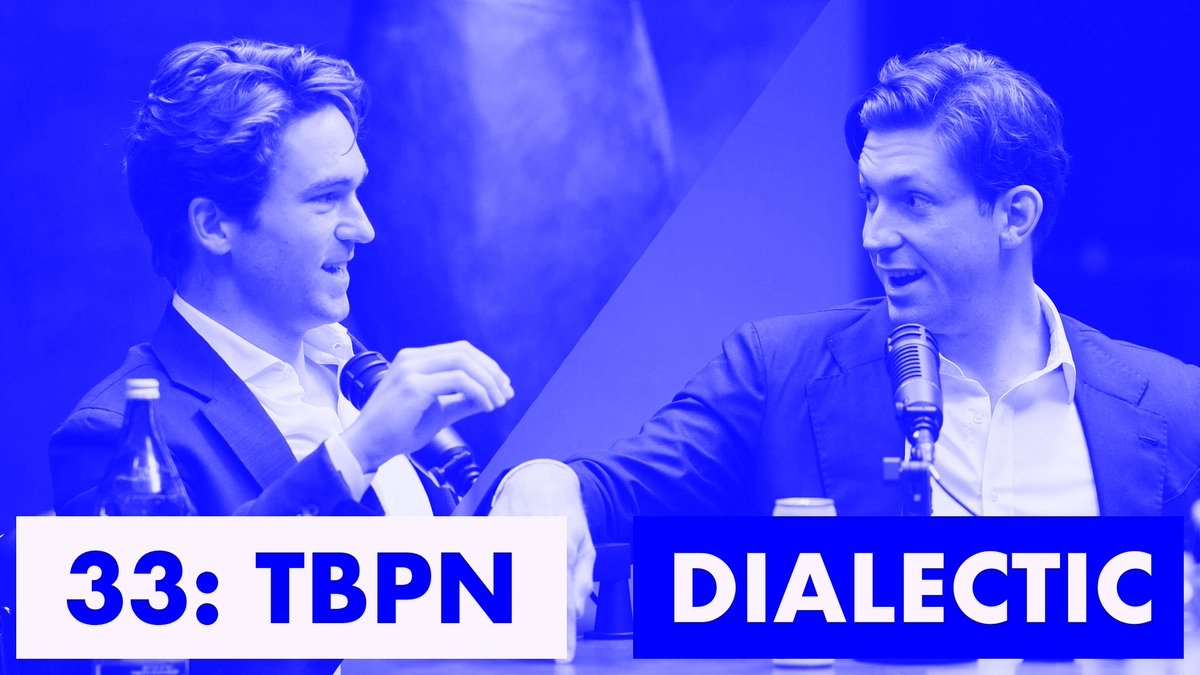
Ep. 33: TBPN (John Coogan & Jordi Hays) - Inside Tech's Water Cooler John Coogan and Jordi Hays are the hosts of TBPN, a daily live show covering the technology business. TBPN was launched only about a year ago, but has become a mainstay in tech culture and a center of gravity for terminally online technologists. John was previously an EIR at Founders Fund and tech YouTuber. He co-founded Lucy Nicotine and Soylent. Jordi has co-founded and invested in many business including Party Round/Capital and Branded Native, a podcast and youtube ad network. We cover the origins of TBPN, or the Technology Business Programming Network, from its beginnings as "Technology Brothers" to the interplay between John's love for technology and Jordi's for business. They share how they've built a media business in an era of infinite competition by leaning into high volume and constant iteration, all while treating media as the "main thing." We discuss brand building and innovating on form by borrowing ideas from outside the tech industry—from Formula One and SportsCenter to Hollywood films—to avoid tech's tendency toward circular references. We also talk about their focus on X/Twitter and a niche, highly informed audience, rather than trying to go too wide. We also chat about what makes their partnership work and how they take the work incredibly seriously while not taking themselves seriously at all. Timestamps: 0:00 - Opening Highlights 3:18 - Intro & Background 6:08 - Technology vs. Business and the Strategy behind TBPN 12:08 - Building a Media Business when Distribution is not Scarce 22:26 - Being Entrepreneurs and Talent 30:33 - Avoiding Audience Capture 35:57 - Why Advertising is a Good Model 44:04 - Technology's Circular References and Borrowing Ideas from New Places 53:20 - Narrow vs. Wide Appeal 59:44 - X (Twitter)-First Content and Other Platforms 1:14:35 - Making Content People Want to Share and Taking Yourself Seriously and Unseriously 1:20:28 - Valuing Brand 1:30:10 - Balancing Focus and Iteration 1:35:25 - Endurance & Evolution 1:40:34 - A Day in the Life of TBPN & Learning to be Newscasters 1:49:59 - Jordi & John as a duo, Will Manidis, and the beginnings of TBPN 2:02:57 - Grab Bag: Bias to Action, 15 Minute Interviews, Not Journalism, Talent, and Domination of Spirit Available on all platforms. Full transcript and all links available below.

Dialectic with Jackson Dahl

170,839 次观看 • 8 个月前

In 1942, the Japanese rounded up all Chinese men in Singapore. They were filtering out the healthy young ones to execute. Lee Kuan Yew was 18. A guard pointed at him and said: "Go to that lorry." He knew what that meant. The lorry went to the beaches. The beaches meant machine guns. He asked: "Can I collect my other things?" They said yes. He walked away, found his family's gardener, and hid in his quarters for two days. When they changed the screening inspectors, he tried again. This time, he got through. The ones sent to that lorry were taken to the beaches and shot. Somewhere between 50,000 and 100,000 didn't survive. 60 years later, he sat down at Harvard to explain how he built Singapore from a tiny island into one of the wealthiest nations on Earth: On what the war did to him: "We lived in happy, placid colonial Singapore in the 1920s and 30s. The British Empire would have lasted another thousand years, so we thought." Then the Japanese came. In less than one and a half months, the British collapsed. "Three and a half years of hell. Butchery. Brutality. Many didn't survive. I was fortunate. I did." "But it changed us." "What right did they have to do this to us? Why did the British let us down so badly?" When the war ended, Lee went to Cambridge to study law. But he was watching with different eyes. "Can they govern me better than I can govern myself? Because they scooted when the Japanese came in. And why shouldn't I be running the place?" On learning languages to lead: Lee was the best speaker in English. But only 20% of Singapore spoke English. The masses spoke Hokkien, Mandarin, and Malay. "So every day at lunchtime, instead of having lunch, I would sit down with a Hokkien teacher and laboriously and painfully learn to convert my Mandarin into Hokkien." "Had I not mastered that, the battle would be lost by default." His first speech in Hokkien, the kids laughed at him. "I said, please don't laugh. Help me. I'm trying to get you to understanding." By 6 months, he could get his ideas across. By 2 years, he was fluent. "Believe it or not, at the end of two years I could speak better than most of them." "That came respect." It showed two things: how determined he was, and how sincere. Here was a man doing all these other things and still learning their language just to talk to them. On fighting the Communists: The Communists had been organizing since 1923. The year Lee was born. "Here we were in the 1950s trying to beat them. And they are professionals at organization." They had elimination squads. Guerrillas in the jungle. Killer squads in the towns. Lee stood up and said no. "They denied that they were Communists. 'We're just left-wing socialists.' So I did a series of 12 broadcasts to set the scene. And I made it in three languages." English. Malay. Mandarin. 20 minutes each. "When I finished each broadcast, the director of the station couldn't see me. Went into the room and found me lying on the floor trying to recover my breath." "But it was a fight for survival. Life or death." On where trust comes from: "It's difficult to establish trust in times of calm. You just say, 'Well, it's an argument, therefore I'm a better guy than you.'" "But when the chips are down and you can get eliminated in a very unpleasant way and you show that you're prepared for it and you'll fight for them, it makes a difference." "Without that trust, we could not have built Singapore." On IQ vs EQ: Harvard asked him: would you prefer high IQ or high EQ in a leader? "IQ, you can get beautiful paper done. Complex formulas worked out. Elegant solutions." "But when you've got to get a team to work and put that formula into practice, you're dealing with human beings." "If you're not good at EQ, you can't sense that A doesn't get on with B, and you put them in the same team. It's no good." He rated his own EQ as 7 or 8 out of 10. His IQ as "maybe 120." But he had colleagues who could sense a person instantly. "He shook hands with the man and said, 'I recoiled when I felt his palm. Evil man.' And he was. How does he know? I don't know." "So I learned whenever I had to do interviews to choose people, I would get people who are very good at seeing through a candidate." On corruption: Singapore in the 1950s was full of deals, bribes, and organized crime. "When we took over, we decided that this was the critical factor. If we did not make it so that every dollar put in at the top reaches the ground as one dollar, we're not going to succeed." "We came in and made a symbolic act. We dressed in white shirts, white trousers, and said we will be what we represent." He put the anti-corruption bureau under his personal portfolio. "I gave the director the authority to investigate everybody and everything. All ministers. Including myself." One of his own colleagues took half a million in bribes. When the investigation started, he asked to see Lee. "I said, if I see you then I'll be a witness in court. So best not see me. Better see your lawyer." The man committed suicide. Left a note saying: "As an oriental gentleman who believes in honor, I have to pay the supreme price." "It's a heavy price. But it reminds every minister that there are no exceptions." On consistency: Lee had three journalists analyze 40 years of his speeches. He asked them: what was the dominant theme? All three said the same thing: consistency. "What I said at the beginning, throughout all that period, the theme stayed loud and clear." "That made it simple. Because you know where you stand with me. And you know what I want to do." On delivering results: "We deliver the homes, the schools, the jobs, the hospitals." "Today, 98% of our people own their own homes. The smallest would be about $100,000 US. The biggest about $300,000." "Once you own that amount of assets, you are not in favor of risking it with a crazy government. Your assets will go down in value." "But that was planned." Why? Because Singapore is small. Everyone does national service. If you're going to fight, you better be fighting for something you own. "So we give everybody a stake." On changing culture slowly: Lee wanted Singapore to speak English. But he couldn't force it. "Had I passed a law and said you will all learn English, we would have had mayhem. Riots." Instead, he let parents watch who got the best jobs. The jobs were already there, from the multinationals and banks. They all used English. "They watched and saw who got the best jobs. And they switched." It took 16 years. "I did not want to have said 16 years. Because in those 16 years I lost 20,000 Chinese graduates who had poor jobs. I wanted to make it shorter. I couldn't. I would have run into flack." On whether leadership can be taught: Lee quoted Isaac Singer, the Nobel Prize winner for Yiddish literature. Someone asked Singer: "Can you make a writer write great literature?" He paused. Then said: "If he has the writer in him, I will make him a good writer in a shorter time." Lee's version: "Can you make a leader of anybody? I don't think so." "He must have some of the ingredients. He must have that high energy level. He must have the ability to project himself, his ideas. He must have the desire, almost instinctively, to say 'let's do something better.' Of wanting to do something for his fellow men and not just for himself and his family." "You can't teach those things. He's either got it or he hasn't got it." "But if he's got that, then you can save him a lot of trouble." On sustaining yourself: Harvard asked how he managed despair over decades of leadership. "If your message is one of despair, then you should not be a leader. You must give people hope." "But there are moments when you feel very down. Either because you're physically down, or emotionally down, or because the world has turned adverse against you." "When you are in that condition, the first thing you do is get a good night's sleep. Then get a swim or chase a ball. Get the cobwebs out of your mind." "If you're not fit, you're going to make mistakes. Physically fit. You must stay physically and mentally fit." In his later years, he learned to meditate. "At the end of 20 minutes to half an hour, my pulse rate can go down from 100 to about 60. You can feel yourself subside. You still your mind. You empty your mind." "Then when you are rested, you resume quietly. You still got the same problems. Maybe you sleep on it. Come back. Look at it for a few days. Then decide." This 2 hour Harvard interview will teach you more about leadership than every business book you've read combined. Bookmark & give it 2 hours this weekend, no matter what.

Jaynit

1,017,696 次观看 • 2 个月前

And that’s a wrap on First Stand !! Incoming “I ain't reading that, happy for u, or sorry that happened” post xD First Stand Gameplay - Was pretty happy with how the lane swaps and adjustments to Atakhan worked out. Don’t know the exact number), but it felt like mostly Ruinous with games of Voracious where it made sense and no lane swaps - There was a good amount of AD/AP squishy and tank mix in each role with omega gigachad Zeka pulling out the Sylas Ahri and Akali where it made sense 🙃 - Skarner and Kalista were the outliers on priority, but teams didn’t seem particularly effective with Kalista… - Skarner on the other hand; will discuss with the team about larger work on him when we get back; he’s too effective at too many things, while also being impotent for regular players - As announced yesterday by Greeley, we’re hoping to see adaptive drafts continue with Fearless for the rest of the year, I think diversity will continue to increase as teams get better at finding lines to draft that make certain counterpick/situational champs god tier after certain champs are out; it will evolve into more of a TFT/Chess style “find the optimal line to draft with the pieces given”, which the prospects are really exciting - An improvement point feels like how long it takes to end if a team gets a significant early lead; part of this is how optimal boringly slowly choking the opponent out is over 15 min, rather than changing the incentive structure so that ahead teams can make major decisive play and can end the game swiftly - Maybe an opportunity space for the future… but interested in hearing peoples’ thoughts on this First Stand Experience - It was amazing and inspiring seeing how many fans were coming out to support the teams without tickets - Not only the KC fans who flew from Europe to do a meetup watch party and it was great chatting to a few, but also what felt like an unstoppable number of college girls coming out to support HLE. I think I counted about 100 wearing HLE jackets on finals day, but it was a reminder of how integrated and mainstream popular League feels in the East - As soon as the entry to the cheerfuls (signs) opened, they all charged in to go and start drawing their cards, it was honestly quite shocking the level of dedication and enthusiasm that some of these fans had, but also awesome - I can’t possibly imagine something like that happening in the West… - We also had the honor to play in a mini Arena tournament with a bunch of LCK Legends that have I've been watching for 15 years and didn’t do too shabby; went 6th, 3rd, 2nd, but Mingyo and Sangho were too good… - It will be the first and last time I get to say I killed Pray, Smeb, Kuro, Madlife, Shy on repeat :D and the players watching on stream were surprised to see the Devs were actually pretty decent LOL, which felt nice - A fan came out specifically to play with Kuro, wearing a ROX Tigers jersey and seeing the joy of getting to meet and play with your hero, she was laughing, smiling, it must have been the time of her life; it’s just a reminder of how meaningful League can be and just makes us really inspired to keep working hard to make the game good Solo Q Experience and Balance - Outside of the work obligations, had some time to slam 20 Solo Q games; was pleasantly surprised by my level this time around, feels like I’m playing around solidly KR D2/D1 level, which is quite shocking, because it’s not like I’m Masters level on NA right now and haven’t been able to play more than 50 games in the last 6 months due to life. Probably would've won more if I wasn't such a kda player xD - Main character syndrome still feels really peak here, the person either goes 8-0 or 0-8 and is spam FF’ing repeatedly, so minimizing my enemy laner impact, scaling and playing defensively to support my jungler feels most effective even though I’m playing Ori who feels like a dog champ on this server, since it’s so hard to actually land QW on anyone due to their mechanics and it’s risky to walk in river and so easy to die to ganks - Moving to help jungler in lost fights to avoid mental boom is the only thing that I’m finding annoying, some of these fight selections feel extremely perplexing, like Zac wanting to fight Lee at first scuttle with no prio and I end up having to sac my lane half the time to prevent them from AFK’ing or soft inting because I didn’t move, it’s super annoying… - Every post game chat also feels like at least 3 players are writing their PhD thesis, which is somewhat amusing, but also really unfortunate… - It feels like Lee Sin or Viego are in every game with a 30% pickrate, so if you can prevent the team from throwing and always follow them around and play secondary, they can carry, whereas on NA, Lee Sins in Diamond can't carry and suck relatively (ping hurts as well), so it’s not like you can play around them reliably - It was interesting to feel again for myself just how different these champs feel in their balance state across servers, indeed in one of the press conferences there was a question about balancing decisions making no sense for the state of the champ on KR server. I can see why KR players get angry when we buff Lee because the other regions suck at him, he unironically feels 2-3% winrate stronger on KR server, same with Jayce who has a monstrous pickrate here as well - We even almost buffed Lee Sin for First Stand because he’s been pretty absent from Pro, so I’m actually not quite sure what we’re meant to do about that… - The other thing that I forgot was how good it was to play on 2ms ping. I’m not sure whether it’s net positive for the person dodging or the person hitting, but since I mostly play immobile mages, it feels like I can dodge line skillshots and range leash people more effectively, which makes Mages feel so much better, though it also means it’s extremely hard to QW tag someone in a teamfight as Ori, let alone hit them with R - I’m curious if any people have done any analysis on this - I also attached typical KR Lee Sin penta 😅 Anyway, back to NA tmrw, lots of work to do

Matt Leung-Harrison

151,855 次观看 • 1 年前

Ep. 10 Free The Money | As Cash Disappears: Why Monero Succeeds Where Bitcoin Fails In this episode I’m joined by Douglas Tuman, founder of MoneroTopia and host of Monero Talk Live, to explore why Monero is not only the ultimate privacy coin, but a foundational tool for freedom in the digital age. Doug explains how Monero was built to fix Bitcoin’s core flaws. Bitcoin’s public ledger allows for the tracking of transactions and balances, while Monero encrypts the sender, receiver, and amount by default. Monero’s privacy makes Monero fully fungible, meaning every coin is identical, untraceable, and cannot be tainted or blacklisted, something Bitcoin can never achieve. Doug breaks down why Monero is more decentralized at the mining level, using ASIC-resistant proof-of-work that allows everyday CPUs to secure the network, preventing control by large industrial mining operations and state pressure unlike Bitcoin. This makes Monero harder to censor and more resilient long-term. This episode tackles the controversial topic head-on: Monero’s use on dark markets. Rather than being a weakness, it’s evidence that Monero is the most private and effective digital cash available, just as cash and encryption have always been neutral tools used by both good and bad actors. At a deeper level, this conversation is about freedom. Cash is being eliminated. Privacy is necessary to prevent governments from wielding excessive power over individuals. Sign up for ITrustCapital with this link for $100 funding bonus. See why people are opening a tax-advantaged Crypto, Gold & Silver IRA for their future: 0:54 From Bitcoin Maxi to Monero Advocate: Doug’s personal journey into crypto (and the Dogecoin hack that changed everything) 8:18 Why Monero Is Truly Private: How Monero hides the sender, receiver, and amount by default 9:45 Beyond Privacy: Monero’s dynamic block size & why it actually scales on-chain (unlike Bitcoin) 13:30 Why Monero Is More Decentralized: ASIC-resistant mining, RandomX, and “one CPU, one vote” 17:30 Bitcoin’s Fatal Flaw: Why Bitcoin is no longer digital cash—or even digital gold 19:55 Why Privacy Coins Are Rising: Surveillance, debanking, and people waking up 24:05 How to Secure Your Crypto: Wallet safety, seed phrases, and avoiding catastrophic mistakes 28:00 MoneroTopia: Building real-world adoption and living on Monero 32:05 Running for Congress: Why Doug stepped into politics to defend Monero and financial privacy 38:00 The Realization: Why building a parallel crypto economy beats fighting the system from within 44:00 The Clarity Act & Aaron Day: How new legislation threatens self-custody—and who’s exposing it 45:55 Monero vs Zcash: The real differences in privacy, governance, and philosophy 51:40 The Next Monero Upgrade: Full-chain membership proofs explained 53:25 Private by Default = Fungible 59:05 Dark Markets & the Truth About Privacy: Why Monero’s use proves it’s the best digital cash 1:03:10 XMR Bazaar: Peer-to-peer markets, no middlemen, and a parallel economy built on Monero

Bri Teresi

37,288 次观看 • 5 个月前

The Lindsay home invasion: here are the facts the police and the mainstream media won’t tell you Enough with the injustice; enough with the system mollycoddling violent criminals while throwing the book at law-abiding victims. Lindsay is a community of about 24,000 situated in Ontario’s cottage country. The people are friendly, and its main street has a certain charm to it. But what happened on Aug. 18 in the wee hours of the morning was downright horrific. What was also horrific is that the Kawartha Lakes Police Service and the mainstream media refuse to report the facts of what occurred that day – including the name of the thug and the victim and the weapon that was reportedly employed in what turned out to be a brutal home invasion. Here’s what happened: Jeremy McDonald, 44, was fast asleep in his second storey apartment only to have his slumber rudely interrupted at approximately 3:20 a.m. (when nothing good ever happens.) The uninvited guest, according to multiple sources, was allegedly Mike Breen, 41. Breen is reportedly a career criminal and an alleged drug addict and was already wanted by police for – you guessed it – a probation violation. Breen entered McDonald’s apartment through a window. According to sources, Breen was accompanied by either two or three accomplices, who remained outside on the building’s roof. They would later flee the scene. Sources say the weapon in Breen’s possession was a crossbow. Once awake, McDonald quietly got out of his bed and made his way to the kitchen where he activated his cellphone. However, the illumination of the phone alerted Breen that McDonald was indeed awake – and aware of his presence. Sources say Breen charged at McDonald, hitting him on the head with the crossbow’s stock. McDonald did his best to defend himself. Breen suffered life-threatening injuries as a result of the altercation and was later air-lifted to a Toronto hospital. In the aftermath of this horrific incident, the Kawartha Lakes Police Service laid the following charges against Breen: - Possession of a weapon for a dangerous purpose. - Break, Enter and Theft. - Mischief Under $5,000. - Fail to Comply Probation. But get this: the cops also laid charges against McDonald! Namely, Aggravated Assault and Assault with a Weapon. Even worse, should Breen succumb to his injuries in hospital, there is speculation that McDonald could face a manslaughter charge! This is equal parts outrageous and egregious. What was McDonald supposed to do? Be a passive victim in his own home? When it comes to predators and prey in the wild kingdom, it always boils down to a matter of “flight or fight.” And flight is not an option when you are in your own house. You have crossed the finish line when you are in your own house. There is nowhere to run. You fight back – or potentially get slaughtered. This story is receiving international attention for all the wrong reasons. And it would seem that this has resulted in the Kawartha Lakes Police Service suffering from hurt feelings. On Aug. 20, Kirk Robertson, the KLPS Police Chief, issued the following press release: “We recognize that the recent media release regarding an incident on August 18, 2025 has generated significant public interest and emotional responses. The Kawartha Lakes Police Service appreciates the community's engagement and concern. However, the negative commentary about the officers and their actions is unjust and inaccurate. “The investigators were able to examine all of the information and evidence that was available, prior to laying any charges. In order to protect the investigation and the rights of any person who is charged with an offence during their court proceedings, only a limited amount of information is being released to the public. The role of the police is to investigate impartially and present findings to the justice system, which ultimately determines the outcome. It is important to remember that charges are not convictions; they are part of the judicial process, which ensures that all facts are considered fairly in court. We encourage you to follow this matter as it proceeds through the justice system. “Under Canadian law, individuals have the right to defend themselves and their property. The Criminal Code of Canada, specifically Sections 34 and 35, allow a person to use reasonable force to protect themselves and their property if they believe they are facing a threat. “However, it is important to understand that these rights are not unlimited in Canada. The law requires that any defensive action be proportionate to the threat faced. This means that while homeowners do have the right to protect themselves and their property, the use of force must be reasonable given the circumstances. “The Kawartha Lakes Police Service remains committed to public safety, transparency, and respectful dialogue. At this time we will not be releasing any further information about this incident. “Thank you for your continued support and understanding.” Alas, this woe-is-me drivel raises more questions than it provides answers. For starters, the crux of the matter is this: “The law requires that any defensive action be proportionate to the threat faced.” What does this even mean? What sort of defensive action is deemed “proportionate.” A slap? A punch? A kick? Using a wooden spoon? The cops won’t say, so how is anyone to know? As for “transparency”, is the chief joking? Virtually no tangible information was originally provided – including the name of the home invader! Why would Breen’s identity remain confidential? He is not a young offender. Gross. Indeed, many crimes were committed in Lindsay in the wee hours of Aug. 18. But perhaps the worst crime was the justice system re-victimizing the victim. Enough with the injustice; enough with the system mollycoddling violent criminals while throwing the book at law-abiding victims. Enough with a Liberal government that doesn’t seem to care that it is now open season when it comes to hardworking Canadians who are so often sitting ducks given that we can no longer depend on the police to protect us. Rather, we are criminally charged for fighting back against weaponized career criminals! Enough is enough.

Rebel News

309,424 次观看 • 10 个月前

BREAKING: Berkshire Hathaway just filed its first 13F after Warren Buffett stepped down as CEO. Wall Street spent a decade asking what happens to Berkshire when Buffett is gone. We just got the answer: On May 15, the first 13F of the Greg Abel era hit the SEC. Abel took over from Buffett on January 1, 2026. This filing covers his first full quarter in the chair. It is the most aggressive structural rebalance Berkshire has run in years. And almost nobody is reading it correctly. Here is what the filing actually shows: Berkshire trimmed its portfolio from 40 positions down to 26 in 90 days. 16 stocks fully exited. Amazon, gone. UnitedHealth, gone. Domino's Pizza, gone. Chevron cut by 35%, roughly $8 billion sold at peak energy prices. Visa, Mastercard, and Aon all sharply reduced. Then on the other side of the book: Alphabet position increased 224%. From about 18 million shares to nearly 58 million. The stake is now worth roughly $23 billion. One of Berkshire's seven largest equity holdings. A new $2.65 billion position in Delta Air Lines. Berkshire's first airline holding since they sold the entire sector in April 2020. Total stock sales for the quarter: $24 billion. Total stock purchases: $16 billion. Net selling: $8 billion. And the cash pile? $397.4 billion as of March 31. A new all-time record. Read those numbers again. This is not a passive handoff. This is a CEO clearing the decks and concentrating capital in a small number of high-conviction names while sitting on the biggest cash position in corporate history. Now here is the part the financial media is missing. Everyone is treating this like a referendum on Greg Abel's personality. "Is he as good as Buffett." "Will he be too cautious." "Does he have the killer instinct." Wrong question. The right question is why the system kept executing in exactly the way Buffett would have run it. Because that is what actually happened here. Concentrate in dominant businesses you understand. Check. Buy when valuations get attractive. Check. Alphabet was trading at a forward P/E in the teens when Abel was loading up. Sell when valuations get rich. Check. Chevron got cut at a peak. Visa and Mastercard got trimmed at all-time highs. Hold cash when nothing else qualifies. Check. $397 billion. This is not Greg Abel inventing a new philosophy. This is the Berkshire operating system continuing to run, the way it was designed to run, after the founder stepped away. That distinction matters more than anything else in this filing. Here is why. For 60 years, retail investors have tried to "follow Buffett." They scan the 13Fs the day they drop. They buy what he bought. They hold what he held. They sell when the headlines say he sold. And they almost always underperform. Because following Buffett the person was never the strategy. The strategy was Buffett the system. The patience to hold cash for years when nothing was cheap. The discipline to concentrate when something finally was. The structural willingness to look wrong for long stretches because the math eventually wins. Most retail investors have none of that. They have a phone, a brokerage app, a Twitter feed, and an attention span measured in headlines. They buy when Buffett buys. Then they sell three weeks later when the position is down 8% because they panicked. That is not following Buffett. That is using Buffett's name as a permission slip to make emotional decisions. The Q1 filing makes this point in a way no Berkshire annual letter ever could. The man is gone. The trades still look like Buffett trades. Because the system was the asset all along. The system was the moat. Now look at the Alphabet decision specifically. This is the part that should stop you. Alphabet generated $64.4 billion in free cash flow over the last 12 months. Google Cloud revenue grew 63% year over year in Q1 2026. Operating income from cloud tripled to $6.6 billion. The company is sitting on a near-monopoly in search, a top-two cloud platform, the best AI research lab in the world, and a balance sheet that prints money. And it was trading at a discount to the S&P 500 multiple when Abel was buying. That is not a hard call. It is the easiest call a value-oriented institutional buyer can make. But it requires you to ignore the entire narrative that Wall Street had been running for six months. The narrative was that AI was eating Google search. That ChatGPT was a Google killer. That the search monopoly was structurally broken. Retail investors bought that narrative and sold Alphabet at the lows. Abel ran the math and bought 40 million shares. Same company. Same fundamentals. Two completely different decisions, because one was driven by data and one was driven by narrative. The Alphabet position is already up 38% since the end of Q1. Six weeks of gains. Roughly $8 billion of paper profit in 42 trading days. That is what systems do. They do not predict the future. They wait for asymmetric setups, take large positions when the math says to, and let time do the work. Now the $397 billion cash position. This is the number that confuses retail the most. Why would the largest holding company in America be sitting on $400 billion in cash while the S&P sits at record highs? Because cash is not a position. Cash is optionality. Cash is the ability to act when everyone else is forced to sell. In 2008, Buffett had cash when Goldman Sachs and General Electric needed capital. He cut deals at terms no retail investor could ever access. In 2020, Buffett had cash when the COVID crash hit. He took advantage. Greg Abel is doing the same thing. He is loading the rifle. He does not know when he will get to fire it. He knows that having it ready is what separates Berkshire from every fund that has to be fully invested all the time. Most retail investors cannot do this. They look at $397 billion in cash and see "missed opportunity cost." They think holding cash is the same as losing money to inflation. It is not. Cash held by a disciplined system is a weapon waiting for the right target. Cash held by an emotional investor is a temptation that gets spent on the next hot trade. Same dollar. Two completely different outcomes. Here is the lesson the entire financial press is missing this week. Berkshire is not interesting because Greg Abel is a genius. Berkshire is interesting because it is the rare proof point that an investment process can survive its founder. The most important investor of the last 60 years is gone. The portfolio still looks like a Buffett portfolio. Because the rules were the asset. The personality was the wrapper. Most retail investors got the wrapper and missed the asset. They watched the documentaries. They read the books. They went to the Omaha meeting. They bought the personality. They never built the system. That is why they keep losing to the market over 20 year holding periods, while a holding company with the same playbook for six decades keeps quietly compounding. The question is whether you spend the next 20 years doing the same thing. Or whether you finally build a system that runs without you. Most retail investors will never have $397 billion in cash to deploy. But every retail investor can build the same kind of structural discipline Berkshire just demonstrated. Rules that execute regardless of headlines. Rules that buy when the math says to buy. Rules that hold when nothing qualifies. Rules that do not need a famous founder to run. That is exactly why Surmount exists. Automated, rules-based strategies that execute the same way every single trading day. No panic selling. No FOMO buying. No "what would Buffett do" guessing. Just systematic execution built on the same principle that just kept Berkshire running without its founder: The system is the asset:

Logan Weaver

20,503 次观看 • 1 个月前

I paid Alex & Leila Hormozi $5,000 for their 2-day scaling workshop. Why? To grow my business from $6 million to $12 million in 2025. These 12 lessons from the event will help me get there: 1. The fastest-moving entrepreneurs are obsessive resource allocators. Similar to investors, they seek the best risk-adjusted returns with the resources they have. The main resources of the business are: • Time (of the team) • Attention (of the team) • And capital (of the business) So resource allocation is: • Aligning attention on the most important thing • Properly allocating everyone’s time to achieve that thing the fastest • Strategically investing capital to accelerate the outcome or increase its likelihood of achievement 2. $3m to $10m in EBITDA is where the majority of the value in a business is created. $3m in EBITDA likely gets a 1x multiple, so $3m of enterprise value. The process of going to $10m (when done well), not only 3.3x’s the EBITDA, but can take the multiple from 1 to 4 -> which is a 13.2x return. The EV goes from $3m to $40m, and that is the stage we are in right now as a business. 3. LTV:CAC are two metrics you must have staring at you and constantly audited. LTV = lifetime value of the customer CAC = customer acquisition cost The scope of calculating those is beyond this write-up, but basically you want this metric to be ~8:1 or higher when aggressively scaling a service-based business. On top of that, these are the only two metrics that you can “improve” in your business → either making customers worth more or reducing the cost to acquire them. You should be able to tie every project on your list directly to the improvement of one of these metrics. 4. We need a single dashboard with the most important metrics in the business. The quality of the dashboard is: • How many people use it on a daily basis • And how clearly they can connect their performance to the performance of the main numbers on the dashboard. We have data thrown about across Airtable, Google Sheets, and various Slack channels. Now, it’s time to unite them such that we can make even better decisions as a team. 5. Leveling up in business is transitioning from selling to people to selling to employees. In the beginning, you are the one creating all of the value. Over time, you will replace yourself out of certain functions that are customer-facing (if you are approaching business correctly). However, your job then becomes selling to your employees to spark their highest performance and retain them. 6. Brand is the best way to improve LTV and reduce CAC at the same time. It makes it cheaper to acquire customers since you have fixed media expenses (just labor) but unlimited upside in the number of eyeballs you can reach. It increases LTV because the continued content you create makes customers likely to keep purchasing because they associate the good content with the purchase they made, whether it’s free content or not. 7. Every single thing in your business is trainable, you just lack the skill of training. Seeing their presentations, their handshakes, the way they repeat the question back to the audience, it was so clear that Alex & Leila did this first, then obsessively role-played and drilled each person on their performance until it was indistinguishable from theirs. 8. The people doing it at the highest level of an obsessive, intentional standard. It was so evident the way these employees conducted themselves that they: • Loved working there • Loved the culture of high performance • And had been trained with extreme repetition and attention to detail 9. Past $3-5m in revenue, anything “new” starts with “who” not “how.” I made the mistake last year of trying to “bootstrap” our cold ads initiative (while continuing to run the rest of the business & sales team). I spent roughly ~200 hours on this throughout the year, which took time away from both my content and the management of the sales team. But for whatever reason, I thought I “had” to be the one who got it off the ground, then handed it off to a new hire or media buyer. But I had the sequence flipped. I should have spent the first 50 hours finding a world-class director of paid marketing, someone with far more experience than me building out a cold traffic acquisition system. Heck, I could have even spent 200 hours on it and ended up with a far greater return than I ended up with. 10. Excellence is a remarkably high number of extremely small details done well. Throughout the workshop, I paid close attention to the event operations, taking notes on how to run a great in-person event in case we wanted to do so in the future. Several things stood out that were clearly “iterations” from prior events, all based around eliminating the small, annoying parts of attending any kind of seminar. • High-quality food • Greeters at the door • Clear bathroom signs • A barista for fresh coffee • WiFi signs posted everywhere • Constant 15-minute breaks every 90 minutes The list goes on and on. 11. Any change you make in a business you should expect a 20% “decrease” in performance to start. That makes the hurdle rate to doing “new” at least 20% for it to be worth it, and arguably 40%. This happens because the switching cost leads to an immediate drop just from having to retrain the team. Change a meeting cadence, change a sales script, change an onboarding flow, all of these are going to come with a switching cost the team must overcome. Therefore, the highest risk-adjusted return is always to just do more or better or whatever you’re already doing, rather than add something new. 12. The ultimate size of the business is the sum of the intelligence of its people. Alex laid out this golden nugget during one of his talks and I found it interesting for a few reasons. First, because of his definition of intelligence = speed of learning, that means the ultimate size of the company is how quickly everyone can learn things. And so said another way, the ultimate size of the company is correlated to the speed of its iterations. The second reason I found this interesting is because you can create a culture of iteration through constant, rapid feedback on every behavior. And when I say constant, I mean constant. You could tell they’ve built this culture by the way their presenters all presented the exact same way as Alex and Leila. Aaand that’s it! I go deeper into all these lessons in this video, check it out: Timestamps 00:37 The Fastest Moving Entrepreneurs Are Obsessive Resource Allocators 04:09 $3m To $10m EBITDA Is Where The Majority Of The Value In A Business Is Created 07:00 LTV:CAC Are Two Metrics You Must Have Staring At You 10:04 You Need A Single Dashboard With The Most Important Metrics In The Business 12:03 Leveling Up In Business Is Transitioning To Selling To People To Selling To Employees 14:10 Brand Is The Best Way To Improve LTV And Reduce CAC At The Same Time 16:02 Every Single Thing In Your Business Is Trainable, You Just Lack The Skill Of Training 18:54 The People Doing It At The Highest Level Have An Obsessive, Intentional Standard 20:04 Past $3-5m In Revenue, Anything "New" Starts With "Who" Not "How" 23:33 Excellence Is A Remarkably High Number Of Extremely Small Details Done Well 26:23 Any Change You Make In A Business You Should Expect A 20% "Decrease" In Performance To Start 28:07 The Ultimate Size Of The Business Is The Sum Of The Intelligence Of It's People

Dickie Bush 🚢

62,036 次观看 • 1 年前

Noah was just 13 when the HPV vaccine took his short life. Noah Tate Foley received his first and only Gardasil injection on May 7, 2018, just two days after his 11th birthday. Noah enjoyed hunting and fishing with his dad, playing games with his younger sister, building Legos, and playing his drum set. He loved school and was active in his church. Most of all, Noah loved his family and treasured the times they spent together. Prior to the Gardasil shot, Noah had no autoimmune diseases and no autonomic issues. He was extremely healthy, having received a clean bill of health during a medical check-up. Roughly two weeks after the Gardasil shot, Noah experienced fevers that reached as high as 102.9 degrees. His symptoms continued and one week later, his blood was checked to rule out Mononucleosis or other causes for the ongoing fevers. Testing revealed no “cause” for his fevers, which came and went throughout the summer of 2018. On October 10, 2018, Noah went to the emergency room at Duke University Medical Center in Durham, North Carolina. After examination and blood tests, Noah’s mother, Kelli Foley, was informed that her son’s inflammatory markers were elevated, possibly due to a viral infection. Noah was then referred to the Duke University Infectious Disease department, where blood work revealed that Noah’s white blood cell count had tripled in two weeks. For months, Noah endured countless doctor visits and testing, including a CT scan and biopsy of a swollen lymph node. Kelli Foley recalled the 35 days between the discovery of the swollen lymph node and a report that ruled out cancer as “long and torturous.” Still, the family had no answers to the underlying cause of Noah’s health issues. On May 7, 2019, Noah had an appointment for weight loss where the records state: “Over the past year, [Noah] has had a rough year. He was in his usual state of good health per Mother until he went for his 11-year-old vaccine and well child check-up. After that he continues to have fevers and fatigue. He has been seen by multiple specialists over the past 7 months – starting in October 2018. He has had one lymph node removed from his neck as well as CT scan (neck/abdomen) and MRI to evaluate what inflammatory process may be occurring. He has continued to have fatigue and not feel like himself. It has been noted that over the past year he has lost 20lb despite continued good vertical height growth and continued to eat fairly well…” Noah’s weight was 69 pounds, his BMI was in the 4th percentile at 14.79, and his inflammatory markers remained elevated. At a May 21, 2019 pediatric gastroenterology consultation, the assessment discussed an “autoimmune or inflammatory process.” On the afternoon of September 29, 2020, Noah’s left leg went numb. While his mother rushed him to the emergency room, Noah’s face and tongue went numb. By the time he arrived at the ER, Noah vomited, and by 6:00 p.m., he was completely non-responsive. Noah was transported to Duke University Medical Hospital, where his condition rapidly declined. On September 30, 2020, Noah was almost completely brain dead. On October 8, 2020, Noah passed away four hours after his breathing tube was removed. He was 13 years old. According to the Foley’s lawsuit allegations, Noah died of encephalitis caused by an autoimmune/autoinflammatory dysregulation process, which was caused-in-fact by the Gardasil vaccination received in 2018. “Our faith is very strong, which is why I know that despite the pain our family continues to feel in Noah’s absence, we won’t let his death be in vain.” Kelli Foley says. “We will fight for him in getting justice against Merck for what they did to him.” “I lost my fishing and hunting buddy, and my daughter lost her best friend,” says Cliff Foley. “They say time heals all wounds, but losing your son is something you never really heal from. Every day, we feel the loss, and it doesn’t get any easier.”

Jessica Rojas 🇺🇸💪

45,379 次观看 • 2 年前

Good morning. In November of 2024, I laid out why Brian Tully, Kate Peter, and Jason Broyles leaked an unredacted 15-year extraction of Lindsey Gaetani's phone. I didn't want the world to listen to me. I wanted someone, somewhere, to protect Lindsey. I can finally breathe. Here is the full text of my report (that now has 700,000 views); Okay, fine, as a special treat (on this, the day of oral arguments in the #KarenReadTrial appeal), I will lay out some of what I am thinking as to the timeline of events between August of 2023 and the spring of 2024. You are going to get a lot of inside information in this post. You have been warned. In the fall of 2023, via a woman named Natalie (who was friends with Karen Read and enjoyed talking about houseplants with Karen), I believe the Commonwealth of Massachusetts came to be in possession of evidence indicating that Read and blogger Aiden Turtle Boy Kearney were conspiring to intimidate witnesses in Read's ongoing criminal trial related to the murder of John O'Keefe. See the evidence of that contact (which started in April/May of 2023 --because of Natalie-- and occurred directly with Read and via Read's lawyers, David Yannetti and Alan Jackson) here - As a result of this information being uncovered, I believe the Commonwealth then began targeting Mr. Kearney with criminal charges related to witness intimidation in the context of Read's criminal trial (Kearney had been organizing, with Read's help, rallies at the homes of witnesses in the case and running smear campaigns to poison the jury pool in the lead up to Read's trial). I believe the intent of this targeting was multifaceted but, primarily, involved the following: 1) Getting Kearney to stop his abhorrent behavior related to witnesses in Read's case (which included, in some cases, Kearney's followers putting semen on pictures of witnesses' children and then sending those pictures to said witnesses, as explained here - 2) Placing criminal charges on Kearney in an effort to pressure him to "flip" on Karen Read and, in turn, testify that Read did, indeed, order the witness intimidation in question via a conspiracy. Kearney, when he was eventually jailed in late 2023/early 2024, confirmed that such an offer was presented while he was incarcerated. 3) Getting information for the Massachusetts State Police, and the Norfolk District Attorney, as to the nature of an ongoing federal probe into the conduct of those departments (an investigation which, in time, it turns out had moved on from investigating John O'Keefe's death and, in turn, evolved into a probe of a potential cover-up of the death of Sandra Birchmore). Read more background on that complex situation --involving two Troopers assigned to the Norfolk DA, who also worked on the Read case, that signed off on a "misleading" state-level police report into Matthew Farwell-- here - At the same time, and in furtherance of those investigatory activities, I believe the State Police began working directly with a former colleague of Aiden Kearney, a woman named Kate Peter AKA MafiaMasshole who has a small online cult following related to humiliating First Amendment Auditors (which, admittedly, is noble work). What may have not been so noble (along with Peter taking cash in a Chick-Fil-A parking lot for her "efforts" on behalf of some wealthy witnesses in the Read trial), however, is that --as Mr. Kearney became the subject of police investigations related to the aforementioned witness intimidation-- the Norfolk DA announced to the public that a Special Prosecutor would be appointed to oversee those charges (because of the numerous allegations of corruption that Kearney had made towards the DA in public). That Special Prosecutor, Ken Mello, was nonetheless assigned to work with the same State Police Trooper (Brian Tully) who worked on the Read case and who reported directly to the Norfolk DA at the time. And, furthermore, I believe the State Police and the Norfolk DA, via Brian Tully, also around this time (fall of 2023) began working directly with Kate Peter (who, for some time, was working for a Private Investigations firm with ties to a number of figures in the orbit of the Read case) in order to obtain evidence against Mr. Kearney, seek out and catalog information from sources close to Mr. Kearney and, in some cases, even help draft parts of Mr. Kearney's eventually October, 2023, criminal indictment. However, what I think the State Police (and the Norfolk DA) did not know at the time was that Aiden Kearney was working as a confidential federal informant, specifically looking into allegations of civil rights violations against said State Police, since at least May of 2023. Furthermore, I also think the State Police were not aware that it was Karen Read's lawyers, Alan Jackson and David Yannetti, who had the necessary connections in order to help Kearney obtain that status. Read more here - That said, at the same time, when Kearney was initially brought on by the federal government in May of 2023, in my view, I don't think the DOJ was finished looking into the death of John O'Keefe. In fact, I think the DOJ pulled out an old FBI tactic (which I can confirm exists) and, after the US Attorney for the District of Massachusetts wrapped-up the O'Keefe probe in the fall of 2023, Kearney was encouraged by the FBI to use his coverage of the Read case to generate leads related to other misconduct by the State Police unit attached to the Norfolk DA (in particular Brian Tully). Read more about that FBI playbook here - Indeed, that timeline perfectly synchs with a recent announcement by US Attorney Josh Levy indicating that the federal probe of Sandra Birchmore's death began in, roughly, August of 2023. See more background on Birchmore's tragic life and death here - Nonetheless, because of Kearney's ongoing work for the federal government in the fall of 2023, and because the State Police did not realize this was happening (although they should have been able to put it together, because Kate Peter and Kevin from Yellow Cottage Tails for sure knew, as early as May of 2023, that FBI agents were calling around, on behalf of Kearney, related to ongoing criminal cases entirely removed from the Read trial) I believe said State Police, stupidly, committed some of the very civil rights violations that the FBI was looking for. I believe the State Police did this, in particular Brian Tully, by way of his relationship to Kate Peter. [Side note: I will always remember talking to Kate, over winter and spring of 2024, and explaining my firm belief that Aiden Kearney was an FBI agent. Peter simply could not come to terms with that reality, despite having been the person who called the FBI back in May in order to confirm the agency was poking around some of Kearney's criminal cases, and, in that moment, I knew that pride was, indeed, about to cometh before her fall.] And, indeed, I also think Karen Read, herself, was well aware that the federal probe into John's death had ended in the fall of 2023 (for the most part) and that, in turn, the feds were going to move on to other serious allegations of corruption related to Tully and his unit at the State Police. However, for many reasons, I think Karen was happy to let the FBI (and TurtleBoy) use her trial as "cover" to get more information, and leads, related to said Troopers (this was, after all, the very same unit that had investigated Read and mocked her with horrifying language during that process). [Also, another side note, there is an intense history of tension between the Norfolk DA's office and the DOJ in Boston which dates back to the 1990's and William Delahunt, but which, in reality, really heated up during a 2015 mob trial.] Basically, there is a connection between Josh Levy (Acting US Attorney For District of Massachusetts) + Karen Read (accused murderer) + Dustin Chao (head of Boston DOJ's Public Integrity Section) + David Yannetti (lawyer for accused murderer Karen Read) + Rachael Rollins (former Suffolk County DA, and US Attorney for the district of Massachusetts, until Spring of 2023, who was also Josh Levy's boss in November of 2022 and who previously had direct contact with Read's lawyer, Mr. Yannetti) + Aiden TurtleBoy Kearney (blogger indicted with 19 felonies in relation to targeting witnesses in the Read case, until he was thrown out of Read's inner circle for exposing Read's connection to Acting US Attorney Levy). Chao (aforementioned head of the DOJ Boston's Public Integrity Section) had a grudge to use whatever means necessary take down the Norfolk DA since 2015 (After Chao's wife was passed over for a promotion and left that DA's office on bad terms) and, in turn, the proxy-battle behind all of this chaos becomes a bit more clear. Read the primary source documents laying all of this out here - and here - That said, I think there one was wild-card who came into the picture between October of 2023 that no one (be it Kate Peter, the FBI, the DOJ, the State Police, Aiden Kearney or otherwise) expected, and her name is Lindsey Gaetani. At first, between October and December of 2023, Lindsey was simply someone who had met Mr. Kearney online, chatted with him, and then begun to form a bond. Little did Ms. Gaetani realize, however, that, by virtue of a simple twist of fate, Kearney's pillow talk related to Karen Read and Josh Levy having direct contact, FBI agents, and civil rights probes of the State Police would put her directly in the middle of an unholy conflagration that was, on the night of December 23rd, 2023, about to take a turn that would change the course of history for an untold number of human lives. For, you see, in the weeks leading up to Christmas of 2023, the State Police discovered that Ms. Gaetani had information about Karen Read and TurtleBoy being in direct communication (along with information that Read and Josh Levy spoke directly). See those documents here - That, in turn, meant Ms. Gaetani was going to be forced to provide testimony at a Grand Jury scheduled for the week after Christmas (roughly December 26th, 2023). When Kearney found out this news, on or around December 22nd, it sent him into a tailspin (for good reason, it turns out, as what Mr. Kearney did next would, over time, lead to him being kicked out of Karen Read's inner circle and sent to jail...or, as Kearney says it, "...[that night] was a very expensive trip to [the city where Lindsey lives.]" Leveraging a very difficult time in Ms. Gaetani's life, Kearney demanded he be able to visit her, at home, late at night on December 23rd of 2023. Then, Kearney forced Gaetani to allow Kearney to review the contents of her phone (specifically her messages with Kate Peter) and take notes (using an ongoing medical situation that Gaetani was going through as leverage to get permission to do so). However, after Gaetani raised an objection to Kearney taking those notes, and after Gaetani retrieved her own notepad (that Kearney had used to take said notes) Kearney entirely lost his cool, pushed Gaetani onto a couch, and then began illegally recording her with his phone (an audio file Kearney would later try to edit in order to suggest Gaetani had consented to the recording, although that plan failed when a copy of the original recording, without the line about consent, was introduced into the court record). That, in turn, led to Kearney being criminally charged (again) with witness intimidation, illegal interception of an oral communication and assault and, as a result, a warrant to arrest (with probable cause) was issued. Kearney, after being a self-admitted "fugitive" from justice for multiple days with the warrant active, then turned himself in to authorities and was sent to jail after a Judge in Dedham district court revoked Kearney's bond as a result of the new charges involving Gaetani. See the post where Kearney admitted to being a fugitive here - See full coverage of the moment Kearney's bail was revoked here - In turn, Kearney then spent the next 60 days in jail (in protective custody, per my sources, because of his status as a federal informant) and, during that time, Kearney has confirmed that he would have been able to "walk free" if he "flipped" on Karen Read in the context of an ongoing conspiracy and witness intimidation probe into the pair of star-crossed attention seekers. However, Kearney did not do so and, in turn, was released from jail in late February of 2023 after serving the full 60 days on his bail revocation. For Ms. Read, however, a newly-leaked series of text messages confirm that, even thought Kearney stayed loyal and sent love-letters begging Read's forgiveness while locked up, the incident on the 23rd with Lindsey was Karen's red line and Kearney had been cut off from Read's inner circle. See that leaked text message (from March 3rd) here - Interestingly, on one of the first day's that TurtleBoy was out of jail (February 26th, 2024), I captured this fascinating moment where Karen clearly is uncomfortable around Kearney (she entirely ignores his presence outside of court and her lawyer, Alan Jackson, puts his arm on Karen's back to gently tug her away from Kearney as they walk by his hallowed-shell) - And, even more interestingly, it was also on the same day (2/26/24) that Lindsey Gaetani (under mysterious circumstances that, again, trace back to Kate Peter being shady) attended a court hearing, wherein, because of Gaetani's active restraining order on Kearney, Kearney was forced to leave the courtroom during Karen's case (and, on this same day, Kearney was also charged with a violation of that RO for hiding in the bushes outside of the court after being asked to leave the area by authorities). See video of that day here - However, sadly, I believe Gaetani's "usefulness" also quickly ended around this time as Kearney, within weeks, got his RO amended to allow TurtleBoy to attend any court hearing in the Commonwealth (even with Lindsey present) and, furthermore, the pressure tactics to get Kearney to "flip" on Karen Read had failed. Furthermore, because Karen was now in fear of TurtleBoy (having cut Aiden off), I believe Peter, Tully and the Norfolk DA took an entirely new direction. They would try to get Karen Read to cooperate regarding the ongoing investigations into TurtleBoy. This move, however, had unintended consequences (in particular for Lindsey Gaetani). In what I believe was a colloquial "crime of opportunity" -- and because Gaetani was no longer "useful" for the purposes of pressuring Kearney into a plea or for the purposes of keeping Kearney away from Karen Read hearings -- Kate Peter came up with a new idea: Kate, before knowing anyone else in the case, was connected with Jen McCabe (a witness in the Read trial who heard Karen confess to hitting John O'Keefe and who was tormented by TurtleBoy, for months, as a result of her willingness to testify on behalf of justice for John). Kate, also, had extensive connections to a network of Discord operatives who use fake profiles and hunt down bad people on the internet (again, a noble calling). However, I believe Kate weaponized some of those people (including someone named Father Mark Murphy, who used a fake profile called "The Jennings Report" and a parking clerk named Jason Broyles who moonlights as a woman online named "Hailey W.") to, in a last ditch effort now that Lindsey had no other use and because TurtleBoy could not be stopped, deflect the attention of TurtleBoy's fans (known as "TurtleRiders") away from Jen McCabe and onto --an unwitting and entirely innocent-- Lindsey Gaetani). What makes this even more shocking is that the way public attention was deflect onto Lindsey involved, what I believe, was an operation (run by Kate) to leak sensitive documents about Lindsey (along with other private information) to those fake profiles (including Jason Broyles, who Kate Peter has known since 2019). Interestingly, Broyles (and Murphy) began operations targeting Lindsey, and her support network/allies, right around the end of February, 2023 (and, interestingly, those accounts, for months, went out of their way to avoid mentioning Kate Peter or Jen McCabe, nearly entirely). Read more about the fake "Jennings Report" profile here - and read more about the disturbing tactics deployed by Jason Broyles here - and here - Anyway, that entire fiasco was the subtext (that I referenced in earlier posts) behind my question to Karen Read, in April of 2024, regarding whether Karen wanted to apologize to Lindsey for what was happening (as, by that point, Karen knew full well what it was like to become the target of Aiden's ire simply because Karen had cut him off). Karen may not have responded to my question, but she is a smart person (really, I don't mean that gratuitously: Read plays on a level I don't think most of us understand, and she does it by hiding in plain sight) and Karen knew exactly what I was talking about (she probably could have written this post herself, in fact, but she probably wouldn't have said as much about her gilt as to John's death). See video of me asking Karen that pointed question here - So, where does that leave us? Well: 1) In my view, Karen Read is vulnerable, concerned about what Aiden will do to her and her family, running out of money, and constantly at risk of having her conversations with TurtleBoy and other insiders (past and present leaked). Karen, after she loses her appeal at the SJC, is likely to look for a way to take a plea and cooperate against Aiden (Robert Cosgrove, the new special prosecutor in the Read/Kearney cases, and Hank Brennan, the new ADA in Read's murder trial, are serious legal heavy hitters and Read is in deep trouble, in my view). 2) Likewise, I think Brian Tully and Kate Peter are also deeply concerned because they didn't realize the FBI is, in reality, probably coming for them (and it has nothing to do with John O'Keefe's death, but instead it has everything to do with Kate and Tully's actions between the fall of 2023 and the summer/fall of 2024 and, also, probably Tully's actions in the context of the Sandra Birchmore investigation). I think this is why Peter is facing so many state-level criminal charges (despite trying to use her connections to get those cases to "go away" and, even in one case, managing to get the Norfolk DA not to recuse itself related to one of those charges, despite a special prosecutor being assigned to Peter's other criminal cases in the jurisdiction because of her connection to the State Police and the DA). 3) I think a lot of people are trying to keep Lindsey Gaetani and her story away from the media, and away from documentaries/podcasts that they do not control, in order to hide this information from the public, punish Lindsey for "knowing" Aiden, and insulate Peter and Brian Tully from accountability. I do not think this strategy is going to work because, and I cannot understate this enough, Lindsey is actually a genius (and none of you can see it, because you're blinded by greed, ego, jealously or otherwise). 4) I think, at the end of the day, Karen Read killed John O'Keefe, while Karen was drunk driving, at 12:31am on 1/29/22 by hitting John with her SUV and then leaving John to die. In turn, I think Karen was mad that people "flipped on her" related to Karen's actions that night, and, in turn, Karen leveraged her political connections (which I don't fully understand, but which I think are based in the intelligence community) to "punish" the Norfolk DA and the State Police Troopers who uncovered said evidence of Karen's guilt. Little did Karen realize, all the way back in November of 2022, that she had stumbled onto overlapping social circles of power that, when the dust settles, would have been consumed by their hubris --and wanton disregard for the memory of John O'Keefe-- regardless. "Remember," dear friends and readers, "it's about Justice For John." I'm a towel, and that's what I think happened (as of November, 2024). Usual disclaimer: I am a towel, not a lawyer. This is not legal advice. You are reading social media. Get a lawyer if you have questions about the law.

Grant Smith Ellis

28,671 次观看 • 11 个月前