Loading video...
Video Failed to Load
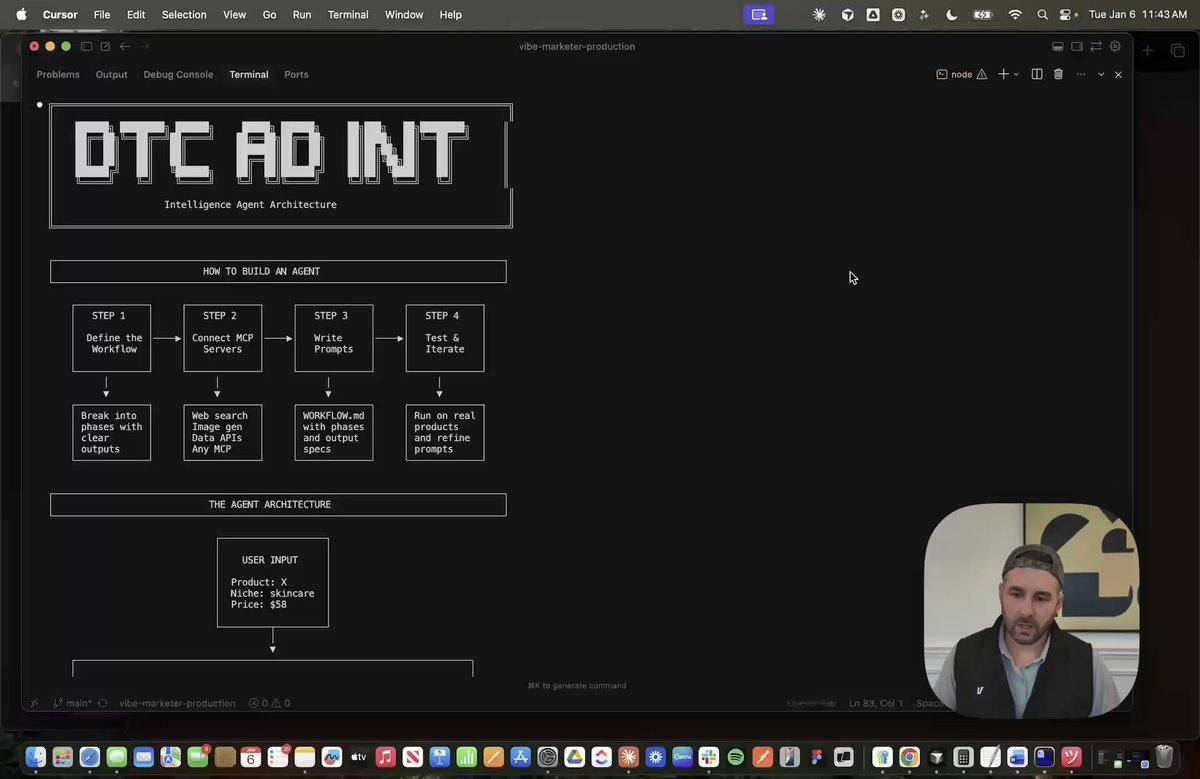
Node Banana must grow. - Discord server: link below, hmu. - Generate node carousel: the active image will be used in the workflow. - Node group locking: because I accidentally hit run and it killed the mood. - Hot hot keys: Shift + (p)rompt, (g)enerate image, (i)mage, (l)lm node.... show more

17,346 views • 8 months ago •via X (Twitter)
0 Comments
No comments available
Comments from the original post will appear here




![Graph Convolutional Network by hand ✍️ ~ 12 steps walkthrough below Graph Convolutional Networks (GCNs), introduced by Thomas Kipf and Max Welling in 2017, are the tool for data shaped like a graph: social networks, recommendations, biological networks, drug discovery, molecular chemistry. I drew and calculated a simple GCN entirely by hand. Goal: run a two-layer GCN, then a small classifier, on a five-node graph, filling in every cell yourself. 1. Given A graph of five nodes, A to E, with edges between some of them. 2. Adjacency matrix (neighbors) Put a 1 wherever two nodes share an edge, in both directions. 3. Adjacency matrix (self) Add 1s down the diagonal, one self-loop per node. That is just adding the identity matrix. 4. Messages Multiply each node's embedding by the weights and biases, then ReLU. Negatives become 0. 5. Pooling Multiply the messages by the adjacency matrix. Each node gathers the messages of its neighbours and itself. 6. Visualize Node A pools [3,0,1] + [1,0,0] = [4,0,1]. 7. Second GCN layer Messages again: weights, biases, ReLU. 8. Pooling again Pool over each node and its neighbours, once more. 9. Visualize Node C pools [1,2,4] + [1,3,5] + [0,0,1] = [2,5,10]. 10. Fully connected layer Weights, biases, ReLU. This time there are no neighbours to pool, just the node itself. 11. Linear layer One more: weights and biases. 12. Sigmoid Squash each score to a probability (≥ 3 → 1, 0 → 0.5, ≤ -3 → 0). That is the classification for each node. You have just classified every node in the graph by hand. ✍️ The outputs: A: 0 (very unlikely) B: 1 (very likely) C: 1 (very likely) D: 1 (very likely) E: 0.5 (neutral) The takeaway: a GCN layer is two parts. The top part pools each node with its neighbours through the adjacency matrix. The bottom part is an MLP that transforms each node on its own. A transformer layer has the same two parts, with an attention matrix where the adjacency matrix was. Both matrices do one job, mixing across positions: attention over tokens, adjacency over nodes. In my class I call the GCN the transformer's little cousin: a bit more stubborn, because its attention is fixed by the graph rather than computed from Q, K, and V. Draw the two side by side and the resemblance is hard to miss. 💾 Save this post! #AIbyHand #GraphNeuralNetworks #DeepLearning](https://image.24vids.com/tw-2077396566864773414/ext_tw_video_thumb/2077396555410051073/pu/img/JX9U_Rk-wmgd1S-x.jpg)
