Video yükleniyor...

Video Yüklenemedi

Ana Sayfaya Dön

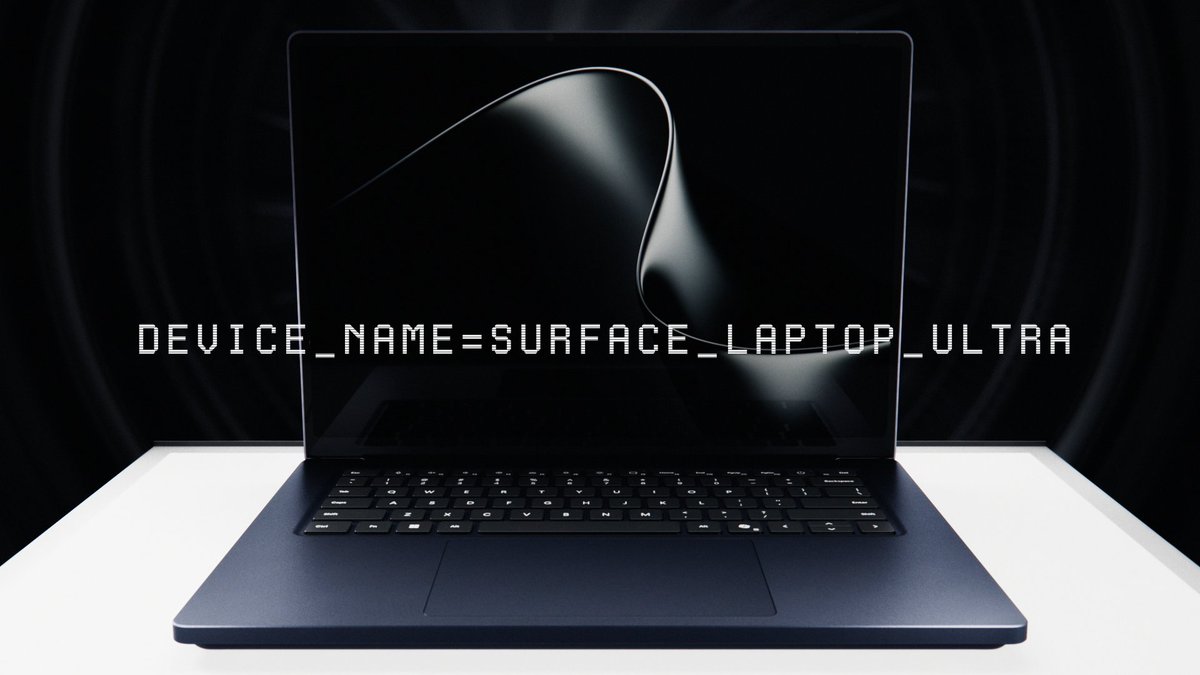
🔥 NVIDIA ANNOUNCES RTX SPARK: ARM-BASED PROCESSOR WITH RTX 5070-LEVEL GPU, GREAT BATTERY LIFE, AND HIGH AI PERFORMANCE NVIDIA unveiled its new ARM-based RTX Spark processor: • GPU performance equivalent to RTX 5070 • Runs modern games at 1440p with 100 FPS • Strong performance even on battery (no...

39,927 görüntüleme • 3 ay önce •via X (Twitter)

0 Yorum

Yorum bulunmuyor

Orijinal gönderinin yorumları burada görünecek

Benzer Videolar

#Battlefield6 NVIDIA DLSS 4 Reveal Trailer 📽️ The game includes support for DLSS 4 with Multi Frame Generation, DLSS Frame Generation, DLSS Super Resolution, DLAA, and NVIDIA Reflex. Desktop GPUs Performance At 4K, Ultra settings, DLSS 4 with Multi Frame Generation and DLSS Super Resolution multiply Battlefield 6's GeForce RTX 50 Series frame rates by an average of 3.8X. ▪️ GeForce RTX 5090 performance rockets to over 470 FPS. ▪️ GeForce RTX 5080 exceeds 330 FPS. ▪️ GeForce RTX 5070 Ti is in touching distance of 300 FPS. ▪️ GeForce RTX 5070 surpasses 230 FPS. At 2560x1440, Ultra settings, DLSS 4 with Multi Frame Generation and DLSS Super Resolution increase Battlefield 6 frame rates by an average of 3X. ▪️ GeForce RTX 5090 runs at almost 600 FPS. ▪️ GeForce RTX 5060 Ti over 240 FPS. At 1920x1080, Ultra settings, the combination of DLSS 4 with Multi Frame Generation and DLSS Super Resolution boost Battlefield 6’s GeForce RTX 50 Series frame rates by an average of 2.9X. ▪️ Allowing every GPU in NVIDIA's line-up to play at over 230 FPS, maxing out at over 740 FPS on the GeForce RTX 5090. Laptop GPUs Performance GeForce RTX 50 Series Laptop GPUs benefit similarly from DLSS 4 with Multi Frame Generation and DLSS Super Resolution, with Battlefield 6 frame rates multiplied by 3X on average at 2560x1600, with Ultra settings, enabling performance of up to 360 FPS. At 1920x1080, Ultra settings, GeForce RTX 50 Series Laptop GPU performance increases by 2.8X on average, enabling Battlefield 6 frame rates to surpass 480 FPS, and the range to run at over 200 frames per second.

Battlefield Bulletin

30,559 görüntüleme • 11 ay önce

NVIDIA just handed every solo creator and freelancer an unfair advantage. Jensen Huang walked on stage and announced RTX Spark. An ARM-based laptop chip that nobody saw coming. They called it the most power efficient PC chip ever built. 20 cores. Blackwell graphics. 6144 CUDA cores. Up to 128GB of LPDDR5X memory. But forget the spec sheet for a second. Here is what actually matters. RTX Spark is built to run AI models locally. No cloud subscription. No API costs. No waiting on a server somewhere. Everything runs directly on the laptop at full speed. That changes the math completely for anyone using AI to make money. The guy generating 3D assets in Blender with Claude his renders now take minutes instead of hours. More projects per day. More income per week. The girl producing AI kids content for YouTube local rendering means no upload wait times, no generation limits, no monthly fees eating into her margins. The freelancer building websites and automating outreach every AI tool in his stack now runs faster and cheaper than before. 30 laptops from Asus, Dell, Lenovo, MSI and others. Available this fall. For years the barrier was hardware. You needed an expensive setup to run serious AI workflows locally. NVIDIA just put that power inside a thin laptop anyone can carry anywhere. The people who already figured out how to monetize AI are about to move twice as fast. The people who haven’t started yet just ran out of excuses. Save this.

Shelpid.WI3M

27,820 görüntüleme • 3 ay önce

$AMD $MSFT Partnership is MASSIVE in 2026 🚀 If you were excited about my thread on $AMD $AMZN AWS long time partnership, you will be even more excited about what Microsoft gonna do with 2026 AMD EPYC "Venice". Historical Context: The relationship between AMD and Microsoft began in the early 2000s, with Microsoft initially focusing on Intel's x86 architecture for its Windows operating system and server products. However, AMD's entry into the server market with its Opteron processors in 2003 marked the beginning of a competitive dynamic that eventually led to collaboration. The partnership intensified with the launch of 3rd Generation EPYC "Milan" in 2021, powering Azure's N2D and C2D VM families. By 2025, Microsoft had integrated 5th Generation EPYC "Turin" into new compute-optimized instances, reflecting a strategic shift towards AMD for cost and performance benefits. This "Secret Weapon" breakthrough will mark another inflection point for AMD Microsoft Azure relationship, will probably be more aggressive than EPYC "Milan" moment in 2021. We can call it EPYC "Venice" moment 2026" 1. Technical performance of AMD EPYC "Venice" (2026) AMD's 6th Gen EPYC "Venice" processors, slated for 2026, introduce New Chiplet design breakthrough. a revolutionary chiplet interconnect fabric that redefines server scalability for AI. This isn't just faster silicon; it's a paradigm shift for Microsoft Azure , enabling hyper-efficient, rack-scale AI inference that slashes costs and latency while boosting throughput. ~Up to 256 Zen 6 cores, a 70% performance increase over "Turin," optimized for AI and HPC. ~Memory and Bandwidth: 1.6 TB/s per socket, doubling "Turin's" capability, with support for MR-DIMM/MCR-DIMM. ~Efficiency: 1,500-1,700W power draw, a 50% reduction, aligning with Microsoft's sustainability initiatives. ~Interconnect: PCIe 6.0 and a new chiplet fabric for rack-scale AI, reducing latency and enhancing scalability. 2. Why $MSFT will adopt $AMD YPYC Share to 50%+ in 2026. AMD EPYC Share: ~30-35% of Azure's x86 CPU-based business while Intel Xeon share is 65% Microsoft's Azure has been progressively integrating AMD EPYC, with "Venice" expected to expand this footprint: A. Dominance of AI Inference Workloads ~AI inference constitutes 80% of AI workloads in cloud environments, with latency-sensitive applications like chatbots, recommendation engines, and fraud detection requiring sub-second response times. ~"Venice's" 35x inference performance uplift directly addresses these requirements, outperforming Intel's offerings and custom Arm solutions in multi-threaded scenarios. B. Cost Efficiency and Operational Savings ~Azure's 2025 capex of $118B is under pressure to deliver returns. "Venice" can reduce operational expenses by $20-30B annually due to its power efficiency and performance gains, improving Azure's margins to 35-40%. ~The cost per inference operation is significantly lower with "Venice," estimated at 24-31% less than Intel-based alternatives, enhancing Azure's competitiveness against AWS and GCP. C. Scalability for Enterprise AI: ~"Venice" supports rack-scale AI deployments, enabling Azure to scale AI services for enterprise customers. For example, a 1,000-node cluster can process 700,000+ tokens per second, crucial for large-scale AI applications like personalized marketing and predictive analytics. ~This scalability is particularly important as Azure aims to capture the $100B+ AI opportunity by 2026, as stated by Microsoft CEO Satya Nadella. D. Reduction of Nvidia Dependency ~While Nvidia ( $NVDA) dominates AI accelerators, AMD's integrated EPYC-GPU solutions (MI450 with "Venice") offer a balanced approach, reducing Azure's reliance on Nvidia's high-cost GPUs. ~"Venice" enables hybrid inference models, where CPU-based inference handles 80% of workloads, and GPU acceleration is reserved for training and complex tasks, optimizing resource allocation. 3. Financial Implication: ~Revenue from Azure could reach $15-18B annually by 2026, part of a total revenue projection of $70-100B ~Profit margins could improve to 55-60%, boosting net income to $20-25B, supported by scale economies and reduced production costs. Intel could respond by giving more aggressive discounts, but this breakthrough has been a decade long of $AMD R&D, or rethinking chiplet design, a complete new approach. "Venice's" lead in AI inference and efficiency is challenging to match. Broader Industry: Other hyperscalers ( Amazon Web Services , GCP) and enterprises will follow Azure's lead, standardizing EPYC technology and pressuring Intel further. This could lead to a broader industry shift towards AMD, enhancing its ecosystem and bargaining power. Conclusion: The strategic adoption of AMD's 6th Generation EPYC "Venice" processors by Microsoft Azure in 2026 marks a pivotal moment in the evolution of cloud computing, particularly for AI inference capabilities. "Venice's" groundbreaking chiplet design, offering a 35x performance uplift for AI inference tasks, a 50% reduction in power consumption, and unparalleled scalability, positions Azure to leapfrog its competitors in the race for AI dominance. This technical superiority, combined with significant cost savings potentially $20-30B annually in operational expenses; aligns perfectly with Microsoft's ambitions to capture the $100B+ Revenue AI opportunity by 2026. The shift to 50% x86 market share for AMD within Azure is not merely a technical transition but a strategic realignment that redefines the competitive landscape. Historically, Microsoft's partnership with AMD has evolved from niche deployments to a core component of Azure's infrastructure, and "Venice" accelerates this trend. The 30-35% AMD EPYC share in 2025 is expected to double, driven by new VM families like C4D and H4D, which will dominate AI-intensive and HPC workloads. This migration is incentivized by "Venice's" efficiency gains, reducing dependency on Intel and Nvidia, and enhancing Azure's sustainability profile. Not Financial Advice!

Mike

141,018 görüntüleme • 11 ay önce

🔥HOLY SMOKES! $TAO holders! 🚀 SUBNET 19 (VISION) ON BITTENSOR IS ABSOLUTELY CRUSHING IT! In my 5+ years covering crypto and AI, this is one of the most impressive implementations I've seen. The combination of scale, performance, and decentralization is absolutely next level! 🚀 @namoray_dev @Corcel_X 💨 INSANE Speed Performance: - Llama 3.1 8B: 196.18 tokens/s with +107.23% advantage - Llama 3.1 70B: 124.96 tokens/s with +154.96% advantage - Llama 3.2 3B: 166.69 tokens/s with +21.66% advantage 🔥 Top Tier Model Integration: - Meta-Llama-3-70B & 8B Instruct - FLUX.1-schnell for Text-to-Image - ProteusV0.4-Lightning (Text & Image) - Multiple model variations for redundancy 🔥 What Makes This INSANE: - Complete decentralization - No single point of failure - Multiple model choices for redundancy - Real-time performance tracking - Transparent incentive structure The incentive distribution curve shows a healthy network with: - Strong rewards for top performers - Fair distribution across all participants - Clear path for growth and improvement - Sustainable economic model What's truly MIND-BLOWING is how they've managed to: 1. Scale to millions of operations 2. Maintain high quality across multiple tasks 3. Create a fair, competitive marketplace 4. Build in redundancy and reliability 5. Achieve true decentralization This isn't just another subnet - this is the future of decentralized AI inference happening RIGHT NOW! 🔥 1. MASSIVE Scale & Adoption: - We're seeing 7M+ tokens being processed - 14K+ processing steps being executed - Multiple AI models running simultaneously - Incredible miner participation across the network 2. Revolutionary Task Distribution: - Llama 3.1 70B leading with 20% weighting - Avatar Generation at 15% - Perfectly balanced task distribution for optimal network performance - Multiple specialized tasks including Text-to-Image and Image-to-Image processing 3. Elite Performance Metrics: - Top miners hitting 0.00775 incentive rates - Consistent performance across the network - Impressive scaling from top to bottom performers - Strong incentive curve maintaining network quality 📈 Network Performance: - Consistent upward trend in tokens/s - Quality scores maintaining high levels (>0.9) - Steady improvement in miner performance - Rock-solid network reliability ⚡ Platform Highlights: - Permissionless, serverless architecture - Global network of Always-On GPUs - Instant API access - Full decentralization - Multi-model support with seamless switching What makes this TRULY SPECIAL is the consistent upward trajectory in both speed and quality, while maintaining a decentralized architecture. The performance advantages over industry standards (+154.96% for 70B!) are absolutely mind-blowing! 🚀 This isn't just another AI subnet - it's a glimpse into the future of decentralized AI inference! The combination of speed, reliability, and model variety makes this one of the most impressive implementations in the space! 🔥 📽 Watch Now on YouTube and TikTok: Source 🔗

Andy ττ

11,616 görüntüleme • 1 yıl önce

AMD CEO Lisa Su just killed Nvidia’s $4,000 AI box with a $1,499 lunchbox. She walked on stage, held it in one hand, and ran a 235 billion parameter model live. No data center. No cloud. No rented GPU. The chip inside is something nobody saw coming. AMD’s Ryzen AI Max+ 395 is the first x86 silicon where CPU and GPU share the same 128GB of memory. That single trick lets a desktop run models that used to need a server rack. Out of those 128GB, Linux hands the GPU 110GB to play with. For context, an RTX 5090 gives you 32GB. A 4090 gives you 24. This box gives you more than three times either of them, in a chassis the size of a thick paperback. The benchmark that broke the room: this chip beat an Nvidia RTX 5080 by more than 3x on DeepSeek R1 inference. A $1,499 lunchbox outrunning a $1,000 discrete graphics card on a real AI workload. Nvidia spent a decade convincing the world you needed their hardware for serious AI. AMD just put that on a desk for half the price. Here is what nobody is telling you. A heavy AI user right now pays $200 for Claude Code Max, $200 for ChatGPT Pro, $20 for Cursor, $20 for Gemini. That is $5,280 a year leaving your account. The box pays itself off in 9 months and then runs free for the rest of its life. Install Ollama. Pull Qwen3 235B. Point Claude Code at localhost. Same interface you already use, except now nothing leaves your machine, nothing costs per request, and no company throttles your usage at 3am when you finally have time to build. This is the moment every AI subscription becomes optional. Lawyers stop fearing OpenAI leaks. Developers stop watching the token meter. Founders stop renting H100s for prototypes that never ship because the bill scared them. The first thousand people to figure this out will own the next two years of private AI consulting. Save this, and read the full breakdown article below you are watching the next shift hit before everyone else does.

AdiiX

3,396,355 görüntüleme • 3 ay önce

AgiBot’s new generation of industrial-grade interactive embodied robot, AgiBot G2, has officially launched! The G2 has already secured orders worth hundreds of millions of RMB, including two separate contracts each exceeding 100 million RMB, and has begun its first commercial deliveries. The AgiBot G2 is built to industrial standards, featuring high-performance joints, precision torque sensors, and an advanced spatial perception system. It supports rapid learning and deployment, offers strong multimodal voice interaction, and is designed for general use in industrial, logistics, and guidance scenarios. Inheriting the successful "Collect-Train-Deploy" model of its predecessor, the G1, the G2 brings significant upgrades, including a high-performance AI computing platform and actuators that enable omnidirectional obstacle avoidance and high-precision force-control tasks. Its 3-DOF waist allows for human-like bending and lateral body movement. A key feature is the G2's globally first-of-its-kind cross-shaped wrist force-control arm, which uses precision joint torque sensors and joint impedance control to delicately perceive external forces and respond smoothly. For continuous operation, the G2 supports autonomous charging and features a dual-battery hot-swapping system, meeting the 24-hour cycle demands of factory production lines. During the launch event, AgiBot demonstrated the G2’s ultra-low latency remote operation (teleoperation) capabilities. Operators successfully demonstrated precision shots (like hitting a floating balloon in Shanghai while operating from Beijing), showcasing the robot's high accuracy and low latency in both line-of-sight and beyond-line-of-sight scenarios. The G2 is already being deployed across four key real-world scenarios: In automotive parts production, it assists humans with tasks like safety belt lock core pressing and material handling. In precision operations, it used reinforcement learning to master delicate tasks like inserting memory sticks in just one hour. In logistics, the G2, enhanced by AgiBot's OmniHand dexterous hand, efficiently handles various package types for sorting and loading. Its strong mobility allows it to adapt to over 95% of factory floors. AgiBot is also commencing the first batch of commercial deliveries under an over 100 million RMB procurement contract with Joyson Electronic, formally landing the G2 in the automotive parts manufacturing sector.

RoboHub🤖

33,831 görüntüleme • 11 ay önce