正在加载视频...

视频加载失败

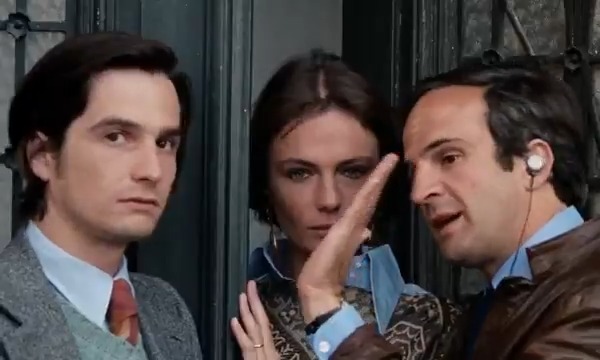
Octavia Spencer narrated her experience while working with Will Smith to Michael Rainey Jr. and Gianni Paolo and how Will Smith changed her life after doing a movie with him🥹❤️ “I watched how he interacted with the casts, i watched the subtle changes that he made, it’s like watching...

44,192 次观看 • 1 个月前 •via X (Twitter)

0 条评论

暂无评论

原始帖子的评论将显示在这里

相关视频

Hirokazu Koreeda on how he directs Children: "Interviewer: I think 'Shoplifters' (2018) is very remarkable in showing different sides of a city and like you said, people who are pretty much invisible, but I do want to also commend you on another thing, is you often work with young actors, and they always tend to have a significant role in many of your films. How do you go about finding such dynamic young actors, and why do you often put these young people at the center of each one of your stories? Koreeda: First of all, I would say that I tend to make what I would call family dramas, and of course, you have to have children if you’re creating a family, but that’s how it started, but I found that as I did it, I became really interested. It became very interesting and fun to work with these children, and for example, the two children in this film, neither of them had any acting experience at all before this film. I brought them in, and what I find when you bring these children in, and you work with them is that the adult actors change. They become much more lively and natural in the way that they act, and I guess, at some point, I realized this, and I guess, became really attracted to the idea of having children and the impact that it had. Interviewer: Do you find that there is any struggle in terms of working with young actors, or in this case, young children who have not actually acted before? Koreeda: Just to clarify, I have worked with children in many of my films, and all of them have never had experienced before. I always go out and pick non-acting children to work in my films, so just, I wanted to put that out there. In terms of the struggle, it does take time. You have to give extra time to work with these children. When I choose these children, I have an audition, and I pick out who I want to the audition, and then when we get to set, I never give them the script. No child that I’ve worked with has been given a script beforehand, and when I get to the actual part where they’re going to be acting, I give them the lines myself, and work with them and coach them. What I find is that it’s actually really enjoyable, both for them and for myself that way. I also, because I’ve been doing this now for several years, I tend to have a fairly high success rate in choosing children that are able to work with me in that way. Interviewer: That’s fascinating, and it also shows how you are able to create such authentic performances from these child actors over and over again in so many of your films. I think it’s a unique gift that you have, and it’s something that very few directors, I think, here in the United States do. Koreeda: It’s true, I guess by working with these children, I learned. I discovered that the best way to do it was just to communicate verbally their lines, rather than giving them in a written format, and over time, this really worked, and so I just kept doing it. But, interestingly, I loved the movie 'Kramer vs Kramer' (1979), directed by Robert Benton, and one time I bought the movie with all the extra, the making of and everything, and I went over it, and I found through that, that in fact, the child in that movie was also given his lines every day by the assistant director each morning when they came in to set, so I discovered that it wasn’t just me that was doing this." (Koreeda's interview with Scott Menzel, We Live Entertainment, 2018)

DepressedBergman

49,522 次观看 • 6 个月前

Denzel Washington’s epic monologue towards the end of Training Day was largely improvised on set. Director Antoine Fuqua was so blown away by his performance, he says he thinks he "forgot to yell cut”. He explains… “That’s Denzel. He was just in his zone. I mean, that was one of those moment...people talk about AI. Those are the moments where you go...it's a great tool. It's gonna be a great tool, I think...but the emotion, and the moment that an actor can bring - you can't predict that. That's something that's just inside of Denzel. And when that came out, I was just like - I hope I got it. I just turned to my operator - who was shaking- I looked over at the guy - I was like, “please tell me you got that.” Because that was the take. That was it. There was no other take - I mean, how do you tell an actor like that, that that wasn't good enough? …He walked over to me, and he just had this look in his eyes. I was like, “you good?” He said, “you good?” I said, “Yeah…” Some of that was in the script, but he flipped it the way he did it. "Putting cases on all you." He kind of added some things in there. And then he just went into a whole other zone with the whole King Kong thing- with Pelican Bay - Denzel started that. That was Denzel. That was him, man. He just kind of lit up, and I think I forgot to yell cut. I was just watching it, because everybody started walking away, and I'm just watching him, and then he lights a cigarette - and he's talking - and I'm just watching him. I think at some point he probably looked at me like, you going to cut? And I'm like, “oh yeah, yeah, cut.” He was still in it. That's the thing with Denzel. He was so Alonso…I'm just watching him for a while because I didn't know what else he was going to do. It was just so magical. And then I think he looked up at me and I was like, “Okay, cut, cut.”

Gangster Cinema Central

42,262 次观看 • 1 个月前

David Lean on how to direct actors & shares a funny story that happened during the filming of 'The Bridge on the River Kwai' (1957) "Interviewer: Could you talk about how you work with your actors? Lean: Dangerous subject. Well, it’s intensely personal. I always try not to speak in a loud voice when I’m talking to an actor on the set. I gently take them aside, and I whisper because I don’t want to give the impression, for their sake, that they are being told to do this or that by a teacher. I try as hard as I can to make them suggest something that I want them to think of. The trouble with actors is that it’s a very di cult job with this damned glass eye looking at them all the time. It’s quite di cult talking to all of you here, but I’d rather talk to all of you than I would have a hundred-millimeter lens pointing at me. It’s so concentrated. It’s part of a director’s job, I think, to get the actor to give as good a performance on the stage as he gave to himself in the bath in the morning. So I try to relieve them of their inhibitions. It doesn’t help if you talk from a great height, from a megaphone, as it were. I try to get their confidence. I try to give them confidence. I can’t bear some actors, the rambunctious types who think they know everything. You’ve got to knock them down and make them realize they don’t know everything. If you’ve really done your homework on the script, you, the director, know the part better than any damned actor because you’ve been at it for months. I’ve had lots of actors who want to change dialogue. I see them doing it. I won’t have it. They took on the script and they’ll stick to it. I’m terribly tempted to tell you a rather long story about Sessue Hayakawa. You know, I nd constantly that actors really are not interested in anything but their own parts. We had a scene in 'The Bridge on the River Kwai' (1957) where they had all the troops lined up, and Sessue gets up on the soapbox and talks. We went through a rehearsal, and I said, “What’s wrong?” Because it was the speech and yet it wasn’t the speech. What Sessue had done was to learn all the lines that were only his. He had cut out all the lines that were anybody else’s. The main script was about that thick, and his script was only that thick. He marked only the pages in which he spoke. He had thrown out the rest and bound it together. Now, we came to the scene at the end of the picture. Alec Guinness is looking over the edge of the bridge and he thinks he sees some wires. He goes up to Hayakawa and says, “Colonel Saito, there’s something rather peculiar going on. I think we better go and have a look.” Guinness walked o the bridge, which leads down to the rocks, and Sessue stayed there like a rock. I said, “Go on, Sessue, follow him.” He said, “I follow him?” I said, “Sessue, this is where you nd the wires and where you get killed.” He said, “I get killed?” He had thrown the page away because he had no dialogue. I’ll tell you another story about an actor, though I won’t tell you who it was. He was damn good, but I was kind of dissatisfied. I said, “Look, I understand that an actor is projecting ninety percent to the person he’s playing with, and ten percent is going out toward the camera. I’ve only just realized that you’re putting ninety percent out to the camera, and ten to whom you’re playing with.” It changed his performance immediately." (David Lean's interview to AFI, 1984)

DepressedBergman

36,391 次观看 • 6 个月前

Whenever I feel there might be a conflict, or if the neighbor likes to be difficult I will always get a survey first before even saying anything. Once that’s in hand I will then let them know I am planning a fence or doing something else. I feel that way they can’t argue with the facts but sometimes they like to anyways. This woman knows the fence isn’t on her property and even avoids it by a few feet. Yet she starts removing the fence as it’s being built, would you stand for this? How do you stop someone who won’t respect the lines? I think the best way is to document everything with paperwork and video. Install a camera so there is proof they are doing what they are doing. I always try to cover my end that’s why I always have cameras everywhere. I never know when I might need it. If I end up in court then it’s no longer here say with evidence. I try to avoid confrontation as much as I can but sometimes it’s unavoidable. I’ve always lived life the way I see fit and I try to always do the right thing. I refuse to let others dictate how I do things especially if my way is proven to be effective. Dealing with stubborn neighbors can be drab but eventually it will work out, it’s the time in between that’s frustrating. The last time I did the fence. The neighbor at first tried to didn’t like the idea she would have a fence on one side of her driveway in case she opened the door and hit it. I explained to her that sometimes there may be kids playing and that I didn’t want a stray toy or ball to hit her house or car. At the end of the day she was reasonable and didn’t give me a hard time from that point on. But I think about how it could have gone awry like how this lady wouldn’t listen to reason.

SonnyBoy🇺🇸

140,595 次观看 • 1 个月前