Video yükleniyor...

Video Yüklenemedi

Ana Sayfaya Dön

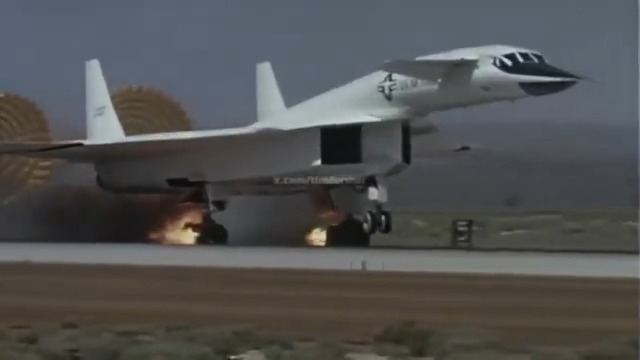
On Apr. 30, 1966, the second XB-70 prototype, Air Vehicle 2 (AV 2), suffered a short circuit in the landing gear retraction system shortly after takeoff from Edwards Air Force Base. As a result of this malfunction, the nose gear was blown back into the partially retracted gear well...

542,147 görüntüleme • 5 ay önce •via X (Twitter)

0 Yorum

Yorum bulunmuyor

Orijinal gönderinin yorumları burada görünecek

Benzer Videolar

Why the 737 landing gear lever has an “OFF” position ✈️ It’s a question I get asked quite often and understandably so! “OFF” isn’t a logical position for the landing gear! The landing gear is retracted into the belly of the aircraft using hydraulic pressure. Once the gear is fully up, mechanical uplocks hold the gear safely in position. However, with the lever in the UP position, hydraulic pressure is still being applied to the system. This is unnecessary now that the gear is being held up with mechanical latches and places extra demand in the hydraulic pumps. So, once the gear has been retracted, the pilots will move the gear lever from UP to OFF as part of the after takeoff checklist. This simply removes hydraulic pressure from the retract lines. When the pilots configure the aircraft for landing, we move the landing gear lever from OFF to DOWN. This action releases the mechanical up locks and the gear is lowered using a combination of hydraulic pressure, gravity and air loads. Once the gear is fully down and locked, a green light - one for each set of wheels, will illuminate. Should the primary gear down sensors fail, we have a second set of green, gear down indicators on the overhead panel. As long as the gear is indicating down and locked on either the primary or standby indicator, the gear is down and locked and safe to land on 👍 In the very unlikely event that the gear won’t lower normally using the landing gear lever, we have a standby gear lowering system which allows the crew to manually release the gear uplocks and allow gravity to lower the gear - see my reel showing that system in operation . With airlinepilotperformance

aircraftmaintenancengineer

19,786 görüntüleme • 2 ay önce

‘How a paperclip saved a $750 million aircraft.’ April 30, 1966. The moment had come. Test pilots Al White and Joe Cotton were poised to push the XB-70 #20207 Valkyrie through its final trial: a grueling 30-minute sprint at Mach 3, the last step toward earning the elusive “unlimited” status. All systems were go—until they weren’t. Shortly after takeoff, Cotton retracted the gear. A sickening jolt followed—the nose gear jammed hard into its door. Suddenly, what had begun as a routine test flight spiraled into a high-stakes emergency. Attempts to lower the gear via the primary hydraulic system failed. Switching to the backup electrical system, Cotton heard a sharp pop. Dead. The system was gone. A belly landing wasn’t just risky—it was impossible. The Valkyrie's long, elegant nose and wide intake geometry left no clearance for such a maneuver. North American engineers hadn’t even simulated one. White tried a desperate move—bringing the XB-70 down for a touch-and-go, hoping the impact would jar the gear free. Nothing. He tried again. Still jammed. Options were running out. Bailing out and sacrificing the $750 million prototype loomed as the only choice. But there was fuel to burn, and hope to chase. As engineers on the ground scrambled through diagrams and wiring charts, White and Cotton circled above Edwards Air Force Base, each minute ratcheting up the pressure. Cotton crawled to the rear of the cockpit, opening service panels and probing systems like a surgeon mid-flight. After more than an hour of diagnosis—and nearly two hours in the air—the culprit was found: a tripped circuit breaker. But fixing it was another problem. The Valkyrie had no onboard toolkit. Yet Cotton had brought his briefcase. Inside—an unlikely hero—a paperclip. He straightened it, gripped it with a leather glove, and carefully reached in. ZAP! The breaker came to life. White hit the switch—and the nose gear extended. It worked. Cotton dropped back into his seat, exhausted but victorious. The drama wasn't over. When the Valkyrie finally came down at 173 knots, the earlier malfunction showed its final consequence: hydraulic pressure had stayed locked on three of the four main wheel brakes. As the tires touched down, they couldn’t spin. The result was catastrophic—intense friction ignited the rubber, and the XB-70's massive landing gear tires erupted in flames. The main gear bogies were severely damaged. Still, the plane remained upright. The Valkyrie lived to fly again—though it would take two weeks to repair the scorched gear. It was a steep price, but far better than losing a one-of-a-kind marvel of engineering. It took me a several hours to restore and upscale the archive video enjoy! No sound.

Puddle Jumper 🦨

248,771 görüntüleme • 1 yıl önce

WHY DOES THE BOEING 767'S MAIN LANDING GEAR TILT FORWARD? If you watch the Amazon Prime Air Boeing 767 coming in to land, you may notice something about its main landing gear: the bogies are tilted forward. This is part of the 767's landing gear design. The forward tilt means the front wheels of the main gear contact the runway first, followed by the rear wheels as the bogie levels out. This helps cushion the touchdown, distribute loads progressively, and reduce stress on the bogie structure. During development, the 767's touchdown behavior showed a tendency for forward pitching. The forward-tilted bogie helps counter this motion as the gear settles and the rear wheels come down. But the design is mostly used to fit in the gear bay to make the best use of the space. When retracted, the 767's landing gear geometry allows the bogie and wheels to fit efficiently inside the undercarriage bay, making the best possible use of limited space around the aircraft's keel beam and surrounding systems. The 767 is distinctive among Boeing aircraft in this respect, but forward-tilting main gear designs are not unique. The Airbus A350 and A380 also use forward-leaning bogies, while the A340-600 combines different orientations on its various landing gear assemblies. In a nutshell, that nose-down tilt you see on approach is exactly how the Boeing 767 was designed to land: front wheels first, bogie rotating level, then the rear wheels settling onto the runway. A video from PDX Aviation shows [N1997A], the same aircraft involved in yesterday's accident, landing at Portland Airport.

Turbine Traveller

89,463 görüntüleme • 19 gün önce

The National Transportation Safety Board said on Tuesday that evidence recovered from the ​Amazon Prime Air 767 flight data recorder suggested the pilots considered aborting the landing ‌after the aircraft touched down. The NTSB said ⁠30 seconds before the end of the flight data recording, the nose landing gear and ​right main landing gear touched down on the runway at a speed of 158 knots (181 ​mph), while 19 seconds before the end of the recording, the left main landing gear touched down at a speed of 134 knots. A few seconds later, the brakes were released and the throttles were increased to ​values consistent with go-around thrust, indicating a late attempt to abort the landing and ​get back in the air. But 11 seconds before the end of the recording, throttles were reduced to idle ‌power ⁠and brakes were reapplied. The final ground speed was 65 knots at the end of the recording. The NTSB said there was no indication in the recorded data that speed brakes or thrust reversers were deployed to help slow the plane. NTSB Chair ​Jennifer Homendy told reporters that investigators would interview both of the pilots on ​Wednesday and then release details from the cockpit voice recorder. Homendy is leading a team of 32 ​investigators at Miami International ​Airport. She said ⁠the NTSB was able to release one of two runways closed since the accident to allow for departures from an easterly direction late ​on Tuesday. The Amazon cargo plane was on its third flight of ​the day, coming ⁠from San Juan, Puerto Rico. It had flown from Cincinnati to Miami and from Miami to San Juan earlier on Sunday before the crash at 1:53 p.m. EDT (1753 GMT). The captain, 55, ⁠received his ​type rating for the 767 in May and has ​7,145 hours of flight time, while the first officer, 37, received his type rating on the 767 in April ​2025 and has 2,655 flying hours, the NTSB said.

Breaking Aviation News & Videos

423,493 görüntüleme • 18 gün önce