Loading video...

Video Failed to Load

Go Home

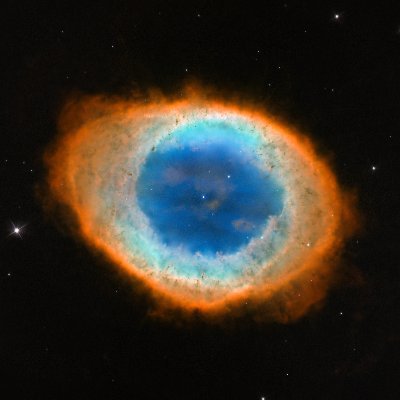
On March 6, 2015, astronomers reported observing a supernova in a distant spiral galaxy. Although the explosion itself occurred millions of years earlier, the light carrying that event had only just reached Earth after traveling across intergalactic space. This delay is not unusual but a fundamental feature of the...

23,079 views • 2 months ago •via X (Twitter)

0 Comments

No comments available

Comments from the original post will appear here

Related Videos

OPINION: ELON AND THE DAWN OF THE WARP AGE While the rest of the world is busy arguing about the present, Elon has been playing a multi-century game of chess. Most people remember his 2013 conference talk for the Hyperloop reveal, but the real bombshell was his take on the Alcubierre Drive. Proposed by theoretical physicist Miguel Alcubierre in 1994, the Alcubierre Drive is a speculative metric that allows a spacecraft to achieve apparent faster-than-light travel. Instead of a ship accelerating through space, which is limited by (the speed of light), the drive manipulates space itself. It works by contracting the fabric of space in front of the vessel and expanding it behind. Essentially, the ship sits in a "bubble" of flat spacetime, effectively "surfing" on a wave of warped reality. Elon did not just call warp drive science fiction; he broke down the physics of warping space so that space itself does the traveling. When you have a mind that views the speed of light not as a ceiling but as a technical challenge to be engineered around, the future starts looking a lot more like Star Trek and a lot less like a stagnant rock in the vacuum. Elon was a decade ahead of the curve. Back then, he noted that while SpaceX was focused on the immediate Mars roadmap, breakthroughs in warp theory were already bubbling at places like NASA. Fast forward to late 2025, and the vision is becoming reality. Former NASA Administrator Charles Bolden once admitted the goal was warp speed, and groundbreaking research even suggested we are finally moving toward manipulating spacetime without needing the impossible amounts of exotic matter we once feared. Source: Journal of Modern Physics, The Debrief, AllThingsD, Elon Musk

Mario Nawfal

201,823 views • 6 months ago

We just saw the exact moment a star exploded for the first time ever. Astronomers have achieved a rare feat: imaging the exact moment a massive star detonated—and the explosion was anything but spherical. SN 2024ggi, a supernova located 22 million light-years away in the spiral galaxy NGC 3621, was detected a mere 26 hours after ignition. This extraordinarily early discovery allowed researchers to train the European Southern Observatory’s Very Large Telescope in Chile on the event while it was still in its infancy. Using the technique of spectropolarimetry—which analyzes the polarization of light to reveal geometric structure—the team uncovered a surprising truth: the expanding shockwave was distinctly aspherical, elongated into an “olive” or prolate shape along one primary axis. This asymmetry means the catastrophic rebound following the star’s core collapse did not propagate uniformly in all directions, directly contradicting the long-standing assumption that the deepest layers of a core-collapse supernova explode spherically. The progenitor was a red supergiant 12–15 times more massive than the Sun that had exhausted its nuclear fuel, triggering gravitational collapse of its iron core. In most supernovae, the initial shape of this breakout is quickly obscured as the blast wave slams into the star’s outer envelope. Here, however, astronomers captured polarized light signatures of the still-unobscured ejecta, freezing the explosion’s geometry in time. The discovery carries far-reaching consequences. It strongly suggests that asymmetry is common, if not universal, in the earliest phases of massive-star deaths. Current theoretical models, which often assume spherical symmetry at the core, will need significant revision. Moreover, these distorted explosions could help explain observed peculiarities in supernova remnants, the production of gamma-ray bursts, and the kicking of neutron stars and black holes to high speeds at birth. By catching a star in the act of dying asymmetrically, SN 2024ggi has given us a vivid glimpse into the violent, chaotic physics that govern the final heartbeat of the universe’s most massive stars. [🎞️ Artist’s animation of a supernova explosion] [Unique shape of star’s explosion revealed just a day after detection. ESO, 2025]

Massimo

363,612 views • 7 months ago

There is a room in Málaga that was built to be the closest thing on earth to standing inside heaven. It is called the camarín of the Virgin of Victory, and it is hidden at the top of a tower inside the Santuario de la Victoria. To reach it, you climb and the ascent is the entire point... The building you are climbing through was completed in 1700, and it was designed as a single argument made in stone. At the bottom lies a crypt: a black chamber crowded with white plaster skeletons, a meditation on death and the brevity of life. From there a staircase rises, and as you climb it the light grows stronger and the imagery changes from bones to saints. The architects of the time understood this ascent as the soul's own journey, the dark crypt as the stage of penitence, the staircase as the stage of spiritual progress, and the room at the very top as the final stage: the union of the soul with the divine. That room at the top is the camarín, and its dome is one of the most extraordinary interiors in Spain... Every surface is covered in white and gold plasterwork. There is no empty space anywhere. The Baroque called this horror vacui, the horror of the void: the conviction that a space meant to represent heaven should not contain a single bare patch of stone. Out of that plasterwork emerge angels, flowers, birds, and mirrors. The mirrors are not decoration alone. They catch the light pouring in through the windows of the drum and throw it around the chamber, so that the gold seems to move and the whole room appears to shimmer and breathe. This wonder was built by people who believed that if you wanted to show a human being what heaven might feel like, you did not describe it to them. You built a room, and you let them climb into it... -- -- -- If you enjoyed this, I write a weekly newsletter read by over 50,000 people who love rediscovering the beauty of the past. You can join us here: If you'd like to support my work, a paid subscription is what makes it possible.

James Lucas

69,219 views • 1 month ago