Video wird geladen...

Video konnte nicht geladen werden

Zur Startseite

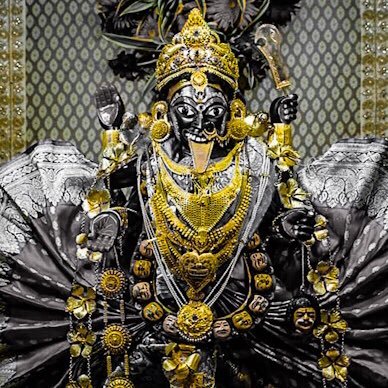
On Shani Jayanti: The audio file - pauranic mantra to be offered in the fire during Shani homa or indeed to Shanischara in any other homam. Meditating on this mantra is an excellent prayer for Shani Maharaj. This is better than the commonly used mantra used elsewhere. सूर्यपुत्रो दीर्घदेहो...

38,420 Aufrufe • vor 2 Jahren •via X (Twitter)

10 Kommentare

Profilbild von Saraswati Films
Saraswati Filmsvor 2 Jahren

Ignore Typo in above tweet and chant as in video above and here is the correct script: 👇🏻 सूर्य पुत्रो दीर्घ देहो विशालाक्षः शिवप्रियः । मन्दचारः प्रसन्नात्मा पीडां हरतु मे शनिः

Profilbild von Shreyas Devanathan
Shreyas Devanathanvor 2 Jahren

Pranaam Can we chant this mantra without Homa?

Profilbild von Saraswati Films
Saraswati Filmsvor 2 Jahren

Pranaam. Absolutely.

Profilbild von AmarVyas अमर व्यास
AmarVyas अमर व्यासvor 2 Jahren

प्रणाम, आपके संदेश के माध्यम से, आज शनि देव की नई प्रार्थना के बारे में पता चला। सादर आभार

Profilbild von Narayanan Hariharan
Narayanan Hariharanvor 2 Jahren

Pranaam Pandit Ji. While reciting, you said mandachaar instead of mandadhaar as written in your tweet. Which is the correct version?

Profilbild von हितैषी
हितैषीvor 2 Jahren

Har Har Mahadev 🙏🙏

Profilbild von AmarVyas अमर व्यास
AmarVyas अमर व्यासvor 2 Jahren

पंडित जी, मैं होम/यज्ञ पद्धति का अनादर नहीं करना चाहता, या शॉर्टकट नहीं अपनाना चाहता। लेकिन, कई घरों में होम करना संभव नहीं है। इसके बजाय - क्या हम क्षेत्र को साफ कर सकते हैं, चूल्हे पर एक नया या साफ बर्तन रख सकते हैं, और उसे यज्ञ कुंड के रूप में मान सकते हैं? मैंने अमेरिका में ऐसा किया था (अज्ञानता या आवश्यकता के कारण) लेकिन कोई औरतरीका होना चाहिए | हम एक चम्मच के बजाय घी की एक बूंद डाल सकते हैं, या आहुति का आकार छोटा हो सकता है... प्रणाम

Profilbild von Ram Venkatraman 🇮🇳
Ram Venkatraman 🇮🇳vor 2 Jahren

Jai Shani Dev 🙏🪷🙏

Profilbild von Sidhartha Pingali
Sidhartha Pingalivor 2 Jahren

🙏

Profilbild von Supriya
Supriyavor 2 Jahren

Pranaam Sir 🙏🏻 Thank you so much 🙏🏻

Ähnliche Videos

The Science of Chanting: Why 32 Lakh Times for the Gayatri Mantra? Have you ever wondered why there is a specific count for mantra chanting in our traditions? It is not just a random number; it is a deep spiritual science based on the structure of the mantra itself. In this video, the significance of the Gayatri Mantra and its "Purushcharana" (the process of mastering a mantra) is explained through simple spiritual mathematics. The Math Behind the Mantra: - The 24 Varnas: The basic Gayatri Mantra consists of 24 syllables or letters, known as varnas. - The 24 Lakh Goal: According to Mantra Shastra, to initiate or "awaken" a mantra, one must chant it as many lakh times as there are syllables. Therefore, the basic practice requires 24 lakh chants, which a dedicated seeker can usually complete in about 2 years. The Vishvamitra Tradition: The count changes when we follow the method used by Brahmarishi Vishvamitra, which includes the Vyahritis. - Adding the Vyahritis: By adding Om and the three Vyahritis (Bhur, Bhuvah, Svah), the total count of syllables increases. - The 32 Lakh Sankalp: These additions bring the total to 32 syllables (24 + 8 = 32). To complete the full Purushcharana of this version, one must perform 32 lakh chants. This tradition shows us that every sound has weight and every chant brings us closer to spiritual awakening. It is a journey of discipline, patience, and pure devotion. Jai Maa Gayatri! If you found this insight helpful, save this post for your spiritual journey and share it with others!

Arpit

23,314 Aufrufe • vor 7 Monaten

It was great to see Lex Fridman learn and chant the Gayatri Mantra so well and PM Narendra Modi too recite it encouraging everyone to do so daily. Gayatri Mantra indeed is a very powerful mantra for expanding our awareness. I would like to humbly talk about it based on my own experience: The Gayatri mantra, like other Vedic mantras, reveals itself to the practitioner over time as they regularly chant and meditate on it. The Sanskrit words (or basically the sounds) reveal their true meanings in our experience as we chant them. For example, "Savitr" in the mantra though is said to be invoking the Sun, has presented itself in my experience, after much Sadhana, as the bright illuminating force of our own consciousness. Bhur, Buvah, and Svah revealed themselves as my own states of awareness from this waking 'reality', to the world constructed by my mind, to just pure consciousness, respectively. Dhi, is the limited power of consciousness. It's our limited awareness in day to day life. Right now as you read this, my words and may be a little more is in your Dhi. Not what you ate for lunch. But now, that lunch is in your Dhi. So what are we asking for while chanting Gayatri Mantra? We are asking the bright illuminating force that illuminates the waking reality, the mental world, and all of our consciousness to present itself in our Dhi - our limited awareness now. By becoming aware of it, we can wield it. And use it to illuminate, or bring into our awareness, much more than what is possible normally. For example, we can become a Ramanujan if we want by turning our Dhi to math problems, and the expanded power of awareness we have developed will bring to us solutions and equations that others may not see. You get it. As you regularly chant Gayatri mantra, you will realize you are much more aware of the world around you as a sort of a play, an illusion. You will also become much more intuitive. And you will see things others may not. For example, you may be able to see much more to events in the world. And while seeing that, your expanded intuition will help you see a lot more in your mental world about those events - like the factors behind them, and what's connecting them. Then you may also see "the future." You may intuitively see how those events will develop. It all depends on what you choose to focus on with your Dhi and how focussed you are about it. This is my personal experience. Of course, I'm not a realized soul, but that's the end goal. I sincerely believe by chanting and meditating on the Gayatri Mantra we can expand our awareness so much that we are aware of our own consciousness. Which is nothing but realization of the self. Enlightenment! Now, the Gayatri Mantra needs to be chanted as an incantation as prescribed in our scriptures with all its tones as per the Gayatri Meter. This is very important I believe. This too came into my realization one day while chanting the Gayatri Mantra: The Vedic mantras are designed like training data for LLMs. Here the LLM is your brain. These mantras when chanted the right way help mould the brain and fine tune the mind in certain ways to experience the world differently. They alter our conscious experience of the world. The sounds (or even mental chanting) probably reshape our brain's neural networks to achieve this expanded awareness (as in the case of Gayatri Mantra). May be one day neuroscience will find out. So if you do plan to start chanting the Gayatri Mantra and meditate on it, make sure you use a proper version chanted in the Gayatri meter the right way. This is of course my suggestion based on my own experience and what I have realized from my practice.

Aravind

108,172 Aufrufe • vor 1 Jahr

🕉 The Mahāmṛtyuñjaya Mantra — From the Ṛg Veda Itself 🔱 This sacred mantra first appears in the Ṛg Veda (7.59.12) — the twelfth mantra of the 59th Sūkta in the 7th Maṇḍala. Most people know how it sounds — but very few know how it is supposed to be chanted. In the Vedas, every syllable carries Svaras — musical notations that guide pitch and tone. 🎵 A line below a letter means a lower pitch, a line above means a higher pitch, and two lines above — an extended higher pitch. These Svaras are not decoration — they preserve the divine rhythm that turns sound into spiritual force. This very mantra also appears in the Yajurveda and Atharvaveda, each with subtle variations in tone and cadence. Listen carefully — this is how the Mahāmṛtyuñjaya Mantra is chanted in its original Rigvedic form. 🕉 त्र्य॑म्बकं यजामहे सु॒गन्धिं॑ पुष्टि॒वर्ध॑नम् । उ॒र्वा॒रु॒कमि॑व॒ बन्ध॑नान्मृ॒त्योर्मु॑क्षीय॒ मामृता॑त् ॥ Could you hear the difference between each Śabda and Svara? Comment below 👇 📿 Share this with someone who chants this mantra — they’ll thank you for life. Follow @TheSanskritChannel for more Vedic insights preserved in sound. #MahamrityunjayaMantra #RigVeda #Sanskrit #VedicChanting #VedicWisdom #vedas #vedicwisdom #sanatandharma #sanskrit #shloka #bhairava #shiva #vishnu

TheSanskritChannel

14,294 Aufrufe • vor 9 Monaten