Video yükleniyor...
Video Yüklenemedi
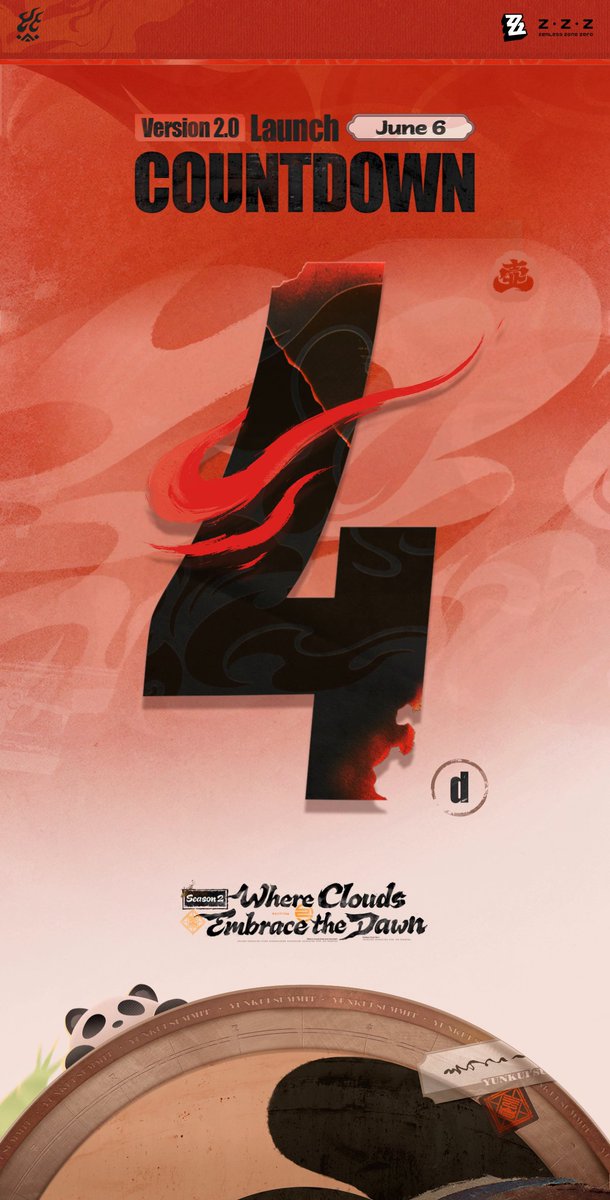
Only 1 day until Zenless Zone Zero Anniversary Version 2.0 "Where Clouds Embrace the Dawn" goes live! "Motion and stillness; Clarity and impurity!" #zzzero #zenlesszonezero #NextstopWaifei #Yixuan

151,554 görüntüleme • 1 yıl önce •via X (Twitter)
0 Yorum
Yorum bulunmuyor
Orijinal gönderinin yorumları burada görünecek








![Hi Proxies, Zenless Live 2026 - New York is about to start! Please check the following information before attending 👇 [Event Dates] March 21, 2026 (Sat) March 22, 2026 (Sun) [Event Location] Racket NYC, 431 W 16th St, New York, NY 10011 [Venue Opening Time] 5:00PM - VIP 5:30PM - GA [Show Start Time] 7:00PM [Show End Time] 9:00PM - Queue formation and entry check-in will begin from 4:30PM each day. - For this event, we will guide entry in the order of VIP Tickets → General Tickets. - Depending on the situation on the day, the queue formation time or guidance details may be subject to change. - For smooth entry, please prepare the Check-in Screen of your purchased ticket and join the queue. [Event Notice] - Smoking is strictly prohibited at the event. - This is a 21+ event. All food and beverages are provided by the third party; for issues regarding food or beverages, please contact the venue directly. - Each ticket permits one-time entry only. Re-entry is not allowed. #zzzero #zenlesszonezero #ZENLESSLIVE2026](https://image.24vids.com/tw-2034812169468981549/media/HDyT7Z3W8AEOfXT.jpg)


![Created this by using a movement sheet as a reference image to animate the dance using Seedance 2.0 + ChatGPT image 2.0 on Yapper GPT Image 2.0 Prompt: Dance Sequence Instruction Sheet [VISUAL STYLE] A composition featuring a highly detailed 3D-rendered female dancer. Designed like a professional choreography guide with a technical, diagram-inspired layout. Clean white background, soft studio lighting, and strong contrast to highlight body movement and posture. [GRID LAYOUT] Structured 4×4 panel grid (16 frames total), evenly spaced with thin black divider lines. Each panel is identical in size and clearly numbered from 1 to 16 to show a continuous dance progression. [CHARACTER] Use image1 as the base character. The same female dancer appears consistently across all panels with accurate likeness and proportions. [WARDROBE] The dancer wears a stylish, performance-ready outfit: a well-fitted top paired with a short, flowy skirt. The look should feel modern and visually appealing while still practical for dance movement. Fabric should subtly respond to motion (slight flow and folds), even in grayscale. [PANEL STRUCTURE – EACH FRAME] Top-left: Step number + short dance move title (e.g., “Step 5 – Spin Transition”) Center: Full-body pose capturing a precise moment in the choreography Bottom-left: 3–4 lines of concise instruction describing the move Overlay: Motion arrows and directional guides illustrating how the dancer transitions [MOTION INDICATORS] Incorporate curved arrows for fluid motion, straight arrows for directional steps, and circular indicators for spins or turns. Emphasize rhythm, weight shifts, and body isolation. [RENDER QUALITY] High-detail sculpted 3D style with smooth grayscale shading, subtle shadows, and clean linework. Maintain a polished, concept-art level finish with clarity in every pose. [RESTRICTIONS] No color, no background scenery, no extra characters, no visual clutter, only the dancer and instructional elements.](https://image.24vids.com/tw-2048428389347024922/ext_tw_video_thumb/2048428337945788416/pu/img/kYc5AePfhfp-aHJJ.jpg)


