Video wird geladen...

Video konnte nicht geladen werden

Zur Startseite

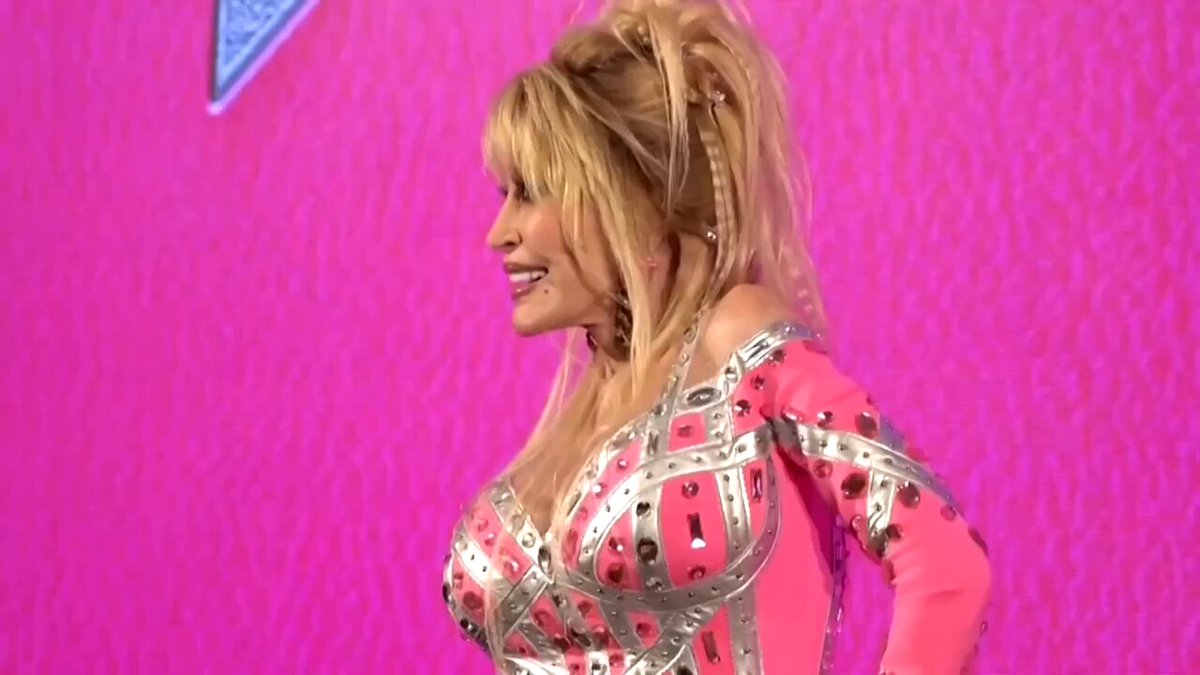
Only Dolly Parton could turn her wardrobe malfunction into a joke when accepting the Artist of the Year award in 1978. Her dress had just torn right down the front as she was about to go up and accept the honor, yet Dolly still walked onstage with a smile,...

82,661 Aufrufe • vor 7 Tagen •via X (Twitter)

2 Kommentare

Profilbild von Music & Memories
Music & Memoriesvor 6 Tagen

The techniques used in “Yangzhou Folk Song” are unique to the Jiangnan style of erhu performance, with many sliding glissando notes and trill embellishments.These characteristics are derived from the “Jiangnan Sixing,” or silk style of music, which reflects the delicate elegance of melodies from the Jiangnan region, south of the Yangtze River. Experience Shen Yun - an unforgettable experience! 💫 Mark your calendars and book your tickets now: 💫 Watch More:

Profilbild von I C U
I C Uvor 6 Tagen

❤️❤️❤️❤️❤️🌷🥰

Ähnliche Videos

“Governor, would you please get out of the way so we can see her?” a woman shouted at me as I rode in a convertible with Dolly Parton at the opening of Dollywood in 1986. In 2014, several governors, senators, and the U.S. Secretary of the Interior were at Newfound Gap for the celebration of the 75th anniversary of the Great Smoky Mountains National Park. But the crowd had come to see one person: Dolly. Those of us in public life quickly learned, “If you want to be noticed, don’t ride in a convertible with Dolly Parton.” “I was born in Boogertown,” Dolly told me when we visited at the Dollywood opening. I told her that my walk across Tennessee in 1978 to become governor had created many unexpected conversations. One of those was in Sevierville after I shook hands with a missionary doctor, Robert F. Thomas, who had delivered Dolly in a one-room cabin on the Little Pigeon River. Later, Dolly wrote a song about Dr. Thomas. In her bedroom at Dollywood was a photograph of her Sevier County high school senior class. “Where are you in the picture?” I asked Dolly. “Where would you expect me to be?” she said and pointed to herself sitting in the middle of the front row. God gave Dolly a basket full of gifts in addition to her extraordinary songwriting and singing abilities. She was a shrewd businesswoman. And she was generous. She used her celebrity to provide books to millions of children, to help victims of fire in her home county, and to provide $1 million for research to speed up a COVID vaccine. Dolly loved everyone, and in today’s polarized world, she seemed to be the one person everybody loved. I think it was because she was bona fide. Dolly was always herself, the mountain girl who never stopped singing or sounding like where she grew up.

Lamar Alexander

30,423 Aufrufe • vor 23 Tagen

For once, Dolly Parton was the one sitting in the audience while somebody else told her story. That is the part of Shania Twain’s 2006 performance of “Coat of Many Colors” at the Kennedy Center Honors that stays with me. Dolly had spent decades telling stories onstage. She knew exactly where a lyric needed a smile, where a joke belonged, where a song needed to slow down. She was usually the person holding the microphone and deciding what the audience should see. This time, she was watching. And Shania was singing about the little girl Dolly used to be. That changes the feeling of the song before Shania even reaches the important lines. “Coat of Many Colors” comes from a very specific memory: Dolly’s mother making her a coat from pieces of cloth because buying a new one simply wasn't an option. As a child, Dolly wore it proudly. Other children saw something poor. She saw something her mother had made for her. It is a story Dolly has told many times. But hearing somebody else tell it while she sits there is different. You start watching Dolly instead of Shania. That is what I find fascinating about the performance. Shania doesn't try to imitate Dolly. She doesn't put on the famous voice or mannerisms. She sings the song in her own voice, which somehow makes the tribute feel more respectful. She isn't pretending to be Dolly. She is reminding Dolly that her story reached someone else. And by 2006, that story had traveled a remarkable distance. The little coat that once marked a child as different had become part of a song known around the world. The girl who might have been embarrassed by what she wore became one of the most recognizable women in country music. And now another country star was standing in one of the most formal rooms in American culture, singing about that coat while its owner listened. There is a lovely awkwardness to that. For once, Dolly cannot control the story by telling it herself. She has to receive it. Maybe that is what makes the moment more moving than a simple tribute. Shania isn't presenting Dolly with another award. She is presenting her with something much older: her own memory, seen through somebody else's eyes. And perhaps that is one of the nicest things another person can do with a story you have carried for years. Not improve it. Not explain it. Just remember it carefully enough to give it back to you. Dolly wrote the song. Shania sang it. But for those few minutes, the story belonged to both of them.

Emotion & Music

690,646 Aufrufe • vor 21 Tagen

❤️The relationship between the original artist, Dolly Parton, and the legendary Whitney Houston stands as one of the most beautiful and gracious stories in music history. Far from the envy often seen in the industry, Dolly always held Whitney in the highest regard. She once shared a moving memory of hearing the cover on the radio for the first time; when Whitney’s voice soared, Dolly had to pull her car over immediately and burst into tears, overwhelmed by how the song had been elevated beyond her wildest imagination. For decades, Dolly maintained that Whitney never "stole" the song; rather, the late diva transformed her intimate, personal sentiment into a monumental global anthem. This mutual respect culminated at the 1994 Grammy Awards, where Dolly Parton herself presented the prestigious golden trophy to Whitney Houston. That night, Whitney also made history with her "white dress" performance—widely considered the greatest live vocal performance of all time. Appearing like a goddess in a pristine white mermaid gown atop a raised circular platform, she performed on a minimalist stage that allowed the audience to focus entirely on her soulful gaze and soaring vocals. The performance served as a masterclass in vocal technique, showcasing an artist at the absolute peak of her powers. Whitney opened with a breathtaking, nearly 45-second a cappella section, demonstrating flawless pitch control as she seamlessly locked in with the instrumentation that followed. During the climax, she employed open-throat technique and Gospel-style melisma to unleash rich, bright, and powerful belted notes. The most powerful moment occurred when the music suddenly paused for a few seconds, giving way to a massive E-flat (Eb5) note on the words "And I..." With boundless breath support and natural vibrato, that magnificent sustained note swept through the auditorium like a tidal wave of sound, leaving even the seasoned stars in the audience awestruck. Her performance at the 1994 Grammys was a perfect blend of dazzling beauty, consummate vocal technique, and heartfelt emotion. When Whitney passed away suddenly in 2012, Dolly Parton bade her farewell with a tearful tribute, affirming that she would always love her. The profound, soulful connection between the songwriter and the singer transformed "I Will Always Love You" into an immortal legend—a musical sanctuary that the world continues to revere with awe to this day. ------------------------------

𝐌𝐮𝐬𝐢𝐜 - 𝐌𝐨𝐯𝐢𝐞 - 𝐀𝐧𝐝 𝐌𝐨𝐫𝐞⭐️❤️

81,619 Aufrufe • vor 19 Tagen

When a Disco Song Makes the Whole Room Want to Dance🎶💃🕺 That was exactly how I felt watching Tina Charles perform “I Love to Love (But My Baby Loves to Dance)” on television on July 10, 1976. The first thing that caught my attention was not her outfit or the stage. It was Tina Charles herself. She appeared with a natural smile and a bright, energetic voice. She did not need complicated choreography to command attention. A little movement with the rhythm, a hand gesture, a smile, and the way she let her voice blend with the live band behind her were enough to bring the whole performance to life. And then I realized: the beauty of this performance is in its simplicity. This was music from a time when television performances did not depend so heavily on visual effects. Behind Tina Charles was a full band, with strings, horns, guitar and percussion. Together, they created a rich and lively Disco sound without overwhelming the singer. The rhythm of the song is clever too. It tells a rather funny story about love: the woman wants affection, closeness and romantic moments, while her boyfriend seems much more interested in dancing whenever the music starts. That contrast is what makes the song so charming. What I especially like is the way Tina Charles sings it. She does not turn the story into some dramatic love tragedy. Instead, she delivers it with playfulness and joy, almost as if she were saying: “Go ahead and dance, but I still want you to love me!” Perhaps that is what Disco did so well. It did not always need to deliver a profound message. Sometimes, the purpose of a song was simply to help people forget their worries for a few minutes and allow themselves to enjoy life. Watching these images from 1976, there is something else I appreciate: the people in the video do not seem to be trying to become perfect versions of themselves. They are simply performing, playing music and enjoying the moment. Today, we may have bigger stages, more sophisticated lighting and better technology. But that does not necessarily mean music carries more emotion. There are some things technology cannot create. A genuine smile. A real voice. A live band playing together. And that feeling of joy passing directly from the performer to the audience. That is what I think I see in this performance. “I Love to Love” is more than a Disco song from 1976. It is a reminder that sometimes the best music does not need to make us think too much. It simply needs to make us smile, get up and dance. If you could go back to one night in the 1970s, would you rather sit and listen to a song like this, or step onto the dance floor and join everyone else?

Music over time🎻

90,334 Aufrufe • vor 29 Tagen

The Pure Joy of Disco: Why This "Ring My Bell" Cover Is Absolute Magic I recently watched a viral video on my timeline titled "Anita Ward - Ring My Bell (1979)" that is making thousands of people smile online. The caption called the disco era the "greatest time in America." When you click play, you see a blonde woman in a sparkling sequin dress, singing her heart out on stage with a live band. If you know music history, you know that this woman is not actually Anita Ward. Anita Ward is the incredibly talented Black artist who sang the original hit. The woman in the video is a cover singer. But as I read through the thousands of comments, I realized something wonderful: nobody cared that the title was slightly wrong. Everyone was just too busy dancing. I am not pointing this out to criticize the video at all. In fact, I want to give huge praise to this singer! She is absolutely fantastic. She didn't just sing the correct notes; she completely captured the magic, joy, and positive energy of 1979. Her smile is contagious, and she performs with so much passion that you cannot help but feel happy watching her. She brought a classic song back to life in the most beautiful way possible. This performance reminds us of what made the disco era so special. The late 1970s music was all about a feeling. The moment you hear that famous, high-pitched electronic bell ringing in the song, your mood instantly lifts. Disco was a time to forget your daily stress, put on your best clothes, and just enjoy life with your friends. The singer in the video understands this perfectly. She acts like a musical time machine, taking us right back to those fun, carefree days. Sometimes, people on the internet focus too much on being perfectly right, and they forget to just have fun. We don't always need a perfect history lesson. Sometimes, we just need a great singer, a sparkling dress, and a beat that makes us want to get up and move. This live cover is a wonderful tribute to Anita Ward's original masterpiece and a beautiful celebration of the whole disco generation. When you hear that classic bell ring in this song, does it make you want to get up and dance, too?

Music over time🎻

62,724 Aufrufe • vor 19 Tagen