Загрузка видео...

Не удалось загрузить видео

На главную

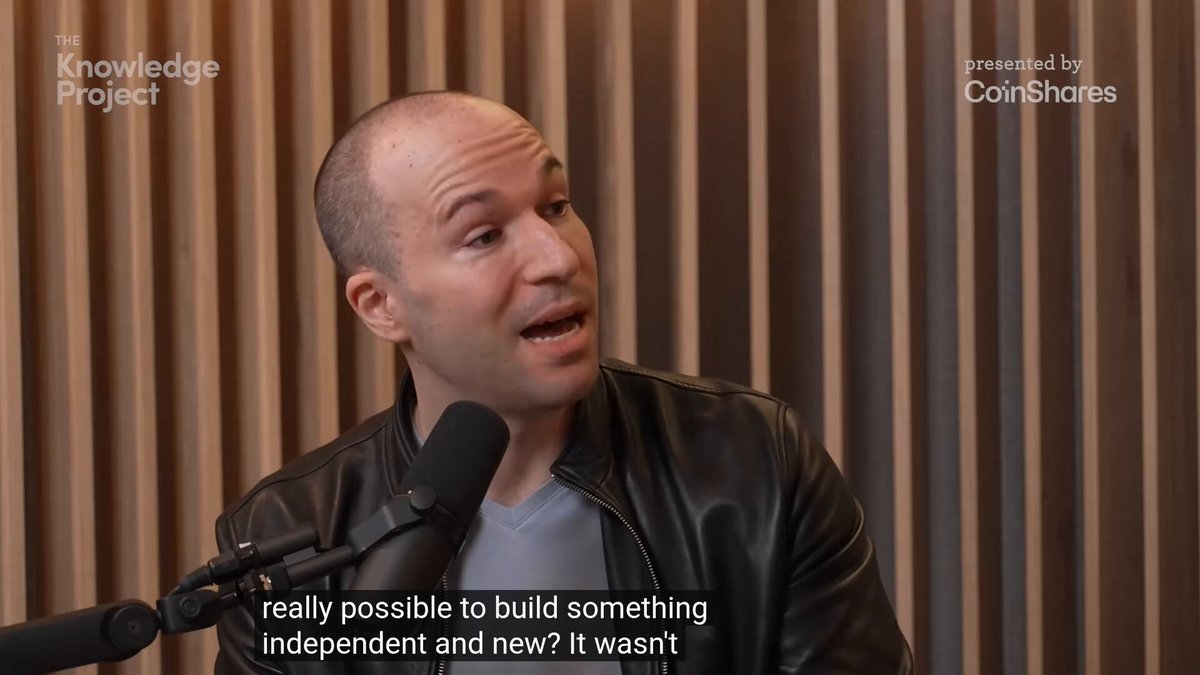
OpenAI President Greg Brockman explains why Anthropic pulled ahead of OpenAI on ARR. (Anthropic at ~$65B and OpenAI is at $40B ARR ) "We focused late on coding in particular. There’s one simple narrative, which is that we focused less on real-world coding, and we came to that game...

31,589 просмотров • 17 дней назад •via X (Twitter)

Комментарии: 0

Нет доступных комментариев

Здесь появятся комментарии из оригинального поста

Похожие видео

Greg Brockman talks about when OpenAI first realized that AGI can't be achieved with "Non-Profit" status and the decided to abandon its Non-Profit roots. "In 2017, we started to think very hard about, first of all, how do we really achieve the mission? How do we actually build an AGI? What will that look like? And we started to do the math on compute. You start to realize that it is going to take a big computer. We came across a company called Cerebras, which was building a unique piece of computing hardware. The kind of computer that they were promising, we realized, was going to be far advanced from where our compute calculations looked. As you start to realize, if we could buy a lot of those computers, we could actually probably succeed at building an AGI. If we could get exclusive access to Cerebras, that could give us an overwhelming advantage. If we could buy very large data centers, that could be something unique as well. The thing about nonprofit fundraising is that I think there is essentially a cap to what is possible there. And so Elon, Sam, Ilya, and I all agreed that the only path forward for OpenAI, and the only path to achieve the mission, was to create a for-profit entity associated with OpenAI in some form. And so, we were committed to that direction. That is something that we knew was the only way to achieve the mission." --- From "The Knowledge Project Podcast" YT Channel (link in comment)

Rohan Paul

10,311 просмотров • 4 месяцев назад

Sergey Brin on AI and Jeff Dean back in December when Gemini peaked: “I would say in some ways we for sure messed up in that we underinvested and sort of didn't take it as seriously as we should have, say, eight years ago when we published the Transformer paper. We actually didn't take it all that seriously and didn't necessarily invest in scaling the compute. And also we were too scared to bring it to people because chatbots say dumb things. And, you know, OpenAI ran with it, which is good for them. It was a super smart insight, and it was also our people like Ilya who went there to do that. But I do think we still have benefited from that long history. So we had a lot of the research and development of neural networks kind of going back to Google Brain. That was also kind of lucky. It wasn't luck that we hired Jeff Dean. I mean, we were lucky to get him. But we were in this sort of mindset that deep technical things matter. And so we hired him. We hired a lot of people from DEC, honestly, because they had the top research labs at the time. But he [Jeff Dean] was passionate about neural networks. And it stemmed, I think, from actually his college experiment. I don't know. He was like, whatever, curing third world disease and figuring out neural networks when he was like 16. He's done crazy things. But he was passionate about it. He built up a whole effort. And actually in my division at the time in Google X. We had him but I didn't I was like okay Jeff you do whatever you want. He's like oh we can tell cats from dogs. I'm like oh okay cool. But you know, you also trust your technical people and soon enough they were developing all these algorithms these neural nets that were doing some of our search. And then, you know, Noam came up with a transformer and we were able to do more and more. But yeah, I mean, so we had the underpinnings, we had the R&D. We did underinvest for a number of years and didn't take it as seriously as we should have.” Both Jeff Dean and Noam Shazeer left Google in the past two months.

tae kim

249,117 просмотров • 1 месяц назад

What is the biggest misconception about Palantir? Emil Michael (Under Secretary of War Emil Michael + Department of War CTO), Under Secretary of War for Research & Engineering, & Department of War CTO, explains: "I mean, Palantir is a software company that innovated.. they were sort of the first big data company, if you will.. and in some ways had AI capabilities that delivered useful software to the government. And it's been amazing to watch how people use their product in the department for all sorts of things. We didn't know where our stuff was. We were spending trillions of dollars over the years. Where are our munitions? Where are these things? How do we understand where they are in their lifecycle? How do we repair them? All the things that were really just basic stuff. The protesters want to talk about, you know, some of the other stuff they do that they think is more controversial. But I think they're really a nuts-and-bolts software company with forward deployed engineers that are smart, that sit with a warfighter and solve everyday problems you would in any organization, as much as they do the other stuff." "Why do you think people think they're evil?" "People are crazy. I don't know. If helping the American government do lawful things makes you evil, I mean, you know, who's not on that list? I mean, we all support our—we live here, right? We support our elected government regardless of the party. So I think it sort of hearkens back to, like, a long—it was probably before your time—but there was a sort of a solicitation on who would sell the first cloud software to the government. And Google bailed because their employees were like, “No, you can't.” So imagine.. they wouldn't sell cloud to the government, but they'd sell it to companies in foreign countries. It's crazy. I think those days are over, and the number or percentage of people that will say that about a Palantir or a Google or any one other company has shrunk so much that hopefully it doesn't matter."

Molly O’Shea

74,174 просмотров • 9 месяцев назад