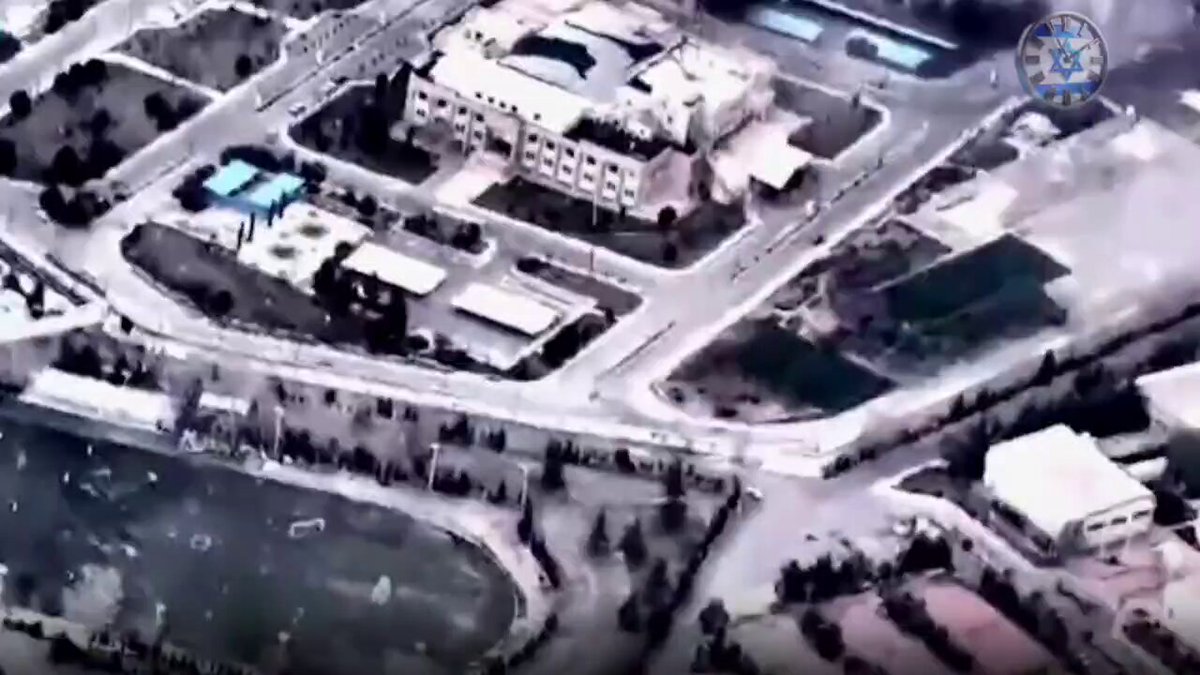
Loading video...

Video Failed to Load

Go Home

๐Ÿšจ OPERATIONAL UPDATE: ISRAEL U.S. WAR WITH THE ISLAMIC REPUBLIC - Reporting Window: LAST 24 HOURS โ€ข Iran widened its fire again with a broad evening missile barrage on central Israel and continued attacks across the Gulf, including a drone strike that hit a fuel tank at Kuwait International...

23,818 views โ€ข 5 months ago โ€ขvia X (Twitter)

0 Comments

No comments available

Comments from the original post will appear here

Related Videos

๐Ÿšจ OPERATIONAL UPDATE: ISRAEL U.S. WAR WITH THE ISLAMIC REPUBLIC - Reporting Window: LAST 24 HOURS โ€ข Iranian missiles struck Tel Aviv and northern Israel, causing injuries and structural damage โ€ข Israel expanded strikes across Iran, including Tehran, Tabriz, Isfahan, Bandar Abbas, and missile infrastructure sites โ€ข U.S.โ€“Israel strikes hit senior PMF infrastructure in Iraq, killing key commanders โ€ข Reported strikes on Iranian gas infrastructure in Isfahan and Khorramshahr signal a potential shift toward energy targeting โ€ข Lebanon intensified with evacuations, Rashidiya strikes, and continued Hezbollah fire โ€ข Trump abruptly pivoted to negotiations with Iran and extended the Hormuz deadline, delaying a major escalation The past 24 hours were not defined by a single headline event, but by a combination of very real battlefield activity and a sudden political shift at the top level. On the ground, the war remained active across every front: Israel, Iran, Lebanon, Iraq, and the Gulf. At the same time, the expected U.S. escalation tied to Hormuz did not happen. Instead, Washington pivoted toward negotiations, with Trump claiming talks are close to agreement while Iran publicly denies that anything meaningful is underway. That combination, ongoing war with a simultaneous negotiation track, is new. And it matters. โ”โ”โ”โ”โ”โ”โ”โ”โ”โ”โ”โ”โ”โ”โ”โ”โ”โ” ๐Ÿš€ IRANIAN MISSILE ATTACKS ON ISRAEL Iran continued missile launches into Israel, with a clear pattern of split targeting between central and northern sectors. A missile hit in Tel Aviv injured several civilians and damaged nearby residential structures. Later waves triggered wide alert zones across northern Israel, including the Galilee, Golan, and confrontation line communities. Your outbox tracked these alerts across dozens of locations in real time. There were also additional impacts from fragments and debris, including a schoolyard hit and damage to homes in the north without mass casualties. This continues a trend seen over the last several days: โ€ข lower salvo size โ€ข wider disruption footprint โ€ข sustained daily pressure Iran is no longer relying on large coordinated barrages. It is maintaining pressure through frequency, geography, and effect per missile. At the same time, Israeli officials continue to investigate interception gaps, including earlier failures tied to THAAD systems, reinforcing that even a degraded Iranian launcher network can still produce meaningful results. โ”โ”โ”โ”โ”โ”โ”โ”โ”โ”โ”โ”โ”โ”โ”โ”โ”โ” โœˆ๏ธ STRATEGIC AIR CAMPAIGN OVER IRAN The Israeli and U.S. strike campaign inside Iran remained broad, multi-layered, and geographically extensive. Mainstream reporting confirmed strikes on: โ€ข missile storage and production facilities โ€ข regime and intelligence headquarters in Tehran โ€ข additional infrastructure in Isfahan and surrounding regions Open source intel shows how wide this really was. Strikes or explosions were reported across: โ€ข Tehran (multiple districts including eastern sectors and Parchin-adjacent areas) โ€ข Tabriz โ€ข Khuzestan and Dezful โ€ข Bandar Abbas and coastal nodes โ€ข Yazd and missile infrastructure There were also multiple reports of targeted assassination strikes, destruction of missile-related infrastructure, and pressure on internal security nodes This matters because the campaign is not narrowing. It is hitting production, command, logistics, and leadership. This is a system-wide degradation effort, not a tactical suppression campaign. โ”โ”โ”โ”โ”โ”โ”โ”โ”โ”โ”โ”โ”โ”โ”โ”โ”โ” โšก ENERGY INFRASTRUCTURE: THE WAR IS GETTING CLOSER TO THE GRID One of the most important developments in this window was the reported targeting of Iranian gas infrastructure. Reuters reported a gas company office and pressure reduction station hit in Isfahan and a pipeline feeding a power station in Khorramshahr struck At the same time, oil prices rose again as markets reacted to continued Hormuz disruption, uncertainty around negotiations, and risk of escalation into full infrastructure targeting Open source intel strongly corroborates these reports, with repeated references to the same targets and follow-on rhetoric about retaliatory strikes on regional power systems. This is the key shift. The war is moving from military systems toward civilian energy systems. Not fully yet, but clearly closer. โ”โ”โ”โ”โ”โ”โ”โ”โ”โ”โ”โ”โ”โ”โ”โ”โ”โ” ๐Ÿ‡ฎ๐Ÿ‡ถ IRAQ: PROXY COMMAND STRUCTURE HIT The Iraq front escalated meaningfully. Reuters reported that strikes hit: โ€ข PMF headquarters in Anbar โ€ข a residence tied to PMF leadership Casualties included at least 15 fighters killed, dozens wounded, and the confirmed death of operations commander Saad al-Baiji. Open source intel confirmed this in real time, including militant messaging and follow-on threats against U.S. positions. This was not a minor militia strike. It was a hit on central PMF command infrastructure. That keeps Iraq as an active and important front, not just a background theater. โ”โ”โ”โ”โ”โ”โ”โ”โ”โ”โ”โ”โ”โ”โ”โ”โ”โ” ๐Ÿ‡ฑ๐Ÿ‡ง LEBANON: PRESSURE CONTINUES AND DEEPENS The Lebanon front remained highly active. Key developments included evacuation warnings north of the Zahrani River, Israeli strikes near Rashidiya and southern Lebanon infrastructure, and continued Hezbollah rocket fire into northern Israel. Open source intel tracked: โ€ข strike activity near Rashidiya refugee camp โ€ข additional targeted strikes in Bchamoun โ€ข repeated northern Israeli alerts Israel continues shifting toward targeting infrastructure, limiting movement, and shaping the battlefield. Hezbollah remains active, but increasingly constrained. โ”โ”โ”โ”โ”โ”โ”โ”โ”โ”โ”โ”โ”โ”โ”โ”โ”โ” ๐ŸŒ WASHINGTON, TEHRAN, AND THE NEGOTIATION TRACK In a sharp pivot, Trump announced that the U.S. is now holding talks with Iran, the Hormuz deadline was extended, and discussions are โ€œclose to agreementโ€. From there markets reacted immediately with oil prices dropping and then global markets rallying. But the reality is far less clear. Iranian leadership denied meaningful negotiations, and then demanded compensation and guarantees as new conditions for an any agreement, including limiting U.S. presence in the Gulf There is also uncertainty about who the U.S. is even talking to. Reports suggest contact with Mohammad Ghalibaf rather than Mojtaba Khamenei, who has not been seen publicly. At the same time, there is a deeper shift: The U.S. may now be willing to end the war without full regime change. That is a major departure from earlier expectations. Meanwhile, Israel is trying to ensure any deal reflects its interests, with Netanyahu reportedly engaging directly with the administration. โ”โ”โ”โ”โ”โ”โ”โ”โ”โ”โ”โ”โ”โ”โ”โ”โ”โ” ๐Ÿ“Œ WHAT MATTERS MOST RIGHT NOW Three developments define the war right now. 1๏ธโƒฃ The battlefield remains fully active across all fronts. Missiles, strikes, Lebanon operations, and Gulf pressure all continued in this window. 2๏ธโƒฃ The war is moving closer to energy infrastructure targeting. Isfahan and Khorramshahr are early signals of a potentially much more dangerous phase. 3๏ธโƒฃ Negotiations have entered the picture, but nothing is settled. The war is still being fought at full intensity even as diplomacy begins. Bottom line, this was not just another day of escalation. It was the first clear moment where war and negotiations are happening at the same time. That creates a new dynamic: โ€ข escalation is still real โ€ข pressure is still increasing โ€ข but the outcome is now less predictable than it was 24 hours ago Quick note... big thanks to Michael W for contributing to the open-source intel picture behind these updates. If youโ€™re serious about following this war and the broader geopolitical landscape, heโ€™s worth having in your feed. โ”โ”โ”โ”โ”โ”โ”โ”โ”โ”โ”โ”โ”โ”โ”โ”โ”โ” END OF REPORT

Inside_Israel_Intel

37,207 views โ€ข 5 months ago

๐Ÿšจ While you were asleep, the war shifted. Hereโ€™s how... OPERATIONAL UPDATE: ISRAEL U.S. WAR WITH THE ISLAMIC REPUBLIC - 3/25 to 3/26 โ€ข Israel sustained a broad overnight strike campaign inside Iran, with Reuters reporting a wide new strike wave and your outbox capturing repeated explosions and reported air activity in Isfahan, Shiraz, Tehran, Bandar Abbas, Qeshm, Najafabad, Khomeini Shahr, and other locations. โ€ข Iranโ€™s direct fire into Israel remained dangerous but uneven. A missile fell near Hadera in what appeared to be an attempted strike near the Orot Rabin power station, while additional Iranian missile waves hit central Israel on Thursday morning. โ€ข Hezbollah kept the northern and central threat picture active, with Israeli and Jerusalem Post reporting indicating rocket fire toward northern Israel and the Tel Aviv area while Israel continued strikes on Hezbollah infrastructure in Lebanon. โ€ข Diplomacy did not meaningfully advance. Reuters reported Tehran is reviewing a U.S. proposal while rejecting the idea of actual negotiations, demanding formal control of Hormuz, guarantees against renewed attacks, and Lebanonโ€™s inclusion in any ceasefire framework. โ€ข The Gulf and wider regional fronts stayed central. Kuwaitโ€™s airport fuel tank was hit by a drone, Gulf states told the U.N. Iranian attacks pose an existential threat, and your transcript underscored Tehranโ€™s messaging that it intends to tie any endgame to Hormuz and potentially wider maritime pressure. The defining narrative in this reporting window was not a single headline strike but the shape of the war itself. Israel kept pressing deeper and wider inside Iran, Iran remained defiant in public while signaling maximalist terms through intermediaries, Hezbollah stayed fully engaged, and the Gulf front continued to harden. Tehranโ€™s messaging was not the language of de escalation. It was the language of a regime trying to preserve leverage through Hormuz, Hezbollah, and regional coercion even as the military pressure on its own infrastructure intensified. โ”โ”โ”โ”โ”โ”โ”โ”โ”โ”โ”โ”โ”โ”โ”โ”โ”โ” *โƒฃ IRANIAN MISSILE ATTACKS ON ISRAEL The clearest operational signal on the Israeli home front was the missile that fell near Hadera. Times of Israel reported that the impact was in an open area near the IECโ€™s major power station and that no infrastructure damage was caused. That matters because the targeting logic appears to have been strategic infrastructure, not just another general population area. Open source intel reporting strengthens that reading with reporting tying the strike area to the Orot Rabin facility, later messaging that Iran had publicized the plantโ€™s coordinates and described the earlier impact as a warning shot, and repeated confirmation that no major infrastructure damage was reported. At the same time, Reuters reported that by Thursday Iran had launched multiple new missile waves at Israel, with sirens in Tel Aviv and other areas and at least five people injured. That suggests the broader pattern is not that Iran has lost the ability to strike, but that its direct fire is becoming more intermittent and less dominant than earlier in the conflict. Reuters also cited CENTCOM commander Brad Cooper saying Iranian drone and missile launch rates are down by more than 90 percent. That is the important distinction this morning. Iran can still generate painful and politically charged attacks, especially when it tries to threaten energy or symbolic infrastructure, but the cadence looks less like sustained strategic pressure and more like punctuated salvos inside a broader degradation trend. โ”โ”โ”โ”โ”โ”โ”โ”โ”โ”โ”โ”โ”โ”โ”โ”โ”โ” *โƒฃ STRATEGIC AIR CAMPAIGN OVER IRAN The main operational story overnight was the continued spread of strikes across Iranian territory. Reuters reported that strikes hit a residential zone in Bandar Abbas, a village outside Shiraz where Tasnim said two teenage brothers were killed, and a university building in Isfahan, while the Israeli military said it had completed a wide scale wave of strikes targeting infrastructure in Iran. Open source intel adds the operational texture mainstream coverage only partly captured. It logged eyewitness and opposition sourced reporting of explosions or low flying aircraft in Malard, Shiraz, Tehran, Isfahan, Najafabad, Khomeini Shahr, Qeshm, Talesh, Bandar Abbas, and Aligudarz. It also captured claims of a possible targeted assassination attempt against senior Iranian naval figures in Bandar Abbas and reporting of smoke over the port city after a reported U.S. attempt on a senior figure. Those Bandar Abbas details remain less firmly confirmed than the wider strike wave itself, but they fit the pattern of pressure on Iranโ€™s southern maritime and naval infrastructure. This is the key point. The strike campaign continues to broaden into much more than a narrow nuclear file. It is hitting military infrastructure, industrial capacity, maritime assets, command nodes, and whatever leadership or specialist personnel Israel and the U.S. assess as essential to Iranโ€™s ability to keep fighting and regenerate capability. Reutersโ€™ reporting that Israel completed another large infrastructure wave is consistent with that larger pattern. โ”โ”โ”โ”โ”โ”โ”โ”โ”โ”โ”โ”โ”โ”โ”โ”โ”โ” *โƒฃ LEBANON / HEZBOLLAH FRONT Lebanon remained fully tied to the main war. Reuters reported that Iran told intermediaries Lebanon must be included in any ceasefire arrangement, which is one of the clearest strategic indicators yet that Tehran sees Hezbollahโ€™s position as inseparable from the end state it wants. On the ground, Hezbollah remained active. Jerusalem Postโ€™s live coverage led with two injured after Hezbollah rocket fire in the north and referenced a missile near Hadera as part of the same broad war picture. Reuters separately reported Hezbollah chief Naim Qassem rejecting talks with Israel under fire and vowing fighters would continue โ€œwithout limits.โ€ Open source intelligence adds the tactical layer: Hezbollah had launched about 120 rockets from populated neighborhoods in Tyre since the start of the operation, that the IDF struck Hezbollah targets including a command center in Dahieh, and that Israeli aircraft eliminated a Hezbollah cell after it launched rockets at IDF forces in southern Lebanon. The practical takeaway is that Hezbollah is not behaving like a secondary theater waiting for diplomacy. It is still an active front and, diplomatically, one of Tehranโ€™s key red lines. That makes Lebanon both a battlefield and a central piece of the bargaining struggle now underway. โ”โ”โ”โ”โ”โ”โ”โ”โ”โ”โ”โ”โ”โ”โ”โ”โ”โ” *โƒฃ GULF / HORMUZ / ENERGY WAR The Gulf front remained one of the most consequential dimensions of the war. Reuters reported that a drone hit a fuel tank at Kuwait International Airport, causing a fire but no casualties. Reuters also reported Gulf Arab states told the U.N. Human Rights Council that Iranian strikes now pose an existential threat. Reuters also reported that Iran is demanding formal control of the Strait of Hormuz as part of its position on ending the war, while AP described Tehranโ€™s counterproposal as including sovereignty over the Strait and continued insistence on its own conditions. Reuters further noted that the Strait remains effectively closed and cited ADNOC chief Sultan Al Jaber calling Iranโ€™s restriction of passage โ€œeconomic terrorism.โ€ Iranian state messaging framed Hormuz sovereignty, reparations, and guarantees against resumed attacks as core ceasefire conditions, and also warned of broader maritime pressure, including possible escalation around Bab al Mandab, which is highly relevant as a reflection of the regimeโ€™s messaging line. This is why the Gulf theater matters so much this morning. Tehranโ€™s leverage is no longer just missiles into Israel. It is also maritime chokehold, energy disruption, and the threat of widening economic pain across the region and beyond. โ”โ”โ”โ”โ”โ”โ”โ”โ”โ”โ”โ”โ”โ”โ”โ”โ”โ” *โƒฃ POLITICAL / DIPLOMATIC DEVELOPMENTS Diplomatically, the most important development was not progress but clarity. Reuters reported that Iran is reviewing a U.S. ceasefire proposal but says there are no negotiations, while Iranian officials publicly mocked Washingtonโ€™s claims that talks are under way. Reuters also reported the U.S. proposal contains sweeping demands ranging from dismantling Iranโ€™s nuclear program and curbing missiles to effectively handing over control of Hormuz, while Tehran is demanding guarantees, compensation, formal Strait control, and Lebanonโ€™s inclusion. Iranian state television also carrying language that Tehran will end the war when it decides to do so and only on its own conditions showing the regime is posturing and why a quick off ramp still looks unlikely. On the Israeli side, the government approved a reserve call up ceiling of up to 400,000 reservists, according to Times of Israel. That does not mean all are being mobilized immediately, but it is a strong indicator that Jerusalem wants maximum flexibility for a conflict that still spans Iran and Lebanon simultaneously. In related news the Knesset committee move toward a special military tribunal for October 7 perpetrators and a separate death penalty push. Those are not central operational developments for the war front, but they do show the political system continuing to harden in parallel with the regional conflict. โ”โ”โ”โ”โ”โ”โ”โ”โ”โ”โ”โ”โ”โ”โ”โ”โ”โ” *โƒฃ WHAT MATTERS MOST RIGHT NOW What changed in the last 24 hours is that the war kept widening sideways even as Iranโ€™s direct military pressure on Israel looked less overwhelming than earlier phases. โžก๏ธInside Iran, the strike campaign remained broad, geographically dispersed, and increasingly focused on infrastructure that matters to long term war capacity. โžก๏ธAgainst Israel, Tehran still showed it can threaten high value targets and generate fresh missile waves, but the pattern looks more episodic than dominant. โžก๏ธIn Lebanon, Hezbollah remained active and politically central to any prospective endgame. In the Gulf, the warโ€™s economic and maritime dimension kept hardening, which may now be one of Tehranโ€™s most important remaining pressure tools. โžก๏ธAnd politically Tehran is not signaling real compromise. It is signaling defiance, maximalist conditions, and an attempt to preserve leverage through Hormuz and Hezbollah while absorbing continued military punishment. That is the signal leading this morning. Not that the war is cooling. It is that Iranโ€™s center of gravity is continuing to shift from sustained direct fire toward a more distributed strategy of intermittent strikes, regional proxy pressure, and maritime coercion while Israel keeps trying to cut deeper into the infrastructure that makes those options possible. **Special thanks to Michael W for your continued contribution to the open-source intel picture behind these updates. If you aren't already, give him a follow and stay informed.

Inside_Israel_Intel

105,623 views โ€ข 5 months ago

Here's what you missed over the weekend in the ongoing conflict in Iran. Get caught up below๐Ÿ‘‡ ๐Ÿšจ OPERATIONAL UPDATE: ISRAEL U.S. WAR WITH THE ISLAMIC REPUBLIC - Reporting Window: 3/27 - 3/30 *โƒฃ Israel sustained a wide strike campaign inside Tehran, targeting missile production, air defense systems, and core regime infrastructure in the capital. *โƒฃ The IAEA confirmed Iranโ€™s Khondab heavy water facility at Arak is no longer operational after Israeli strikes, marking one of the clearest verified hits to nuclear-linked infrastructure. *โƒฃ Iran continued missile attacks into Israel, including impacts near the Neot Hovav industrial zone that caused fires and industrial disruption without mass casualties. *โƒฃ The Houthis in Yemen officially entered the war, launching ballistic missiles and drones toward Israel and signaling continued attacks. *โƒฃ The Gulf front intensified, with damage to infrastructure in Kuwait and sustained pressure tied to the Strait of Hormuz and regional energy systems. *โƒฃ The United States is now weighing escalation options tied to Iranโ€™s enriched uranium stockpile while maintaining a public posture of diplomacy. โ”โ”โ”โ”โ”โ”โ”โ”โ”โ”โ”โ”โ”โ”โ”โ”โ”โ” โœˆ๏ธ STRATEGIC AIR CAMPAIGN OVER IRAN Israelโ€™s campaign seems to have shifted from targeting regime objectives and symbols, like Basij headquarters, to industrial and military complex infrastructure. This is likely due to a prioritization to degrade the long term capabilities of the regime should the conflict end before regime change objectives can be achieved. Sustained strikes across Tehran, combined with the confirmed disabling of the Arak heavy water facility, show a shift toward dismantling Iranโ€™s military and nuclear backbone. This is now a campaign against production, command, and regeneration capacity. Power disruptions and secondary infrastructure damage across Tehran reinforce that this is expanding beyond military sites into the broader ecosystem that sustains the regimeโ€™s ability to fight. This is not a temporary degradation effort. It is structural. โ”โ”โ”โ”โ”โ”โ”โ”โ”โ”โ”โ”โ”โ”โ”โ”โ”โ” ๐Ÿš€ IRANIAN ATTACKS ON ISRAEL Iran is still firing. But the pattern has changed. Missile attacks continue across Israel, including impacts in the south and repeated alerts across multiple regions. The strike near Neot Hovav fits the current model: disruption, not mass casualties. Launch tempo is down significantly from earlier phases, but the capability remains intact. What matters now is not volume. Itโ€™s persistence. Iran can still impose pressure. It just canโ€™t dominate the battlefield in any meaningful way. โ”โ”โ”โ”โ”โ”โ”โ”โ”โ”โ”โ”โ”โ”โ”โ”โ”โ” ๐ŸŸฅ YEMEN FRONT: HOUTHIS ENTER THE WAR The Houthis officially joined the war on March 28, launching ballistic missiles toward Israel for the first time in this conflict and signaling continued operations going forward. Since then additional drone launches toward Israel have been reported and intercepted. The group has framed its attacks as part of a unified โ€œresistance frontโ€ alongside Iran, Hezbollah, and Iraqi militias. This matters for three reasons: 1. Range and geography - Yemen is over 2,000 km away. These are long-range strikes that stretch Israelโ€™s defensive envelope. 2. Multi-front pressure - Israel is now dealing with Iran (direct), Hezbollah (north), Houthis (south / long-range). That is a true multi-front war. 3. Escalation pathway - The Houthis are not limited to Israel. They sit on the Bab al-Mandeb Strait, one of the most critical shipping chokepoints in the world. If they escalate there, it links directly with Hormuz. This could even further choke critical shipping lanes in the global economy. โ”โ”โ”โ”โ”โ”โ”โ”โ”โ”โ”โ”โ”โ”โ”โ”โ”โ” ๐ŸŒ GULF / HORMUZ / ENERGY WAR Iran is now fully leaning into economic warfare. Confirmed damage to infrastructure in Kuwait, combined with continued disruption around Hormuz, shows a deliberate strategy: expand the cost of the war beyond Israel. This is not incidental escalation. It is strategic leverage. โ”โ”โ”โ”โ”โ”โ”โ”โ”โ”โ”โ”โ”โ”โ”โ”โ”โ” ๐Ÿ‡บ๐Ÿ‡ธ POLITICAL / STRATEGIC DEVELOPMENTS The United States is now the pivot. The public posture is diplomacy and de-escalation messaging. The operational reality is that troop deployments are increasing, escalation planning is underway, and uranium-targeting scenarios are under consideration. At the same time, Iran is not signaling compromise. It is mobilizing, expanding proxy activity, and behaving like a regime preparing for a longer war and signaling it can outwait it's adversaries. That gap is now one of the most important dynamics in the conflict. โ”โ”โ”โ”โ”โ”โ”โ”โ”โ”โ”โ”โ”โ”โ”โ”โ”โ” ๐Ÿ“Œ WHAT MATTERS MOST RIGHT NOW โžก๏ธ Israel is systematically dismantling Iranโ€™s military and nuclear-supporting infrastructure, with Tehran now a primary focus. โžก๏ธ Iran still has strike capability, but its attacks are increasingly intermittent but now beginning to be supplemented by proxy fronts in Lebanon and Yemen. โžก๏ธ The Gulf and global energy system are a growing target for the IRGC's war trajectory. โžก๏ธ The United States is positioned between diplomacy and escalation, with the ability to decisively shift the war if it acts. Bottom line, this is no longer just Israel vs Iran. It is now: Iran, Hezbollah, Houthis VS the US, Israel, Gulf States, and the global economy.

Inside_Israel_Intel

39,012 views โ€ข 5 months ago

๐Ÿšจ OPERATIONAL UPDATE: ISRAEL U.S. WAR WITH THE ISLAMIC REPUBLIC - Reporting Window: 3/19 to 3/20 โ€ข Israel widened the strike set inside Iran again, hitting regime infrastructure in Tehran and other cities, while Iranian and Israeli reporting indicated strikes tied to Parchin, Arak, Kerman, Isfahan, Bandar e Lengeh, and northern maritime infrastructure. Iranian state media also said IRGC spokesman Ali Mohammad Naini was killed. โ€ข Iran kept up repeated missile pressure on Israel with at least eight attack waves during the day, including fresh central and northern barrages, a hit on the Haifa refinery, and cluster impacts in Rehovot. โ€ข The Gulf energy war moved from shock to quantified long term damage after Reuters reported that strikes have knocked out 17% of Qatarโ€™s LNG export capacity for an estimated three to five years. โ€ข Washington is pushing harder to reopen Hormuz, with Jerusalem Post reporting that A-10s and Apache helicopters are now actively hunting Iranian fast attack craft and one way attack drones on the southern flank. โ€ข Lebanon remained fully active, with Israel pressing Hezbollah farther north, striking bridges and financial infrastructure, while Hezbollah kept up rocket fire into the Galilee and confrontation line communities. The past 24 hours were defined by three concrete changes. First, Israel kept pushing the regime-targeting campaign inside Iran, while Netanyahu publicly argued Tehran can no longer enrich uranium or build missiles. Second, Iran maintained a high-frequency missile rhythm into Israel, especially the center and north, even if the salvo sizes remain smaller than the early-war pattern. Third, the Hormuz front became more operationally explicit, with U.S. airpower now openly being described as hunting maritime and drone threats rather than simply deterring them from range. โ”โ”โ”โ”โ”โ”โ”โ”โ”โ”โ”โ”โ”โ”โ”โ”โ”โ” ๐Ÿ”ฅ IRAN: ISRAEL KEPT PUSHING UP THE REGIME LADDER The clearest military development was the continued broad strike pattern inside Iran. Israeli reporting indicated another wide strike wave across Tehran and multiple provincial targets, while Iranian media said IRGC spokesman Ali Mohammad Naini was killed. Times of Israelโ€™s live coverage also tied that to the larger Israeli claim that Iran can no longer enrich uranium or manufacture ballistic missiles at meaningful scale, a claim Netanyahu repeated publicly on Thursday. Open source intelligence reporting tracked the same pattern in real time, with repeated references to strikes across Tehran, central Iran, and Bandar e Lengeh, plus reporting around Caspian-facing assets and internal security targets. The exact damage at every site remains uneven in open reporting, but the broader point is clear: this was another multi-city infrastructure wave, not a single symbolic hit. Why this matters: Israel still does not appear to be in a wind-down phase. It is continuing to widen target categories inside Iran, including command, propaganda, maritime, and military-support infrastructure. โ”โ”โ”โ”โ”โ”โ”โ”โ”โ”โ”โ”โ”โ”โ”โ”โ”โ” ๐Ÿš€ ISRAEL: EIGHT ATTACK WAVES, REHOVOT HITS, AND THE NORTH UNDER PRESSURE The missile story today is not just that Iran kept firing. It is that it kept repeating the pattern across the day. Ynet reported an eighth Iranian attack wave since morning, with missiles targeting central and northern Israel and a home in Rehovot catching fire. Times of Israelโ€™s live coverage separately reported two lightly wounded in a cluster impact in Rehovot, while Reuters reported a hit at the Haifa refinery that caused localized damage and a brief power disruption. Open source intelligence mirror that picture strongly. It tracked a very broad northern alert footprint overnight, including Haifa Bay, the Galilee, the Golan, Kiryat Shmona, and other confrontation line communities. It also showed concurrent Hezbollah fire into the north during part of the same window. Why this matters: Iran is still not restoring early-war barrage size. But it is maintaining tactical pressure through repetition, cluster effects, and geographic spread. The center and north were both under meaningful stress in this window. โ”โ”โ”โ”โ”โ”โ”โ”โ”โ”โ”โ”โ”โ”โ”โ”โ”โ” ๐Ÿ‡ฑ๐Ÿ‡ง LEBANON: ISRAEL IS PUSHING HEZBOLLAH NORTH, BUT THE FRONT IS STILL ACTIVE The Lebanon front remains deeply relevant to the daily operational picture. The Jerusalem Post reported that Israel is pushing Hezbollah farther north in Lebanon, buying time but not yet real security. Reuters also described continued strikes on Litani River crossings and Hezbollah-linked infrastructure. Open reporting from the IDF side continued to emphasize strikes on launchers, logistics buildings, and al-Qard al-Hasan financial nodes, which Israel regards as part of Hezbollahโ€™s operational backbone. At the same time, Times of Israelโ€™s live coverage reported Hezbollah rocket fire into the Galilee, and your files showed continued sirens around Kiryat Shmona and surrounding communities. That means this is not a one-way Israeli shaping campaign. Hezbollah still retains enough firepower to keep the northern home front active even as Israel pushes the line northward. Why this matters: The northern front is still not stabilizing. Israel may be improving the tactical geometry, but the home-front pressure problem has not disappeared. โ”โ”โ”โ”โ”โ”โ”โ”โ”โ”โ”โ”โ”โ”โ”โ”โ”โ” ๐Ÿ›ข GULF ENERGY WAR: THE DAMAGE IS NOW MEASURABLE, AND THE THREATS ARE CONTINUING Reuters reported that the strikes on Qatarโ€™s Ras Laffan complex have knocked out 17% of Qatarโ€™s LNG export capacity for three to five years. That is not a temporary disruption story anymore. It is now a medium-term supply loss story with major implications for Asia and Europe. At the same time, Al Jazeeraโ€™s live coverage and other regional reporting indicate Tehran is still explicitly warning that strikes will intensify if more energy infrastructure is targeted. Open source intelligence sources also continued to track fire and damage reporting around Qatari gas infrastructure and broader Gulf-site alerts. Newly released satellite-image reporting also supports the scale argument. The visible damage footprint now spans multiple countries and sectors, reinforcing that this is no longer just a shipping or tanker story but a regional infrastructure war. Why this matters: The energy front is no longer just a lever of pressure. It is now a source of lasting physical damage with global supply implications. โ”โ”โ”โ”โ”โ”โ”โ”โ”โ”โ”โ”โ”โ”โ”โ”โ”โ” ๐Ÿ‡บ๐Ÿ‡ธ HORMUZ: THE U.S. IS NOW FIGHTING THE MARITIME BATTLE MORE OPENLY This is one of the most important additions from todayโ€™s news cycle. The Jerusalem Post reported that A-10 Thunderbolt II aircraft are now hunting Iranian fast-attack craft in the Strait of Hormuz, while AH-64 Apaches and allied helicopters are handling one-way attack drones along the southern flank. CENTCOM video also showed direct strikes on Iranian naval assets threatening shipping. That matters because it moves the Hormuz story out of the realm of diplomatic coalition talk alone. The U.S. is now describing an active, tactical maritime fight against Iranian disruption capabilities. Why this matters: The Hormuz front is no longer just about deterrence. It is now about active suppression of Iranian naval and drone threats in and around the strait. โ”โ”โ”โ”โ”โ”โ”โ”โ”โ”โ”โ”โ”โ”โ”โ”โ”โ” ๐Ÿ›๏ธ POLITICAL AND DIPLOMATIC SHIFTS: ENDGAME GAPS ARE GETTING CLEARER Times of Israel reported that Netanyahu said Iran can no longer enrich uranium or build missiles and that Israel is holding off further energy-site strikes at Trumpโ€™s request. Reuters reporting already pointed to growing daylight between U.S. and Israeli endgame preferences, and todayโ€™s coverage makes that divergence easier to see. The diplomatic picture also hardened in Israelโ€™s favor in one important respect. The Jerusalem Post reported that six additional countries designated the IRGC as a terrorist organization after discussions with Israeli Foreign Minister Gideon Saโ€™ar. That does not change the battlefield directly, but it does matter politically, especially if the war stretches on and sanctions or legal pressure become more important. Why this matters: The battlefield may still be aligned between Washington and Jerusalem, but the political end state is being defined differently, and Israel is still trying to widen the diplomatic cost for the IRGC internationally. โ”โ”โ”โ”โ”โ”โ”โ”โ”โ”โ”โ”โ”โ”โ”โ”โ”โ” ๐Ÿ  ISRAELI HOME FRONT: CIVILIAN AND INTERNAL SECURITY PRESSURE REMAINS REAL Two domestic stories are worth noting briefly. First, Ynet reported that from Tuesday, holiday school will operate only in โ€œyellowโ€ areas that choose to open. That is a reminder that the civilian normalization story remains partial and geographically uneven. Second, Times of Israel reported that an Iron Dome reservist was indicted for spying for Iran and allegedly passed details about Iron Dome, Israeli air bases, and battery locations to Iranian intelligence. That is not a battlefield event, but it is an important internal-security story in the middle of an active missile war. Why this matters: The war is still being fought on the home front not only through sirens and impacts, but also through educational disruption and espionage risk. โ”โ”โ”โ”โ”โ”โ”โ”โ”โ”โ”โ”โ”โ”โ”โ”โ”โ” ๐Ÿ“Œ WHAT MATTERS MOST RIGHT NOW 1๏ธโƒฃ Israel kept widening the regime target set inside Iran. This was another broad infrastructure and command-layer strike wave, not a limited aftershock. 2๏ธโƒฃ Iran maintained high-frequency missile pressure on Israel. Eight waves in a day, cluster impacts in Rehovot, and a Haifa refinery hit show that lower volume still does not mean low danger. 3๏ธโƒฃ The Hormuz fight is now more openly operational. A-10s and Apaches are not diplomatic signaling. They are evidence that the U.S. is directly suppressing Iranian maritime disruption assets. 4๏ธโƒฃ The Gulf energy war is now a lasting damage story. Ras Laffan is not just disrupted. It is materially degraded for years. Bottom line: The last 24 hours were not just another round of attrition. Israel kept pressing deeper into regime infrastructure, Iran sustained repeated pressure on the Israeli home front, the U.S. made the Hormuz battle more overt, and the Gulf energy war became more durable and harder to contain.

Inside_Israel_Intel

32,033 views โ€ข 5 months ago

๐Ÿšจ OPERATIONAL UPDATE: ISRAEL U.S. WAR WITH THE ISLAMIC REPUBLIC - Reporting Window: Last 24 Hours Heavy strike activity continued across Iran, while Iran maintained intermittent but still damaging attacks into Israel and across the Gulf. Open-source reporting, civilian footage, and mainstream outlets including The New York Times, AP, The Guardian, Ynet, and The Jerusalem Post all point to the same picture: sustained pressure across multiple fronts with no meaningful slowdown. โ”โ”โ”โ”โ”โ”โ”โ”โ”โ”โ”โ”โ”โ”โ”โ”โ”โ” โœˆ๏ธ INSIDE IRAN The most concrete strike detail in this window is the continued targeting of Iranโ€™s energy and industrial base. Multiple sources, including The Guardian, AP, and Ynet, confirm Israeli strikes on the South Pars gas field, specifically a major petrochemical facility responsible for roughly half of Iranโ€™s petrochemical production. Additional reporting indicates that, combined with prior strikes, a large portion of Iranโ€™s export-linked petrochemical capacity has now been taken offline. This sits alongside continued strikes in and around Tehran, with open-source reporting and local accounts indicating ongoing explosions, air defense activity, and damage to both infrastructure and regime-linked sites. At the same time, Majid Khademi, head of the IRGC Intelligence Organization, was killed in strikes attributed to Israel and the United States. That removes a senior figure tied directly to internal security, intelligence coordination, and regime control. Taken together, this window reinforces what has already been visible: *โƒฃ Energy and industrial infrastructure are being hit directly *โƒฃ Senior regime figures remain active targets *โƒฃ Tehran itself continues to absorb repeated strike activity โ”โ”โ”โ”โ”โ”โ”โ”โ”โ”โ”โ”โ”โ”โ”โ”โ”โ” ๐Ÿš€ IRANIAN STRIKES ON ISRAEL Iran continued to launch missiles into Israel, with the most detailed reporting coming from Ynet and corroborated by open-source imagery and emergency response reports. A cluster munition missile dispersed submunitions across central Israel, creating 20 to 28 separate impact sites across the Tel Aviv metropolitan area. Residential buildings, vehicles, and infrastructure were damaged, and at least one person was wounded. Separately, rescue operations in Haifa confirmed four civilian fatalities after a direct missile strike caused a structural collapse in a residential building. This is consistent with what youโ€™ve already been reporting: *โƒฃ Iran still has the ability to penetrate defenses at times *โƒฃ Civilian impact remains real even at reduced launch tempo *โƒฃ Cluster munitions continue to increase the number of impact sites per strike โ”โ”โ”โ”โ”โ”โ”โ”โ”โ”โ”โ”โ”โ”โ”โ”โ”โ” ๐Ÿ”ฅ LEBANON FRONT Lebanon remained active, though not the central focus of this window. Israeli strikes continued in Beirutโ€™s southern suburbs, targeting Hezbollah positions, with large secondary explosions and visible damage. Reporting from Asharq Al-Awsat and additional regional sources indicates continued evacuation patterns and reduced civilian presence in targeted areas. There is also continued reporting of internal Lebanese tension, with criticism of Hezbollah growing in some areas as strikes expand geographically. This front remains active, but its role in this window is supportive rather than dominant. โ”โ”โ”โ”โ”โ”โ”โ”โ”โ”โ”โ”โ”โ”โ”โ”โ”โ” ๐ŸŒ GULF AND REGIONAL PRESSURE Iran continued applying pressure beyond Israel, particularly in the Gulf. Reporting from The National indicates Kuwait has now intercepted hundreds of drones and ballistic missiles since late February, with continued targeting of: *โƒฃ Oil refineries *โƒฃ Power infrastructure *โƒฃ Desalination facilities Daily life in Kuwait is continuing, but under persistent alert conditions. This reinforces the broader pattern already established that Iran is sustaining regional pressure even as its direct strike tempo into Israel fluctuates. โ”โ”โ”โ”โ”โ”โ”โ”โ”โ”โ”โ”โ”โ”โ”โ”โ”โ” โš“ HORMUZ AND THE POLITICAL CLOCK The most consequential non-kinetic development remains tied to the Strait of Hormuz. Reporting across The New York Times, AP, and Al Jazeera confirms that the U.S. has again issued a deadline for Iran to reopen the strait, with explicit threats to strike power plants, bridges, and national infrastructure if that does not occur. Iran has responded by signaling it will retaliate if those strikes are carried out. At the same time, there are indications of ongoing diplomatic efforts, including proposals being circulated through regional intermediaries, though none appear close to resolution. โ”โ”โ”โ”โ”โ”โ”โ”โ”โ”โ”โ”โ”โ”โ”โ”โ”โ” ๐Ÿ“Œ WHAT MATTERS MOST RIGHT NOW โ€ข Israeli strikes continue to hit energy infrastructure and regime leadership targets inside Iran โ€ข Iran maintains the ability to cause civilian damage inside Israel, including multi-impact cluster strikes โ€ข Civilian fatalities inside Israel were confirmed in this window โ€ข Hezbollah positions in Beirut continue to be targeted โ€ข Gulf infrastructure remains under sustained Iranian pressure โ€ข The Hormuz deadline remains the clearest trigger for possible escalation โ”โ”โ”โ”โ”โ”โ”โ”โ”โ”โ”โ”โ”โ”โ”โ”โ”โ” ๐Ÿง  ASSESSMENT The pattern across the war is holding. Israel continues applying pressure across military, industrial, and economic systems inside Iran. Iran continues to respond within its constraints, maintaining the ability to strike while distributing pressure across multiple fronts. The most important variable is not a new development. It is timing. The U.S. has now attached a clear deadline to Hormuz, with specific targets named publicly. If that deadline passes without resolution, escalation will not be gradual. โ”โ”โ”โ”โ”โ”โ”โ”โ”โ”โ”โ”โ”โ”โ”โ”โ”โ” ๐Ÿ“– BOOK PLUG If you want the deeper context behind everything youโ€™re watching play out right now, I break it down in: Contested Land, Uncontested Truth It goes beyond daily updates and explains the history, strategy, and narratives shaping this conflict. Continued thanks to Michael W for continuing to contribute to the open-source picture behind these reports.

Inside_Israel_Intel

24,295 views โ€ข 4 months ago

๐Ÿšจ The last 24 hours didnโ€™t change the war in Iran. They clarified where itโ€™s heading. *โƒฃ Israel struck inside Tehran again, with the IDF confirming a wide wave targeting regime infrastructure in the capital. Open-source reporting points to repeated explosions in western Tehranโ€™s Chitgar area, including sites linked to IRGC aerospace activity, with indications of deeper penetration into command and operational systems. *โƒฃ Iran launched multiple coordinated barrages into central Israel, triggering nationwide alerts across Tel Aviv, Jerusalem, and the coastal plain. A ballistic missile struck a residential area, while cluster munitions and interception debris caused localized damage and light injuries across multiple locations. *โƒฃ The U.S. paused energy-site strikes while preparing escalation options, extending the timeline for targeting Iranโ€™s energy infrastructure while weighing deployment of up to 10,000 additional troops and potential expanded operations. Over the last 24 hours, the battlefield didnโ€™t shift in a dramatic new direction. But the trajectory became clearer. Inside Iran, the campaign is now visibly centered on Tehran itself, not just peripheral military sites. Repeated strikes in western districts and areas associated with IRGC aerospace infrastructure point to a focused effort to degrade missile and operational command capabilities. Additional reporting suggests targeted eliminations remain part of the campaign, though confirmation remains mixed. On the Israeli side, Iran demonstrated it can still impose disruption at scale. The latest attacks included multiple waves in a single day, with at least one confirmed impact in a residential area and additional injuries caused by shrapnel and cluster dispersal. The operational effect is less about mass casualties and more about sustained pressure on Israelโ€™s civilian core. The diplomatic picture also became clearer, not because of progress, but because of contradiction. Washington has paused strikes on Iranโ€™s energy infrastructure for 10 days while pushing for a deal, even as Tehran denies requesting the pause and rejects key elements of the U.S. position. At the same time, Iran appears to be selectively modulating pressure in the Strait of Hormuz, allowing limited passage in what U.S. officials have framed as a gesture, even as broader threats to Gulf energy infrastructure remain in place. At the same time, the U.S. is preparing for the opposite outcome. Planning continues for additional troop deployments and potential escalation scenarios, including operations targeting Kharg Island, the terminal responsible for the majority of Iranโ€™s oil exports. Control of that node would directly threaten the regimeโ€™s primary revenue stream, but would also carry significant risk of wider regional retaliation. Israel, for its part, appears to be acting on the assumption that its window is limited. Reporting indicates directives to accelerate strikes against Iranโ€™s military-industrial base, including missile and drone production, before any diplomatic outcome can constrain operations. Put together, the signal is this: โžก๏ธThe war is not expanding dramatically right now. It is tightening. โžก๏ธIsrael is pushing deeper into the infrastructure that sustains Iranโ€™s military capability, now centered on Tehran. โžก๏ธIran is relying on intermittent but still disruptive strikes that continue to reach Israelโ€™s population centers. And the United States is positioning between negotiation and escalation at the same time, preparing options that could decisively shift the war if chosen. โžก๏ธThe gap between what Washington says is happening and what Tehran is willing to accept is now as important as the fighting itself. **Special thanks to Michael W for his continued contribution to the open-source intel picture behind these updates. If you aren't already, you need to give him a follow!

Inside_Israel_Intel

128,925 views โ€ข 5 months ago

๐Ÿšจ OPERATIONAL UPDATE: ISRAEL U.S. WAR WITH IRAN - Reporting Window: Last 24 Hours The last 24 hours reinforce the structure that has been developing across the war. Activity remained steady across Iran, Israel, Lebanon, and the Gulf, with no single breakthrough moment but continued pressure applied across every layer of the conflict. โ”โ”โ”โ”โ”โ”โ”โ”โ”โ”โ”โ”โ”โ”โ”โ”โ”โ” โœˆ๏ธ STRIKES INSIDE IRAN Strikes continued across multiple areas inside Iran, including Tehran, Shiraz, Kermanshah, and Ahvaz. The targeting profile remains consistent with recent days, focused on systems tied to weapons development and military sustainment. In Tehran, reporting points to continued strikes on military-industrial infrastructure, including: *โƒฃ Weapons production and research facilities *โƒฃ Infrastructure around Mehrabad Airport *โƒฃ Sites linked to Iranโ€™s advanced weapons programs, including SPND-related supply nodes There are also indications that some of these locations had secondary roles, including use by Basij-linked personnel. That aligns with the broader pattern of targeting not just hardware, but the networks that support it. The key point in this 24 hour window is continuity. The same categories of targets are being hit repeatedly, suggesting an effort to ensure these systems are not just damaged, but unable to recover quickly. โ”โ”โ”โ”โ”โ”โ”โ”โ”โ”โ”โ”โ”โ”โ”โ”โ”โ” ๐Ÿš€ IRANIAN RESPONSE Iran continues to respond. Current intelligence assessments indicate that roughly half of Iranโ€™s missile launchers remain intact, along with a large drone inventory. At the same time, the operational pattern remains limited. Iran is still launching missiles and conducting attacks, but still not at the scale seen earlier in the war. The response appears to rely on: *โƒฃ Smaller salvos rather than sustained barrages *โƒฃ Continued willingness to strike civilian-adjacent targets *โƒฃ Expansion of pressure beyond Israel itself This reflects pressure on launch systems and coordination, not a lack of overall capability. โ”โ”โ”โ”โ”โ”โ”โ”โ”โ”โ”โ”โ”โ”โ”โ”โ”โ” ๐Ÿ”ฅ LEBANON FRONT The Lebanon front remained active during this window, with both ground and air components continuing. Israeli forces carried out a targeted ground operation in southern Lebanon, resulting in direct engagement with Hezbollah fighters. Reporting indicates: *โƒฃ Israeli troops pushed deeper into southern ู„ุจู†ุงู† *โƒฃ Hezbollah operatives were killed in close-quarters combat *โƒฃ Additional strikes were carried out against infrastructure using air, naval, and ground assets This is consistent with ongoing efforts to shape the immediate border area and reduce launch capability from southern Lebanon. At the same time, the front remains contained geographically, but active in terms of daily engagement. โ”โ”โ”โ”โ”โ”โ”โ”โ”โ”โ”โ”โ”โ”โ”โ”โ”โ” ๐ŸŒ GULF AND REGIONAL ACTIVITY Regional expansion continues to be one of the most consistent elements of the war. Over the last 24 hours, Iranian attacks again targeted Gulf infrastructure, including: *โƒฃ A Kuwaiti oil refinery and desalination facility *โƒฃ Additional aerial threats across UAE airspace, including ballistic missiles, cruise missiles, and drones *โƒฃ Civilian injuries linked to interception and debris in the UAE These are functional targets tied to energy and water systems, reinforcing the broader strategy of applying pressure beyond Israel. โ”โ”โ”โ”โ”โ”โ”โ”โ”โ”โ”โ”โ”โ”โ”โ”โ”โ” โš“ STRAIT OF HORMUZ Hormuz remains central to the strategic picture. Developments in this window include: *โƒฃ Ongoing discussions among multiple countries regarding how to reopen and secure the strait *โƒฃ Continued Iranian signaling around its ability to influence maritime traffic *โƒฃ Early indications of mediation channels involving Oman There is no resolution here yet, but the focus on Hormuz is becoming more operational and less theoretical. โ”โ”โ”โ”โ”โ”โ”โ”โ”โ”โ”โ”โ”โ”โ”โ”โ”โ” โš ๏ธ IRAQ Iraq emerged more clearly in this window the last 24 hours as a continued potential point of escalation. The U.S. embassy issued a warning that Iran-aligned militias could conduct attacks in Baghdad within 24 to 48 hours, with potential targets including: *โƒฃ Diplomatic facilities *โƒฃ Commercial and infrastructure sites *โƒฃ Areas frequented by U.S. personnel This aligns with the broader pattern of pressure expanding through proxy channels when direct options are constrained. โ”โ”โ”โ”โ”โ”โ”โ”โ”โ”โ”โ”โ”โ”โ”โ”โ”โ” ๐Ÿ“Œ WHAT MATTERS MOST RIGHT NOW The structure of the war remains stable, but fully active: *โƒฃ Inside Iran, strikes continue to focus on production and sustainment systems *โƒฃ Iran retains significant capability, but is operating under constraints *โƒฃ Lebanon remains an active front with ongoing ground and air operations *โƒฃ The Gulf is consistently targeted, particularly energy and infrastructure systems *โƒฃ Iraq is showing early signs of becoming more active through proxy activity โ”โ”โ”โ”โ”โ”โ”โ”โ”โ”โ”โ”โ”โ”โ”โ”โ”โ” ๐Ÿง  MY ASSESSMENT This 24-hour window of time does not introduce a new dynamic. It confirms the current one. Israel is continuing to apply pressure across the systems that allow Iran to produce and coordinate military activity. Iran is continuing to respond within its constraints while expanding pressure across the region where it can. The result is a conflict that is not concentrated in one place, but distributed across multiple active fronts at once. That remains the defining characteristic of the war right now.

Inside_Israel_Intel

49,879 views โ€ข 5 months ago

๐Ÿšจ OPERATIONAL UPDATE: ISRAEL U.S. WAR WITH THE ISLAMIC REPUBLIC - Reporting Window: 3/9 - 3/10 โ€ข Hezbollah fighting intensifies around Khiam in southern Lebanon โ€ข Iranian cluster warhead missile kills one civilian in central Israel โ€ข Bahrain refinery strike triggers force majeure amid Gulf escalation โ€ข Oil briefly spikes toward $120 as Hormuz threats escalate The last 24 hours did not bring de-escalation. Instead they clarified the next phase of the war. Israel and the United States continue pressing deeper into Iranโ€™s military infrastructure while Iran attempts to widen the battlefield through Hezbollah, Gulf energy pressure, and regional instability. The result is a war that may involve smaller missile salvos than the opening days, but is becoming broader, more economically strategic, and more dangerous regionally. Below is the operational picture. โ”โ”โ”โ”โ”โ”โ”โ”โ”โ”โ”โ”โ”โ”โ”โ”โ”โ” โœˆ๏ธ STRATEGIC AIR CAMPAIGN OVER IRAN Israeli and U.S. strikes continued targeting military and strategic infrastructure inside Iran. Recent targets reportedly included: โ€ข missile infrastructure near Tehran โ€ข military aviation sites around Mehrabad Airport โ€ข IRGC logistical facilities โ€ข missile production and sustainment infrastructure Large explosions and fires were again reported near Tehran and around Mehrabad. But the most important shift is strategic, not tactical. The campaign increasingly appears aimed at preventing Iran from regenerating missile capability, not just destroying launchers currently in use. If the opening phase of the war was about suppressing immediate missile attacks, the current phase looks more like a systematic attempt to dismantle the infrastructure required for Iran to rebuild those forces. โ”โ”โ”โ”โ”โ”โ”โ”โ”โ”โ”โ”โ”โ”โ”โ”โ”โ” ๐Ÿš€ IRANIAN MISSILE ATTACKS ON ISRAEL Iran continued launching missiles toward Israel over the last 24 hours. However, the pattern of attacks continues to evolve. Recent observations indicate: โ€ข roughly 6โ€“8 missile waves during the day โ€ข smaller salvos than earlier in the war โ€ข cluster munitions used to widen impact areas The most serious incident occurred when an Iranian cluster warhead missile struck central Israel, killing one person and injuring others. Cluster warheads disperse multiple submunitions over a wide area, meaning even a single missile can create several impact zones. Salvo trend: Early phase of the war โ€ข large coordinated barrages โ€ข dozens of missiles launched simultaneously Current phase โ€ข smaller groups of missiles โ€ข more frequent launch windows โ€ข cluster payloads increasing damage footprint This suggests Iran still retains strike capability, but the launcher network enabling large barrages is likely under increasing pressure. โ”โ”โ”โ”โ”โ”โ”โ”โ”โ”โ”โ”โ”โ”โ”โ”โ”โ” โš”๏ธ THE LEBANON FRONT: KHIAM BECOMES A FLASHPOINT The most notable battlefield development of the last 24 hours came from southern Lebanon. Fighting around the border town of Khiam intensified, with Hezbollah claiming direct hits on multiple Israeli Merkava tanks during clashes. While battlefield claims remain contested in real time, the fighting represents closer-range contact than most of the cross-border exchanges seen earlier in the war. Israel also confirmed the death of a second soldier in Hezbollah fighting in southern Lebanon. At the same time, Israel continued strikes on Hezbollah command centers and the Al Qard al Hassan financial network, which is used to fund Hezbollah activity. Why this matters: This front is no longer limited to rockets and airstrikes. It is increasingly showing signs of direct tactical engagement. That makes Lebanon potentially the most dangerous front of the war right now. โ”โ”โ”โ”โ”โ”โ”โ”โ”โ”โ”โ”โ”โ”โ”โ”โ”โ” ๐ŸŒ IRAN IS PUSHING THE WAR INTO THE GULF Iran continues attempting to export the war into the broader region. The most significant development was a drone strike on Bahrainโ€™s Bapco refinery, which forced the facility to declare force majeure on shipments. The refinery disruption followed earlier damage to desalination infrastructure in Bahrain. At the same time: โ€ข drone and missile alerts continued in Saudi Arabia and the UAE โ€ข Gulf air defenses remained active across multiple states Iran has also issued explicit threats regarding oil exports and the Strait of Hormuz, declaring that if the war continues it could prevent oil shipments from leaving the region. This reflects a clear Iranian strategy: If Tehran cannot win militarily, it will attempt to raise the economic cost of the war globally. โ”โ”โ”โ”โ”โ”โ”โ”โ”โ”โ”โ”โ”โ”โ”โ”โ”โ” ๐Ÿ“‰ GLOBAL MARKETS REACT Energy markets responded immediately to the Gulf escalation. Oil prices briefly surged toward $120 per barrel, reflecting fears that attacks on Gulf infrastructure or shipping lanes could disrupt global energy supply. Even when prices later stabilized, markets made clear they now see the Iran war as a systemic energy risk, not just a regional conflict. That gives Tehran a potential leverage point. Iranโ€™s leadership appears to believe that threatening global energy stability could pressure Western governments to push for a ceasefire. โ”โ”โ”โ”โ”โ”โ”โ”โ”โ”โ”โ”โ”โ”โ”โ”โ”โ” ๐Ÿงญ THE WAR IS SPREADING ALONG THE PERIPHERY Beyond Iran and Israel, several additional fronts remain active. Recent developments include: โ€ข strikes on pro-Iranian militia positions in Iraq โ€ข tensions involving Kurdish regions near the Iran-Iraq border โ€ข diplomatic reactions following attacks on Gulf states The pattern increasingly resembles a regional pressure network, rather than a single bilateral war. Iran does not need every proxy front to win. It only needs enough instability across multiple fronts to complicate U.S. and Israeli strategy. โ”โ”โ”โ”โ”โ”โ”โ”โ”โ”โ”โ”โ”โ”โ”โ”โ”โ” ๐Ÿ“Œ WHAT MATTERS MOST RIGHT NOW Three developments define the war in the past 24 hours. 1๏ธโƒฃ The Lebanon front may now be the most dangerous battlefield. The fighting around Khiam suggests Hezbollah is capable of imposing real tactical costs. 2๏ธโƒฃ Iran is expanding the conflict through energy and Gulf instability. Strikes on refineries and desalination infrastructure show Tehranโ€™s willingness to escalate economically. 3๏ธโƒฃ The air campaign is shifting toward long-term denial of Iranโ€™s missile capability. Israel and the U.S. appear increasingly focused on preventing Iran from rebuilding its strike infrastructure. โ”โ”โ”โ”โ”โ”โ”โ”โ”โ”โ”โ”โ”โ”โ”โ”โ”โ” END OF REPORT

Inside_Israel_Intel

28,875 views โ€ข 5 months ago

๐Ÿšจ OPERATIONAL UPDATE: ISRAEL U.S. WAR WITH THE ISLAMIC REPUBLIC Reporting Window: March 20, 2026 โ€“ March 22, 2026 (through 12:00 PM ET) โ€ข Mar 22, early morning (โ‰ˆ03:00โ€“06:00 local / Mar 21, 8:00โ€“11:00 PM ET): Iran launched ballistic missiles at Arad and Dimona, causing mass casualties and exposing a failed interception near one of Israelโ€™s most sensitive strategic zones โ€ข Mar 21โ€“22: The U.S. escalated Hormuz posture, with threats to strike Iranian power plants and active operations against Iranian maritime assets โ€ข Mar 21โ€“22 overnight: Israel conducted another wide strike wave across Iran, hitting arms production, intelligence, and command infrastructure in Tehran and beyond โ€ข Mar 21โ€“22: Lebanon intensified again, with Hezbollah rocket fire killing an Israeli civilian near Misgav Am and Israel expanding strikes and demolition operations south of the Litani โ€ข Mar 20โ€“22: Gulf energy damage from Ras Laffan strikes was quantified, confirming long-term disruption to global LNG supply The last 48 hours were defined by a shift in both geography and escalation logic. The war is no longer moving in a single direction at a time. Southern Israel, the Gulf energy system, Tehran, and southern Lebanon all saw meaningful activity within the same window. At the same time, Washington moved from coalition pressure to direct deterrence language, while Israel continued to expand its strike envelope inside Iran. โ”โ”โ”โ”โ”โ”โ”โ”โ”โ”โ”โ”โ”โ”โ”โ”โ”โ” ๐Ÿš€ SOUTHERN ISRAEL: A NEW AXIS OPENED (MAR 22 EARLY HOURS) Mar 22, ~03:30 local time (Mar 21, ~8:30 PM ET): Iranian ballistic missiles struck Arad and Dimona, marking the most sensitive geographic shift of the war in this window. Reuters reported dozens wounded in both locations, including a direct hit on a residential building in Arad and additional injuries in Dimona. Israeli reporting placed total casualties in the 80+ range in Arad and dozens more in Dimona. The IDF confirmed at least one missile was not intercepted, and the failure is under investigation. This matters because: โ€ข Dimona sits near Israelโ€™s nuclear research complex โ€ข This is the first major southern-axis strike of this scale in the war โ€ข It reflects longer-range Iranian missile capability being used in this phase Why this matters: Iran has now demonstrated it can pressure north, center, and south simultaneously, not sequentially. That changes the defensive problem for Israel. โ”โ”โ”โ”โ”โ”โ”โ”โ”โ”โ”โ”โ”โ”โ”โ”โ”โ” โšก HORMUZ: FROM DETERRENCE TO ACTIVE ENGAGEMENT (MAR 21โ€“22) Mar 21โ€“22: The Hormuz front moved into a more explicit operational phase. Reuters reported that Trump threatened to strike Iranian power plants within 48 hours if Hormuz is not reopened. Iran responded by threatening retaliation against U.S. and Gulf infrastructure. At the same time, Israeli and U.S. reporting confirmed: โ€ข A-10 aircraft targeting Iranian fast-attack craft โ€ข Apache helicopters engaging one-way attack drones โ€ข CENTCOM releasing footage of direct strikes on Iranian naval assets Why this matters: This is no longer just a naval presence or escort mission. It is an active suppression campaign against Iranโ€™s ability to disrupt the strait. โ”โ”โ”โ”โ”โ”โ”โ”โ”โ”โ”โ”โ”โ”โ”โ”โ”โ” ๐Ÿ”ฅ IRAN: STRIKE CAMPAIGN REMAINS BROAD AND SYSTEMIC (MAR 21โ€“22 OVERNIGHT) Mar 21โ€“22 overnight (Tehran local time): Israel conducted another wide strike wave inside Iran. Times of Israel reported strikes on: โ€ข arms production facilities โ€ข intelligence headquarters โ€ข military command nodes in Tehran Additional reporting and open-source tracking showed: โ€ข activity in Parchin, Arak, Isfahan, and Kerman โ€ข maritime-linked targets including Bandar e Lengeh โ€ข continued pressure on internal regime infrastructure Israeli leadership also reiterated that Iran can no longer: โ€ข enrich uranium โ€ข build missiles at scale Why this matters: This is not a tactical cleanup phase. It is an ongoing effort to deny Iranโ€™s ability to regenerate military capacity. โ”โ”โ”โ”โ”โ”โ”โ”โ”โ”โ”โ”โ”โ”โ”โ”โ”โ” ๐Ÿ‡ฑ๐Ÿ‡ง LEBANON: PARALLEL PRESSURE CONTINUES (MAR 21โ€“22) Mar 21 evening โ€“ Mar 22 morning: The northern front remained active in both directions. Times of Israel reported: โ€ข Hezbollah rocket fire killing a civilian near Misgav Am โ€ข sustained fire into northern Israeli communities Reuters reported Israel responded by: โ€ข striking bridges over the Litani River โ€ข ordering accelerated demolition of frontline homes and crossings โ€ข expanding operations in southern Lebanon Open reporting also showed: โ€ข continued Israeli strikes in Beirutโ€™s southern suburbs โ€ข Hezbollah maintaining intermittent fire despite losses Why this matters: Israel is moving beyond reactive strikes and attempting to reshape the southern Lebanon battlespace, while Hezbollah still retains the ability to impose cost. โ”โ”โ”โ”โ”โ”โ”โ”โ”โ”โ”โ”โ”โ”โ”โ”โ”โ” ๐Ÿ›ข GULF ENERGY WAR: DAMAGE IS NOW LONG-TERM (MAR 20โ€“22) Mar 20โ€“22: The Gulf energy story shifted from disruption to structural damage. Reuters reported that strikes on Qatarโ€™s Ras Laffan LNG complex have: โ€ข taken 17% of Qatarโ€™s LNG capacity offline โ€ข created a 3โ€“5 year recovery timeline โ€ข disrupted supply chains across Europe and Asia Additional reporting and open-source tracking showed: โ€ข continued fires and damage assessments โ€ข warnings from Tehran that strikes will intensify if energy targets are hit Why this matters: This is now a durable global energy disruption, not a short-term market shock. โ”โ”โ”โ”โ”โ”โ”โ”โ”โ”โ”โ”โ”โ”โ”โ”โ”โ” ๐ŸŒ GEOGRAPHIC EXPANSION: THE WAR IS NOW FULLY MULTI-AXIS Across this window, the war touched: โ€ข Southern Israel (Dimona / Arad) โ€ข Central Israel (cluster impacts) โ€ข Northern Israel (Hezbollah fire) โ€ข Tehran and central Iran (strike waves) โ€ข Hormuz (active U.S. engagement) โ€ข Gulf energy infrastructure (long-term damage) Additional reporting also noted: โ€ข missile activity toward Diego Garcia โ€ข effects spilling into Jordanian airspace Why this matters: The war is no longer shifting from front to front. It is now active across multiple fronts simultaneously. โ”โ”โ”โ”โ”โ”โ”โ”โ”โ”โ”โ”โ”โ”โ”โ”โ”โ” ๐Ÿ“Œ WHAT MATTERS MOST RIGHT NOW 1๏ธโƒฃ Iran has expanded its strike geometry. Southern Israel is now fully in play alongside central and northern zones. 2๏ธโƒฃ The Hormuz fight is now operational, not theoretical. The U.S. is actively targeting Iranian maritime and drone capabilities. 3๏ธโƒฃ Israel is still widening the target set inside Iran. The campaign remains focused on long-term degradation, not short-term disruption. 4๏ธโƒฃ The Gulf energy war has become structural. Ras Laffan damage confirms this is now a multi-year impact on global supply. Bottom line This reporting window shows a war that is becoming simultaneously broader and deeper. More fronts are active at once. More sensitive targets are being hit. And both sides are now operating in ways that suggest they are preparing for a longer and more complex phase, not a near-term resolution. โ”โ”โ”โ”โ”โ”โ”โ”โ”โ”โ”โ”โ”โ”โ”โ”โ”โ” END OF REPORT

Inside_Israel_Intel

25,980 views โ€ข 5 months ago

๐Ÿšจ OPERATIONAL UPDATE: ISRAEL U.S. WAR WITH THE ISLAMIC REPUBLIC - Reporting Window: Last 24 Hours โœณ๏ธThe war is entering its final phase, but the battlefield is becoming more dangerous, not less. For the first time since the conflict began, the United States has signaled that its objectives against Iran have largely been achieved and that military operations could conclude within 2 to 3 weeks. At the same time, the operational picture tells a more complex story. Strikes inside Iran are intensifying, not slowing. Iranโ€™s responses are becoming less concentrated but more geographically expansive. And across the region, the risk of broader escalation remains very real. This is no longer an open-ended war. It is a race between final military objectives and the risk of wider regional destabilization. โ”โ”โ”โ”โ”โ”โ”โ”โ”โ”โ”โ”โ”โ”โ”โ”โ”โ” ๐Ÿ POLITICAL ENDGAME SIGNAL EMERGES President Donald Trump stated that the war could end within weeks, indicating that core objectives have been achieved, including the degradation of Iranโ€™s strategic capabilities and the disruption of its leadership structure. He also signaled that the United States does not intend to remain indefinitely engaged, suggesting that responsibility for securing critical global nfrastructure, particularly the Strait of Hormuz, may shift to regional and international stakeholders. At the same time, tensions with NATO allies are surfacing. Frustration over limited allied participation in the war has raised the possibility of a broader fracture within the Western alliance structure. Parallel reporting indicates that elements within Iran are signaling openness to a ceasefire framework, particularly if maritime access through Hormuz is restored. Taken together, this marks a clear transition: the war now has a defined political end state, even as military operations continue. โ”โ”โ”โ”โ”โ”โ”โ”โ”โ”โ”โ”โ”โ”โ”โ”โ”โ” โœˆ๏ธ FINAL PHASE STRIKE CAMPAIGN INSIDE IRAN The intensity of strikes over the past 24 hours reflects what appears to be end-stage shaping operations. Israeli and US-aligned strikes targeted a wide range of sites across Iran, including weapons production facilities, research and development centers, and critical infrastructure nodes tied to the regimeโ€™s military capabilities. Tehran remains a central focus. Approximately twenty military-industrial sites were struck, along with infrastructure at Mehrabad Airport and locations linked to Basij coordination. A senior Quds Force engineering figure, Mahdi Vafaei, was eliminated in a precision strike. His role in developing underground weapons infrastructure across Lebanon and Syria made him a key long-term asset for Iranโ€™s regional military network. Additional strikes hit industrial targets, including steel production facilities and a site identified as supporting materials linked to Iranโ€™s chemical weapons development pipeline. This is not a campaign aimed at symbolic damage. It is a systematic effort to dismantle Iranโ€™s ability to produce, coordinate, and sustain war over time. โ”โ”โ”โ”โ”โ”โ”โ”โ”โ”โ”โ”โ”โ”โ”โ”โ”โ” ๐ŸŽฏ IRANIAN RESPONSE AND CIVILIAN IMPACT Iran continues to launch missiles toward Israel, but at a reduced scale compared to earlier phases of the war. Limited salvos were recorded over the past 24 hours, causing injuries and localized damage. One of the most significant developments was the reported use of cluster munitions in central Israel, critically injuring a child and causing multiple casualties. At the same time, Iran appears to be adapting operationally. Rather than attempting large-scale saturation attacks, it is increasingly relying on smaller strikes, drones, and diversified targeting strategies. This does not indicate de-escalation. It reflects an effort to remain operational under sustained pressure. โ”โ”โ”โ”โ”โ”โ”โ”โ”โ”โ”โ”โ”โ”โ”โ”โ”โ” ๐ŸŒ REGIONAL EXPANSION: THE WAR SPREADS While direct attacks on Israel have become more limited in scale, Iran is expanding the conflict across the region. In the Gulf, infrastructure in Kuwait and Bahrain was struck, including fuel storage facilities at Kuwait International Airport. Fires and damage were reported, adding to a growing pattern of attacks on energy and logistical nodes. A commercial tanker was also struck near Qatar, further extending the conflict into maritime space. These developments mark a continued shift where Iran is targeting not just Israel, but the broader economic and energy architecture of the region. โ”โ”โ”โ”โ”โ”โ”โ”โ”โ”โ”โ”โ”โ”โ”โ”โ”โ” ๐Ÿšข THE STRAIT OF HORMUZ The strategic center of gravity in this war is now unmistakable. The Strait of Hormuz remains contested, with ongoing disruption to global shipping and energy flows. The United States is actively evaluating options to reopen and secure the waterway, including potential direct military action against Iranian coastal capabilities. At the same time, Gulf states, particularly the UAE, are pushing for a coordinated military effort to ensure the strait is reopened. However, regional positioning remains complex, with some actors balancing public caution and private pressure. Notably, the United States has signaled that it may not take long-term responsibility for securing Hormuz, instead shifting that burden to global stakeholders. The implication is clear: control of Hormuz will determine not only the outcome of the war, but its aftermath. โ”โ”โ”โ”โ”โ”โ”โ”โ”โ”โ”โ”โ”โ”โ”โ”โ”โ” ๐Ÿ”ฅ NORTHERN AND PROXY FRONTS Iranโ€™s proxy network remains active, but increasingly strained. In Lebanon, Israeli strikes continue to target Hezbollah leadership and infrastructure, including the reported elimination of a senior commander in Beirut. Rocket fire persists, but Israeli operations are steadily degrading launch capabilities. In Yemen, the Houthis have formally entered the fight against Israel and are likely contributing to the expanding pattern of regional attacks, including those affecting Gulf infrastructure. Across Iraq and Syria, Iranian-aligned militias remain engaged, while underlying instability continues to create openings for additional actors. This is now a multi-front conflict, but one in which Iranโ€™s network is under pressure across every axis. โ”โ”โ”โ”โ”โ”โ”โ”โ”โ”โ”โ”โ”โ”โ”โ”โ”โ” ๐Ÿง  WARFARE EVOLUTION A critical and often overlooked development is the role of advanced targeting systems. Israel is employing AI-assisted capabilities to identify threats, prioritize targets, and synchronize strikes across multiple theaters in near real time. This has significantly compressed the operational cycle, allowing for rapid follow-up strikes and reduced recovery time for Iranian forces. The result is a battlefield environment where Iran has less time to act, less time to adapt, and fewer opportunities to rebuild degraded capabilities. โ”โ”โ”โ”โ”โ”โ”โ”โ”โ”โ”โ”โ”โ”โ”โ”โ”โ” ๐Ÿ“Š THE BIG PICTURE The trajectory of the war is now coming into focus. The United States and Israel are executing a campaign designed to dismantle Iranโ€™s ability to function as a coherent military actor. Iran, in response, is expanding the conflict geographically in an attempt to impose broader costs. At the same time, political signals indicate that the war is approaching a defined end state. Markets are already reacting to this expectation, with oil prices declining and global indices rising on the assumption that the conflict may soon conclude. However, the final phase carries its own risks. As Iranโ€™s conventional capabilities degrade, its reliance on asymmetric and regional tactics is increasing. The decisive question is no longer how the war is fought day to day. It is whether the final objectives can be secured before broader escalation overtakes them. โ”โ”โ”โ”โ”โ”โ”โ”โ”โ”โ”โ”โ”โ”โ”โ”โ”โ” ๐Ÿ“˜ BOOK RECOMMENDATION If you want a deeper understanding of the history, narratives, and strategic realities behind this conflict: Contested Land, Uncontested Truth This book breaks down the ideological, geopolitical, and historical forces that led directly to moments like this, with clarity and evidence. ๐Ÿ‘‰ If you found this report valuable, share it. Follow for daily operational updates.

Inside_Israel_Intel

60,835 views โ€ข 5 months ago

Israel Has Hit Nearly Everything It Planned To. Now What?... ๐Ÿšจ OPERATIONAL UPDATE: ISRAEL U.S. WAR WITH IRAN - Reporting Window: Last 24 Hours Israel has now largely completed its preplanned strategic strike package inside Iran, while Iranโ€™s response continues to degrade in scale but not in intent. At the same time, the northern front is heating back up, and regional actors are positioning for what comes next rather than what comes now. โœˆ๏ธ STRATEGIC AIR CAMPAIGN OVER IRAN Israel has effectively finished its target list. The IDF now confirms that nearly all โ€œvital and strategicโ€ targets have been struck. Over the past 24 hours, operations focused on depth and completeness rather than expansion. Strikes hit a wide geographic spread including Tehran, Shiraz, Kermanshah, and Ahvaz, with particular emphasis on military-industrial infrastructure. Key targets included: *โƒฃ Approximately 20 weapons production and R&D fa cilities in Tehran *โƒฃ Mehrabad Airport and adjacent regime-linked infrastructure *โƒฃ A chemical supply node tied to SPND, Iranโ€™s weapons development apparatus At the same time, Israel continued its shift into economic warfare. The destruction of major components of Mobarakeh Steel, Iranโ€™s largest industrial complex, is not tactical. It is strategic degradation of long-term national capacity. What changed here is straightforward. This is no longer a shaping campaign. This is a completion phase. Israel has moved from identifying targets to executing them, and now toward locking in the strategic outcome. ๐Ÿš€ IRANIAN MISSILE ACTIVITY Iran is still responding, but the character of that response has changed. In the latest barrage, roughly 10 ballistic missiles were launched in the opening wave. That makes it one of the larger salvos in recent weeks, but still far below earlier peak volumes. Most were intercepted, and physical damage was limited, though civilian impact remains real, particularly through panic, injuries, and indirect casualties. The important distinction is this: Iran still has the stockpile, but not the operational tempo. Its retaliation doctrine remains intact. It continues to mirror categories of targets struck inside Iran, expanding at times to civilian and economic infrastructure in Israel and across the Gulf. But the scale is no longer overwhelming. It is calibrated. ๐Ÿ”ฅ NORTHERN FRONT: LEBANON ESCALATION While Iran slows, the northern front is doing the opposite. Hezbollah resumed intense rocket fire into northern Israel, including a direct hit in Kiryat Shmona that caused multiple injuries. In response, Israeli operations intensified significantly. In the last 24 hours: *โƒฃ Over 40 Hezbollah fighters were killed *โƒฃ A senior Hezbollah commander was eliminated in Beirut *โƒฃ The IDF began systematically destroying homes used for launch positions and surveillance This marks a clear doctrinal shift. Israel is no longer just responding to fire. It is shaping the battlefield, likely toward a buffer-zone model similar to early phases of Gaza operations. ๐ŸŒ REGIONAL AND GLOBAL DIPLOMATIC MOVEMENT Diplomatic activity is accelerating for one reason. The military phase is stabilizing. President Trump again stated that the war is nearing completion, though notably without offering a clear timeline or exit structure. That ambiguity is now a central feature of the conflictโ€™s political layer. At the same time: *โƒฃ Pakistan has emerged as a potential mediator between the U.S. and Iran *โƒฃ Gulf and European states are pushing for de-escalation frameworks *โƒฃ Discussions are increasingly focused on maritime security and the Strait of Hormuz The UAE, in particular, has highlighted the scale of Iranian regional attacks, reporting hundreds of intercepted missiles and drones while framing Iranโ€™s actions as violations of sovereignty and international law. This is no longer just about the battlefield. It is about shaping the post-war order. โš ๏ธ INTERNAL IRAN PRESSURE Inside Iran, pressure is building across multiple fronts. The economy is entering a wartime shock phase, with inflation rising sharply and essential goods becoming harder to access. At the same time, the regime continues internal crackdowns, including executions tied to earlier protests. There are also signs of instability at higher levels. The reported assassination attempt on former foreign minister Kamal Kharazi adds another layer of uncertainty, whether internal or externally driven. Public trust is eroding. Information control is weakening. The internal environment is becoming more volatile, not less. ๐Ÿงญ THE BIG PICTURE What changed in the last 24 hours is not the scale of the war. It is the clarity of its trajectory. Israel has largely completed its strategic objectives inside Iran. Iran continues to respond, but at a reduced and more controlled pace. The center of gravity is shifting away from large-scale strikes and toward political positioning. At the same time, the Lebanon front is emerging as the most active and unpredictable theater. ๐Ÿง  MY ASSESSMENT This is the phase most observers misread. The war is not ending because Iran has collapsed or because stability has been achieved. It is moving toward an endpoint because the core objectives have been demonstrated. Israel and the United States have shown that they can penetrate Iran at will, dismantle critical infrastructure, and do so without being pulled into a prolonged ground conflict. That changes the strategic equation. Even if the regime remains in place, the message is now unmistakable. Military dominance does not require occupation. Deterrence no longer depends on long wars. And that lesson will not be lost on Iran, Hezbollah, the Houthis, or any actor watching how this conflict unfolded.

Inside_Israel_Intel

129,155 views โ€ข 5 months ago

๐Ÿšจ OPERATIONAL UPDATE: ISRAEL U.S. WAR WITH THE ISLAMIC REPUBLIC Reporting Window: 3/22 to 3/23 โ€ข Iran fired additional cluster munition barrages into central Israel, with damage reported in Holon, Bat Yam, Or Yehuda, Safed, and the Jerusalem area, while another overnight launch triggered alerts in the Jerusalem corridor and south. โ€ข Israel widened its Lebanon campaign by destroying the Qasmiya bridge over the Litani and accelerating demolitions of homes and crossings in frontline villages. Reuters and AP both treated that as a major escalation. โ€ข Overnight strikes hit Tehran and a wider arc of Iranian military infrastructure, with your wire tracking blasts in east and northeast Tehran, Karaj, Yazd, Khorramabad, Bushehr, Bandar Abbas, and near Parchin, while the IDF publicly announced a broad wave of strikes on regime infrastructure in Tehran. โ€ข The Hormuz front remained the strategic center of gravity, but AP reported that Trump extended his deadline by five days rather than moving immediately to strike Iranian power plants. Iran simultaneously threatened Gulf power and water infrastructure if attacked. The last 24 hours were more concrete than conceptual. The most important story was not a new grand theory of the war. It was a set of specific events that showed how the conflict is now functioning day to day. Iran kept using cluster style ballistic attacks to create wider damage zones inside Israel. Israel moved from hitting Hezbollah targets to physically reshaping southern Lebanon. And inside Iran, the strike map widened again overnight with visible pressure on Tehran, missile infrastructure, coastal nodes, and internal security sites. At the same time, the anticipated U.S. move on Iranian power plants did not happen yet, which makes the immediate next window as important as the one just completed. โ”โ”โ”โ”โ”โ”โ”โ”โ”โ”โ”โ”โ”โ”โ”โ”โ”โ” ๐Ÿš€ IRANIAN MISSILE ATTACKS ON ISRAEL Iran continued missile launches into Israel, but the operational detail that matters is how these attacks are being configured. Times of Israel live coverage reported fresh damage in central Israel from cluster munitions or fragments, while Jerusalem Post live coverage tracked shrapnel and fragment strikes in central Israel and additional impacts farther north. Ynet also highlighted two lightly wounded in Bat Yam and a partly collapsed building in Holon from the same general wave pattern. That matters because the attacks are no longer just about how many missiles Iran can fire. They are about how much disruption each missile can create. A single cluster warhead can turn one penetration or one imperfect interception into several impact points. Your wire also tracked this in real time, including central Israel damage and a later overnight launch that sent alerts toward Jerusalem and the south. One specific point worth noting is that todayโ€™s Israeli home front story was not dominated by mass casualties. It was dominated by repeated local damage events, scattered fragments, and shelter disruptions. That makes the attacks feel smaller than earlier war barrages, but not less operationally relevant. They are being used to sustain pressure while Iranโ€™s launcher network remains under strain. โ”โ”โ”โ”โ”โ”โ”โ”โ”โ”โ”โ”โ”โ”โ”โ”โ”โ” ๐Ÿ‡ฑ๐Ÿ‡ง LEBANON: ISRAEL MOVED FROM STRIKES TO TERRAIN DENIAL The biggest concrete change on the northern front was Israelโ€™s continued move toward physical denial of Hezbollah movement rather than just attritional fire. Reuters reported that Israel struck the main bridge on the southern Lebanese coastal highway and ordered the destruction of homes near the border and bridges over the Litani River. AP reported the same bridge strike and framed Katzโ€™s order to include all Litani crossings as a meaningful broadening of the target set. That means the Lebanon front is no longer just a story of rockets and retaliatory airstrikes. Israel is trying to reengineer the battlespace itself. Destroying crossings, flattening frontline structures, and reducing usable approach routes all point to the same objective: make it harder for Hezbollah to return south in meaningful strength even if the current phase of fighting slows. Reuters explicitly described Lebanese criticism that these measures look like pre invasion preparation and collective punishment. There was also an important corrective detail today. Times of Israel and Ynet both reported that the farmer killed near Misgav Am was not killed by Hezbollah fire after all, but by errant Israeli artillery shelling intended to support troops in southern Lebanon. That matters because it changes the factual record of one of yesterdayโ€™s most emotionally resonant northern incidents. โ”โ”โ”โ”โ”โ”โ”โ”โ”โ”โ”โ”โ”โ”โ”โ”โ”โ” โœˆ๏ธ STRATEGIC AIR CAMPAIGN OVER IRAN Open source intelligence reported explosions and reported hits in east and northeast Tehran (shown in attached video), Hakimieh, Lavizan, Tehranpars, near the Parchin mountains, Karaj and Fardis, Khorramabad, Yazd, Bushehr, Bandar Abbas, and other sites. The IDF later publicly announced that it had launched a broad wave of strikes on regime infrastructure in Tehran. Mainstream coverage supported the broader pattern even where every individual site was not independently confirmed one by one. APโ€™s live coverage described explosions in Tehran and widening Israeli activity, while Times of Israelโ€™s liveblog tracked the announced broad strike wave in Tehran. The strike set also appears to have remained mixed. This was not just about launchers. Open source reporting referenced possible targeted assassinations in Khorramabad and Tehran, missile site damage in Yazd, busier strike activity around coastal and port areas like Bandar Abbas and Bandar Deyr, and pressure near Parchin. Even where some of those claims remain open source rather than fully confirmed by Reuters or AP, the overall pattern is clear: the campaign remains broad, multi city, and focused on degrading the regimeโ€™s ability to keep fighting, not merely blunting the next launch. โ”โ”โ”โ”โ”โ”โ”โ”โ”โ”โ”โ”โ”โ”โ”โ”โ”โ” ๐ŸŒ GULF FRONT: STRIKES, INTERCEPTIONS, AND INFRASTRUCTURE THREATS The Gulf front stayed active, but the most important part of todayโ€™s story was not one giant headline strike. It was the persistence of Iranian pressure and the hardening response from Gulf states. AP reported that Iran threatened to mine the Persian Gulf and target regional energy infrastructure as Trumpโ€™s deadline neared. Reuters reported that Iran threatened to hit Gulf power plants and the systems powering U.S. bases if Iranian power infrastructure were attacked. Open source intel tracked the practical side of that pressure in real time. It logged interceptions and alerts in Bahrain, the UAE, and Saudi Arabia, including reported UAV interceptions in eastern Saudi Arabia, missile and drone interceptions by the UAE, and multiple reports of explosions or sirens in Bahrain. Those details are useful because they show the Gulf story is still not abstract diplomatic signaling. Air defenses are still being used. Another development worth mentioning is market stress. Reutersโ€™ earlier energy reporting remains relevant here because Gulf attacks have already damaged major oil and gas facilities in several states, and the International Energy Agency chief warned that the current situation is worse than the oil crises of the 1970s. Your wire separately tracked comments from Fatih Birol about reserve releases and Hormuz as the key pressure point. โ”โ”โ”โ”โ”โ”โ”โ”โ”โ”โ”โ”โ”โ”โ”โ”โ”โ” โšก HORMUZ: THE BIG DECISION DID NOT HAPPEN YET This was probably the single most important strategic update of the day. The expected U.S. strike on Iranian power plants did not occur in this reporting window. Instead, AP reported that Trump extended the deadline by five days, temporarily holding off on those strikes. That is a real development, because it changes the immediate pacing of the war and means the next reporting window matters more than expected. That does not mean the Hormuz crisis eased. Quite the opposite. Reuters reported that Iran threatened retaliation against Gulf power and water infrastructure and warned it could mine all Gulf shipping lanes if attacked. AP similarly reported threats against electrical plants and broader Gulf systems. So the practical reality is that the strategic center of gravity remains Hormuz, but the execution timeline shifted. This also helps explain why this report feels operationally busy but strategically suspended. Lots happened. But the one action that could have forced a dramatic phase change was deferred. That makes the present moment feel less like de escalation and more like a pause before a possible infrastructure war phase. โ”โ”โ”โ”โ”โ”โ”โ”โ”โ”โ”โ”โ”โ”โ”โ”โ”โ” ๐Ÿ“Œ WHAT MATTERS MOST RIGHT NOW First, todayโ€™s report is really about concrete battlefield mechanics, not broad narrative drift. Iran kept using cluster style missile attacks to widen disruption inside Israel even without restoring early war salvo size. Second, Israelโ€™s Lebanon campaign moved another step away from reactive fire and toward deliberate terrain denial. The destruction of the Qasmiya bridge and orders to strike Litani crossings are specific, visible evidence of that shift. Third, the Tehran centered air campaign remained expansive and geographically wide overnight, and open source reporting was useful here in showing how broad the strike footprint was beyond the handful of locations that got top billing in mainstream coverage. Fourth, the most dramatic expected U.S. move did not happen yet. Trump extended the deadline, which means the next 24 hours are now more consequential than the last ones. โ”โ”โ”โ”โ”โ”โ”โ”โ”โ”โ”โ”โ”โ”โ”โ”โ”โ” END OF REPORT

Inside_Israel_Intel

23,364 views โ€ข 5 months ago

๐Ÿšจ OPERATIONAL UPDATE: TALKS FAIL, PRESSURE CONTINUES - Reporting Window: Last 24 Hours The diplomatic track did not produce a result in this window. After extended, high-level negotiations in Islamabad, the United States and Iran left without an agreement, despite what both sides described as a final round of talks. At the same time, Lebanon remains active, the Strait of Hormuz is still unresolved, and the broader regional pressure structure has not changed. โ”โ”โ”โ”โ”โ”โ”โ”โ”โ”โ”โ”โ”โ”โ”โ”โ”โ” ๐Ÿ‡ต๐Ÿ‡ฐ ISLAMABAD TALKS: FAILED ROUND, NOT A BREAKTHROUGH The most important development in this window is straightforward: โ€ข U.S. and Iranian delegations held 21 hours of direct talks โ€ข No agreement was reached โ€ข Both sides left without accepting terms โ€ข Each side blamed the other The core issues did not move: โ€ข U.S. demands: nuclear rollback and unrestricted access to the Strait of Hormuz โ€ข Iranian demands: sanctions relief, reparations, control over Hormuz, and a regional ceasefire including Lebanon Those positions remain fundamentally incompatible. At its core, this is not just a ceasefire negotiation. It is a negotiation over Iranโ€™s long-term ability to project power: โ€ข The U.S. is pushing to dismantle that capability, including nuclear, missile, and proxy elements โ€ข Iran is trying to preserve enough of it to remain a regional power Both sides are still signaling willingness to continue talks, but this round produced no progress. โ”โ”โ”โ”โ”โ”โ”โ”โ”โ”โ”โ”โ”โ”โ”โ”โ”โ” ๐Ÿ‡ฑ๐Ÿ‡ง LEBANON: CONTINUED STRIKES, NO LINK TO CEASEFIRE Lebanon remains the most active battlefield and was not affected by the failed negotiations. Israeli strikes continued across southern Lebanon, with reporting confirming: โ€ข Multiple strike waves across southern towns โ€ข At least 11 killed in recent operations โ€ข Continued targeting of Hezbollah infrastructure and positions At the same time, Hezbollah continues: โ€ข Intermittent rocket fire toward Israel โ€ข Ongoing clashes along the border This reinforces the established fact that there is no operational pause in Lebanon. โ”โ”โ”โ”โ”โ”โ”โ”โ”โ”โ”โ”โ”โ”โ”โ”โ”โ” โš“ STRAIT OF HORMUZ: NAVAL MOVEMENTS AND PARTIAL OPENING The most important operational shift in this window is in the Strait itself. Two U.S. Navy destroyers transited the Strait of Hormuz, tied to planned mine-clearing operations. Three supertankers successfully exited the Gulf, while hundreds remain queued, and Iran continues to signal control and leverage over access. At the same time, the U.S. has now moved beyond signaling: โ€ข President Trump announced the Navy will interdict vessels that pay tolls to Iran โ€ข He indicated a willingness to impose a de facto blockade of the Strait โ€ข The stated objective is to eliminate Iranโ€™s ability to monetize or control passage This creates a new reality: โ€ข Hormuz is not fully closed โ€ข It is not fully open โ€ข It is now becoming an actively contested maritime zone โ”โ”โ”โ”โ”โ”โ”โ”โ”โ”โ”โ”โ”โ”โ”โ”โ”โ” ๐ŸŒ GLOBAL ENERGY RESPONSE Markets are already adapting to the disruption. โ€ข Tankers are rerouting away from the Gulf โ€ข U.S. exports are rising toward record levels โ€ข Gulf Coast refineries are running near capacity โ€ข Major buyers are competing for non-Gulf supply The effect is clear. Iran disrupted supply, the global market began rerouting around it, that does not remove Iranโ€™s leverage. It limits how long that leverage can be sustained. โ”โ”โ”โ”โ”โ”โ”โ”โ”โ”โ”โ”โ”โ”โ”โ”โ”โ” ๐Ÿ“Œ WHAT MATTERS MOST RIGHT NOW โ€ข U.S.โ€“Iran talks failed to produce an agreement โ€ข Both sides left Islamabad without accepting terms, though talks may continue โ€ข Lebanon remains an active battlefield, with continued Israeli strikes and Hezbollah fire โ€ข The U.S. has begun direct naval movement through Hormuz, including destroyer transits and upcoming mine-clearing operations โ€ข Shipping is partially resuming, but the Strait remains unstable and contested โ”โ”โ”โ”โ”โ”โ”โ”โ”โ”โ”โ”โ”โ”โ”โ”โ”โ” ๐Ÿง  ASSESSMENT This was a real negotiation attempt. It failed. And the reason it failed is becoming clearer. Iran continues to negotiate as if it holds structural leverage over the outcome. The battlefield suggests otherwise. Its position is weaker than its posture. But it is not without leverage. That leverage is concentrated in two places: โ€ข The ability to disrupt Hormuz and global energy flow โ€ข The ability to keep secondary fronts, especially Lebanon, active The first creates economic pressure. The second prevents clean diplomatic separation. At the same time, the United States is signaling something equally important: It is willing to test those limits directly. Naval transits through Hormuz are not symbolic. They are the early stages of forcing open the most important pressure point Iran still holds. That is the real signal underneath the headlines. Not just that talks failed. But that both sides are now preparing for what happens if they continue to fail.

Inside_Israel_Intel

22,034 views โ€ข 4 months ago

๐Ÿšจ OPERATIONAL UPDATE: TALKS ADVANCE, PRESSURE HOLDS - Reporting Window: Last 24 Hours *โƒฃ If you find these reports useful, PLEASE consider sharing them, this is how more people get access to clear, open source breakdowns of whatโ€™s actually happening. Diplomacy is now fully underway, but the underlying structure of the war has not changed. U.S. and Iranian officials are actively engaged in talks in Islamabad, while Israel continues operations in Lebanon and regional pressure points remain unresolved. Negotiations are real, but they are happening alongside continued military activity, not in place of it. โ”โ”โ”โ”โ”โ”โ”โ”โ”โ”โ”โ”โ”โ”โ”โ”โ”โ” ๐Ÿง  MY ASSESSMENT The disconnect in this phase of the war is no longer just military. It is perceptual. Iran is negotiating like a peer power. It is not operating like one. The regime has taken real damage across leadership, infrastructure, and military capability. That much is clear from weeks of sustained strikes and the cumulative effect theyโ€™ve had on its systems. At the same time, the United States and Israel retain clear escalation dominance, including the ability to threaten core Iranian infrastructure on a scale that would put the regime itself at risk. And yet, Iran continues to negotiate from a maximalist position. That is not because it holds superior leverage. It is because the leverage it does have is concentrated in disruption, not control. Hormuz remains the clearest example. Iran does not need to shut it permanently to create pressure. It only needs to make it unstable enough to raise global economic costs and force urgency into negotiations. The same applies to its proxy network. Hezbollah does not need to win in Lebanon. It only needs to remain active enough to prevent a clean separation of fronts. So the reality is more specific than either extreme. Iran is not negotiating from strength. But it is not negotiating without leverage. It is negotiating from a weakened position, using time, disruption, and regional pressure to offset what it has lost militarily. That is what makes this phase unstable. The United States is trying to convert military advantage into a negotiated outcome. Iran is trying to convert limited leverage into constraints on that outcome. Israel is continuing to act where it is not constrained. Those dynamics do not resolve cleanly. They drag. And the longer they drag, the more the outcome depends not just on capability, but on tolerance for escalation and time. Now let's break down all the different theaters contributing to this assessment: โ”โ”โ”โ”โ”โ”โ”โ”โ”โ”โ”โ”โ”โ”โ”โ”โ”โ” ๐Ÿ‡ต๐Ÿ‡ฐ ISLAMABAD TALKS: REAL, HIGH-STAKES, BUT FAR APART The most significant development in this window is the shift to direct U.S.โ€“Iran engagement in Pakistan. Senior delegations are now physically present in Islamabad under heavy security, with Pakistan acting as the central intermediary trying to convert a temporary ceasefire into something more durable. But the gap between the two sides remains wide: โ€ข Iranโ€™s reported framework focuses on sanctions relief, security guarantees, and preserving proxy influence โ€ข The U.S. framework demands nuclear dismantlement, missile limits, and a permanently open Hormuz Both sides are treating these as opening positions, not final terms. At the same time, Iranian negotiators are still pushing to include Lebanon in ceasefire guarantees, a condition that continues to complicate progress. โ”โ”โ”โ”โ”โ”โ”โ”โ”โ”โ”โ”โ”โ”โ”โ”โ”โ” ๐Ÿ‡ฑ๐Ÿ‡ง LEBANON REMAINS ACTIVE Despite the diplomatic push, Lebanon remains an active combat zone. Israeli strikes continued across southern Lebanon in this window, including deadly strikes in Nabatieh and surrounding areas. Reporting indicates: โ€ข More than two dozen killed in a single strike event, including members of Lebanese security forces โ€ข Additional strikes on urban areas, shops, and infrastructure โ€ข Continued clashes on the ground, with IDF personnel wounded in exchanges along the border At the same time, Hezbollah fire has not stopped entirely, with intermittent launches toward northern Israel continuing. The key continuity point holds: Lebanon is not covered by the ceasefire structure being negotiated in Pakistan, and it is not behaving like it is. โ”โ”โ”โ”โ”โ”โ”โ”โ”โ”โ”โ”โ”โ”โ”โ”โ”โ” โš“ HORMUZ: STILL UNRESOLVED The Strait of Hormuz remains the central strategic lever. U.S. officials are signaling active efforts to secure the waterway, including naval movements and mine-clearing operations, though some claims remain unverified. At the same time, Iran continues to threaten rapid retaliation against U.S. vessels operating in the area. This is the same unresolved issue sitting underneath the negotiations: โ€ข The ceasefire depends on Hormuz being open and stable โ€ข That condition has not yet been fully met โ€ข Both sides are still signaling willingness to escalate if it breaks down โ”โ”โ”โ”โ”โ”โ”โ”โ”โ”โ”โ”โ”โ”โ”โ”โ”โ” ๐ŸŒ REGIONAL PRESSURE AND SPILLOVER The regional layer of the war remains active even as talks proceed. Recent reporting highlights: โ€ข Continued Iranian-linked pressure on Gulf infrastructure, which has already disrupted Saudi industrial capacity in recent days โ€ข Pakistan increasing its own military posture, including sending fighter jets to Saudi Arabia as part of broader defense coordination โ€ข European pressure, particularly from France, to expand the ceasefire framework to include Lebanon This reinforces the broader pattern: The war is no longer confined to one front, and it cannot be easily paused in one place without consequences elsewhere. โ”โ”โ”โ”โ”โ”โ”โ”โ”โ”โ”โ”โ”โ”โ”โ”โ”โ” ๐Ÿ‡ฎ๐Ÿ‡ท INTERNAL IRAN DYNAMICS Additional reporting in this window provides a clearer picture inside Iran. โ€ข Iranโ€™s current Supreme Leader, Mojtaba Khamenei, remains seriously injured from earlier strikes but is still actively governing through remote coordination โ€ข The regime continues to maintain tight control domestically, including extended internet blackouts โ€ข There are increasing indications of information control and narrative shaping as negotiations proceed Separately, reporting suggests the regime has encouraged civilians to position themselves near key infrastructure as a deterrence tactic, reinforcing a pattern of using civilian presence as part of its defensive posture. โ”โ”โ”โ”โ”โ”โ”โ”โ”โ”โ”โ”โ”โ”โ”โ”โ”โ” ๐Ÿ“Œ WHAT MATTERS MOST RIGHT NOW โ€ข Direct U.S.โ€“Iran talks are now fully underway in Pakistan, but positions remain far apart โ€ข Lebanon remains an active battlefield, with continued Israeli strikes and ongoing casualties โ€ข Hormuz is still not fully stabilized, leaving the entire diplomatic framework conditional โ€ข Regional actors are adjusting posture, including Gulf states and Pakistan, signaling continued instability โ€ข Iran continues to operate from a constrained but still functional position, both militarily and internally

Inside_Israel_Intel

15,357 views โ€ข 4 months ago

๐ŸšจOPERATIONAL UPDATE: ISRAEL U.S. WAR WITH THE ISLAMIC REPUBLIC - Reporting Window: 3/11 to 3/12 โ€ข Iran widened pressure on the Gulf energy system, with tankers hit near Basra, a container vessel struck near the UAE, and fuel infrastructure targeted in Bahrain and Oman, sending oil back above $100. โ€ข Israel expanded its campaign inside Iran, striking IRGC command infrastructure, missile production sites, and drone launch networks in and around Tehran. โ€ข Hezbollah launched one of its largest rocket barrages of the war, triggering heavy Israeli strikes on command centers and weapons infrastructure in Beirutโ€™s southern suburbs. โ€ข Iranian proxies and aligned forces continued attacks on U.S. positions across the region, bringing the total number of incidents targeting American sites or personnel to at least 25 since the war began. The central story of the last 24 hours is that the conflict is increasingly moving beyond the battlefield and into the systems that keep the region functioning. Iran continues to pressure shipping, energy infrastructure, and U.S. positions across the Middle East, while Israel is pushing deeper into the regimeโ€™s military and security architecture. The result is a war that now looks less like a contained exchange of strikes and more like a widening struggle over the regionโ€™s economic stability, military balance, and internal political control. โ”โ”โ”โ”โ”โ”โ”โ”โ”โ”โ”โ”โ”โ”โ”โ”โ”โ” *โƒฃ PERSIAN GULF: IRAN CONTINUES TO PRESSURE THE ENERGY SYSTEM The Persian Gulf remained the most strategically significant theater over the last 24 hours. Multiple reports confirmed additional attacks affecting shipping and energy infrastructure across the region. Two oil tankers were reported burning in Iraqi waters near Basra after earlier strikes on vessels in the Gulf, while another container ship was reportedly hit near the UAE. Fuel and logistics infrastructure also came under pressure. Bahraini authorities reported that Iranian aggression targeted fuel tanks at a facility in Muharraq near Bahrain International Airport, while additional reports indicated that oil storage facilities at Omanโ€™s Port of Salalah were struck. These attacks reinforce a clear pattern: Iran may not be able to fully close the Strait of Hormuz, but it is demonstrating that it can disrupt the broader logistical network surrounding the Gulfโ€™s energy system. The market reaction was immediate. Oil prices moved back above $100 despite coordinated moves by the United States and its partners to release large volumes from strategic petroleum reserves. The International Energy Agency and several governments have moved to inject supply into the market, but these measures are temporary buffers. As long as shipping through the Gulf remains at risk, the global energy market will continue to price in disruption. โ”โ”โ”โ”โ”โ”โ”โ”โ”โ”โ”โ”โ”โ”โ”โ”โ”โ” *โƒฃ TEHRAN: THE CAMPAIGN IS NOW HITTING THE REGIMEโ€™S CORE SECURITY NETWORK The latest strike waves inside Iran appear to be moving beyond general bombardment and toward a systematic dismantling of the regimeโ€™s security infrastructure. Israeli strikes reportedly targeted the IRGC Air Force headquarters in Tehran, ballistic missile storage and production facilities, Basij paramilitary command centers, and a compound at Imam Hossein University that functions as an operational hub for the Revolutionary Guards. Additional strikes were reported against Iranian intelligence ministry facilities and internal security infrastructure, indicating that the campaign is beginning to focus not only on missile capability but on the regimeโ€™s ability to control events inside the country. Separate strikes in western Iran reportedly hit drone launch teams preparing attacks toward Israel, suggesting that launch infrastructure is now being targeted dynamically as it emerges rather than only through preplanned strikes against fixed installations. Satellite imagery also confirmed damage to Iranian F-14 fighter aircraft at Isfahanโ€™s 8th Tactical Air Base, further degrading an already aging Iranian air force that has struggled to contest Israeli and U.S. air superiority throughout the conflict. Taken together, the targeting pattern suggests that the coalition is increasingly focusing on the regimeโ€™s operational nervous system: command networks, launch infrastructure, and internal security forces that allow the government to coordinate and sustain military operations. โ”โ”โ”โ”โ”โ”โ”โ”โ”โ”โ”โ”โ”โ”โ”โ”โ”โ” *โƒฃ LEBANON: ISRAEL IS NOW TARGETING HEZBOLLAHโ€™S OPERATIONAL COMMAND STRUCTURE The northern front also escalated sharply over the last 24 hours. Hezbollah launched one of its largest barrages of the war, firing large numbers of rockets and drones toward northern Israel in coordinated strikes linked to Iranโ€™s broader regional campaign. Israelโ€™s response focused heavily on Hezbollahโ€™s command and operational infrastructure rather than simply retaliating against launch sites. Israeli aircraft struck multiple facilities in Beirutโ€™s southern suburbs (Dahieh), including command centers, operational headquarters, and weapons storage sites linked to Hezbollahโ€™s Radwan forces, the elite unit responsible for cross-border operations against Israel. Additional strikes targeted missile launch infrastructure and militant positions across southern Lebanon, as well as logistical sites used to support ongoing rocket attacks. The concentration of strikes in Dahieh is significant. The area functions as Hezbollahโ€™s central military and intelligence hub, and repeated attacks there suggest Israel is attempting to disrupt the groupโ€™s command-and-control structure rather than merely suppress individual launch cells. This shift indicates that the northern theater may be entering a new phase where Israel seeks to systematically degrade Hezbollahโ€™s operational leadership and coordination networks, not just reduce the immediate rocket threat. โ”โ”โ”โ”โ”โ”โ”โ”โ”โ”โ”โ”โ”โ”โ”โ”โ”โ” *โƒฃ REGIONAL SPILLOVER: U.S. POSITIONS AND GLOBAL SECURITY CONCERNS Regional spillover continues to grow. Iranian proxies and aligned groups have carried out repeated attacks targeting American facilities or sites hosting U.S. personnel across the Middle East. Analysts now count at least 25 attacks targeting U.S. sites or locations housing American personnel since the war began. One of the most significant recent incidents involved a drone strike on a large U.S. diplomatic facility near Baghdad International Airport. The attack caused damage but did not produce casualties, and U.S. officials suspect it was carried out by Iranian-aligned militias operating in Iraq. Beyond the Middle East itself, intelligence warnings suggest the conflict could reach further. U.S. authorities have warned about potential Iranian retaliation targeting American interests abroad, including scenarios involving drone launches from maritime platforms. Cyber activity linked to Iran has also been detected in Europe, including an attempted attack on a nuclear research facility in Poland that officials say bears multiple indicators of Iranian involvement. These developments show that while the warโ€™s kinetic center remains in the Middle East, the broader confrontation between Iran and its adversaries is beginning to manifest across multiple domains: military, cyber, and economic. โ”โ”โ”โ”โ”โ”โ”โ”โ”โ”โ”โ”โ”โ”โ”โ”โ”โ” *โƒฃ WHAT MATTERS MOST RIGHT NOW The key takeaway from the past 24 hours is that the war is continuing to widen in practice even as some political messaging suggests it could be nearing a conclusion. Iran is still capable of imposing meaningful costs through attacks on shipping, energy infrastructure, and proxy operations across the region. Israel, meanwhile, is expanding its strike campaign into deeper layers of Iranโ€™s military and security architecture while escalating pressure on Hezbollah in Lebanon. Neither side appears close to a decisive breakthrough. Iranโ€™s leadership structure remains intact despite heavy strikes, and its network of proxies continues to generate pressure across multiple fronts. At the same time, Israel and the United States retain overwhelming military superiority and appear committed to degrading Iranโ€™s ability to sustain a prolonged conflict. For now, the trajectory remains clear: the war is evolving from a direct exchange of strikes into a broader contest over the regionโ€™s economic stability, military balance, and political future. --------------------------------- END REPORT

Inside_Israel_Intel

30,124 views โ€ข 5 months ago

๐Ÿšจ OPERATIONAL UPDATE: ISRAELโ€“U.S. WAR WITH IRAN - Reporting Window: Last 24 Hours Thereโ€™s a widening gap right now between the language being used publicly and whatโ€™s actually unfolding underneath it. You have ceasefire talk. You have negotiation chatter. But when you look at the mechanics, the system is still tightening. โ”โ”โ”โ”โ”โ”โ”โ”โ”โ”โ”โ”โ”โ”โ”โ”โ”โ” โš“ AT SEA: PRESSURE BECOMES ENFORCEMENT The clearest development in the last 24 hours is at sea. The United States is now actively enforcing the blockade, not just signaling it. Thirteen commercial vessels have already been turned back after direct warnings from U.S. naval forces, backed by carrier strike groups and full air support overhead. Thatโ€™s not symbolic pressure. Thatโ€™s control being asserted in real time. โ”โ”โ”โ”โ”โ”โ”โ”โ”โ”โ”โ”โ”โ”โ”โ”โ”โ” ๐Ÿญ INSIDE IRAN: ADJUSTMENT UNDER STRAIN Iran, in turn, is no longer just absorbing that pressure. Itโ€™s adjusting to it. Tehran has halted petrochemical exports entirely, redirecting supply inward to stabilize domestic markets after sustained damage to industrial infrastructure. At the same time, the internal environment remains locked down. The nationwide internet blackout is still in place, each day setting a new record for the longest ever recorded, with measurable economic damage already mounting and day-to-day activity inside the country increasingly constrained. This is not collapse. But it is a regime shifting into a defensive footing internally. โ”โ”โ”โ”โ”โ”โ”โ”โ”โ”โ”โ”โ”โ”โ”โ”โ”โ” ๐Ÿ‡ฑ๐Ÿ‡ง LEBANON: A PAUSE WITHOUT CONTROL Up north, the Lebanon front is sitting in a fragile and somewhat artificial pause. A 10-day ceasefire framework is technically holding, and civilians are already moving back toward southern areas. But the underlying conditions havenโ€™t stabilized. Destroyed infrastructure is being rapidly repaired, including key bridges over the Litani, allowing movement back into areas that were deliberately restricted just days ago. At the same time, Israeli leadership continues to signal that operations will resume or expand if Hezbollah is not pushed back. And Hezbollah itself has not clearly aligned with the ceasefire structure. So what you have is not resolution. Itโ€™s a pause that neither side fully controls. โ”โ”โ”โ”โ”โ”โ”โ”โ”โ”โ”โ”โ”โ”โ”โ”โ”โ” ๐Ÿ”— SUPPLY LINES: ACTIVE, BUT CONTESTED Whatโ€™s happening around Lebanon reinforces that. A shipment of roughly 6,000 explosive detonators was intercepted in Syria en route to Lebanon, likely intended for Hezbollah. Thatโ€™s a small detail, but it carries weight. Because it shows two things at once: *โƒฃ Hezbollahโ€™s supply lines are still active. *โƒฃ And they are no longer moving freely. โ”โ”โ”โ”โ”โ”โ”โ”โ”โ”โ”โ”โ”โ”โ”โ”โ”โ” ๐ŸŒ REGIONAL POSTURE: SILENT ALIGNMENT And zooming out, that pattern holds across the region. There is no meaningful external relief for Iran right now. Gulf financial channels are tightening under U.S. pressure. Shipping lanes are being enforced, not contested. Supply corridors are being disrupted, even if unevenly. Even countries that are publicly critical of U.S. and Israeli actions are not stepping in to offset the pressure in any material way. That silence is not neutral. Itโ€™s alignment without exposure. โ”โ”โ”โ”โ”โ”โ”โ”โ”โ”โ”โ”โ”โ”โ”โ”โ”โ” ๐Ÿ•Š๏ธ DIPLOMACY: ACTIVE, BUT UNCHANGED Diplomatically, nothing has simplified. There is still discussion of extending the ceasefire window with Iran. There are still backchannel efforts moving through intermediaries. But the actual points that matter havenโ€™t moved: Nuclear capability. Missile systems. Proxy networks. Hormuz access. Sanctions relief. And now thereโ€™s an added complication. Iran continues trying to tie the Lebanon front into the broader negotiation, while Israel is treating it as a separate problem entirely. That disconnect is still unresolved. โ”โ”โ”โ”โ”โ”โ”โ”โ”โ”โ”โ”โ”โ”โ”โ”โ”โ” ๐Ÿง  WHAT ACTUALLY MATTERS If you strip out the headlines, what changed in the last 24 hours is straightforward: 1. The U.S. moved from pressure to enforcement at sea. 2. Iran shifted further into internal economic stabilization mode. 3. The Lebanon front held, but only in a way that looks temporary. 4. And across the region, no one stepped in to relieve the pressure on Iran. โ”โ”โ”โ”โ”โ”โ”โ”โ”โ”โ”โ”โ”โ”โ”โ”โ”โ” BOTTOM LINE Nothing decisive happened today. But the structure tightened again. More enforcement. More constraint. More pressure being applied from multiple directions at once. And until something gives on the issues that actually matter, there will be no resolution.

Inside_Israel_Intel

13,913 views โ€ข 4 months ago

๐Ÿ‡บ๐Ÿ‡ธ๐Ÿ‡ฎ๐Ÿ‡ท Trump says the U.S is going to โ€œhit Iran hard,โ€ while Tehran is warning that from now on, every American attack will be met with a response โ€œdozens of times greater.โ€ That's an extremely dangerous change in the rules of this war. The latest U.S strike was deliberately limited: American forces hit rocket launchers on Larak Island that CENTCOM says were preparing to deploy sea mines into the Strait of Hormuz. Iran didn't respond proportionally; it launched a much larger barrage of missiles and drones toward U.S positions in the region. And that's the part that matters. Earlier in the war, Iran largely calibrated its responses because it still believed there was a deal to be made with Washington. That calculation appears to be disappearing, because Tehran believes America no longer possesses the escalation dominance it had at the beginning of the war. And Iran is now willing to prove it by deliberately responding harder than it gets hit, meaning Trump now faces a brutal dilemma. If he doesn't respond after publicly promising to โ€œhit them hard,โ€ Tehran can portray it as proof that American threats have lost their force. But if he does hit Iran hard, Tehran is explicitly threatening to escalate even more, and warning that no target in the region is beyond its reach. The most dangerous assumption Trump could make now is that the U.S still gets to decide where the escalation ends. Iran's telling him it has a say in that. Brandon Weichert

Mario Nawfal

329,206 views โ€ข 1 day ago