Загрузка видео...

Не удалось загрузить видео

На главную

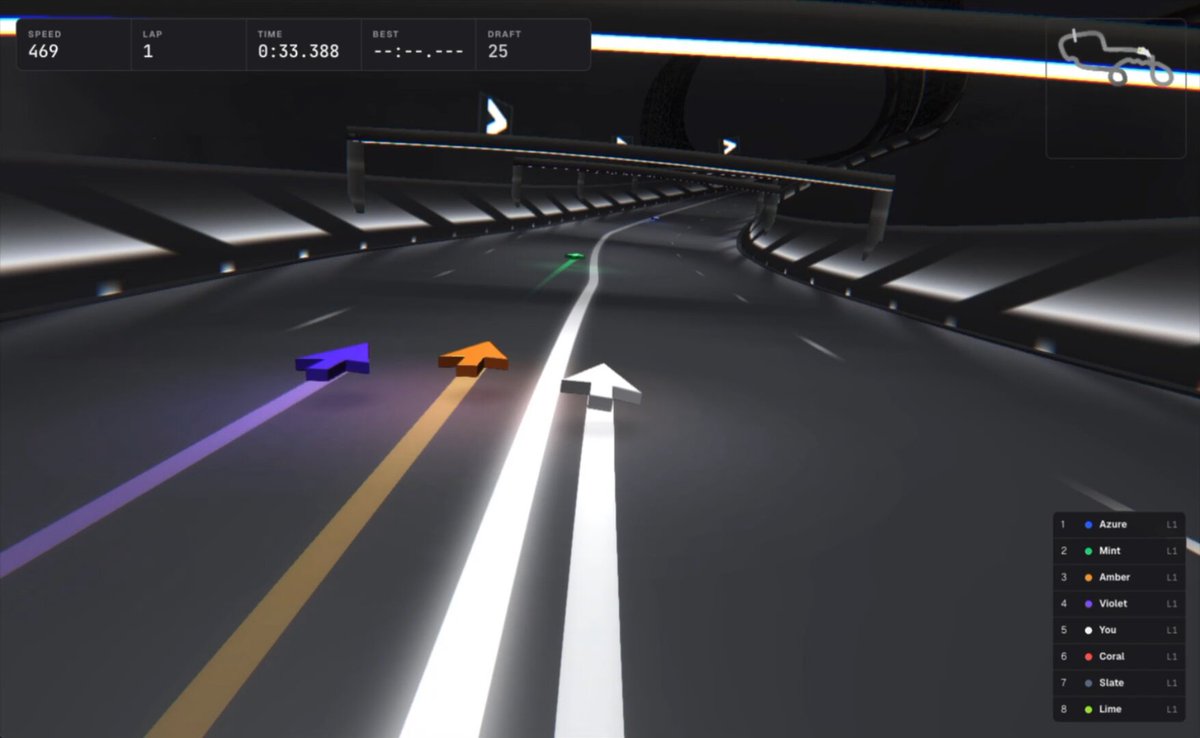
Opus 4.5 (new model from Anthropic) can do something no model could do until now: It can close the design loop. This is (in my testing) the first model that can reliably do the visual loop of Generate Code ⇛ Render ⇛ Look at it ⇛ Improve. Step 3...

57,822 просмотров • 6 месяцев назад •via X (Twitter)

Комментарии: 0

Нет доступных комментариев

Здесь появятся комментарии из оригинального поста
Похожие видео

BREAKING NEWS: Anthropic just dropped Claude Ops 4.5!! It is by FAR the best coding model I've ever used. We've been testing it internally Every 📧 for the last few days, and it is an absolute paradigm shift for any kind of coding task. It extends the horizon of what you can vibe code The current generation of new models—Anthropic’s Sonnet 4.5, Google’s Gemini 3, or OpenAI’s Codex Max 5.1—can all competently build a minimum viable product in one shot, or fix a highly technical bug autonomously. But eventually, if you kept pushing them to vibe code more, they’d start to trip over their own feet: The code would be convoluted and contradictory, and you’d get stuck in endless bugs. We have not found that limit yet with Opus 4.5—it seems to be able to vibe code forever. Takes working in parallel to a whole new level because it's far better at planning and coding, it can work with more autonomy—meaning you can do more in parallel without breaking anything . Kieran Klaassen worked on 11 different projects in six hours—and had good results on all of them. Great at design iteration Opus 4.5 is incredibly skilled at iterating through a design autonomously using an MCP like Playwright. previous models would lose the thread after a few cycles, or say a design was done when it wasn't. Opus 4.5 is incredible at autonomously iterating until a design is pixel perfect. we have a full 4,000 word vibe check on Every 📧 right now with everything we tested:

Dan Shipper 📧

272,434 просмотров • 6 месяцев назад

Dario Amodei just told software engineers exactly how long they have. Six to twelve months. Amodei: “I have engineers within Anthropic who say I don’t write any code anymore. I just let the model write the code, I edit it, I do the things around it.” The people building the most powerful AI in history have already stopped writing code. That is not a forecast. That is the current working condition inside the lab closest to the frontier. Amodei: “We might be six to 12 months away from when the model is doing most, maybe all, of what SWEs do end-to-end.” The tech industry spent a decade making software engineers its highest-paid, most protected class. That era has a last day now. When a model can execute an entire software build end-to-end, the ability to write syntax stops being a skill. It becomes a credential for a job that no longer exists. Amodei: “And then it’s a question of how fast does that loop close.” That is the sentence everyone skipped. The code was never the hard part. The hard part was everything around it. The model just learned everything around it. Writing the code is already nearly gone. Testing is next. Deployment is next. When all three collapse into a single autonomous execution loop, the machine no longer needs a human in the chain at all. The corporation or sovereign state that closes that loop first does not gain a competitive advantage. It gains a category of speed that biological engineers cannot match, track, or reverse. That is not disruption. That is replacement at a systems level. Amodei is not describing a future disruption. He is describing the current state of his own building. The loop is already closing. The only question is whether you are inside it or outside it when it seals.

Dustin

315,019 просмотров • 3 месяцев назад