Загрузка видео...

Не удалось загрузить видео

На главную

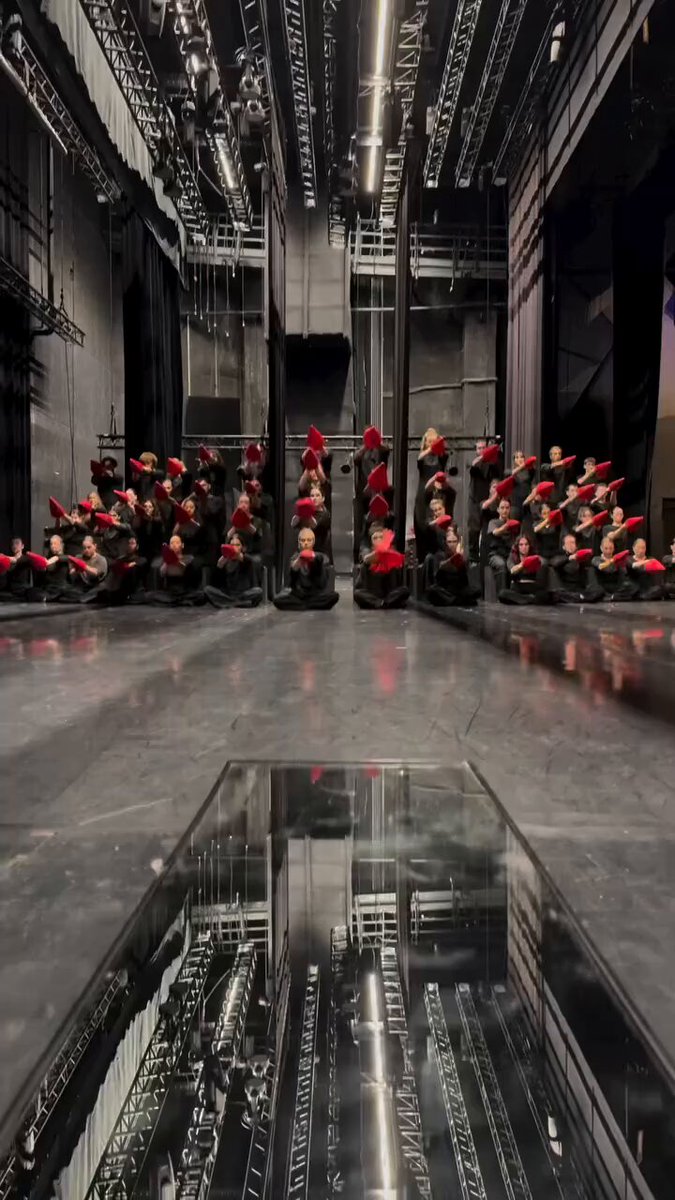
‘perfect synchronization’

29,309 просмотров • 9 месяцев назад •via X (Twitter)

Комментарии: 0

Нет доступных комментариев

Здесь появятся комментарии из оригинального поста

Похожие видео

Introducing the MOZA HMA150 — a motion actuator fully developed in-house, powered by proprietary motors, control software, and motion algorithms. 𝐁𝐮𝐢𝐥𝐭 𝐚𝐬 𝐚 𝟒-𝐚𝐱𝐢𝐬, 𝟑𝐃𝐎𝐅 𝐬𝐲𝐬𝐭𝐞𝐦, 𝐢𝐭 𝐝𝐞𝐥𝐢𝐯𝐞𝐫𝐬: ✅Precise pitch, roll, and heave motion ✅150 mm of travel, 300 mm/s speed, and peak acceleration exceeding 1G ✅Perfect synchronization with every in-game movement detail 𝐏𝐨𝐰𝐞𝐫𝐞𝐝 𝐛𝐲 𝐧𝐞𝐱𝐭-𝐠𝐞𝐧𝐞𝐫𝐚𝐭𝐢𝐨𝐧 𝐞𝐧𝐠𝐢𝐧𝐞𝐞𝐫𝐢𝐧𝐠 𝐚𝐧𝐝 𝐩𝐫𝐞𝐜𝐢𝐬𝐢𝐨𝐧 𝐜𝐫𝐚𝐟𝐭𝐬𝐦𝐚𝐧𝐬𝐡𝐢𝐩, 𝐢𝐭 𝐟𝐞𝐚𝐭𝐮𝐫𝐞𝐬: ✅0-150Hz Vibration ✅Low-latency Real-time Feedback ✅600MHz High-performance Processor ✅2.09M High-resolution Encoder ✅48V Low Voltage Safety Input 𝐃𝐫𝐢𝐯𝐞𝐧 𝐛𝐲 𝐨𝐮𝐫 𝐢𝐧𝐭𝐞𝐥𝐥𝐢𝐠𝐞𝐧𝐭 𝐜𝐨𝐧𝐭𝐫𝐨𝐥 𝐬𝐨𝐟𝐭𝐰𝐚𝐫𝐞 — 𝐌𝐎𝐙𝐀 𝐌𝐨𝐭𝐢𝐨𝐧 𝐌𝐚𝐧𝐚𝐠𝐞𝐫 — 𝐢𝐭 𝐨𝐟𝐟𝐞𝐫𝐬: ✅ Advanced configuration and deep customization ✅ Compatible with both sim racing and flight simulation titles ✅ Motion feedback support for AAA titles, even without telemetry Witness its debut at GDC 2026. #MOZA #MOZARacing #Racing #SimRacing #MOZAHMA150 #MOZAMotion #MotionActuator #GForce #MOZAGDC #GDC2026

MOZA Racing

23,405 просмотров • 5 месяцев назад

A creature smaller than your fingernail just solved the hardest problem in evolutionary biology. This male peacock spider weighs less than a grain of rice. His brain contains roughly 100,000 neurons. For comparison, a honeybee has a million. Yet this tiny spider executes a courtship routine so intricate that human choreographers study his movements. He raises his abdomen like a neon billboard, revealing patterns that shift from electric blue to golden yellow. His front legs wave in perfect synchronization while his third pair of legs vibrate at frequencies that create substrate tremors only the female can detect. The entire sequence lasts exactly 47 minutes and involves over 300 distinct movements performed in precise order. Get one step wrong and she eats him alive. Sexual selection created the cruelest performance review in nature. The female peacock spider doesn't just judge his dance. She measures his genetic fitness, his neurological precision, and his ability to execute complex motor functions under lethal pressure. Every movement broadcasts information about his DNA quality, his developmental stability, and his cognitive processing speed. What breaks your brain is the computational load. This spider must simultaneously control eight legs in different patterns, monitor her behavioral cues, adjust his display intensity in real time, and maintain perfect rhythm across nearly an hour of continuous performance. His nervous system is processing sensory input, motor output, and decision trees at a speed that would challenge supercomputers. Evolution built a microscopic performer capable of calculations that required millions of years to perfect, all contained in a brain you could barely see without magnification. The universe keeps hiding its most sophisticated engineering in the smallest packages.

The Curious Tales

343,179 просмотров • 4 месяцев назад

When several metronomes are placed on a common movable surface, each begins with its own rhythm. There is no coordinating signal, no external clock, and no instruction for order. Yet their motion converges. The oscillators settle into a shared rhythm that none of them possessed individually. This behavior is not an anomaly but an expression of a general principle: weakly coupled oscillatory systems tend toward phase organization. The phenomenon is known as phase locking, and it appears wherever interacting cyclic processes are allowed to exchange even minimal influence. Its mathematical description was formalized by Kuramoto in the context of chemical oscillations, but the underlying idea is far older: collective order can arise without centralized control. What matters in such systems is not perfect synchrony. More commonly, the system settles into a state of partial synchronization, in which the components maintain a stable phase offset rather than coinciding exactly. The oscillators are neither independent nor identical. They are locked, but imperfectly so. Crucially, such phase-locked states are often metastable. They represent preferred configurations of the system, yet they are separated from large excursions by a finite stability barrier. As long as fluctuations remain small, the system remains confined near its equilibrium phase. But random perturbations, accumulating over time, may eventually push it beyond that barrier. When this occurs, the loss of phase stability is abrupt. The system does not drift gradually into failure; it escapes. This mode of failure is probabilistic rather than deterministic. It is governed by the statistics of noise rather than by intrinsic periodicity. In physical terms, it corresponds to Kramers escape: the thermally or stochastically activated crossing of a potential barrier. Waiting times are irregular, clustering is common, and long intervals of apparent calm coexist with sudden bursts of activity. The relevance of this framework becomes apparent when one turns to the geomagnetic field. [1/3]

Craig Stone

15,387 просмотров • 7 месяцев назад