Video yükleniyor...

Video Yüklenemedi

Ana Sayfaya Dön

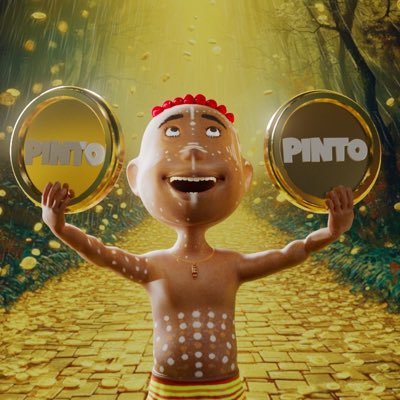
$PINTO IS LIVE! Africa’s Coin Has Launched CA: v1G66wZM51Kjp5YFw3mws5MyQGK2ry5MHRrArZipump Straight from Africa, shaking the world. Backed by: • One of Africa’s biggest animation studios, FatBoy (2M+ followers on TikTok, 850k+ followers on Instagram) • Featured in Forbes, CNN, BBC, and Meta • Built-in Anti-PVP tech to protect real holders...

12,792 görüntüleme • 11 ay önce •via X (Twitter)

0 Yorum

Yorum bulunmuyor

Orijinal gönderinin yorumları burada görünecek

Benzer Videolar

“Africa, if you add up the 55 countries of the African Union, that’s about 1.5 billion people—same size as India, same size as China. The big difference is that the imperial powers divided Africa into 55 little countries, not one of which can thrive on its own, whereas India and China, because of the history, remained. So I tell them every single time I have the opportunity that the African Union is the key. As 55 you can’t make it, but as one African continental economy you can make it. So what’s happening now is Africa’s population is continuing to rise—it’s the only place in the world with rapid population growth—and all the others are declining. Everyone else has peaked or is just about to peak or actually beginning a decline. Africa’s population today is 1.5 billion. By 2050 it’ll be 2.5 billion. That’s a lot, adding a billion people in the next quarter century. If you go even farther and just try to extrapolate based on current trends, Africa’s population reaches about 3.5 billion. According to the UN’s most recent forecast, 3.7 billion by the end of the 21st century. And Africa goes from being 9% of the world population to being more than 30% of the world population. It’s going to be a completely different world. What do I say to African leaders every time? Be Africa-wide. Second, get on quickly with mass education, because that is the key to economic development. Third, look at what China did—follow that model.” —Jeffrey D. Sachs, American economist.✅

Aikon

150,787 görüntüleme • 3 ay önce

Yorubas made this song go viral, somehow Nigeria is taking credit for it Yorubas built the first Television in Africa, even before France, somehow Nigeria took credit for it. Yorubas built Cocoa House, Africa’s first skyscraper, somehow Nigeria took credit for it. Yorubas founded the first newspaper in Africa (Iwe Iroyin fun awon ara Egba ati Yoruba, 1859 ca), somehow Nigeria took credit for it. Yorubas bought a house for SW region in London, Nigeria took credit for it forcefully took it over. Yorubas produced the first Nigerian-born and one of the first African-born Grammy winners, Sade Adu, somehow Nigeria took credit for it. Yorubas created Afrobeat/Afrobeats, Nigeria took credit for it. Yorubas built Africa’s biggest FinTech ecosystem, Nigeria took credit for it. Yorubas created Egusi soup, Efo-Riro, Moin-Moin, Aso-Ebi, Aso-Egbe, Gele, Jollof Rice, Agbada, etc, somehow Nigeria and Nigerians took credit for it. Yorubas started Detty December, somehow Nigeria and Nigerians are taking credit for it. Yorubas performed surgery on an unborn baby, put the baby back into the mother’s womb and was born normally after 9months, Nigeria took credit for it. Yorubas built the most academically advanced diasporas in the US, Canada and in the UK, Nigeria and Nigerians took credit for it. Yorubas produced the first African Bishop, Samuel Ajayi Crowther, somehow Nigeria took credit for it. Yorubas established Africa’s first indigenous insurance company, African Alliance, somehow Nigeria took credit for it. Yorubas gave the world the first African to design a car, Jelani Aliyu, somehow Nigeria took credit for it. Yorubas founded the first university in Nigeria (UI’s roots traced to Western Region initiative), somehow Nigeria took it over. Yorubas produced Africa’s first Nobel Laureate, Prof. Wole Soyinka, somehow Nigeria took credit for it. Yorubas pioneered Africa’s biggest movie industry (Nollywood) through the likes of Hubert Ogunde and Ade Love, somehow Nigeria took it over and took credit for it. Yorubas designed the Lagos megacity blueprint that became Nigeria’s commercial heartbeat, somehow Nigerians took credit for it. Yorubas created the architecture of modern Nigerian banking and tech (GTBank, Paystack, Flutterwave, Interswitch), somehow Nigeria took credit for it. Yorubas established the first free education system in Africa under Awolowo, somehow Nigeria took credit for it. Yorubas produced the first African woman to earn a PhD in a scientific field, Dr. Elizabeth Abimbola Awoniyi, somehow Nigeria took credit for it. For how long will we keep giving???

🇨🇦 Ademola🇨🇭

46,293 görüntüleme • 10 ay önce

THE WEST FEARS AFRICA’S FUEL LIBERATION For over a century, Africa has been trapped in a colonial "extraction loop": exporting raw crude for pennies and buying back refined fuel from the West at a massive premium. But the era of dependence could be coming to an end. Following Nigeria’s shift into a net exporter of refined fuel, driven by the success of the Dangote Refinery, Africa’s richest man, Aliko Dangote, has unveiled plans to replicate his success in Nigeria by building a 650,000-barrel-per-day mega-refinery in East Africa — a move that could signal the export of a model aimed at breaking dependence on imported fuel. The cost of Africa’s fuel dependency is staggering. For example, while Angola holds nearly 8 billion barrels of oil, it still spent $854 million on fuel imports at the end of 2025 alone. This “trap” drains foreign reserves while enriching overseas refineries. However, in Nigeria, the Dangote Refinery is beginning to disrupt this cycle, processing around 565,000 barrels per day as of March 2026 and supplying the vast majority of the domestic market. As a result, the chronic fuel queues that once defined daily life in Africa’s second-largest economy have largely disappeared. But Africans refining for Africans is a nightmare for European oil giants. Consequently, the World Bank - where the US is the largest shareholder - has launched a counter-offensive. In April 2026, the Bank advised Nigeria to resume fuel imports, claiming they are "cheaper." Critics suggest that this "advice" is an attempt to force Nigeria to reopen import licenses for Western giants whose market share has evaporated. The West only advocates for "competition" when it means African industries competing against subsidised European giants. By refining at home, Africa saves billions in foreign exchange and creates thousands of local jobs. True sovereignty is not found in World Bank loans with colonial conditions. It is found in the power to fuel your own future.

Sovereign Media

12,304 görüntüleme • 4 ay önce

EFF Spokesperson: South Africa’s Latest Anti-Immigration Wave Is Externally Funded, Not Organic In recent months, South Africa has witnessed a tragically familiar resurgence of anti-immigrant viol*nce, fueled by the oldest trick in the colonial book: “divide and conquer”. At a time when predatory Western corporations are kicking against the country’s equality laws – aimed at ensuring its African majority actually benefits from its economy – and when the US government is actively supporting separatist groups in the country led by white supr*macists, the timing of this resurgence could not be more telling. Under the false pretext of “protecting” their country from “crim*nals”, a noisy minority of historically-illiterate South Africans has flooded the streets, hunting down and att*cking Africans from other nations, blocking their children at the gates of schools, and calling for them to return to their countries. The African Union and human rights groups have strongly condemned these violations. Ghana and Nigeria have since summoned their South African envoys over them. And through it all, the neocolonial forces that are actually responsible for the economic state of Africa’s longest and most directly colonized nations continue to enjoy their eternal free pass. In this June 8, 2026, interview, Sinawo Thambo, South African Member of Parliament and National Spokesperson for the Economic Freedom Fighters (EFF) party, comments on the forces behind this malicious movement, and where the necessary funding may be coming from.

The Spearhead

32,290 görüntüleme • 2 ay önce

IMF & WORLD BANK HAVE NOT HELPED AFRICA How can we trust institutions established during colonial times by the very forces that colonised us? This is the question posed by Fadhel Kaboub (Fadhel Kaboub فاضل قابوب on X), an associate professor of economics at Ohio's Denison University, who critiques global financial institutions like the International Monetary Fund and the World Bank. Despite their inclusive names, these institutions act as neo-colonial tools, deepening poverty and dependency in Africa and the Global South. After decades of so-called ‘aid,’ little progress has been made in Africa, while Western countries advance by exploiting its resources. For example, the foreign-backed proxy war over natural resources in the Democratic Republic of the Congo (DRC) has lasted over 30 years. Instead of addressing exploitation, the World Bank supports projects like the Inga Dam, which critics say facilitate further resource extraction under the guise of aid. Western powers, led by the US and supported by Europe and the G7, control these institutions. They back initiatives like the Lobito Corridor, a 1,300-kilometre strip of land featuring a railway that snakes through Zambia, the DRC and Angola to ship Africa’s resources across the Atlantic Ocean. The World Bank also supported apartheid South Africa, a history it prefers to forget. Given that Africa pays out more in debt and resource extraction than it receives in aid, is it not time for the rest of the continent to reject these colonial-era models and pursue African-led development, like our siblings in the Sahel? Video credit: Lynn Ngugi on Instagram

African Stream

17,067 görüntüleme • 1 yıl önce

Patrice Tlhopane Motsepe – PR27 A Full Biography Early Life & Background Patrice Tlhopane Motsepe was born on 28 January 1962 in Soweto, Johannesburg, South Africa, one of the country’s most well-known townships. He grew up during apartheid in a family that strongly valued education, discipline, and entrepreneurship. His father owned a spaza shop and distribution business near mining communities. This exposed Patrice to business and commerce from a young age, teaching him the importance of hard work, customer service, and financial discipline. Education Motsepe earned a Bachelor of Arts degree from the University of Swaziland. He later obtained a law degree from the University of the Witwatersrand in Johannesburg. Early in his legal career, he specialised in mining and business law, a foundation that helped shape his future career. He worked as a lawyer representing mining unions and companies, gaining deep insight into the mining industry. Business Career In 1997, Patrice Motsepe founded African Rainbow Minerals (ARM). Through strategic investments and partnerships, ARM became one of South Africa’s leading mining companies. Motsepe made history as the first Black African billionaire, building his wealth through mining, energy, and resource investments. His business success positioned him as one of the most influential entrepreneurs in Africa. Philanthropy Motsepe is widely respected for his philanthropic work. Through the Motsepe Foundation, he has donated billions of rands to education, healthcare, poverty relief, youth development, and community upliftment. He is also a signatory to the Giving Pledge, committing to donate the majority of his wealth to charitable causes. Sports Leadership In 2021, Motsepe was elected President of the Confederation of African Football (CAF). In this role, he has focused on improving governance, financial transparency, the development of African football, and raising Africa’s global football profile. Personal Values & Leadership Style Motsepe is known for his humility and strong belief in Ubuntu – the idea that humanity is interconnected. He often speaks about leadership, service, and giving back to society. His leadership style is defined by integrity, long-term vision, discipline, and commitment to African development. Legacy From Soweto to the global stage, Patrice Motsepe’s journey represents African excellence, perseverance, and purpose-driven leadership. He remains one of South Africa’s most respected business figures and philanthropists.

Goolam

67,687 görüntüleme • 7 ay önce