Loading video...

Video Failed to Load

Go Home

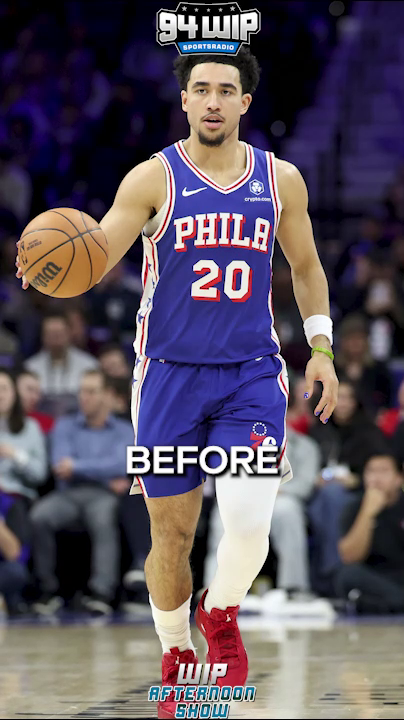
Pivot to video continues! Talked about the Jared McCain trade & explained how it opens some doors for the Sixers between now and the trade deadline that I previously believed were closed. Some possible McCain replacements in here + (hopefully) an easy-to-digest salary cap update:

116,212 views • 6 months ago •via X (Twitter)

0 Comments

No comments available

Comments from the original post will appear here

Related Videos

The Wolves salary dumped Mike Conley's $10.8M contract at the trade deadline. These were the functional salary cap-related values to the Wolves in making that trade... - The trade got them below the 1st apron, which gave them the ability to take back more money in a subsequent trade (because you can't be over the 1st apron and take back more money than you send out in a trade). Technically, they took back more money in the Ayo Dosunmu trade, because it included Julian Phillips and his contract. But if you remember, the Conley trade happened two days before the deadline. They made the move in advance to open up the possibility of taking back more money in a trade for an expensive star (potentially Giannis). That was the theoretical value there, much more than it was about the value of bringing in Phillips. - They saved a lot of money on the luxury tax bill after paying nearly $100M in luxury tax for being above the 2nd apron the season before. - They created a $10.8M trade exception that they can use to absorb up to $10.8M in salary without sending money back. But using a trade exception hard caps you at the 1st apron and only lasts for 12 months. - Got off Rob Dillingham's contract that is set to pay him $6.9M this coming season and $8.8M the following season. This creates some space beneath the aprons that they could need if they are to re-sign Ayo Dosunmu. Also created another $6.6M trade exception when doing the Dillingham-Dosunmu trade, because the Wolves absorbed Dosunmu into the Alexander-Walker trade exception from last summer ($7.6M NAW trade exception, and Dosunmu made $7.5M). Transacting this way hard-capped the Wolves at the 1st apron, but at that point in time the deadline was about to pass, they weren't trading for Giannis or anyone else, meaning there was no cost to being hard-capped at the 1st apron for the rest of the season. (Though that could impact a draft night trade, I believe -- because that's the same calendar year.) - The 21st picks salary this season ($3.9M) is $800k higher than the 28th picks salary this coming season ($3.1M). So while that player should be more valuable, that player would also carry a bigger cap hit. What it cost them was a pick swap with Detroit in this draft -- moving them back from pick 21 to pick 28 in the 1st round. So I asked Tyler Metcalf how much value the Wolves gave up in this draft by moving back from 21 to 28.

Dane Moore

59,064 views • 2 months ago

If the Wolves were able to have a cap space team (maybe Brooklyn or Chicago) absorb Julius Randle's contract next season ($33M), that would open up three interesting roster building tools I want to highlight. I think this is relevant because the Wolves front office has a history of kind of stringing together transactions -- even over the course of multiple transaction windows (offseason and trade deadline). The Randle trade would be Randle + draft compensation for say Brooklyn to absorb the contract - maybe: Randle + No. 28 for a future 2nd (Adjust compensation as you see fit. Not the point of this exercise. Obviously if this would cost a bunch, they wouldn't do it. Or maybe they'd have to move to using Gobert's salary as the salary moved into another team's cap space.) Shedding Randle's salary would drop the Wolves well below the *1st* apron (about $52M). And while beneath the 1st apron, the Wolves would open up the ability to three additional roster building tools for spending that $52M... (If Ayo Dosunmu were to sign for $17M, that would be $35M in room below the 1st apron. And need to make sure to get the roster to 14 players.) 1. The non-taxpayer midlevel exception ($15M) - The "big MLE" is a $15M gift card for teams to spend above the salary cap but below the 1st apron. So if the Wolves were to use this, they would be hard-capped at the 1st apron ($13M below 2nd apron). If a team is over the 1st apron, they only have access to the taxpayer or "mini MLE", which is $6M next season - Could go out and sign a free agent for up to $15M in starting salary - Could also use this $15M as a trade exception and trade for a player who makes up to $15M 2. The trade exception generated in the Mike Conley salary dump trade to Chicago ($10.77M) - A trade exception allows a team to trade for a player without sending back matching salary for up to the amount of the trade exception - So with access to this trade exception, the Wolves could trade for a player making up to $10.77M - Using a trade exception also hard caps a team at the 1st apron ($13M below 2nd apron) 3. Making a Randle trade to a team who absorbs his contract into cap space would also create another trade exception (up to $33M) - The size of that trade exception would be Randle's $33M, minus whatever the Wolves took back in the trade - Might not need that for spending this summer. But doesn't expire for 365 days. The downside of working below the 1st apron as opposed to the 2nd apron is it restricts overall spending power by $13M -- because that's the gap between the two aprons.

Dane Moore

509,821 views • 2 months ago