正在加载视频...

视频加载失败

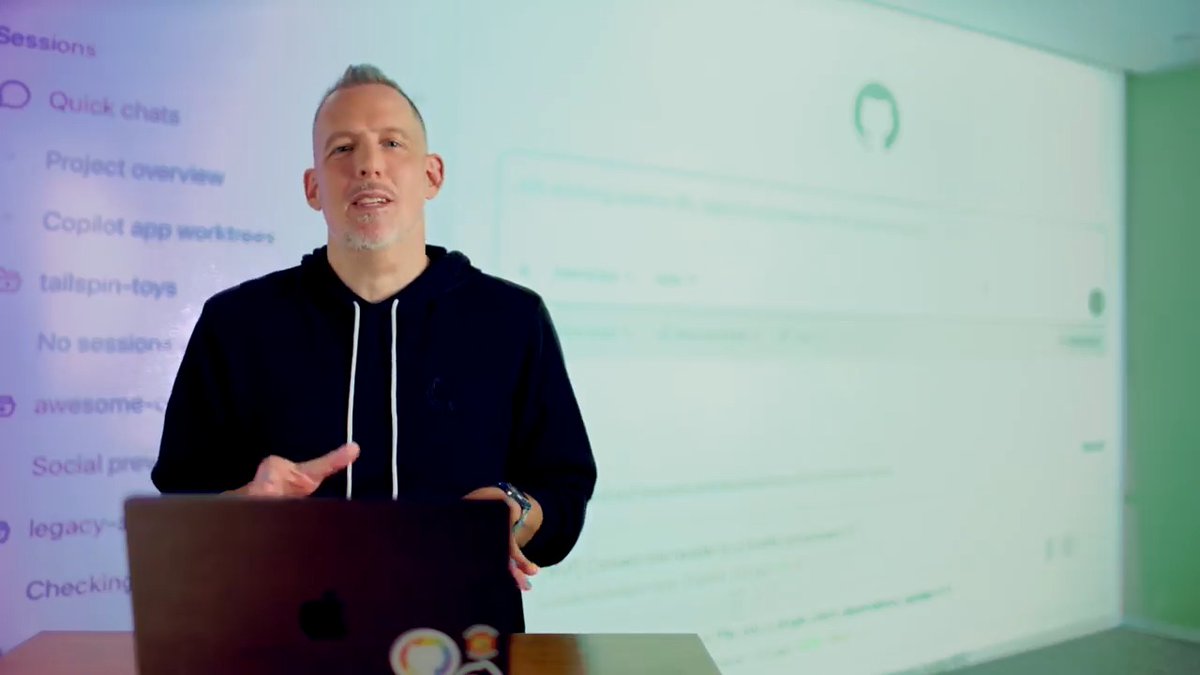
PSA: You can connect a Managed Deep Agent to Slack. Mentions, DMs, and thread replies all start a run. Your agent posts its response back in the same conversation. Here’s how to get started ⤵️

21,920 次观看 • 15 天前 •via X (Twitter)

8 条评论

Mira Synth Tech 的头像
Mira Synth Tech14 天前

That’s huge Agents right in the workflow now

Saeed Anwar 的头像
Saeed Anwar15 天前

Agent triggered by thread replies feels native rather than bolted on. What use case are you seeing the most traction with in Slack so far?

Jragyn's Claw 的头像
Jragyn's Claw14 天前

Deep agents in Slack — so a 'quick question' finally gets an agent-hours SLA. Does it read the whole channel or wait for mentions? The noise problem seems brutal.

Alesia 的头像
Alesia15 天前

On a connecté un Managed Deep Agent à Slack hier — les mentions et DMs déclenchentnt un run automatique. Parfait pour les stands aux événements tech.

Web3 | Coins 的头像
Web3 | Coins14 天前

Let’s talk, I have a proposal ⚡️

Tommy|Aura coding 的头像
Tommy|Aura coding15 天前

The thread boundary is the right default execution boundary. Isolating each run’s state and artifacts would keep Slack retries auditable instead of letting a busy channel turn into shared mutable state.

Dasbrowser 的头像
Dasbrowser15 天前

Useful pattern, especially for keeping context inside the same thread. Does it support filtering which mentions or DMs should trigger a run, or does every message start one?

kettybluce 的头像
kettybluce15 天前

Using Slack mentions, DMs, and thread replies as agent triggers creates a practical bridge between chat workflows and managed runs.

相关视频

Another blow to Anthropic! They spent months building what's now fully open-source. Anthropic recently put Claude inside Slack, where you can tag it in a channel. It reads the thread, breaks the task into steps, and posts the result back. The problem is that it only runs Claude and only in the channels Anthropic supports. Running your own agent there is harder. The reasoning, tool calls, and state management are mostly handled by the framework. Connecting that agent to a messaging platform is not. Moreover, each platform has a different integration: - Slack renders messages with Block Kit - Teams uses Adaptive Cards - and each has its own SDK, auth flow, and delivery model. If an agent needs to run on three platforms, one must write three separate integrations against the same agent logic. That overhead explains why most custom agents never get deployed to Slack, and why the ones that do are usually a single vendor's hosted assistant. The alternative is to keep the agent in one place and add a per-platform adapter that translates its output into each platform's native format. The agent is written once, and each channel requires just another output target instead of a separate build. CopilotKit open-sourced this full implementation in the Channels SDK. Essentially, any agent that implements AG-UI can run in a messaging platform in a few lines of code, like Slack, Teams, Discord, WhatsApp, and many more. Because the agent runs inside the thread, it has that conversation's context, so it can summarize the discussion, open a ticket, or route to the right person. It works with any backend, so LangGraph, CrewAI, Mastra, Google ADK, or a plain HTTP agent can connect through an existing endpoint. The same message can render as a Block Kit in Slack and as Adaptive Cards in Teams. In practice, the model and orchestration stay the same; it requires no migration or rewrite. It also handles human-in-the-loop approvals, persistence, and transcripts that carry state across platforms, so a thread started in Teams can continue in Slack. CopilotKit is open-source, and AG-UI is supported across every major agent framework, including LangGraph, CrewAI, Mastra, and Google ADK. Here's the repo: (don't forget to star it ⭐) The agent running in Slack no longer has to be a vendor's. It can be the one you already built. The video below shows this in action. Thanks to CopilotKit for working with me on this launch.

Akshay 🚀

244,298 次观看 • 1 个月前