Video yükleniyor...

Video Yüklenemedi

Ana Sayfaya Dön

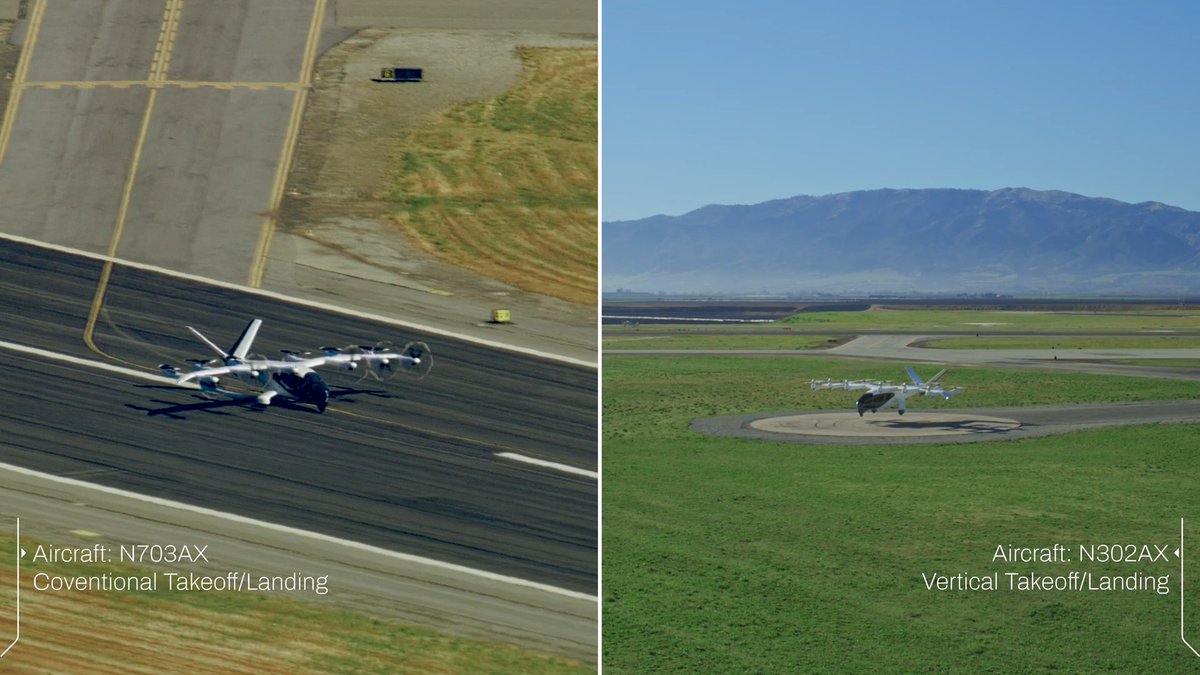
PUBLIC NOTICE!! Drone operations in Zimbabwe are regulated under a structured licensing framework administered by the Civil Aviation Authority of Zimbabwe (CAAZ). Whether you are flying for recreation or commercial purposes, compliance with the applicable licensing requirements is mandatory. Licensing Categories: 1️⃣ VLOS (Visual Line of Sight): Entry-level operations....

18,642 görüntüleme • 3 ay önce •via X (Twitter)

0 Yorum

Yorum bulunmuyor

Orijinal gönderinin yorumları burada görünecek
Benzer Videolar

BIG | 🇺🇦🇷🇺✈️‼️‼️ Pressure on Russia’s civilian aviation network is beginning to spread beyond European carriers, with Air Arabia reportedly cancelling some flights to Russia after President Volodymyr Zelenskyy warned that Ukrainian drone operations would increasingly make Russian airspace unsafe for normal commercial traffic. According to Baza, Air Arabia has removed a number of Russia-bound bookings scheduled for October and December, although the airline has not issued a public announcement explaining the cancellations. The development follows Zelenskyy’s September 1 warning to airlines and insurers that the growing scale of Ukrainian drone activity would make Russian airspace progressively harder to use safely. Moscow airports have already experienced repeated closures and disruptions as Ukrainian long-range strikes intensify. The effect Ukraine is seeking is broader than the physical damage caused by individual strikes. Persistent drone activity can force airport closures, complicate airline scheduling, increase insurance and operational risks, and gradually make foreign carriers reconsider whether serving Russia remains commercially worthwhile. If more non-Western airlines begin reducing service, Moscow could face another form of isolation created not by sanctions alone, but by the expanding consequences of the war reaching deeper into Russian territory. See the latest updates with us: Visioner

Visioner

18,042 görüntüleme • 19 gün önce

Oh please, National Railways of Zimbabwe, stop with this cheap propaganda. Beitbridge Bulawayo Railway (BBR) is a privately owned company, but Zimbabwe’s railway system is and should be regulated by the Government of Zimbabwe through the National Railways of Zimbabwe (NRZ), a state-owned enterprise (parastatal) whose chairman is a ZANUPF politician, Mike Madiro. BBR operates under a Build-Operate-Transfer (BOT) agreement, allowing it to function within the national railway framework while adhering to standards set forth by the NRZ and the Ministry of Transport. While BBR is a private company, NRZ holds a 15% stake in BBR, meaning it has a partial ownership interest. NRZ and BBR have also signed an open access agreement which allows BBR to utilise NRZ’s network and NRZ to use the BBR infrastructure. Are you saying your trains use a railway network that you don’t inspect? The national railway network currently has numerous speed restrictions due to track defects, totalling over 254 km. These defects cause derailments and delays, as acknowledged by the state media’s Chronicle newspaper of December 5, 2023. This again falls on your doorstep. The oversight of railway operations in Zimbabwe, including those of BBR, falls under the purview of the Ministry of Transport. This ministry is responsible for setting policies and railway standards for the sector in Zimbabwe, including for BBR. The supervision is done by the NRZ! So please, spare us this pathetic attempt to exclusively throw the blame at BBR. When you build a house, it needs express authority of the council to certify it fit, when you run a railway line it requires state supervision through the NRZ, something that doesn’t work in Zimbabwe because of incompetence! You should have read the Railways Act [Chapter 13:09] which provides a regulatory framework before putting out this propaganda tweet. That law extends to the oversight of all railway operations within Zimbabwe, including those conducted by private operators. Even though private railway companies like BBR are not explicitly detailed in the Act, because you cannot name all companies in a law, the overall responsibility for setting standards, ensuring safety, and supervising railway operations falls under public authority, particularly through the Ministry of Transport and the NRZ. I have posted the Railways Act in my Telegram Channel which can be accessed via this link;

Hopewell Chin’ono

22,996 görüntüleme • 1 yıl önce

We are launching a 90-day Drone as First Responder (DFR) trial to evaluate how remotely piloted drones can support emergency response & public safety. ℹ️ The trial will assess the effectiveness of drones in improving situational awareness, supporting operational decision-making & enhancing public & officer safety. Beginning Thursday, Sept. 10, 2026, 2 Skydio X10 drones will be deployed to select incidents in northeast & southeast Calgary. The drones will provide responding members with real-time aerial information to help them better understand unfolding incidents & determine the most appropriate response. 💬 “The Drone as First Responder model has been successfully implemented by other police agencies & has shown potential to enhance emergency response. This trial will help us determine how the technology can support public safety in Calgary by providing responding officers with valuable information about an incident, often before they arrive on scene.” — Supt. Jodi Gach of the CPS Operational Support Division. The drones are deployed from a secure location in northeast Calgary. When an eligible call for service is identified, a sworn CPS member trained as a drone pilot can remotely deploy a drone to the scene. In some cases, the drone may arrive before responding officers, providing an early view of the incident that can help members identify risks, locate individuals & make informed operational decisions. While we have used drones for several years to support public safety operations, including emergency incidents, searches & investigations, DFR introduces a new deployment model that allows drones to respond directly to select calls for service & provide information during the early stages of an incident. ℹ️ The use of drones for the trial has been approved by Transport Canada. The trial will be conducted in accordance with Transport Canada regulations & CPS policies. 🌐 More information about the CPS use of drones & the DFR trial can be found here: 📺 Watch the full media availability here:

Calgary Police

17,670 görüntüleme • 18 gün önce

Today we’re announcing a new product for warfighters and first responders: Astranis Vanguard. A fully air-gapped, rapidly deployable network using a dedicated satellite. In partnership with Persistent Systems, Kymeta, and Satcube. And we’ve demonstrated this capability using an operational, on-orbit satellite asset. Astranis Vanguard offers both defense and commercial customers the ability to quickly and easily spin up a resilient, self‑forming network capable of voice, video, and broadband data. For defense missions, Vanguard allows operators to sustain command‑and‑control and situational awareness in austere or contested environments. Dismounted or mounted teams can deploy mobile terminals to extend connectivity beyond line-of-sight, all without reliance on a central hub or existing infrastructure. For commercial and public safety users, Vanguard offers a method to rapidly restore or extend coverage. First responders can stand up connectivity within minutes after severe weather or wildfires, enabling push‑to‑talk, live drone feeds, and data sharing for incident command. And industrial operators in the energy, mining, rail, and maritime industries can use the system to link remote crews and equipment where cellular access is sparse or unavailable. The live demonstration proved out this capability with: ‣ an operational Astranis satellite in geostationary orbit (GEO), with connectivity managed using the satellite’s onboard software-defined radio ‣ a Mobile Ad-Hoc Network (MANET) with Persistent Systems MPU5 broadband radios, using that network to share video feeds, comms, and IP traffic ‣ Flat-panel user terminals by Satcube (for communications on the pause) and Kymeta (for communications on-the-move), connecting directly to the Astranis satellite to provide backhaul and extend the network beyond line of sight This is real equipment that is already deployed all over the world with warfighters, first responders, and a wide array of enterprise customers. In industries that care about mobility and security like oil & gas. Astranis Vanguard is a big deal. It’s a capability that customers have long asked us for. It was only made possible due to our collaboration with Kymeta, Persistent Systems, and Satcube, and we’re excited to roll it out to our existing and future customers.

John Gedmark

74,614 görüntüleme • 10 ay önce

🚨 DRONE STRIKES UNITED 737 AT 3,000 FEET: America's Skies Are No Longer Sovereign Territory – The FAA's Icarus Moment Has Arrived Yesterday, United Flight 1980 — a Boeing 737 from SFO to San Diego — reported a direct mid-air encounter with a small, red, shiny drone while descending through controlled airspace at 3,000 feet. The pilot's words to ATC were unambiguous: “We hit a drone… red drone heading west… so small… red… shiny.” The jet landed safely. No damage. No injuries. Passengers deplaned normally. But this was no “near miss.” It was a system failure in real time. Recreational drones are legally capped at 400 feet above ground level. They are banned outright from airport approach corridors without FAA authorization. This intruder was operating at 7.5 times the legal altitude — in one of the most vulnerable phases of commercial flight, where a single engine ingestion or control-surface strike could cascade into catastrophe. An AP analysis of NASA’s Aviation Safety Reporting System reveals drones now account for nearly two-thirds of all reported near-midair collisions at America’s 30 busiest airports — the highest share on record. The FAA logs over 100 drone sightings near airports every single month. Incidents have surged at SFO, Newark, Miami, and beyond. Consumer quadcopters have democratized the skies without a corresponding democratization of responsibility or enforcement. Remote ID rules, counter-UAS systems, and severe penalties exist on paper — yet the incursions continue. This isn’t a hobbyist’s oops. It’s a national airspace sovereignty crisis. What happens when the next drone carries a payload? Or when malicious actors test the same vulnerability that hobbyists already exploit with impunity? We regulated the chaos of early aviation, post-WWII jet age, and post-9/11 security threats. We can — and must — do it again. FAA: Enforce. Now. Deploy counter-drone tech at major hubs. Treat 3,000-foot incursions like the felonies they are. America’s 400+ million annual flyers are not collateral damage in the drone revolution. The skies belong to the people who fly them safely — not the ones who treat them like a video game. #SecureOurSkies #DroneCrisis #FAAWakeUp #AviationSafetyFirst #UnitedDroneStrike #AirspaceSovereignty

Tony Seruga

16,394 görüntüleme • 5 ay önce

The Dallas Police Department’s new Drone as First Responder program officially launched today with eight remotely piloted drones based at Dallas Fire-Rescue stations across the City of Dallas. These drones are operated out of the Fusion/Real Time Crime Center and are designed to respond to calls for service in a two-mile radius from their base station. The base locations were selected based on heat maps of calls for service for both police and fire, placing them where they can potentially respond to the greatest number of calls. The pilots will be able to get to the scene quicker than in a squad car and begin to provide real-time intelligence and feedback to officers, as well as reduce the level of response or clear a call entirely if the incident has resolved. If a pilot sees a call in a drone’s response area where aerial intelligence can enhance officer safety, they can deploy a drone to provide critical updates to officers at the scene. Each drone is equipped with a thermal camera to help during nighttime operations, as well as a loudspeaker to make announcements to individuals on the ground. “I challenged our team to find innovative ways to continue improving our response times, and this new drone unit will not only keep officers free to respond to more calls, but provide real time updates as they are responding to calls,” said Dallas Police Chief Daniel Comeaux. “Even during our training, our pilots were able to clear three holding calls in an hour with one drone. That alone proved their value to us, and I’m looking forward to seeing the benefits in both officer safety and response times.” Our public safety partners at Dallas Fire-Rescue will also be utilizing the Drone as First Responder program, with training for pilots underway. Under the new program, in the event of a reported structure fire, a drone will be dispatched to the scene ahead of arriving apparatus. This real-time aerial perspective will allow incident command to assess the size, scope, and intensity of a fire before firefighters even step off the apparatus. “Dallas Fire-Rescue is proud to collaborate with DPD on any initiative that will make our city safer,” said Justin Ball, Chief of Dallas Fire-Rescue. “By strategically docking the drones at our fire stations in high-demand areas, we are optimizing our response times and ensuring our tactics are more precise, while adding an extra layer of protection for the city.” This collaborative partnership between police and fire departments represents a major step forward in using smart-city technology to protect both residents and first responders.

Dallas Police Dept

10,318 görüntüleme • 4 ay önce