Video wird geladen...

Video konnte nicht geladen werden

Zur Startseite

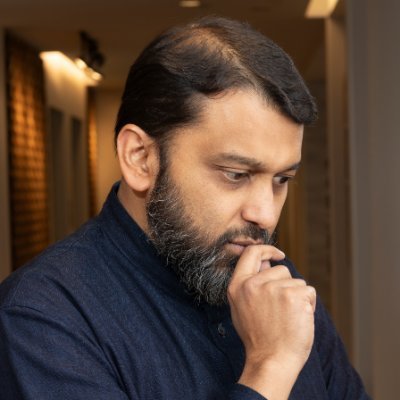
Public religious debates that fuel hostility over minor, abstract issues do more harm than good. When disagreements rooted in tradition become public spectacles, they fracture unity instead of nurturing understanding. Serious discussions belong in private spaces, while public spaces should preserve brotherhood, shared worship, and focus on the far...

35,974 Aufrufe • vor 5 Monaten •via X (Twitter)

0 Kommentare

Keine Kommentare verfügbar

Kommentare vom Original-Post werden hier angezeigt

Ähnliche Videos

Regional Manager for DMV needs to stay in her lane as she loses it over being on camera. ​When public servants are confronted with the very Constitution they are sworn to uphold, the response shouldn't be ignorance and evasion. Yet, that is exactly what unfolded at the West Virginia Division of Motor Vehicles regional office in Charles Town, located in Jefferson County. ​An independent journalist exercising their protected First Amendment right to film in a public government facility is immediately met with hostility, unlawful demands, and a complete lack of basic legal comprehension by the staff on duty. ​The incident quickly escalated when the facility's Regional Manager, identified as Lorraine Thompson Vangosen, and the on-duty security guard approached the journalist. Rather than conducting themselves with the professionalism expected of public employees, both individuals displayed a stunning lack of understanding regarding constitutional law and citizen rights: ​ Lorraine and the security guard aggressively asserted that filming inside the DMV was strictly prohibited, demanding that the journalist delete the recorded footage. ​Staff attempted to claim that because other citizens' faces were on camera, it created an expectation of privacy that violated public service policies. In a public government building, there is no reasonable expectation of privacy in open, publicly accessible common areas. When the journalist attempted to calmly de-escalate the situation and explain the legal precedent protecting the filming of public officials in public spaces, both Lorraine and the guard refused to listen, doubling down on their unconstitutional directives. ​The true nature of their "authority" was exposed the moment law enforcement arrived. After a responding deputy informed both Lorraine and the security guard that the journalist was entirely within their legal rights to record in the public areas of the building, the dynamic completely changed. ​Rather than issuing an apology or acknowledging their error, both the manager and the guard chose to retreat. For the remainder of the encounter, both individuals stayed completely out of sight, hiding in the back offices until the journalist finally left the premises. ​This encounter isn't an isolated misunderstanding—it highlights a systemic issue with how government employees interact with the public. ​When public officials choose to hide instead of acknowledging the law, it proves that accountability is sorely needed.

Giggling Ganon

20,949 Aufrufe • vor 1 Monat

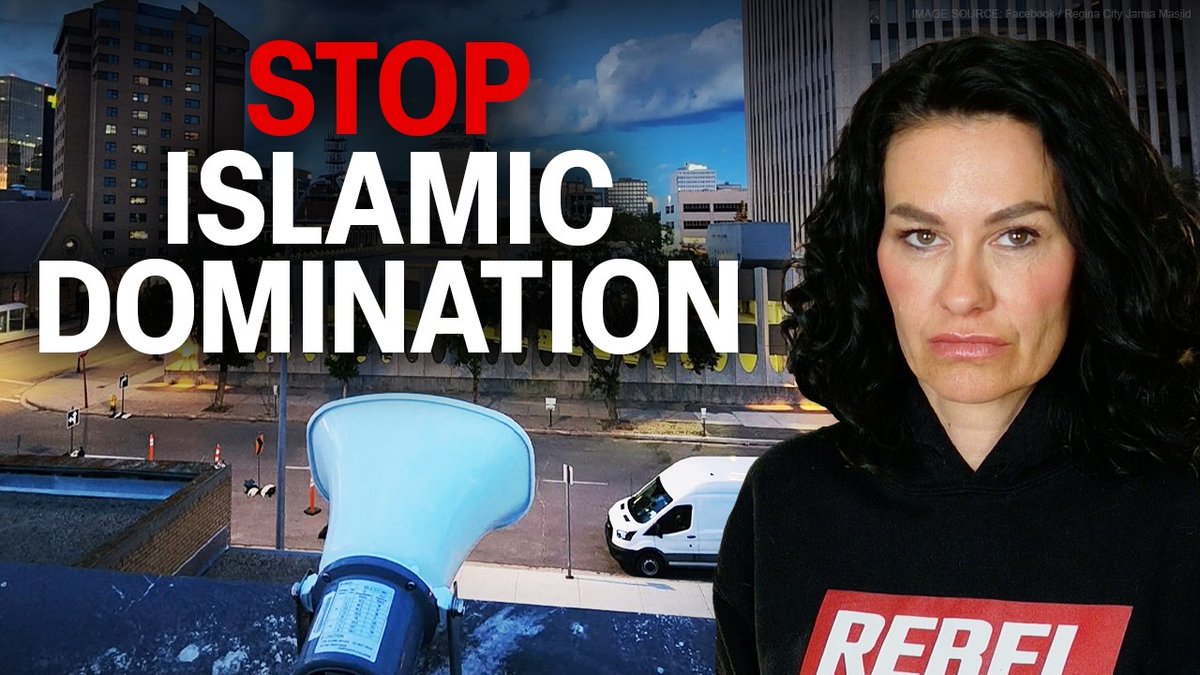
🚨 Stop Islamic domination! Mosques shouldn't be playing prayers over loudspeakers Let's be clear. Criticizing a government decision is not a hate crime. Questioning a permit is not a hate crime. Saying, "I don't want religious messages blasted over my downtown," is not a hate crime. Every Friday, a government-approved Islamic call to prayer is now being broadcast over downtown Regina. Some people have tried to dismiss concerns about this as nothing more than a complaint about noise. They're wrong. This isn't simply about noise pollution. It's about changing the character of our shared public spaces without public debate and placing an explicitly religious message at the centre of civic life. A source tells Rebel News that this permit was approved by Regina police without ever being brought before Regina city council for public discussion. That should concern every Canadian, regardless of their faith. This isn't like an innocuous church bell. Church bells are tones. They function much like a clock tower, marking the passage of time or calling a congregation together without conveying a specific theological message to everyone within earshot. The Adhan is something entirely different. It is a spoken religious proclamation: "Allah is the Greatest," "I bear witness that there is no god but Allah," "I bear witness that Muhammad is the Messenger of Allah." This is not merely a sound in the background of city life. It is an explicit religious and ideological message being amplified over an entire downtown core. For many Canadians, this raises a much larger question: should governments be facilitating the projection of a particular religion's message into our common civic spaces? Canada has long embraced freedom of religion. Every Canadian should be free to worship, pray, and practice their faith in peace. But freedom of religion is not the same thing as religious domination. No religion should expect the public square to conform to its practices, and no faith should enjoy special privileges that allow it to reshape our common spaces without public consent. Many Canadians also see this as part of a broader trend of increasingly visible Islamic claims over public spaces, whether through amplified calls to prayer or organized prayers in streets and public squares rather than in houses of worship. You may agree with those concerns, or you may not. But Canadians have every right to discuss them. At the same time, residents who object to this decision are now being met with police warnings about hate crimes and increased monitoring of online commentary. The effect is chilling. Many Canadians will reasonably wonder whether they can even voice their opposition without attracting police attention. Let's be clear. Criticizing a government decision is not a hate crime. Questioning a permit is not a hate crime. Saying, "I don't want religious messages blasted over my downtown," is not a hate crime. Free citizens have the right to object to decisions made in their name, using public authority, and affecting their communities. That's not hate. That's democracy. If government agencies can authorize this in Regina without public consultation, they can do it anywhere. Today it's Regina. Tomorrow it could be your city. That's why we're launching sign the petition and fund out independent journalism. Because our shared civic spaces belong to everyone, and Canadians deserve a voice before they are fundamentally changed.

Rebel News

17,521 Aufrufe • vor 18 Tagen

Boston, MA - In a city known for its historical significance in American freedom, a recent interaction between a Boston Police Sergeant and a citizen has sparked a debate over the boundaries of free speech and city ordinances. The incident involved a citizen peacefully displaying support for President Donald Trump through flag signage in a public space, which led to an encounter with law enforcement. According to the officer, the act was in violation of a Boston city ordinance that prohibits the affixing of signs or advertisements on public property without permission from the mayor's office. City of Boston Ordinance set forth by Mayor Wu states it prohibits individuals from posting or affixing any sign, advertisement, or similar material on public infrastructure like sidewalks, poles, and other structures without explicit consent. The citizen was informed they would be arrested under Chapter 272, Section 53, for failing to comply with this ordinance, highlighting a clash between local regulation and First Amendment rights. Free Speech Advocates argue this case represents an overreach of local laws, potentially infringing on the right to free expression, especially in a public forum. Example is the Supreme Court case like Shurtleff v. City of Boston where the Court emphasized that certain public acts (like flag raising) should be seen as private speech, not government endorsement. Law Enforcement and City Officials maintain that such ordinances are necessary for maintaining order, aesthetics, and safety in public spaces. They argue that while free speech is protected, there are reasonable time, place, and manner restrictions which this ordinance represents. There's a mix of reactions from Bostonians. Some feel that the city's approach stifles political expression, while others believe in upholding the law, suggesting there are plenty of legal avenues for political expression that don't involve violating city ordinances. This incident could prompt discussions or legal challenges on how such ordinances are enforced, especially in light of past Supreme Court rulings emphasizing the protection of symbolic speech in public spaces. This situation in Boston underscores the ongoing tension between individual rights to free expression and the regulatory power of municipalities. While the citizen's arrest might be legally defensible under current ordinances, it's stirring a conversation on where exactly the line should be drawn between public order and the sacred right to free speech.

Chester Tam

209,795 Aufrufe • vor 1 Jahr