Loading video...

Video Failed to Load

Go Home

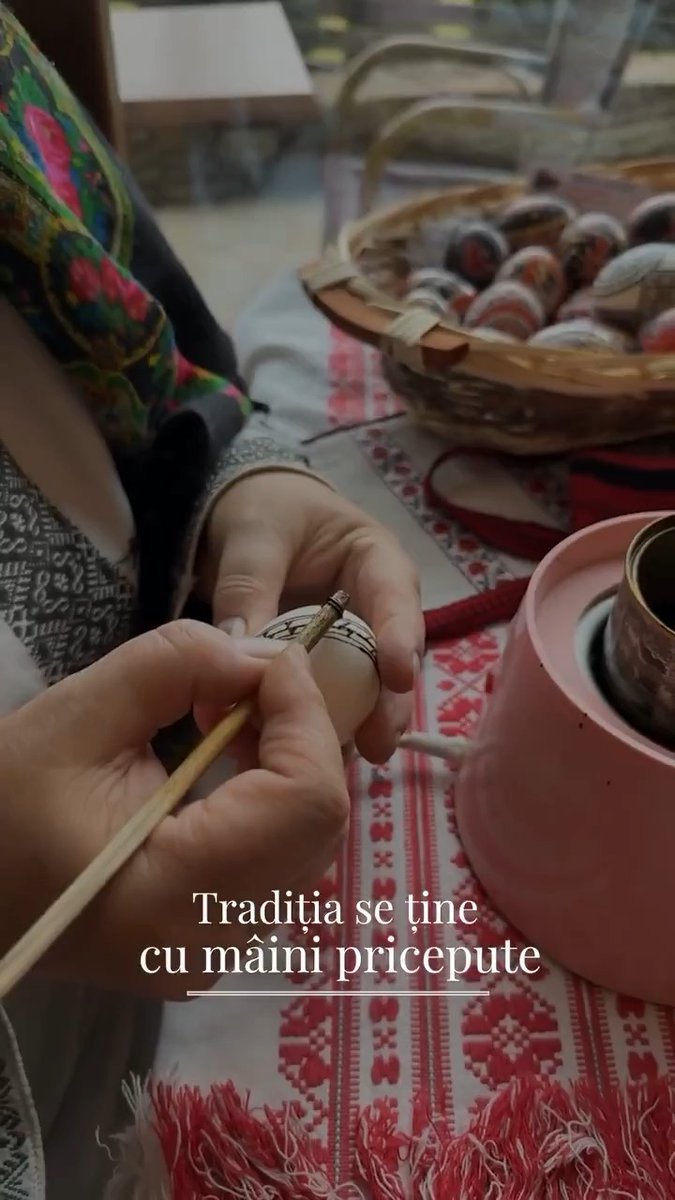
Pysanky are Easter eggs adorned with wax-resist (batik) designs, featuring motifs from Slavic folk art. They're widespread in various parts of Eastern Europe.

62,984 views • 1 year ago •via X (Twitter)

10 Comments

Frank's profile picture
Frank1 year ago

This is pure art in my opinion! Who agrees ?

LuxuryGirls's profile picture
LuxuryGirls1 year ago

Incredible patience required to do this

L's profile picture
L1 year ago

Can’t believe it works

APE Σ 👁‍🗨💹🧲's profile picture
APE Σ 👁‍🗨💹🧲1 year ago

broooo

LifeAhead's profile picture
LifeAhead1 year ago

Easter eggs

Shubi's profile picture
Shubi1 year ago

Amazing

Ram Avatar's profile picture
Ram Avatar1 year ago

Pysanky are such a beautiful blend of art and tradition — each design tells its own story and keeps Slavic culture alive through generations!

LifeAhead's profile picture
LifeAhead1 year ago

Wow, it works

x trendviral videos's profile picture
x trendviral videos1 year ago

Pysanky are Easter eggs adorned with wax-resist (batik) designs, featuring motifs from Slavic folk art. They're widespread in various parts of Eastern Europe.

Lion king's profile picture
Lion king1 year ago

Nice finish

Related Videos

🚨 BREAKING NEWS: CROATIAN PRESIDENT MILANOVIĆ CLAIMS DALMATIAN CROATS SHARE ILLYRIAN ROOTS WITH ALBANIANS — “WE ARE THE SAME PEOPLE, JUST DIFFERENT LANGUAGES NOW” 🇭🇷🔥🇦🇱 In a recent public statement, President Zoran Milanović said that Croats in Dalmatia have the same ancient Illyrian origin as Albanians. He added: “We are the same, but we have two different languages. Albanians speak Albanian, which was also the language of the Illyrians.” The statement is now being widely celebrated by Albanian nationalist circles as proof of shared heritage and “Balkan unity.” This is a dangerous attempt to rewrite history for current political convenience. Croats are a Slavic people — with Slavic language, culture, traditions, and identity formed over centuries. Emphasizing ancient Illyrian roots while downplaying the Slavic core is exactly the kind of historical revisionism used to weaken national identity and push vague “Balkan” or regional projects that often serve non-Slavic interests. Eastern and Slavic nations have seen this pattern before: when politics change, some suddenly want to “rediscover” ancient roots to dilute who we really are. Croats, like Poles, Czechs, Slovaks, Serbs, and others, are Slavic peoples with the right to defend their Slavic identity, language, and demographic future — without apology. True history should be respected, but never weaponized to undermine modern Slavic nations and their sovereignty. Will more leaders in the Balkans and Eastern Europe stand firm and defend Slavic identity instead of rewriting it for political gain? Slavic nations first. Our history. Our identity. Our survival.

Slavic Networks

27,887 views • 3 months ago

A Slavic Nation Hidden in Germany — And Their Forbidden Dream of Freedom 🇩🇪🆚🇷🇸 🎶 “Rjana Łužica” — the national anthem of the Sorbs (Lusatians) — is one of the least known yet most symbolic anthems in Europe. Who are the Sorbs? A Slavic people living in Eastern Germany, long before Germany even existed. But here’s the uncomfortable truth Germany doesn’t want to talk about: A Slavic nation lives under German rule without autonomy, without official recognition, without a voice in Europe. They survived: •Germanization •Prussian repression •Nazi attempts to erase their identity •Post-war neglect and assimilation And still, they sing. They speak Upper and Lower Sorbian. They proudly call their homeland Łužica — Lusatia. 🇪🇺 The EU Speaks of Minority Rights… But Where Are Sorbian Rights? Germany lectures Central Europe about human rights and democracy — while erasing a native Slavic nation within its own borders. How many in the world even know that: ⚠️ Sorbian schools are closing ⚠️ Sorbian villages are destroyed for coal mines ⚠️ Their language is dying in silence ⚠️ Their anthem is almost unknown… even among Slavs But Sorbs remain. A tiny Slavic flame surrounded by a powerful empire. 🇸🇱 Why It Matters to All Slavs From Poland to Serbia, from Croatia to Slovakia — Slavs must never forget our own people in Germany. The anthem “Rjana Łužica” isn’t just a song. It is a cry for survival. Because if one Slavic nation disappears… we all lose a part of who we are. ❓Should Slavs Support Sorbian Self-Determination? We are not calling for anything illegal. We are simply asking: Why does the West preach freedom everywhere — except for Slavs living on its own territory? Lusatia deserves: ⭐ Cultural protection ⭐ Linguistic rights ⭐ Respect ⭐ And yes — a choice about its future ⸻ 🎧 Listen. Learn. Remember. Share if you stand with the Sorbs of Lusatia — the Forgotten Slavs of Europe. ➡️ Follow Slavic Networks for more stories suppressed by Western media. 📌 Like • Share • Invite All Slavs Let every Slavic voice be heard — even in Germany. Nirali SlavicFreeSpirit VVeles

Slavic Networks

27,502 views • 8 months ago

🔥 SERBIAN 🇷🇸 KOLO — ONE OF THE OLDEST SLAVIC DANCES 🔥 The video shows a traditional Serbian kolo, one of the most iconic folk dances in the entire Slavic world. What you see here isn’t just choreography — it’s a living piece of Slavic history, passed down through generations for over a thousand years. Kolo is performed in a circle or semi-circle, with dancers holding hands or belts, moving together in perfect rhythm. This symbolizes unity, equality, and community — nobody leads, nobody follows. Every dancer is part of the same circle. For centuries, this is how Serbs celebrated weddings, harvests, military victories, and major village gatherings. The costumes you see in the video are authentic Šumadija and Vojvodina outfits — wool skirts, embroidered shirts, opanci shoes, and white headscarves. These elements come from medieval Serbian dress, shaped by Ottoman, Byzantine, and local Slavic traditions. Across the Balkans, similar circle dances appear among Croats, Bosniaks, Macedonians, Bulgarians, Montenegrins, and even some Greeks and Romanians — proving how deeply pan-Slavic these traditions really are. UNESCO even protects Serbian kolo as part of the world’s cultural heritage. What you are watching is not just a dance — it is the heartbeat of a nation and one of the oldest surviving expressions of Slavic spirit. 🇷🇸✨ Slavic culture lives through movement, music, and memory. If you like what we are doing — like, share, subscribe, and invite your friends for more. Follow us also on Facebook: Slavic Networks. Nirali SlavicFreeSpirit VVeles

Slavic Networks

21,593 views • 9 months ago