Загрузка видео...

Не удалось загрузить видео

На главную

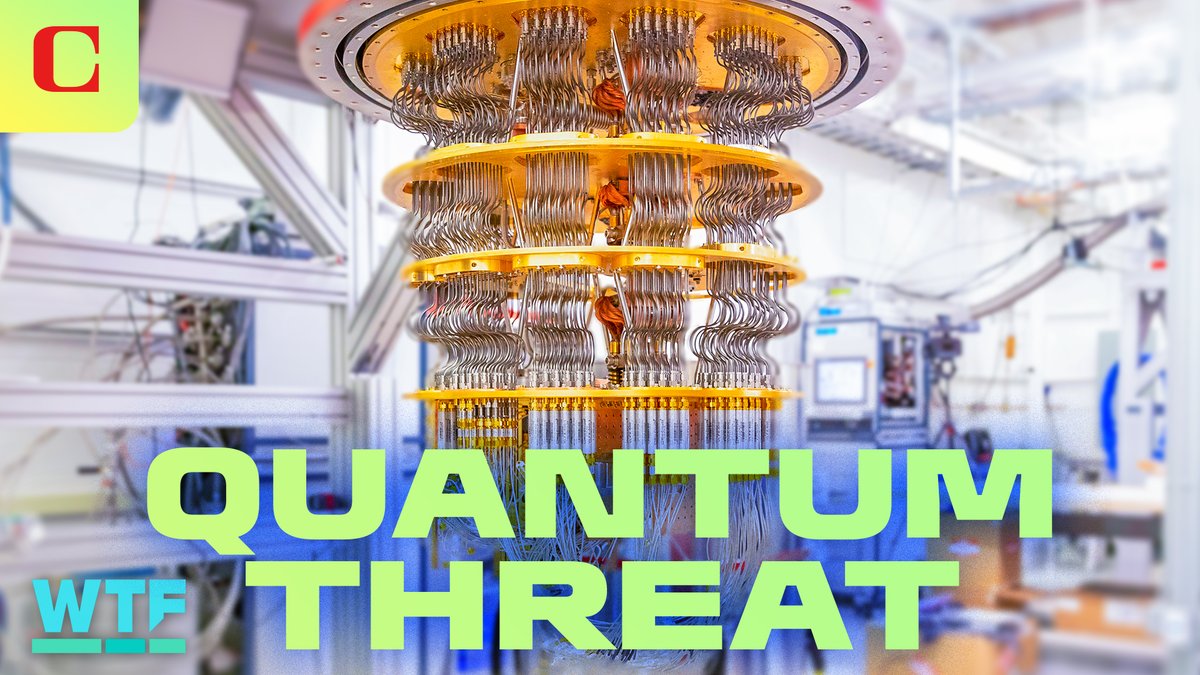
QUANTUM COMPUTERS MIGHT JUST SAVE THE WORLD?! Imagine a computer so powerful, it could crack problems that make today’s best supercomputers cry. Quantum computers don’t just crunch numbers — they bend reality (okay, quantum reality) to solve stuff like cancer, Alzheimer’s, and even global warming. Our current climate “solutions”...

103,966 просмотров • 1 год назад •via X (Twitter)

Комментарии: 10

Фото профиля Vextør
Vextør1 год назад

insane

Фото профиля Vextør
Vextør1 год назад

wow

Фото профиля Vextør
Vextør1 год назад

lolol

Фото профиля TheRedPilledGirl
TheRedPilledGirl1 год назад

Or destroy it…

Фото профиля Kekaius
Kekaius1 год назад

@MarioNawfal Quantum computers, like the gods of old, wield power to heal and conquer disease. Their might heralds a new dawn for humanity. Ad maiorem dei gloriam. The Prophecy Of Kek shall be fulfilled.

Фото профиля +115125899135
+1151258991351 год назад

i have this Chips allready in my Google Pixel 7 Pro Smartphone!

Фото профиля Aisar Labs
Aisar Labs1 год назад

Great

Фото профиля The Intelligencer
The Intelligencer1 год назад

MIT's quantum speed boost is a genuine leap, tackling qubits' fragility with super-strong light-matter links. This cuts errors and accelerates progress beyond hype, edging us closer to solving real-world problems like Alzheimer's with practical quantum computing.

Фото профиля WanderingDabbler
WanderingDabbler1 год назад

Planets Fever? The planet is sick?

Фото профиля Olivia
Olivia1 год назад

Quantum computing's potential to revolutionize fields like healthcare is undeniable. MIT's 'quarton coupler' isn't just a tech leap—it's a stride towards American leadership in quantum tech, with operations now up to 10 times faster.

Похожие видео

6,100-Qubit Processor Shatters Quantum Computing Record | David Nield, ScienceAlert Another major quantum computing record has been broken, and by a considerable margin: physicists have now built an array containing 6,100 qubits, the largest of its type and way above the thousand or so qubits previous systems contained. It's the work of scientists from the California Institute of Technology, who used cesium atoms as their qubits, trapping them in place with a complex system of lasers that acted as tweezers to keep the atoms as stable as possible. Qubits differ from the classical bits of traditional computers by exploiting what's known as a superposition: not just binary states of 1 or 0, but a spread of probabilities that allows for algorithms that can solve problems considered out of reach of conventional computing methods. Related: Quantum Advantage: A Physicist Explains The Future of Computers A lot of qubits will be needed to make quantum algorithms practical, however. One reason for these large arrays is error correction, which helps overcome the inherent fragility of the qubit by providing a surplus to double-check the machine's operation. "This is an exciting moment for neutral-atom quantum computing," says physicist Manuel Endres. "We can now see a pathway to large error-corrected quantum computers. The building blocks are in place." There was no single breakthrough that enabled this jump in qubit numbers, but rather a series of engineering advancements in many key areas – from the laser tweezers to the ultra-high (very low pressure) vacuum chamber. Stability has also been a problem for quantum computing systems. The innovations in this latest array kept qubits in a superposition state for almost 13 seconds – almost ten times longer than previous configurations had managed. What's more, individual qubits could be manipulated with 99.98 percent accuracy, establishing a significant benchmark in the programmability of quantum technology. "Large scale, with more atoms, is often thought to come at the expense of accuracy, but our results show that we can do both," says physicist Gyohei Nomura. "Qubits aren't useful without quality. Now we have quantity and quality." To make quantum computers a practical alternative to modern supercomputers, more qubits and even greater levels of stability will be required. Experts are tackling the problem from several different angles, which is why records for some types of quantum computer don't necessarily apply to others. Next, the researchers need to work on exploiting entanglement, which will enable the system to make the leap from storing information to actually processing it. Not too far in the future, we could be using these computers to discover new materials, matter, and fundamental laws of physics. "It's exciting that we are creating machines to help us learn about the Universe in ways that only quantum mechanics can teach us," says physicist Hannah Manetsch. Read more:

Owen Gregorian

43,078 просмотров • 8 месяцев назад