Загрузка видео...

Не удалось загрузить видео

На главную

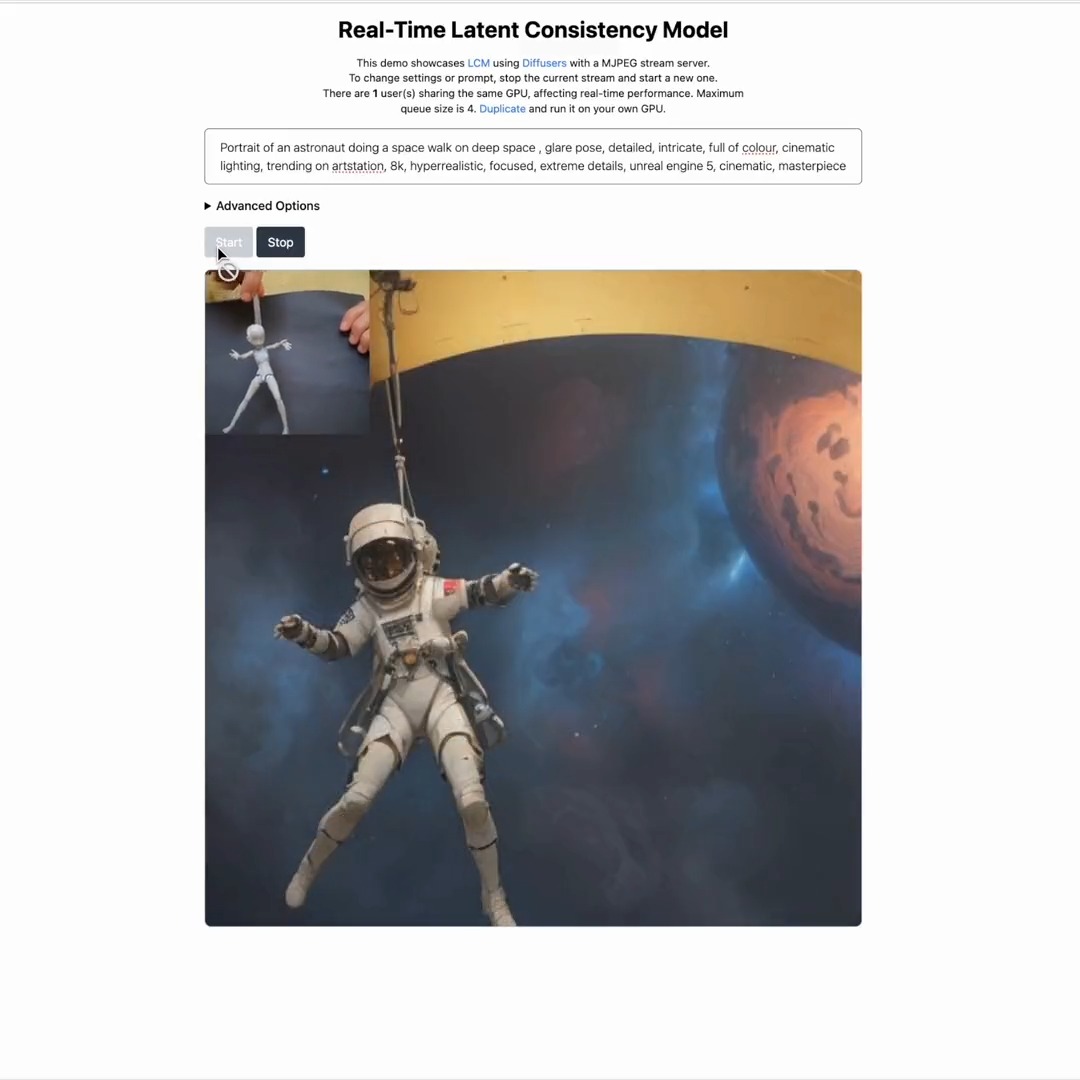
Quick test with SDXL Turbo, another amazing, super-fast diffusion model. It works right out of the box with diffusers unofficial demo txt2img and img2img:
219,854 просмотров • 2 лет назад •via X (Twitter)

Комментарии: 10

Фото профиля SkalskiP
SkalskiP2 лет назад

@diffuserslib This is insane…

Фото профиля 1LittleCoder💻
1LittleCoder💻2 лет назад

@diffuserslib Your demos are addicitive and inspiring!

Фото профиля Ankush Singal
Ankush Singal2 лет назад

@diffuserslib Is it faster compared to using with LCM ? Cheaper?

Фото профиля blender_ovo
blender_ovo2 лет назад

@diffuserslib super lcm!

Фото профиля 🟢 ٴ` b0gie.eth🟣
🟢 ٴ` b0gie.eth🟣2 лет назад

@diffuserslib @Crypto_koH

Фото профиля かつお節
かつお節2 лет назад

@osanseviero @diffuserslib cat power

Фото профиля JunMa
JunMa2 лет назад

@diffuserslib Thanks for sharing. This is super cool. Is there any way to fine-tune the model for img2img task?

Фото профиля bondarchukb
bondarchukb2 лет назад

@diffuserslib hmm, idk why but its working quite slow on my side, maybe because a lot of users are testing it?

Фото профиля Sylwester Mielniczuk 🔮💎
Sylwester Mielniczuk 🔮💎2 лет назад

@diffuserslib Trying to get the models, it's over 30G....

Фото профиля starwave
starwave2 лет назад

@diffuserslib It continues to blow my mind how things got so fast that you can just prompt and then surf through seeds and steps now at lightning speed to help find the image you're looking for rather than having to modify the prompt all the time, whole new way to explore!
Похожие видео

In the past few weeks, I deep dived into an exploration revolving around the use of physical interfaces to feed and interact with a real-time img2img diffusion pipeline using Stream Diffusion and SDXL Turbo. What really captivated me is to use my hands, objects, art supplies, tools, and light to create images and scenes. 𝗣𝗵𝘆𝘀𝗶𝗰𝗮𝗹 𝗠𝗲𝗱𝗶𝗮 + 𝗧𝗼𝗼𝗹𝘀 I experimented with clay, manipulating different types and colors along with a selection of prompts. I used a magnifying glass, tracked in real-time, to focus the diffusion process on specific areas. Combining these tools created a dynamic and inspiring experience. Using magic clay to layer shapes and colors as a base for revealing landscapes and hidden worlds, and the magnifying glass to focus and reveal these details, was particularly effective. 𝗣𝗵𝘆𝘀𝗶𝗰𝗮𝗹 𝗟𝗶𝗴𝗵𝘁 I used light as my method of interaction with the img2img diffusion. This approach felt special right away. There was something magical about holding a physical light source and seeing it influence the generated visuals. I iterated on this technique with themes like Rococo architecture, flowers, Brutalist architecture, hidden worlds, and origami landscapes. 𝗜𝗻𝗸 + 𝗛𝘆𝗯𝗿𝗶𝗱 𝗙𝗼𝗿𝗺𝗮𝘁𝘀 I also used ink in milk as a means of physical interaction with the diffusion pipeline. As I drop ink into milk, shapes come alive instantly. By learning to manipulate the combination of physical and digital elements, I steered the generated output toward my areas of interest. These iterations extended beyond ink in milk to include the format in which these elements are contained: a circular plate or a triptych of small stainless steel trays. These formats provide a structured yet flexible framework to explore themes and narratives across multiple visual spaces. It's magical. Some of that last iteration has been captured in this insightful article by Fast Company: #stablediffusion #realtime #ai

Hugues Bruyère

86,381 просмотров • 2 лет назад