Video yükleniyor...

Video Yüklenemedi

Ana Sayfaya Dön

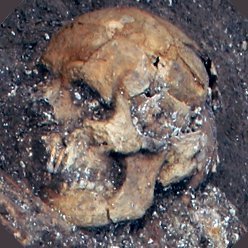
Reconstructions based on 6,300-year-old early Proto-Indo-European elites from the Lower Don (Krivyanski I11828/I31755, Y-DNA J-M319, mtDNA T2a1b), and from Hungary—the first known horse rider (Csongrád I5124, Y-DNA Q-Y6802, mtDNA K1b2) The Krivyanski individual was buried in a round pit with a concave bottom, its floor covered in red ochre....

52,184 görüntüleme • 4 ay önce •via X (Twitter)

0 Yorum

Yorum bulunmuyor

Orijinal gönderinin yorumları burada görünecek

Benzer Videolar

Facial reconstructions of Iron Age Koban culture individuals from Georgia, Ossetia, and Ingushetia The Koban culture was a major Late Bronze Age and Early Iron Age culture of the Central Caucasus, renowned for its advanced bronze and iron metallurgy and craftsmanship. The Koban culture was divided into three regional variants: central, western, and eastern. The western variant became increasingly syncretic with Post-Dolmen Horizon and Proto-Maeotian groups associated with the Northwest Caucasians, while the eastern variant interacted closely with the Kayakent-Kharachoy/Zandak culture, possibly linked to the ancestors of Nakh-speaking peoples. The language of the Koban population remains unknown. Some scholars, including Valentina Ivanovna Kozenkova, have proposed a Kartvelian affiliation based on the culture's origins in the Great Liakhvi Basin (such as the site of Tlia in Georgia, the prototypical and one of the longest-inhabited Koban site, which has archaeological parallels with the even older site of Brili to the west), although no direct linguistic evidence has survived. Genetic studies reveal high levels of CHG ancestry and a predominance of Y-DNA haplogroup G2a1 within the main Koban genetic cluster. Similar genetic profiles are found among populations associated with the Late Bronze Age expansion of Kartvelian-speaking groups into eastern Georgia. Together with archaeological parallels, particularly similarities between Colchian and Koban axe forms, this evidence supports a possible Kartvelian connection. The Koban population maintained extensive contacts with neighboring societies. To the south, they interacted with tribes of the Colchian cultural-historical sphere, including groups inhabiting present-day Svaneti. To the north, they engaged with the Scytho-Cimmerian world. Anthropologically, the Kobanians are characterized by a relatively homogeneous Europoid morphology, including dolichocrany, a narrow face, low nasomalar and zygomaxillary angles, and a strongly projecting, narrow nose.

Ancestral Whispers

25,998 görüntüleme • 2 ay önce

Facial reconstructions of 2,500-year-old Maeotians from Northwest Caucasus The Maeotians and related tribes such as the Sindi and Kerketi were Northwest Caucasian peoples ancestral to the modern Circassians, Abkhazians, Abazins, and Ubykh. They developed from the Proto-Maeotian culture of Krasnodar - likely a syncretism of the Post-Dolmen Horizon with the Koban culture. The Maeotians played a role in the politics of the Bosporan Kingdom, and were tightly knit with the Scytho-Sarmatian world. The male was buried in the Tsemdolina necropolis in Krasnodar, which contained elite burials of the local administrative and military aristocracy who oversaw the Bosporan presence on the Abrau Peninsula. The site yielded numerous Scythian-style bronze artifacts, including zoomorphic pieces, and featured large underground pit-type tombs with horse burials. Horse burials were widespread in the Iron Age Caucasus, a custom either introduced by Scytho-Cimmerians or developed locally, and persisted long after disappearing in the western Steppe. This practice helps distinguish Maeotians from the later Iranic Steppe nomads. He is depicted with a bronze cuirass bearing the Gorgon Medusa, found in a Maeotian kurgan of the Kuban steppe, Elizavetsky burial ground. Although often viewed as a Greek motif, the golden gorgoneion from the Ulyap sanctuary suggests a local interpretation. Its resemblance to the Chechen and Ingush goddess Tusholi, worshiped as a fearsome mask, may indicate that the Maeotians saw the gorgoneion as a form of the Great Goddess. Among Caucasian peoples, including the Maeotians, who practiced ritual decapitation and venerated human heads, the gorgoneion likely carried additional cultic significance. The woman was buried at Lobanovaya Shchel, an Iron Age cemetery 9.9 km west of Abrau-Dyurso. The community practiced stone-cist burials that continue Bronze Age funerary traditions. Lobanovaya Shchel contained iron weapons, including spearheads and knives; locally made pottery alongside imported vessels and diverse ornaments including bronze sinusoidal pendants, torcs, signet rings, silver lunula pendants, glass, jet, and bone beads, and cowrie-shell pendants; and tools such as iron knives, an awl, a bronze needle, and ceramic and lead spindle whorls. She is depicted with a headdress associated with finds from the Karagodeuashhe kurgan, which reflects a high-status Maeotian burial tradition. In such elite graves, the deceased was placed in a prepared multi-chamber stone tomb, accompanied by ceremonial attire, weapons, a funerary wagon with horses, and additional horse sacrifice in a nearby dromos, with the chieftain and his wife buried in separate chambers.

Ancestral Whispers

26,291 görüntüleme • 3 ay önce

Facial reconstructions of a 3,200-year-old likely Para-Armenic man and a 2,600-year-old likely Proto-Georgian/Iberian man from Samtavro in Mtskheta, Georgia The Bronze Age in East Georgia marked several periods of population replacement. Starting from the Early BA, East Georgia was inhabited by the people of the Kura-Araxes culture, associated with Northeast Caucasian speakers. In the Middle BA, following a cataclysmic environmental event, people of the Catacomb culture migrated from the steppes into the eastern Caucasus, mixing with the previous Kura-Araxans and playing a major role in the formation of the Trialeti culture, associated with Armenic speakers. By the Late BA, the genetic cluster associated with the Trialetians spread throughout most of eastern Transcaucasus, with the inhabitants of Mtskheta belonging to this genetic cluster. who are known in the archaeological record to favor distinct leaf-shaped daggers and swords. At this period, a new wave of people from West Georgia and Samtskhe began migrating into Kartli and other parts of East Georgia, bringing new metallurgical technologies and their distinct Colchian and Koban-style axes, associated with Kartvelians. A few centuries later, these Kartvelian invaders imposed themselves as the dominant population, conquering the preceding inhabitants in what later would be known as Mtskheta, the capital of Kartli. Anthropologist Malkhaz Abdushelishvili described the 3,300-year-old Samtavro man as brachycephalic, with weakly expressed relief and a narrow, high face. In contrast, the 2,600-year-old man was described by Malkhaz Abdushelishvili as dolichocephalic, with a moderately developed brow ridge, relatively large cranial dimensions and massive cranial features, and a wide face. The initial LBA population of Mtskheta associated with the Trialeti cluster is generally gracile, and the deeper it goes into the Iron Age, the more massive and robust the population becomes, correlating with an increase in CHG ancestry brought by Kartvelian tribes.

Ancestral Whispers

30,183 görüntüleme • 7 ay önce

Facial reconstructions of 2,850-year-old Hurrians from Urmia The people of Iron Age Hasanlu were genetically a mixture of Zagrosians, Upper Mesopotamians, and Proto-Armenics. Hasanlu is an archaeological site of an ancient city located in northwest Iran, in the province of West Azerbaijan, just south of Lake Urmia. The settlement was likely associated with the Mannaeans, a Hurro-Urartian people with a possible Indo-European substrate related to the Armenic branch. The Hasanlu man was laid on his back beneath a hypogeum wall, head west, facing south with flexed legs. He had Rich grave goods - bronze and iron weapons, an iron armlet, jewelry, a decorated bronze belt, and ceramic vessels, indicating a high-status individual. The style of his belt and ornaments links his material culture to the South Caucasus and early Urartian cultural sphere, showing close artistic and technological connections between these regions around 900–850 BCE. The people of Dinkha III were likely Hurrian, and closely related to the Hasanlu Iron Age cultural horizon of the Urmia region. Dinkha III burials are primarily recognized by their associated grave goods, which are quite similar to those found in the Hasanlu excavations. The dead were buried in individual graves without markers; the brick tombs generally opened to the east. Men, women, and children were interred in the same area and apparently received the same burial rites. All burials were placed within pits, which were then refilled. The Dinkha Tepe individual was a mature adult, buried flexed on his back in a north-south orientation, with the head to the south. The right arm was bent back to touch the shoulder. He was buried with a plain bracelet with overlapping tapered ends on the right wrist; a stone button with drilled designs by the left foot; and assorted beads at the throat, including coarse faience, fine faience (possibly glass), paste, carnelian, and a lotus-bud-shaped bead of fine faience or glass. A socketed spear was placed along the left leg, such that the shaft must have passed over the body. At the feet were a dark gray burnished spouted vessel and a gray IIC worm bowl with two holes. Reconstructions commissioned by 𒁍𒊑 𒋗𒊑𒌍 Buri Šoreš 𓄂❤️☀️💚

Ancestral Whispers

10,944 görüntüleme • 6 ay önce

How 'Beef Parotta' Became A Part Of "Kerala's Culture?" Today, ‘beef curry’ and ‘parotta’ are proudly flaunted as Kerala's culture. It can be seen everywhere, from the speeches of political leaders to Malayalam cinema. But was it always like this? Definitely not, it was forced into Kerala's cuisine, and ultimately its "culture." To know how, read or watch the following. Like the rest of India, the Hindus of Kerala held profound reverence for the cow, and there is a great deal of historical evidence to prove this. Famous foreign travellers like Ibn Battuta and Abdur Razzaq clearly wrote in their travelogues that slaughtering a cow in Kerala was the greatest crime, punishable by the most gruesome death. However, reverence for the cow has now become an exception in Kerala. And it is not because cow worship was not a tradition in Kerala, but because a systematic de-Hinduisation and de-sacralisation of public life has been carried out here. If we look at British records of Kerala, the slaughter of cows by Moplahs in Malabar at that time was the biggest cause of frequent Hindu-Muxlim riots, as the British refused to intervene on behalf of the Hindus. During the Moplah Riots of the 1920s, there were countless incidents where Muxlims ofnormalisation Malabar slaughtered cows in temples and forcibly fed beef to Hindus to convert them. Because the rule of the Hindu Zamorin kings ended early in Malabar and a majority of the Hindu population was converted to Islam, cow slaughter and beef consumption became commonplace in this region. Conversely, in Travancore, cow slaughter was completely banned, and in Cochin, it was severely restricted. Thus, the roots of beef normalisation in Kerala lie in the Muxlim-majority Malabar. By the 1920s, due to British patronage and their dominance in the timber trade for shipbuilding, the Moplah Muxlims of Kerala began to become economically empowered. Since Malabar was a coastal region, these Muslims had been trading in Burma and Malaysia since the beginning, and with the Gulf Oil Boom of the 1960s, they not only earned wealth in Gulf countries but also strengthened their religious orthodoxy. Meanwhile, the exact opposite was happening to the Hindus. Kerala saw the formation of India's first non-Congress government, and it was a Communist one. The Communists launched sustained ideological attacks on the sacred religious beliefs of Hindus and began to desacralize or secularize all traditional institutions. Since Christians and Muslims had gained a demographic advantage due to forced conversions, they collaborated with the Communist state to undermine Hindu beliefs. For instance, the "land reforms" of the 1970s severely broke the stronghold of the traditional Hindu elite. Following historical patterns, they began to openly offend and humiliate Hindus in Malabar using cow slaughter and beef with full state support. A prime example of this is the portrayal of beef in Malayalam cinema. As long as the cinema was dominated by middle-class and upper-caste Hindus, beef was never shown, because it was simply not a part of their culture. However, as soon as Muxlim and X-tian producers, directors, and writers established a foothold after the year 2000, they turned the forced reality of ‘beef-parotta’ into a symbol of Kerala’s food culture. And as a result of this sustained propaganda around beef in 'popular culture' (cinema, theatre, media, etc.) by the Ixlamo-Marxist next, an average Malayali Hindu who consumes all this media started believing in the narrative of beef (cow meat) as part of Kerala's culture. This systematic and exaggerated propagandist portrayal on the reel started influencing reality to a significant extent. Although even today, the majority of Hindus in Kerala do not eat beef, it remains a largely political act. However, the normalisation of beef in Kerala is a clear-cut example of how Communist and Abrahamic ideologies can subvert any native culture in a very short span of time.

Prateek

575,468 görüntüleme • 6 ay önce

This World Cup has shown how Argentinian players are just built different, and it was interesting because, in the press conferences, both managers addressed this. First, Tuchel talks about the Argentinian value of the ball and how they protect the ball at all costs, how they manage those small spaces, and how they learn this from a young age. He references culture, and this is exactly it. A child playing in a certain environment leads to that. Not every Argentinian child is on the national team, but it raises the ceiling. It creates a certain type of style and a certain type of player. Then Scaloni also references his culture. He sees them play without fear of losing. It comes from playing in an environment where you are constantly faced with the potential of losing and being able to play with that pressure, right? They don’t fight against it. They play with it. They use it. And I think this is where youth football coaches should really take note. This does not mean we should copy and paste Argentinian culture into every training environment, because culture cannot just be copied. But the values within that culture can be inculcated in every training environment. The value of the ball. The courage to receive it in small spaces. The ability to protect it under pressure. The confidence to keep playing after a mistake. The willingness to play with the possibility of losing rather than constantly trying to avoid it. Those values can become part of the environment we create every day. They can be present in the games we design, in what we praise, in what we allow players to struggle with, and in how we respond when they lose the ball. If every mistake leads to the coach stopping the session, giving the answer, or taking the pressure away, then players never learn to play with that pressure. They learn to wait for the coach. It was cool to see how two managers, at such a big stage, reference culture and the environments that kids play in when they’re young. Because the players we see on the biggest stage were not only created by tactics or coaching information. They were created by environments that taught them what to value, how to relate to the ball, and how to play when there was something to lose.

David Garcia

170,334 görüntüleme • 1 ay önce

Warren Buffett and Charlie Munger on why you should build culture from scratch rather than try to change it: An audience member explains that he's just joined a new organisation, and for him to succeed there, the culture needs to change. He asks Buffett and Munger how to change the culture of an existing organisation, and how to build a strong, unique culture if you're starting fresh. Buffett doesn't hesitate on which is easier: "Well I think it's a lot easier to build a new organization around the culture than it is to change the culture of an existing organization and it is really tough." He uses Berkshire itself as the example. The culture there is now so deeply embedded that it has become self-protecting: "It's so ingrained in all our managers, our owners, everything about the place is designed in effect to reinforce a culture and for anybody to come in and try and change it very much, I think the culture would basically reject it." But Buffett is candid that Berkshire's strong culture wasn't built quickly, or against resistance. He had something most people don't: a blank slate and decades to work with. "That was the luxury of time I've had with Berkshire; it goes back to 1965 and there really wasn't much of anything there except some textile mills, so I didn't have to fight anything." Rather than forcing change, he added companies that fit and let belief accumulate over time: "As we added companies they became complimentary and they bought into something that they felt good about, but it took decades." Then comes the admission that gives the whole answer its weight. Buffett has tried to change an existing culture, and graded himself honestly on the result: "At Salomon, I attempted to change culture in some respects and I would not grade myself A+ in terms of the result." Munger is even blunter, and funnier, about the difficulty. He's quietly flattered the questioner believes they can pull off what he never could: "Well I'm quite flattered that a man would say that he's in a new place where he can't succeed unless he changes the culture and he wants us to tell him how to change the culture. In your position, my failure rate has been 100%."

Black Edge

31,560 görüntüleme • 3 ay önce

🚨Why Greek DNA remained unchanged according to genetic science.🇬🇷 (Complete post with sources) 🔴Why Roman occupation introduced only minimal changes to Greek heritage. 🔴How Byzantine policies and resettlements helped sustain Greek identity. 🔴Why Ottoman influence left only a light genetic footprint. 🔴A rare and impressive genetic mutation found in Crete. 1. 🧬 Genetic Studies by Iosif Lazaridis Genetic Continuity to Modern Greeks The 2017 study led by Dr. Iosif Lazaridis analyzed ancient DNA from Minoan and Mycenaean remains. Findings revealed that both civilizations derived 62–86% of their ancestry from Neolithic Anatolian farmers. Additionally, 9–17% of their genetic makeup traced back to populations from the Caucasus or Iran. Notably, Mycenaeans possessed 4–16% ancestry from northern Eurasian steppe populations, a component absent in Minoans. Further research confirmed that modern Greeks share approximately 70–80% of their DNA with Mycenaeans, underscoring a strong genetic continuity from the Bronze Age to present-day populations. While subsequent historical periods introduced additional genetic influences, the primary genetic signature remains rooted in Mycenaean ancestry. A comprehensive genome-wide study of 102 ancient individuals from Crete, mainland Greece, and the Aegean Islands revealed high levels of endogamy (marriage within close kin) during the Bronze Age. This practice, unprecedented in the global ancient DNA record, suggests tightly knit communities with limited external gene flow. Source : 1. Genetic origins of the Minoans and Mycenaeans 🚨More sources according to the video : 2. Ancient DNA reveals admixture history and endogamy in the prehistoric Aegean 3. A genetic probe into the ancient and medieval history of Southern Europe and West Asia 4. Genetics of the peloponnesean populations and the theory of extinction of the medieval peloponnesean Greeks 5. The Greeks in the West: genetic signatures of the Hellenic colonisation in southern Italy and Sicily 6. A Genetic History of the Near East from an aDNA Time Course Sampling Eight Points in the Past 4,000 Years 7. The R19X mutation in the APOC3 gene has been identified in a specific population in Crete, Greece, particularly among residents of the mountainous villages of Anogia and the surrounding Mylopotamos area. This variant is associated with favorable lipid profiles, including lower triglyceride levels and higher high-density lipoprotein (HDL) cholesterol levels, which are protective against cardiovascular disease. In the general European population, the R19X variant is extremely rare, with a frequency of less than 0.05%. However, in the Cretan MANOLIS cohort, the frequency is significantly higher, around 1.9% to 4%, depending on the study. This elevated prevalence is likely due to genetic drift and the relative isolation of the population. The discovery of the R19X variant in this Cretan population underscores the value of studying isolated populations to identify rare genetic variants with significant health implications. Such findings can inform the development of targeted therapies and enhance our understanding of genetic factors contributing to disease resistance. 🚨Video belongs to Youtube Channel : "The History Hub" !!! Support his work.

Homer Pavlos

42,796 görüntüleme • 1 yıl önce

*Update on the Collaborator File* The resistance’s Radaa force, dedicated to targeting collaborator militia members, has published this video. It documents the remnants of instruments left behind by Husam al-Astal’s collaborator gang following an ambush east of the Mawza Roundabout, south of Khan Yunis. The ambush resulted in the elimination of three agents at zero distance on 6 May 2026. The video shows the devices gleaned by the resistance. ***** Husam al-Astal is associated with a militia operating in the Khan Yunis area and is also known by the Gazan nickname “Abu Seven.” He refers to his group as the “Counterterrorism Strike Force.” The militia reportedly formed in the summer of 2025. Allegations linking al-Astal to collaboration with the occupation date back to the 1990s. He also served as an officer in the PA’s Preventive Security Service. Al-Astal left the Gaza Strip in 2010 and lived in several locations abroad, most notably Malaysia. He was responsible for the 2018 assassination of scientist Fadi al-Batsh in Malaysia. In 2022, he was lured back to the Gaza Strip by the resistance, investigated, and sentenced to death. During the war, he was imprisoned in Asdaa Prison. Asdaa Prison is a central prison in the Asdaa area of al-Mawasi, west of Khan Yunis. Suspecting the prison would targeted by the occupation when Tufan al-Aqsa began to free suspected collaborators, the resistance moved al-Astal. For approximately two months, al-Astal and others were held at a site that was subsequently targeted by the occupation. Al-Astal was thus freed. After his release, al-Astal disappeared from public view until the summer of 2025, when he joined the Abu Shabab group. He later split from the Abu Shabab group and established his own militia. In a 13 February 2026 interview on Ehata Podcast, in the episode “ما هي خريطة المليشيات العميلة في غزة؟” (“What Is the Map of the Collaborator Militias in Gaza?”), hosted by Ahmad Mawlana and featuring Palestinian journalist and researcher Ma’mun Abu Jarad, Abu Jarad referred to Al-Astal’s group as potentially the most dangerous militia “on the security level,” though not the largest numerically. The force was estimated at roughly 30–40 fighters. Al-Astal’s alleged long-term relationship with the Shin Bet, combined with his prior service in the PA’s Preventive Security Service, was presented as evidence that he was a security-trained officer. Several assassinations were attributed to al-Astal. These included the assassination of Wasim Abdulhadi in eastern al-Bureij, a member of the al-Nasir Salah al-Din Brigades. Al-Astal was also linked to the assassination of Muhammad Abu Mustafa, identified as a leader in the Mujahideen Brigades. Mustafa was also described as being involved in securing some of the prisoners of war captured on 7 October 2023. Al-Astal also spearheaded the assassination of Mahmoud al-Astal, an officer in the Criminal Investigation Department in Khan Yunis and a member of the same extended family. Mahmoud al-Astal was portrayed as an important security figure involved in combating militias and collaborators in Gaza. The operational sophistication of these assassinations was attributed to the training al-Astal received from the Shin Bet.

Mujamma Haraket

40,732 görüntüleme • 3 ay önce

Masahiro Shinoda explains why it was impossible for the Jesuits to impose their religion in Japan: "Interviewer: Is 'Silence' (1971) critical of the very fact of the Catholics coming to Japan and imposing an alien culture on the Japanese? Shinoda: Japan is an island surrounded by the sea. Many cultures from outside have come here. Japan could not refuse them. The sea current itself conveyed these foreigners to Japan’s southern shores. Japan’s culture thus consists of many, many foreign cultures in a mixture. Sometimes it caused us to lose our essential Japanese culture. I’m not even sure sometimes what Japanese culture is. In the sixteenth century Christianity and the gun were introduced into Japan. The introduction of the gun was a traumatic event and had a much deeper impact than did Christianity. The Japanese people were perplexed, but they are a realistic people and they made their choices pragmatically, giving up the metaphysical. We are empiricists, materialists. Interviewer: If I had made that movie, I would have questioned the right of the Jesuit priests to come to Japan and impose their ideas on the Japanese. Shinoda: No, it was impossible for the Jesuits to impose their religion on the Japanese because of the animism believed in by this insular, island people. It was not to be destroyed by so severe a religion as Christianity. Christianity destroyed the Roman gods, but the Japanese gods were protected by the softness of Buddhism. Buddhism is so soft that it was absorbed into the Japanese culture of the time. The Japanese people believed that Buddhism could easily marry with Shinto, and thus Japanese culture is a mixed breed of both religions. Then Christianity came, but by this time the native animism of Shinto and Buddhism were already coexisting in harmony. I think that there was no room for an additional religion. All Eastern religions are in accordance with a belief in the oneness of man and nature, whereas Christianity deals with the relationship between one man and another. When movies, or film culture, were introduced into Japan they were already based on modern Western thought. But Japanese culture influenced the kind of films that would be made here, despite the Western origins of the cinema. I must categorize the films of the world into three distinct types. European films are based upon human psychology, American films upon action and the struggles of human beings, and Japanese films upon circumstance." ('Voices from the Japanese Cinema', Joan Mellen, 1975)

DepressedBergman

3,902,851 görüntüleme • 5 ay önce

Over the last year we have seen a flurry of migrant sex attacks on British women and girls. In multiple of these cases, they use their culture of their home country as a defence. We now are begging to learn of the scale of the Pakistani rape gangs that have terrorised thousands of British girls. Some may say we have actively imported a rape culture to Britain. This phrase, “rape culture” became widely used during lockdown on social media and amongst young women off the back of a feminist campaign to raise awareness of sexual harassment and assault within schools. National media covered the crisis that had been revealed. The government launched an immediate inquiry into school safeguarding, the NSPCC launched a helpline called Report Abuse in Education, and the Met Police launched investigations into allegations. It was effectively treated as a national emergency. It was defined to mean anything that normalised or trivialised sexual violence. This could be anything from serious sexual offences such as upskirting, to general misogyny and jokes about sexual assault. The message was that if any of these behaviours were normalised, they could act as a gateway to more extreme acts such as sexual assault and rape. The term was being used so broadly that it led myself and I think many young women in my generation to believe that if a male peer was to make so much as a joke at the expense of women, that without intervention, he could literally go on to be a rapist. Strangely, the same feminists who began and continue with this campaign to end what they call rape culture within schools, seem oddly absent from the actual rape culture that we are importing to the UK. We also know that young women are the main demographic that are in support of open borders. Where is the national emergency about sexual violence from foreign men who come from countries that could far more accurately be described as rape cultures? I will be speaking about this at the Women's Rights Network - WRN national conference on the 5th July in central London. You can get your tickets via the link in the women’s rights network bio.

Connie Shaw

51,377 görüntüleme • 2 ay önce

A DNA expert said in an EuroNews interview that we all in Europe have the same DNA; it's just that Albanians have the oldest DNA. Pure racism, as how can a seasonal Apple fruit say to its roots who created, 'I don’t come from you, but you are only older than me'? why they hate to admit that Albanians and their ancestors are the fathers of Europeans. 🧬 Recent genetic research has shed fascinating light on Albanian ancestry and its deep roots in Europe: 🧬 Bronze-Age Continuity & Illyrian Legacy A large-scale analysis of over 6,000 ancient genomes across the Balkans (spanning ~8,000 years) reveals that modern Albanians are primarily descended from Roman-era western Balkan groups. Crucially, their paternal lineages—traced through Y-DNA—demonstrate continuity with Bronze Age Balkan populations, frequently associated with the ancient Illyrians. Y-Chromosome Evidence Modern Albanian men are enriched in three key haplogroups associated with ancient Balkan demographic events: • E-V13 (~30–40% of men), likely Neolithic or Bronze Age in origin • R1b-Z2103/M269 (~20%), tied to later Indo-European Yamnaya expansions • J2b-L283 (14–18%), tracing back to Middle Bronze Age Balkans These alignments further support long-standing local ancestry dating back several millennia. One of Europe’s Oldest Lakeside Settlements Archaeological discoveries at Lake Ohrid (Lin, Albania) have uncovered Neolithic stilt-house villages about 8,000 years old, among the oldest of their kind in Europe. This settlement underscores early and sustained human occupation in the region. It’s accurate that Albanians have deep, continuous regional ancestry dating to the Bronze and even Neolithic eras. Among modern European ethnic groups, Albanians arguably exhibit some of the longest unbroken local genetic continuity. Regards to modern refugees in Balkan, Slavs and Arabs orthodox dressed as modern Greeks who have the courage to question the antiquity of Albanians. 🇦🇱🇽🇰🦅🫶🏻

Ancient Dardania 🇦🇱🇽🇰🇺🇸🇬🇧🦅

12,859 görüntüleme • 1 yıl önce

Facial reconstructions of 14,000-year-old Oberkassel WHGs The Magdalenian culture, which followed the Solutrean, dates to the end of the Ice Age. Initially, the climate was cold and humid, resembling modern tundra, with mammoths, reindeer, musk oxen, hares, and ptarmigans. During the Middle Magdalenian, conditions became colder and drier as steppe expanded northward. Mammoths disappeared, reindeer retreated north, and horses, saiga antelopes, jerboas, and Asiatic wild asses became the dominant fauna. People increasingly occupied caves, while polychrome cave art reached its peak at sites such as Altamira and Font-de-Gaume. Flint tools became more specialized, serving mainly as components of composite implements, while bone technology flourished with the production of harpoons, spear points, needles, and fishing gear. The diversity of tools reflects growing craft specialization, organized hunting, and increasingly complex social organization. In 1914, two Magdalenian skeletons - a 40-year-old man and a 20-year-old woman - were discovered at Oberkassel near Bonn, Germany. Buried about one meter apart, both had been covered in red ochre and capped with basalt slabs. Animal bones and carved bone artifacts accompanied the burials, including a polished bone spatula with a carved predator-head handle and carved horse-head ornaments. Although direct descendants of the Cro-Magnons, both individuals were short but strongly built. The man was particularly robust, with a powerful chest and broad shoulders. His height was only slightly over 1.60 m, while the woman was even shorter, standing at approximately 1.55 m. (Gerasimov 1955) The anthropologist Mikhail Gerasimov described the Oberkassel man as follows: The Oberkassel man had a very large, massive, elongated skull, with a cranial length of 198 mm, a breadth of 142 mm, and an exceptionally broad cheekbone width of 155 mm. His face was large, broad, and pentagonal, with massive cheekbones, a narrow forehead, a strong lower jaw, a broad projecting chin, and a narrow, high, protruding nose. His orbits were rectangular with prominent brow ridges. It is evident that he was exceptionally strong and undoubtedly handsome in a rugged, masculine way. As a typical Europoid, he almost certainly had a thick beard and mustache, along with straight or slightly wavy hair. The Oberkassel woman is described by Mikhail Gerasimov as follows: Her skull was large and massive, with well-developed relief. It measured 184 mm in length, 132 mm in width, and 131 mm in cheekbone breadth. The brow ridges were well developed, while the nasal bones were large and broad, with only weakly expressed nasal prominences. The occipital bone was broad and almost without curvature. The face was pentagonal, broad, and relatively high, with a massive lower jaw, a broad strongly projecting nose, a slightly prognathic alveolar region, and a projecting chin. The orbits were rectangular with prominent upper margins. Gerasimov noted that the Oberkassel woman lacked typical Cro-Magnon features. Compared with the man, her skull was lighter and less massive. His reconstruction showed some similarities to the Cro-Magnon woman, such as a sloping forehead and deep-set eyes, but differed in having a broader, shorter nose, less facial projection, and a weaker chin. While the Oberkassel man showed more exaggerated facial proportions, the woman retained more ancestral traits. Observations of Late Paleolithic and Mesolithic skulls in Europe show that some exhibit facial flattening as pronounced as that of the most strongly expressed modern Mongolid populations, affecting both the orbital and subnasal regions. The Oberkassel male and female are notable examples: their nasomalar angles measure 143° and 146°, and their zygomaxillary angles 137° and 133°, respectively. Both the absolute values and the relationship between these angles indicate a "harmonious" or "complete" degree of facial flattening comparable to that seen in the most pronounced modern Mongolid populations (V. P. Yakimov, 1956, 1960; I. I. Gokhman, 1958). The Oberkassel individuals were short but robust and, according to Gerasimov, were neither primitive nor unattractive. Their short stature, like that of other late Cro-Magnons, was attributed to the harsh conditions of the Magdalenian period. The Oberkassel Man carried Y-DNA haplogroup I2-V4921 and mtDNA haplogroup U5b1. The Oberkassel Woman shared the same mtDNA haplogroup (Posth et al 2023).

Ancestral Whispers

35,252 görüntüleme • 1 ay önce

Facial reconstructions of two 4,000-year-old individuals from Abkhazia, Georgia The Dolmen culture was a Middle Bronze Age archaeological horizon in Abkhazia and Krasnodar, succeeding the Novosvobodnaya (late Maykop) culture and continuing traditions of megalithic tombs, ceramics, and settlement patterns. Some theories have been postulated that the Dolmen culture tradition of building dolmens was a cargo cult of Maykop culture burial practices. Settlements were typically near water, with wattle-and-daub houses and some cave use. The economy mixed animal husbandry (notably pigs), hoe agriculture, hunting, and fishing, alongside crafts such as pottery, stoneworking, weaving, and arsenical bronze metallurgy. Trade is evidenced by imported carnelian and faience beads. Dolmen ceramics likely reflect influences from Proto-Colchian and Ochamchire cultures via eastern Black Sea interactions. Regional variation is evident, including a possible distinct southern Sochi variant and limited dolmen presence in Abkhazia, suggesting brief or localized adoption of the tradition (M. I. Kudin, 2016). In Krasnodar, the culture was followed by the Post-Dolmen horizon (later linked to the EIA Proto-Maeotian development - a likely proto-Northwest Caucasian culture), while in Abkhazia it was replaced by the EIA Colchian culture, associated with Kartvelian tribes. From 1999 to 2000, an expedition led by V. Bzhania carried out surveys and excavations of cave sites in the Bzyb River gorge, including the Kaldakhvara Cave, the shelter near Blue Lake, and the Yupsy grotto. The work revealed important evidence about the succession and interaction of ancient cultures in the Caucasian Black Sea region during the 4th–2nd millennia BC. Of particular interest were two Bronze Age burials discovered in the Yupsy grotto, among the earliest human remains of this period found in Abkhazia. The bones were collected and initially studied in the field by anthropologist P. Kvitsinia. The burials were secondary, and the site itself is preliminarily dated to the late 3rd–early 2nd millennium BC. The first Yupsy skull is well preserved and identified as female based on gracile morphology, including weak brow ridges, small mastoid processes, and reduced muscle attachment areas. The individual is estimated to be 50–60 years old, indicated by extensive tooth loss, complete alveolar resorption, and advanced cranial suture closure. The cranium is strongly dolichocranial (185.3 × 137.5 mm), with a high vault, and prominent occipital projection. The face is low and broad (127.5 mm), orthognathic, and flattened in the midface, with high zygomaxillary and nasomalar angles. Orbits are low and wide, and the nose is moderately broad but projecting. The maxilla shows severe resorption, and only two premolars remain in the mandible; the chin is strongly projecting. Postcranial remains are fragmentary, with a gracile femur, weak clavicular curvature, and an eurycnemic tibia, consistent with female sex estimation. Estimated stature is 150–160 cm. The second Yupsy skull is largely complete but lacks parts of the cranial base and left temporal/zygomatic regions. It shows clear asymmetry, especially in the occipital area, and moderate cranial relief. It is long-headed (cranial index 73.1) with large absolute dimensions (195.5 mm length, 143 mm width). The frontal bone is strongly developed with a vertical forehead, prominent supraorbital ridges, and a flattened glabella. The occipital region is asymmetrical with pronounced relief, while the parietals and temporal lines are weakly expressed. The face is low and very wide (hypereuryprosopic), with large zygomatic breadth - 138 mm, low facial height, square low orbits, and a wide interorbital distance. The nasal aperture is mesorrhine, and the maxilla and mandible show severe alveolar resorption. Age is estimated at 50-55 years, with extensive dental loss and suture closure. Postcranially, the skeleton is robust, with strong muscle attachments, some asymmetry, and degenerative changes in the pelvis and upper limbs. Estimated height is 166–182 cm, likely around 170 cm.

Ancestral Whispers

13,026 görüntüleme • 3 ay önce

Satyajit Ray on how audience from other countries can connect with his movies: "There are obvious risks in exposing an audience to a wholly alien culture. There was an American lady, for instance, who was so upset by the spectacle of Indians eating with their fingers that she had to leave the theatre as soon as the second dinner episode commenced. But such squeamishness is not common. If details confuse, or offend, or go over the head, there is always the human element to fall back upon. In 'Apur Sansar' (1959), Apu attends the wedding of a friend’s sister. The bridegroom (this is an arranged marriage) arrives and is found to be touched in the head. With the bride’s mother refusing to give away her daughter, the marriage seems on the verge of being abandoned. If it doesn’t take place at the appointed hour, the bride would be cursed and made unmarriageable for life. The crisis is averted at the last moment by Apu offering to step in as the groom. A Western viewer ignorant of orthodox Hindu customs must find the episode highly bizarre. But since Apu himself finds it so, and since his action is prompted by compassion, the viewer accepts it on moral grounds, though given no opportunity to weigh the pros and cons of a seemingly irrational practice. Faced with a film from an alien culture, swamped by details which evoke no responses in him, a viewer will often find that the only aspect which offers a common ground is the moral one. Broad concepts of good and evil, right and wrong, do not vary much from culture to culture. Human behaviour also falls within patterns which are largely familiar and predictable. Abnormal situations may affect such behaviour as, say, in Hitler’s Germany; but as long as a film makes the context clear, a viewer is unlikely to lose his bearings. This can happen only when the development of the story itself turns on social and historical factors of which the viewer has no knowledge." ("Deep Focus- Reflections on Cinema", Satyajit Ray, 2011) P.S: On this day, 67 years ago, 'Apur Sansar' was released in India.

DepressedBergman

21,478 görüntüleme • 4 ay önce

Stop lying Albanese “The Australian Labor Party has formally enshrined support for Welcome to Country and Acknowledgement of Country ceremonies in its updated draft national platform." V "Foreign investors and superannuation funds will typically pay much lower capital gains tax on non-property assets in Australia than local individuals, as a result of the Albanese government’s budget changes which widen the tax gap between different investors. As Treasurer Jim Chalmers on Tuesday continued to defend the proposed changes to CGT, saying Labor was about “a fair go for first home buyers”, local investors said the government was offering a better deal to big super funds and investors living abroad compared with individuals at home." ••••••••••• This word salad from Albanese really goes to show why he is unfit to lead the country. After saying he has never focused on culture wars he then goes on a mind bending semantic word salad about entering countries and welcoming people to their own homes. In other words he contradicted his initial statement by engaging in culture wars. Albanese has always been a culture warrior for the simple reason he has no real solutions to fix the economic malaise the Australian economy is in. In fact he seems determined to punish hard working Australians by imposing higher taxes on them than foreigners and his mates in the Superannuation industry. As Prime Minister for Australia he should rise above the culture war rhetoric and instead unify the nation by focusing on what all Australians want - greater prosperity and a better life for their children. He should focus on lower taxes, less regulation and more efficient government spending. At People First we know that the best way to make people welcome in their own country is to through better economic management of the economy so they can own a home. Sign up today at if you agree.

Gerard Rennick

24,364 görüntüleme • 1 ay önce