Video yükleniyor...
Video Yüklenemedi
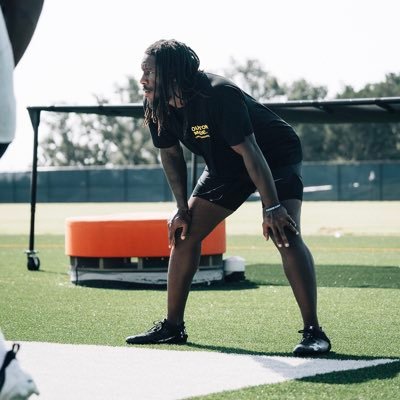
Rice linebacker Kaleb Blanton working lateral movement & zone drop transitions. Kaleb “KB” Blanton | Rice Football #WE #HCville
0 Yorum
Yorum bulunmuyor
Orijinal gönderinin yorumları burada görünecek
Video yükleniyor...
Yorum bulunmuyor
Orijinal gönderinin yorumları burada görünecek


![Richard Werner, formerly on the ECB's "Shadow Council," divulges the full plan for digital IDs: "The final stage is...it's the size of a grain of rice...[&] you've got the microchip implant under your skin...[&] the legal consequence may be that you're not classified as human" This clip of Werner (Richard Werner), who holds a First Class Honors BSc. in Economics from the London School of Economics and a doctorate in Economics from the University of Oxford, is taken from the International Science Summit (Uncensored), which took place in 2022. ----------------Partial transcription of clip--------------- "But what does central bank digital currency look like? You see, so they never talk about that because people won't actually like the looks of it because it apparently looks, and several central banks, apparently, as I heard from my sources, have already fully developed the final stage of CBDC. "I mean it comes in stages initially likely through your mobile phone, but it's only an intermediate step. And the final stage is, it's small and it's the size of a grain of rice. Now why is that? ...It's your digital ID. Your wallet. Can be your passport, your key. Now of course what we found with our debit cards or credit cards is they've already now moved to the system RFID chips. RFID technology where you just wave the thing contactless, that is sort of conditioning us in this direction that in the future you'll just wave your hand because you've got the microchip implant under your skin. "And because in each step there's a rational reason, it's easier just to wave this, isn't it? It's much faster because we always have to wait in the queues as everyone types in their numbers and all that. So just wave it, it's quicker. But the next rationalization will be, well, but you can lose your card, somebody can steal your card and then you're just waving this kind of risky. Well, wouldn't it be nice if you couldn't lose it and nobody could steal it? "But it's clear that that's sort of, it is almost a step too far for a lot of people because it is a violation of human dignity to actually inject something like that under the skin. So that's where you need some more persuasion. "And it's interesting that this concept of universal basic income has been around for around a century where everyone should get some kind of citizens payment. But the billionaire elites have so far not liked that. But since 2015 they've all come out, I mean all the big billionaires And World Economic Forum, have come out. Oh, this is a good idea. Universal Basic Income. "Well, why suddenly now? Because now we have the technology for the microchip implant. And so in 2017, Bill Gates came out and said that Universal Basic Income is a good idea, but it's too early to introduce it. Now, what was still missing? So we had the technology for the microchip implant, but what was missing was the digital ID hadn't been introduced. "Now this is where this whole Covid agenda had become very useful. And so the sequence has been that first they worked on the technology, they had what they wanted. It was completely made ready already quite a few years ago. "Then the question became, how can we introduce it? And, the usual game plan would have been to do what central banks in many countries have been working on for many decades, which is to create boom, bust cycles and economic crises. And then in the crisis you say, oh, here's a new idea. That's the solution to the crisis. That's how they've been operating. But in this case, it seems they concluded that, resistance will still be too high. People don't really want to accept this implant because it could also have consequences. "Apparently, we learned from the World Economic Forum that there is also an approach in law that once you have, what they call transhumanism, once you have electronic implants in the body, which is, you know, to persuade people to do that, they always say this will enhance your functions, you get more abilities, you know, like almost become superhuman. But at the same time, the legal consequence may be that you're not classified as human anymore. "You know, there's this movement out there talking about humanoid robots. And, you know, many years ago I thought, oh, to create a humanoid robot, that's a lot of work in electronics, in order to create this humanoid robot. Because when you're starting with electronics, there's a lot to build, but it's much faster if you start with a human. "So once you have certain implants, you may then be classified as a humanoid robot, which seems to be what for these transhumanist, people, you can use them and throw them away whenever you like. That becomes the next question. So once you're not classified as human anymore, but as humanoid robot, will you have human rights? And they've done, World Economic Forum has done surveys asking people, do you think humanoid robots should have human rights? And most people say no. Well, that could be you once you've accepted the microchip implant."](https://image.24vids.com/tw-1973205752560099514/amplify_video_thumb/1973199629723508737/img/y2CQIXARs2PvZCBI.jpg)

![Thabo Cele and Lebo Maboe double pivot vs Polokwane City📝 The level of organisation, discipline, and resistance was completely different compared to our games vs Magesi, Orbit or TS Galaxy and that matters when analyzing performance. And, before even getting into the Maboe–Cele double pivot, it’s important to address the front 3. Trying to impose a possession-based approach with Lilepo, Duba, and Silva is, at this stage, a bit unrealistic. The profiles don’t naturally support sustained control or efficiency in tight spaces; they are more direct, which makes the approach look slightly disconnected. Otherwise, who should combine with the double pivot to keep possession against a low block cos you're not inverting any fullbacks or CBs? Mdu[10] is also direct and won’t drop deep into ball circulation. ■ The midfield pairing of Cele & Maboe gave the team a clear structural balance in the 1st and 2nd phase, even if the chemistry is still far off. I mean, it's their 1st start together so🤷🏾♂️ Cele operated as a holding midfielder, anchoring the team behind/next to Maboe. He took on most of the defensive responsibility, well-positioned to screen the backline, and effective in managing transitions. ■ In possession, Cele was central to the 1st and 2nd phase of progression. He completed more passes than Plk City’s midfield duo of Kambala and Maphangule combined while also neutralising their 10 Mutudza. Mutudza managed just 5 passes in 66 minutes, which says everything about Cele’s dominance in that zone. He constantly made himself available in front of the CBs, scanning, managing the tempo, and organising the team’s structure. He always demanded movement from his teammates, always pointing to open spaces they should be occupying to progress better. At one point, he was calling Mdu to receive while Mdu was instead making a forward run away from Cele who had the ball. Cele didn’t force progression unnecessarily, but that doesn’t mean he lacked intent to move the team forward. He completed more line breaking passes and passes into the final 3rd than any other player. That highlights his awareness of when to accelerate play and when to maintain control. ■ Maboe, on the other hand, operated as the 8, with freedom to impact higher zones. With Cele securing the base, he was free to connect phases and influence play closer to the final 3rd. However, you could still see old habits from his previous role. He often dropped deeper than expected, which slightly limited his presence in decisive attacking areas. As much as he played balls into the final 3rd, we also needed him to receive in the final 3rd more. ■ Together, Cele and Maboe created 5 chances against a very disciplined low block of Plk City. 4 of those came from Maboe, underlining how much creative responsibility he still carried. However, this wasn’t his sharpest attacking performance in terms of passing and shooting. Despite the output in chances created, there were several misplaced passes in key moments, and he didn’t attack the box enough for an 8 with a reliable 6 behind him. It’s a similar issue we had with Mdu yesterday, he also struggled to consistently enter the opposition box as usual or combine between the lines. There was a clear lack of chemistry in the final 3rd in our overall performance. We couldn't stay on the ball enough to put pressure on their defense and cause enough panic for them to crack. ■ Towards midway through the 2nd Half, both Cele & Maboe started to lose some steam, and the pairing needed refreshing. At this point, Plk City had already overloaded the middle and allowed very little space for us to operate. We failed the same way in the loss vs Stellies, they improved their midfield to cancel our dominance, and we looked confused with our subs, no clear intention to improve a clear area that's been neutralized. Our struggles were not in the double pivot. There was nothing result-altering or structurally wrong with Maboe & Cele. [Video] Part 1:](https://image.24vids.com/tw-2045887731700559891/ext_tw_video_thumb/2045887060720885760/pu/img/e0-wMqe9a8wsJnU7.jpg)