Loading video...

Video Failed to Load

Go Home

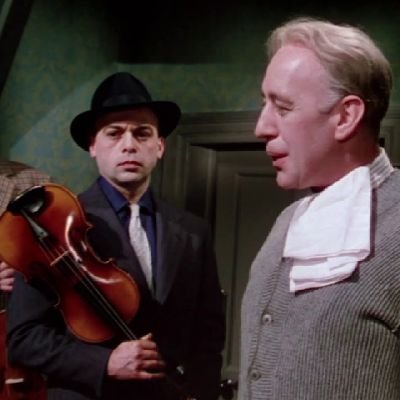
#RIP #GeneHackman seen here playing Reverend Frank Scott in the multi Academy Award nominated American all-star disaster film "THE POSEIDON ADVENTURE" (1972) dir. Ronald Neame 🎬 20th Century-Fox
19,643 views • 1 year ago •via X (Twitter)

6 Comments

Rahul's profile picture
Rahul1 year ago

@Intuitive_PS @UlteriousFilm @DGirlJay @oxley264 @collegefilm @cinemaofdreams I still 😢 cry at this scene even after so many years

M.A. Rothman's profile picture
M.A. Rothman1 year ago

"If you like Jack Reacher or Dirk Pitt, you must meet Levi Yoder." - Kevin J. Anderson, New York Times bestselling author. #MArothman #LeviYoder #thriller #operasinger

Gregory Rust's profile picture
Gregory Rust1 year ago

@Intuitive_PS @UlteriousFilm @DGirlJay @oxley264 @collegefilm @cinemaofdreams The first movie I seen him in Always a great watch

Just Me And Oscar♡'s profile picture
Just Me And Oscar♡1 year ago

@Intuitive_PS @UlteriousFilm @DGirlJay @oxley264 @collegefilm @cinemaofdreams Absolutely loved this film as a child. Can’t remember how many times it was shown on tv in the ‘70’s and early 80’s!

Cuban Pete's profile picture
Cuban Pete1 year ago

@Intuitive_PS @UlteriousFilm @DGirlJay @oxley264 @collegefilm @cinemaofdreams This is the film that introduced me to Hackman. He gave it to you straight.

Chris's profile picture
Chris1 year ago

@Intuitive_PS @UlteriousFilm @DGirlJay @oxley264 @collegefilm @cinemaofdreams 🙏

Related Videos

Happy 80th Birthday to GOLDIE HAWN Born | November 21, 1945 in Washington, DC, USA Video | Worrying is the WORST Thing You Can Do! | Goldie Hawn American actress, producer, dancer, and singer Goldie Jeanne Hawn achieved stardom and acclaim for playing light-hearted comedic roles in film and television. In a career spanning six decades, she has received several awards, including an Academy Award and a Golden Globe Award as well as nominations for a BAFTA Award and two Primetime Emmy Awards. She rose to fame on the NBC sketch comedy program Rowan & Martin's Laugh-In (1968–1970). She made her screen debut in a minor role in the western comedy The One and Only, Genuine, Original Family Band (1968), before going on to receive the Academy Award for Best Supporting Actress and Golden Globe Award for Best Supporting Actress for her comedic role in Cactus Flower (1969). She was nominated for the Academy Award for Best Actress for playing a woman who enlists for the army in the comedy Private Benjamin (1980). Hawn has also starred in such comedy films as There's a Girl in My Soup (1970), Butterflies Are Free (1972), The Sugarland Express (1974), Shampoo (1975), Foul Play (1978), and Seems Like Old Times (1980). She later starred in Overboard (1987), Bird on a Wire (1990), Death Becomes Her, Housesitter (both 1992), The First Wives Club (1996), The Out-of-Towners (1999), and The Banger Sisters (2002). Hawn made her return to film with roles in Snatched (2017), The Christmas Chronicles (2018), and The Christmas Chronicles 2 (2020). Hawn is the mother of actors Oliver Hudson, Kate Hudson, and Wyatt Russell. She has been in a relationship with Kurt Russell since 1983. In 2003, she founded the Hawn Foundation, which educates underprivileged children.

Hollywood Golden Age of cinema

448,075 views • 7 months ago

HAPPY 101ST BIRTHDAY TO EVA MARIE SAINT !!! Born | July 4, 1924 in Newark, New Jersey, USA American retired actress Eva Marie Saint had a career that spanned nearly 80 years. Saint has won an Academy Award, a Primetime Emmy Award, in addition to nominations for a Golden Globe Award and two British Academy Film Awards. Saint is the oldest living and earliest surviving Academy Award winner, and one of the last living stars from the Golden Age of Hollywood. Saint attended Bowling Green State University and began her career as a television and radio actress in the late 1940s. She played the role of Thelma in Horton Foote's The Trip to Bountiful (1953). She made her film debut in Elia Kazan's On the Waterfront (1954), opposite Marlon Brando. The film won eight Academy Awards, including Best Picture, and earned her the Academy Award for Best Supporting Actress along with a BAFTA nomination for Most Promising Newcomer. From then on, Saint appeared in a variety of roles, including Raintree County (1957), opposite Montgomery Clift and Elizabeth Taylor; and Fred Zinnemann's A Hatful of Rain (1957), opposite Don Murray and Anthony Franciosa, for which she was nominated for the Golden Globe Award for Best Performance by an Actress in a Motion Picture — Drama; and Eve Kendall in Alfred Hitchcock's North by Northwest (1959), opposite Cary Grant. In the 1960s, Saint appeared in Exodus (1960), alongside Paul Newman; The Sandpiper (1965), which reunited her with Elizabeth Taylor and featured Richard Burton; 36 Hours (1965) with James Garner; The Russians Are Coming the Russians Are Coming (1966), alongside Carl Reiner and Alan Arkin; and John Frankenheimer's Grand Prix (1966), opposite Yves Montand and in her second film with James Garner. Beginning in the 1970s, her film career began to decline and she returned to television in the following decades and into the 2010s, with a few film roles throughout. Saint married producer and director Jeffrey Hayden on October 28, 1951. They had two children together: son Darrell Hayden, born April 1, 1955, and daughter Laurette Hayden, born July 19, 1958. Their first child, Darrell, was born two days after she won an Academy Award for On the Waterfront. She began her acceptance speech with “I may have the baby right here!”. Saint and Hayden also have four grandchildren and were married for 65 years, until Hayden's death in 2016. On July 4, 2024, Saint turned 100, which she spent celebrating with four generations of family members in Los Angeles.

Hollywood Golden Age of Cinema

11,577 views • 1 year ago

In Remembrance of Barbara Stanwyck. Born | July 16, 1907 in Brooklyn, New York City, New York, USA. Died | January 20, 1990 aged 82 in Santa Monica, California, USA. American actress and dancer Barbara Stanwyck (born Ruby Catherine Stevens) was a star of the stage, film, and television and during her 60-year professional career, she was known for her strong, realistic screen presence and versatility. Stanwyck was a favourite of directors, including Cecil B. DeMille, Fritz Lang, and Frank Capra, and made 86 films in 38 years before turning to television. She received numerous accolades, including three Primetime Emmy Awards and a Golden Globe Award, and was nominated for four Academy Awards. Orphaned at the age of four and partially raised in foster homes, she always worked. One of her directors, Jacques Tourneur, said of her, “She only lives for two things, and both of them are work”. She made her debut on stage in the chorus as a Ziegfeld girl in 1923 at age 16, and within a few years was acting in plays. Her first lead role, which was in the hit Burlesque (1927), established her as a Broadway star. In 1929, she transitioned from the stage to the film industry, and began acting in talking pictures, the first of which was George Archainbaud's The Locked Door, where her naturalistic acting style and unaffected vocal delivery were instantly evident. Frank Capra chose her for his romantic drama Ladies of Leisure (1930), and Stanwyck later became a favourite of Capra’s, leading to another three collaborations. This led to additional leading roles which raised her profile, such as Night Nurse (1931), Baby Face (1933), the controversial The Bitter Tea of General Yen (1933), and Gambling Lady (1934). By the late 1930s, Stanwyck had moved to more mature roles in critically and commercially successful comedies and dramas. For her performance as the titular character in Stella Dallas (1937), she earned her first Academy Award nomination for Best Actress. In 1941, she starred in two screwball comedies: Ball of Fire with Gary Cooper, and The Lady Eve with Henry Fonda. She received her second Academy Award nomination for Ball of Fire, and in the decades since its release, The Lady Eve has come to be regarded as a comedic classic, with Stanwyck's performance widely hailed as one of the best in American comedy. Other successful films during this period are Remember the Night (1940), Meet John Doe (1940) and You Belong to Me (1941), reteaming her with Cooper and Fonda, respectively, The Gay Sisters (1942), and Lady of Burlesque (1943). By 1944, Stanwyck had become the highest-paid actress in the United States. That year, she received a third Academy Award nomination for Best Actress in the film noir Double Indemnity, playing a wife who persuades an insurance salesman to kill her husband. In 1945, she played a homemaker columnist in the holiday classic Christmas in Connecticut, and the following year, starred as the titular femme fatale in The Strange Love of Martha Ivers. For the remainder of the decade, Stanwyck starred in additional successes ranging from romantic dramas and comedies, to suspenseful, crime-noirs. Her films during this period include My Reputation (1946), The Two Mrs. Carrolls (1947), Sorry, Wrong Number (1948), for which she received her fourth and final Academy Award nomination, and East Side, West Side (1949). By the early 1950s, Stanwyck’s career began to decline, despite a fair number of leading and major supporting roles, the most successful being Clash by Night (1952), Jeopardy (1953), and Executive Suite (1954). In the 1960s, Stanwyck had made a successful transition to television, where she won three Emmy Awards, for The Barbara Stanwyck Show (1961), the Western series The Big Valley (1966), and the miniseries The Thorn Birds (1983). She received an Honorary Oscar in 1982, the Golden Globe Cecil B. DeMille Award in 1986, and several other honorary lifetime awards. In 1999 she was ranked as the 11th-greatest female star of classic American cinema by the American Film Institute. Video | Barbara Stanwyck Tribute. Video footage courtesy of Saxon Brack Music | The Shawshank Redemption (1994) ― “So Was Red” and “End Title”. Music composed and conducted by Thomas Newman. Performed by The Hollywood Studio Symphony.

MSI | Movie Star Icons

15,995 views • 5 months ago

In Remembrance of Spencer Tracy Born | April 5, 1900 in Milwaukee, Wisconsin, USA Died | June 10, 1967 aged 67 in Beverly Hills, Los Angeles, California American actor Spencer Bonaventure Tracy (April 5, 1900 – June 10, 1967) was known for his natural performing style and versatility. One of the major stars of Hollywood's Golden Age, Tracy was the first actor to win two consecutive Academy Awards for Best Actor, from nine nominations. During his career, he appeared in 75 films and developed a reputation among his peers as one of the screen's greatest actors. In 1999, the American Film Institute ranked Tracy as the 9th greatest male star of Classic Hollywood Cinema. Tracy first discovered his talent for acting while attending Ripon College, and he later received a scholarship for the American Academy of Dramatic Arts. He spent seven years in the theatre, working in a succession of stock companies and intermittently on Broadway. His breakthrough came in 1930, when his lead performance in The Last Mile caught the attention of Hollywood. After a successful film debut in John Ford's Up the River (in which he starred with Humphrey Bogart), he was signed to a contract with Fox Film Corporation. Tracy's five years with Fox featured one acting tour de force after another that were usually ignored at the box office, and he remained largely unknown to movie audiences after 25 films, nearly all of them starring him as the leading man. None of them were hits, although his performance in The Power and the Glory (1933) was highly praised at the time. In 1935, Tracy joined Metro-Goldwyn-Mayer (MGM), Hollywood's most prestigious studio at the time. His career flourished after his fifth MGM film, Fury (1936), and in 1937 and 1938 he won consecutive Oscars for Captains Courageous and Boys Town. Tracy teamed with Clark Gable, MGM's most prominent leading man, for three major box office successes, and by the early 1940s, he was one of MGM's top stars. In 1942, he appeared with Katharine Hepburn in Woman of the Year, beginning a professional and personal partnership that led to nine films over 25 years. In 1955, Tracy won the Cannes Film Festival Award for Best Actor for his performance in the film Bad Day at Black Rock. Tracy left MGM in 1955 and continued to work regularly as a freelance star, despite several health issues and an increasing weariness and irritability as he aged. His personal life was troubled, with a lifelong struggle against severe alcoholism and guilt over his son's deafness. Tracy and his wife Louise became estranged in the 1930s, but the couple never divorced. His 25-year relationship with Katharine Hepburn was an open secret. Towards the end of his life, Tracy worked almost exclusively for director Stanley Kramer. Tracy made his last film with Kramer, Guess Who's Coming to Dinner (1967), with filming completed just 17 days before he died. Video | Spencer Tracy, Sidney Poitier, and Katharine Hepburn in a scene from Tracy's last film, Guess Who's Coming to Dinner (1967).

Hollywood Golden Age of Cinema

24,715 views • 1 year ago

🇺🇸 🇨🇳 I was on Fox News @ Night tonight discussing something that should concern every American in the context of the U.S.-China summit. For decades, the United States has led the world in biotechnology. Cell & gene therapies & advanced biologics — the medicines of the future — are finally delivering real hope to patients with diseases that were once untreatable or incurable. These are not incremental improvements. They are transformative. But here’s the reality we can no longer ignore: roughly half of the global investment capital in advanced biotechnology is now flowing to China. This isn’t just about money or market share. It’s about who will control the next generation of life-saving treatments. When capital, talent, & manufacturing shift overseas, American patients lose access, American innovation slows, and our strategic position in one of the most important industries of the 21st century erodes. China is not playing by the same rules. They are moving aggressively to dominate cell and gene therapy, while we continue to tie ourselves in regulatory knots and send mixed signals to the companies trying to develop these therapies here at home. We cannot afford to watch this happen. The patients who are waiting — children with rare genetic diseases, adults facing terminal conditions, families desperate for options — don’t care about bureaucracy or politics. They care about whether these treatments reach them in time. The FDA has an essential role to play in this moment. We must modernize our approach so that we can accelerate safe and effective innovation here in America, while maintaining the rigorous standards that have made our system the global gold standard. If we fail to do this, we will not only lose our leadership — we will fail the very patients we are supposed to serve. In my career, I’ve seen what’s possible when regulation keeps pace with science, and I’ve seen what happens when it doesn’t. The video of my appearance is below 👇 . I’d love to hear your thoughts.

Houman David Hemmati, MD, PhD

26,031 views • 2 months ago

On this day, 45 years ago, Paul Schrader's "Hardcore" (1979) was released in the USA. George C. Scott & Paul Schrader did not get along during the filming of 'Hardcore' (1979), so much that at one point Scott called the movie "a piece of sh*t", refused to come out of his trailer and threatened to quit the film. Scott only agreed to come out after Schrader got down on his knees & promised Scott that he would never direct another movie. (A promise which he didn't keep) Here is the full story: ""It was always a big melodrama working with George," Schrader commented, "but it was worth it, because you were getting a performance. What's really painful is when you're having trouble with an actor and you're not getting a performance. As long as you're getting a performance, it's all worth it." A particularly melodramatic moment occurred when Scott was not needed for three or four hours while shooting in the red light district of San Francisco. The lights were set up for a series of shots to look into a bar. When the lights were shifted for the setup with Scott coming into the bar, all he had to do was enter, say two words, and walk out. When the crew was ready, he had been kept waiting for several hours and refused to come out of his trailer. When Schrader went in, Scott was in his underwear with a bottle of vodka by his side. He greeted Schrader with "This movie is a piece of sh*t." Schrader tried to reason with him-he's tired, it's late, but all he has to do is get dressed, walk over to the bar set, and say two words. He told his star that sometimes in the middle of filming, you're not sure about quality of the final result, but that everything turns out okay in the end. Scott countered, "No. No. No. I've made a lot of films. This is a piece of sh*t. You're a good writer but can't direct." Finally, the director had to get down on his knees and promise Scott he would never direct another movie in order to get him to put on his wardrobe and say the two words. Schrader broke his promise and went on to direct 'American Gigolo, 'The Comfort of Strangers', 'Affliction', and many others."" (Excerpt from 'Rage and Glory - The Volatile Life and Career of George C. Scott', David Sheward, 2008)

DepressedBergman

43,921 views • 5 months ago

Francis Ford Coppola’s new film “Megalopolis” cost $120m and he self-financed it (including money from selling his winery). Coppola is a legend of “going all in” and “putting skin in the game”. The GOAT example is “Apocalypse Now”, his classic 1979 war film with arguably the most insane production story ever. Let’s rewind to 1975, the year Copolla turned 36: he is on top of Hollywood after directing “The Godfather” (1972) and “The Godfather II” (1974). What does Coppola choose to do next? Make a film about the Vietnam War. The script was based on Joseph Conrad’s “Heart of Darkness”, the 1889 novel about the horrors of colonialism in the Belgian Congo. The major studios all said “no” to Coppola’s pitch for three major reasons: 1️⃣ He wanted full creative control 2️⃣ He wanted to own all of the film rights 3️⃣ The Fall of Saigon happened in April 1975 and the American audience wasn’t exactly asking for a Vietnam War film (the studios wanted Coppola to make another Mafia flick) Coppola was undeterred and made a huge bet. “The Godfather II” cost $14m and the director estimated that “Apocalypse Now” would be the same budget. He put up $7m (mostly from those sweet Godfather checks) and raised another $7m from United Artists (which bought domestic distribution rights for ~7 years). But the project was a disaster from the start. Filming started in The Philippines in March 1976 and was supposed to last 3-4 months…it would take 16 months: ▫️Harvey Keitel was the initial lead but Coppola fired him after one week. ▫️Martin Sheen (Captain Willard) took the lead role but drank so much on set that he gave himself a stress-induced heart attack and almost died. ▫️Dennis Hopper was doing 3g of coke and 20+ drinks a day while on set (him and Marlon Brandon also hated each other). ▫️A typhoon destroyed 80% of the set and delayed filming for 2-3 months. ▫️Actual dead bodies — stolen from a local grave — were used on set and the Filipino government and its strongman leader Ferdinand Marcos threatened to shut down production after finding out. ▫️Marlon Brando (Col. Kurtz) demanded a huge fee ($3m+ for 3 weeks of work and 10% of the film’s gross). He then showed up late, asked for rewrites, declined to read Conrad’s book and was so overweight that the costumes wouldn’t fit (to obscure his heft, Copolla filmed Brando in the shadows and had him wear oversized dark clothing). The budget ballooned to over $30m. To maintain creative control and maintain all the film rights, Coppola mortgaged his home and borrowed money against his ownership in The Godfather. After the success of “Star Wars” (1977), Coppola even asked his friend and business partner George Lucas — who was originally tapped to direct Apocalypse — for some funds. I repeat: Coppola went ALL THE WAY IN and had SKIN IN THE GAME. His wife Eleanor took recorded video of all the insanity and the footage was turned into a 1991 documentary (“Hearts of Darkness: A Filmmaker's Apocalypse”). The total cost for the film — including marketing spend — reached $45m. Against all odds, Coppola finished the project and the film was released in August 1979. It grossed $105m and Coppola would make a fortune on future DVD, Home Video and other ancillary revenue streams (below is a trailer for a re-mastered cut from 2019). During the Cannes Festival in May 1979, Coppola famously said of the film: “The way we made it was very much like the way the Americans were in Vietnam. We were in the jungle, there were too many of us, we had access to too much money, too much equipment, and little by little, we went insane.”

Trung Phan

1,703,365 views • 2 years ago

Fred Astaire and Ginger Rogers dancing “Cheek to Cheek” in Top Hat (1935). For this “Cheek to Cheek” number, Ginger Rogers wanted to wear an elaborate blue dress heavily decked out with ostrich feathers. When director Mark Sandrich and Fred Astaire saw the dress, they knew it would be impractical for the dance. Sandrich suggested that Rogers wear the white gown she had worn performing “Night and Day” in The Gay Divorcee (1934). Rogers walked off the set, finally returning when Sandrich agreed to let her wear the offending blue dress. As there was no time for rehearsals, Ginger Rogers wore the blue feathered dress for the first time during filming, and as Astaire and Sandrich had feared, feathers started coming off the dress. Astaire later claimed it was like “a chicken being attacked by a coyote”. In the final film, some stray feathers can be seen drifting off it. To patch up the rift between them, Astaire presented Rogers with a locket of a gold feather. This was the origin of Rogers' nickname “Feathers”. The shedding feathers episode was recreated to hilarious results in a scene from Easter Parade (1948) in which Fred Astaire danced with a clumsy, comical dancer played by Judy Garland. “Cheek to Cheek” was nominated for the Best Song Academy Award for 1936, which it lost to “Lullaby of Broadway”. The song spent five weeks at #1 on Your Hit Parade and was named the #1 song of 1935. Astaire's 1935 recording with the Leo Reisman Orchestra was inducted into the Grammy Hall of Fame in 2000. In 2004, Astaire's version finished at No. 15 on AFI's 100 Years ... 100 Songs survey of top tunes in American cinema.

Hollywood Golden Age of Cinema

50,601 views • 8 months ago

In Remembrance of Marilyn Monroe on her 100th Birthday Born | June 1, 1926 in Los Angeles, California, USA Probably the most celebrated of all actresses, Marilyn Monroe was born Norma Jeane Mortenson on June 1, 1926, in the charity ward of the Los Angeles General Hospital. Her mother, Gladys Pearl (Monroe), was born in Piedras Negras, Coahuila, Mexico, to American parents from Indiana and Missouri, and was a film-cutter at Consolidated Film Industries. Marilyn's biological father has been established through DNA testing as Charles Stanley Gifford, who had been born in Newport, Rhode Island, to a family with deep roots in the state. Marilyn grew up not knowing for sure who her father really was. Gladys gave Norma Jeane the name of Baker. Poverty was a constant companion to Gladys and Norma. Gladys, who was extremely attractive and later worked for R.K.O. Studios, suffered from mental illness and was in and out of mental institutions for the rest of her life, and because of that Norma Jeane spent time in foster homes. When she was nine, she was placed in an orphanage where she was to stay for the next two years. Upon being released from the orphanage, she went to yet another foster home. In 1942, at sixteen years old, Norma Jeane married twenty-one-year-old aircraft plant worker James Dougherty. The marriage lasted only four years, and they divorced in 1946. By this time, Marilyn began to model swimsuits and bleached her hair blonde. Various shots made their way into the public eye, where some were eventually seen by R.K.O. Pictures head Howard Hughes. He offered Marilyn a screen test, but an agent suggested that 20th Century-Fox would be the better choice for her, since it was a much bigger and more prestigious studio. She was signed to a contract at $125 per week for a six-month period and that was increased by $25 per week at the end of that time when her contract was lengthened. Her first film was in 1947 with a bit part in The Shocking Miss Pilgrim (1947). Her next production was not much better, a bit in the forgettable Scudda Hoo! Scudda Hay! (1948). Two of the three brief scenes in which she appeared wound up on the cutting room floor. Later that same year, she was given a somewhat better role as Evie in Dangerous Years (1947). However, Fox declined to renew her contract, so she went back to modeling and acting school. Columbia Pictures then picked her up to play Peggy Martin in Ladies of the Chorus (1948), where she sang three numbers. Notices from the critics were favorable for her, if not the film, but Columbia dropped her. Once again Marilyn returned to modeling. In 1949, she appeared in United Artists' Love Happy (1949). It was also that same year she posed nude for the now famous calendar shot which was later to appear in Playboy magazine in 1953 and further boost her career. She would be the first centerfold in that magazine's long and illustrious history. The next year proved to be a good year for Marilyn. She appeared in five films, but the good news was that she received very good notices for her roles in two of them, The Asphalt Jungle (1950) from MGM and All About Eve (1950) from Fox. Even though both roles were basically not much more than bit parts, movie fans remembered her dizzy but very sexy blonde performance. In 1951, Marilyn got a fairly sizable role in Love Nest (1951). The public was now getting to know her and liked what it saw. She had an intoxicating quality of volcanic sexuality wrapped in an aura of almost childlike innocence. In 1952, Marilyn appeared in Don't Bother to Knock (1952), in which she played a somewhat mentally unbalanced babysitter. Critics didn't particularly care for her work in this picture, but she made a much more favorable impression later in the year in Monkey Business (1952), where she was seen for the first time as a platinum blonde, a look that became her trademark. The next year, she appeared in Gentlemen Prefer Blondes (1953) as Lorelei Lee. It was also the same year she began dating the baseball great Joe DiMaggio. Marilyn was now a genuine box-office drawing card. Later, she appeared with Betty Grable, Lauren Bacall, and Rory Calhoun in How to Marry a Millionaire (1953). Although her co-stars got the rave reviews, it was the sight of Marilyn that really excited the audience, especially the male members. On Thursday, January 14th, 1954, Marilyn wed DiMaggio, then proceeded to film There's No Business Like Show Business (1954). That was quickly followed by The Seven Year Itch (1955), which showcased her considerable comedic talent and contained what is arguably one of the most memorable moments in cinema history: Marilyn standing above a subway grating and the wind from a passing subway blowing her white dress up. By October 1954, Marilyn announced her divorce from DiMaggio (though the divorce was not finalised until October 31, 1955). In 1955, she was suspended by Fox for not reporting for work on How to Be Very, Very Popular (1955). It was her second suspension, the first being for not reporting for the production of The Girl in the Red Velvet Swing (1955). Both roles went to others. Her work was slowing down, due to her habit of being continually late to the set, her illnesses (whether real or imagined) and generally being unwilling to cooperate with her producers, directors, and fellow actors. However in Bus Stop (1956), Marilyn finally showed critics that she could play a straight dramatic role. It was also the same year she married playwright Arthur Miller. (They divorced January 20, 1961.) In 1957, Marilyn flew to Britain to film The Prince and the Showgirl (1957), which proved less than impressive critically and financially. It made money, but many critics panned it for being slow-moving. After a year off in 1958, Marilyn returned to the screen the next year for the delightful comedy, Some Like It Hot (1959) with Tony Curtis and Jack Lemmon. The film was an absolute smash hit, with Curtis and Lemmon pretending to be females in an all-girl band, so they can get work. This was to be Marilyn's only film for the year. In 1960, Marilyn appeared in George Cukor's Let's Make Love (1960) with Tony Randall and Yves Montand. Again, while it made money, it was critically panned as stodgy and slow-moving. The following year, Marilyn made what was to be her final film, The Misfits (1961), which also proved to be the final film for the legendary Clark Gable, who died later that year of a heart attack. The film was popular with critics and the public alike. In 1962, Marilyn was chosen to star in Fox's Something's Got to Give (1962). Again, her absenteeism caused delay after delay in production, resulting in her being fired from the production in June of that year. It looked as though her career was finished. Studios just didn't want to take a chance on her because it would cost them thousands of dollars in delays. She was only 36 years old. Marilyn remains a pop culture icon, with the American Film Institute ranking her as the sixth-greatest female screen legend from the Golden Age of Hollywood. Marilyn acted in only thirty films, but her legendary status and mysticism will remain with film history for ever.

Hollywood Golden Age of cinema

35,552 views • 1 month ago

The character of Rizzo in "Midnight Cowboy" (1969) is described in the novel as “a skinny, child-sized man of about twenty-one or twenty-two… a little blond runt,”. The all-American image Dustin Hoffman had after "The Graduate" (1967) and him not being considered a character actor cast doubts for John Schlesinger if Hoffman could pull of the limping, coughing and scruffy Rizzo. Jack Gelber had told the producer Jerome Hellman that he had seen Dustin Hoffman in an Off-Broadway play, 'Eh?' & thought the actor would be perfect for the role. Hellman was blown away after seeing the play & said to himself, “Oh sh!t, this guy was born to play ‘Ratso’ Rizzo.” When meeting with John Schlesinger and the producer, Hoffman took it to the next level so as to show that he would indeed be a good pick for the part—they were to meet on a Manhattan street corner and he showed up dressed in filthy rags. Schlesinger did not even notice the beggar who was asking people for change not even 10 feet away until Hoffman revealed himself and got the part. Mike Nichols tried to change Hoffman's mind about accepting the role, thinking his performance would imply taking a few steps backwards, instead of forwards: “Are you crazy? I made you a star. This is an ugly character. It’s a supporting part to Jon Voight. What are you doing? Why are you sabotaging?” But Hoffman stood his ground and it ended up being one of the best decisions he had ever made: “The truth was, I saw 'The Graduate' as a setback, because I was determined not to be a star.” Little did Hoffman know that he would become an even bigger star and also get his first Academy Award nomination, along with co-star Voight. (Source: "How John Schlesinger’s Homeless and Lonesome ‘Midnight Cowboy’ Rode His Way to the Top and Became the First and Only X-rated Movie to Win a Best Picture Oscar", Koraljka Suton, Cinephilia & Beyond, & IMDb) P.S: On this day, 57 years ago, "Midnight Cowboy" (1969) was released in the USA & Canada.

DepressedBergman

120,760 views • 1 month ago