Video yükleniyor...

Video Yüklenemedi

Ana Sayfaya Dön

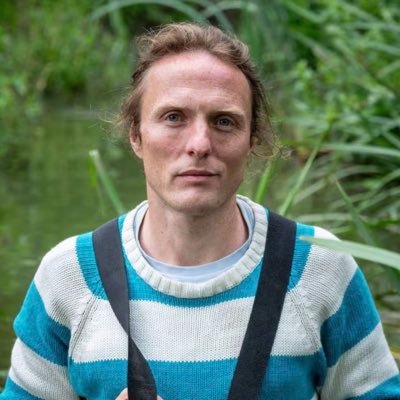
River guardians do not want bribes that allow Thames Water to keep breaking the law. We want one simple thing: for Thames Water to put spades in the ground & fix every single illegal outfall within the next 5-10 years. A little story to illustrate: 5 years ago I...

70,297 görüntüleme • 4 ay önce •via X (Twitter)

0 Yorum

Yorum bulunmuyor

Orijinal gönderinin yorumları burada görünecek

Benzer Videolar

The sewage crisis laid bare As we’ve been having a wet winter, sewage has been cascading into the River Roding from outfalls everywhere. But one has been discharging for so long (550 hours, or over three weeks) that I thought it was an error with the sensor. I decided to spend my free time on a Saturday night checking it out. It was not hard to find, as the loud noise of rushing water instantly drew me towards the right part of the site. Climbing a fence, I found that the outfall was covered in brambles & fallen trees and hadn’t been inspected in years. There was clearly a fault in the storm tanks which was causing them to spill huge amounts of sewage, even when it wasn’t raining. Even worse, the outfall itself had become clogged with years of debris, so the whole site had been flooded & become a lake of sewage, literally acres in extent. The flow was so intense that it was not possible to fully measure it, but I would estimate it was at least 100 litres a second, likely more. I checked the ammonia levels & it maxed out my checker, so I used a higher range checker which gave an ammonia reading of 27ppm: ie very concentrated sewage. Doing some quick calculations, I discovered that this one spill had poured at least 180,000,000 million litres of concentrated raw sewage straight into the River Roding, putting the health of local people at risk and causing huge ecological damage to the river. It frankly beggars belief that I, as a volunteer in my spare time, was able to discover this serious illegal sewage spill, but at no point has anyone from either Thames Water or the Environment Agency thought to go and investigate the outfall that has apparently been flowing for weeks. The time for talking has ended: we now need change and real action.

Paul Powlesland

65,417 görüntüleme • 5 ay önce

Before & After… If anyone doubts the power of community action over the Environment Agency’s spineless inertia, you can walk to the outskirts of Ilford & walk along an ancient lost river to see for yourself. With 10 days of intense effort by dedicated volunteers, the river River Roding Trust managed to clean up & restore 250 metres of the Aldersbrook (about 1/3 of the brook). This allows a direct comparison between the parts of the brook we restored & those we haven’t got round to yet. These photos & videos are all from May 2026. The first is on a part of the Aldersbrook still to be restored & shows the old flood defences which are no longer needed & are killing the river but which the EA won’t remove unless we volunteers pay them £50,000 just for surveys. These defences have caused 2-3ft of stinking sludge & silt to build up over 70 years, such that the water in the brook is just a few centimetres deep. Combine with huge amounts of rubbish & and out of control knotweed infestation & the river ecosystem is essentially dead. A river that is older than England destroyed by official indifference. A hundred metres away, and it’s a different story. The rubbish & the invasive species (I sprayed the knotweed myself last autumn) are gone. The silt that used to clog the river is now spread on the banks & rapidly providing fertile ground for native plants. Instead of sludge, there’s 2-3ft of water, so fish have returned to the brook for the first time in decades, along with dragon flies, herons & a nesting moorhen. We river guardians knew our intervention would make a difference, but have been shocked at quite how quickly nature has come back. The restored Aldersbrook is now a rare jewel: pretty much the last fully natural tidal brook in London. The EA now has a choice. It can salvage some good from this situation & work with us to restore the remaining sections of the brook, or it can continue to do nothing. If the latter, river guardians *will* be back this winter to finish the job & the EA can see how well prosecuting volunteers for restoring a river without permission goes for them.

Paul Powlesland

450,385 görüntüleme • 1 ay önce

Britain had a wonder of the world. ⚔️🇬🇧 For 600 years, London Bridge wasn't a bridge. It was a street. A town. A city floating on the Thames. Construction began in 1176 and took 33 years. When it was finished it had 19 stone arches, a drawbridge to let ships through, and a chapel dedicated to Saint Thomas Becket at its heart. The starting point for every pilgrim walking to Canterbury. Then people started building on it. At its peak: 200 buildings. 500 residents. 🏘️ Haberdashers, booksellers, apothecaries, taverns and alehouses open from dawn. The longest inhabited bridge in Europe. You could walk halfway across and never know you were over a river. In 1212, three years after completion, a fire killed thousands on the bridge itself. 🔥 In 1282, five arches collapsed under winter ice. The arches slowed the Thames so much that in hard winters the river froze solid. Londoners held frost fairs on the ice. Bull-baiting. Pop-up taverns. A printing press operating on a frozen river. 🧊 Every time something went wrong, they rebuilt. London Bridge stood for 622 years. Then in 1831 they demolished it. The Victorian replacement lasted barely a century. By the 1960s it was sinking into the Thames. So the City of London sold it to an American for $2.46 million. 💰 He had it dismantled stone by stone and shipped to the Arizona desert. Where it still stands today. 🏜️ Britain had a wonder of the world on the Thames for six hundred years. We sold what replaced it to Arizona. Did they teach you that? We will. 🇬🇧 Proud Of Us is a community of ordinary British people keeping extraordinary British history alive. No ads. No sponsors. Just us. If that matters to you, join us at 🙏 Be part of us. Be Proud Of Us. 🇬🇧

Proudofus.uk

263,078 görüntüleme • 3 ay önce

Tony Gwynn shares what it took to become one of the greatest hitters of all time and how to master the mental game. "It took me a while to figure it out, but after about 4 or 5 years, I started to realize that this thing was more mental than it was physical." He didn't figure it out alone. "Those first 5 years, I had great conversations with a lot of great players. Pete Rose, Willie Stargell, Henry Aaron, Mike Schmidt. I had a chance to sit down and talk to 'em - pick their brain, find out how they do what they do." The greats learn from the greats. They never stop learning. They never stop wanting to get better. "After about 4 years, I started to realize that this is more mental than physical. So what I need to do is get an approach that I think will work and then just trust the approach. Trust what you practice on. Trust it." That's the key. Create the plan then work the plan. And when it's not working, you still trust yourself. "During the winter, I can hit in a cage and be mechanically sound. But the first time I hit live in spring training, I'll be lucky if I get a ball out of the cage." "For younger guys, that's a sign of, 'Oh, I'm not getting out of the cage,' so they try to speed things up, do things quicker." Trust your approach and stay under control. Don't let frustration change who you are. The game is mental. The greats know that and they learn how to build a process that works for them. They adapt as needed, but they learn the art of focus. Focusing on how to master and trust the process. (🎥Special Collections )

Coach AJ 🎯 Mental Fitness

95,443 görüntüleme • 5 ay önce

George Lucas on how he had to reluctantly write the screenplay for 'American Graffiti' (1973) & the confidence he gained from the movie's success: "When I was doing 'American Graffiti' (1973) I was still struggling with my ‘I don’t want to be a writer’ syndrome. I had some good friends of mine that I wanted to write the screenplay, but it took me like two years just to get the money to do a screenplay. And I got a little tiny amount of money and—which I had to go actually to the Cannes Film Festival to get on my own. So finally I got this money. I called back and I said, you know, “I got the money. We can start working on the screenplay.” And they said, “Oh, we don’t want to do that now. We’ve got our own low-budget picture off the ground and we can’t write it.” I said, “Oh no.” I said, “What am I going to do? I am in Europe and I’m not going to be back for like three months and I want to get this thing off the ground.” So they recommended another student from school that I knew pretty well. I had a story treatment that laid out the entire story scene by scene, so I called him over the phone from London and I said, “Do you want to do this?” And he said, “Okay.” The person I was working with at that time as a producer made a deal with him for the whole money because there wasn’t very much. It was so tiny that he could only get him to do it for the whole amount of money. When I came back from England, the screenplay was a completely different screenplay from the story treatment. It was more like 'Hot Rods to Hell' (1967). It was very fantasy-like, with playing chicken and things that kids didn’t really do. I wanted something that was more like the way I grew up. So I took that and I said, “Okay. Now here I am. I’ve got a deal to turn in a screenplay. I’ve got a screenplay that is just not the kind of screenplay I want at all and I have no money.” And, I spent the very last money I had saved up to go to Europe to make the deal, so I had nothing. That was a very dark period for me so I sat down myself and wrote the screenplay. After I did 'American Graffiti', and it was successful, it was a big moment for me because I really did sit down with myself and say, “Okay, now I am a director. Now I know I can get a job. I can work in this industry, and apply my trade, and express my ideas on things and be creative in a way that I enjoy. Even if I end up doing TV commercials or something, or I fall back into what I really love is documentaries. I’ll be able to do it. I know I can get a job somewhere. I know I can raise money somewhere. I know I can do what I want to do.” That was a very good feeling. At that point, I’d made it. There wasn’t anything in my life that was going to stop me from making movies." ('‘American Graffiti’ at 52: A Sentimentally Affectionate Look at America Before the Collective Loss of Innocence', Sven Mikulec, Cinephilia & Beyond)

DepressedBergman

56,916 görüntüleme • 7 ay önce