Loading video...

Video Failed to Load

Go Home

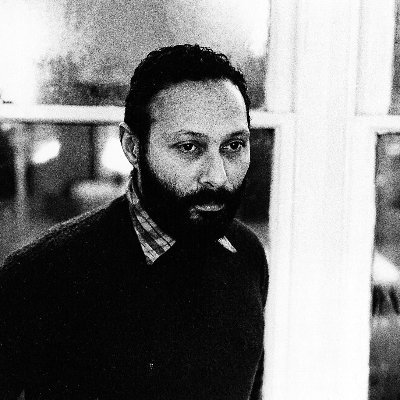
Robin D. G. Kelley discusses thanatocracy on Conjuncturepod, co-hosted by @c_heatherton and SHF Fellow @jordan_t_camp. Hear more from Robin D. G. Kelley at our Autumn Keynote next week: 📆 Thu 5 Sep, 7pm (UK) 📍 Conway Hall, London & Online Book now:
21,159 views • 2 years ago •via X (Twitter)

3 Comments

Parker Johnson (semi-retired)'s profile picture
Parker Johnson (semi-retired)1 year ago

@conjuncturepod @c_heatherton @Jordan_T_Camp @ConwayHall Looking to the recording

all-incomplete's profile picture
all-incomplete2 years ago

@conjuncturepod @c_heatherton @Jordan_T_Camp @ConwayHall @TurnLeftMediaUK @curtisdaly_

Malcolm X Movement🔻's profile picture
Malcolm X Movement🔻2 years ago

@conjuncturepod @c_heatherton @Jordan_T_Camp @ConwayHall Your entry prices are disgusting and discriminatory.

Related Videos

My fellow Chicagoans, our city is at the precipice We have been suffering through insidious crime for decades but over the past 8 years under our current Cook County State’s Attorney Kim Foxx’s reign, we have fallen off a cliff There is no more time, no more mulligans, no more excuses: “We need to right the ship and we need to right the ship quickly.” Eileen O’Neill Burke It is WELL past time to get the adults back in the room and I’m here to tell you that the first adult we need is, without question, Eileen to replace Foxx, period I’m an outspoken proponent of Eileen, and although there are many reasons, this less than 2 minute video I took does an incredibly good job of explaining why, and directly from her own mouth, so please watch it My favorite part is when Eileen says: “And, he’s a nice man…I’m a terrible politician, but he’s a nice man.” I love this because I’m D-O-N-E with career politicians and NO politician would EVER call their opponent a “nice man” and mean it Eileen isn’t a career politician, she’s a concerned, life-long Chicagoan who deeply loves our city and knows that it’s time to stand up and do something about it The big difference between Eileen and any of us, including her opponent, is her EXTENSIVE experience in the criminal justice system as a State’s Attorney, criminal defense attorney, trial court judge, and for the past 7 years, an appellate court judge for Illinois 😳 HUGE thanks to my good friends Claude Cimeus 🇭🇹 Landon & Jeff Shapack for hosting this event at Shapack Partners’s gorgeous 167 N Green building in Fulton Market on 2/24 If you’d like to hear from Eileen yourself and provide your support for her campaign, then please DM me for details about the fundraiser my colleagues Jenny Guzmán Ira Weiss Stuart Loren & I are hosting for her this Friday 3/1 WE ARE OUT OF TIME!!! If we don’t act now, our city will fail, I promise you, so please join me, my colleagues and the rest of our fellow concerned Chicagoans in supporting Eileen for our next Cook County State’s Attorney ❤️🙏👊

Christopher Deutsch

64,363 views • 2 years ago

On Thursday I co-hosted a town hall in Bayside with BP Donovan Richards to discuss important issues such as policing and city services. Representatives from Con Edison were also in attendance and I took the opportunity to ask them publicly what so many of us want to know -- what are you doing to lower our energy bills? Not one day goes by without my office being flooded with calls from constituents who simply cannot afford their electric and heating bills any longer. Triple-digit increases are not uncommon -- with even more increases on the way. It's completely out of control, and nobody in this city or state has any answers whatsoever. Here are the facts -- New York's liberal energy policy is a disaster. We traded affordable energy for, well, nothing really. We shut down cheap and reliable power generation across the state for renewables that produced a fraction of the output for several times the cost, we closed down a valuable pipeline from from Pennsylvania, and we are now making up our vast shortfalls by importing energy from Canada. We did this all the while implementing wildly reckless electrification mandates across the city and state that have driven up grid demand without ANY corresponding increase in supply. The result of all of this is ordinary New Yorkers can't afford to heat or power their homes anymore. Earlier this very same day I actually met with the new EPA administrator for our region, and be assured that if Democrats in New York refuse to do what's necessary to reduce energy costs, the Trump Administration will force them to. I had a very productive conversation about many of the local laws which contributed to this crisis and will be working with the federal government to dismantle them. It's funny that we hear Democrats here cry endlessly about the affordability crisis, while no single policy has contributed to our exploding cost of living more than their disastrous and dead-ignorant energy policies. A very simple fact is that if you want to lower the cost of living, the single most important factor is cheap energy. Give people cheap energy and the cost of literally everything else goes down. Why is this so hard for Democrats to accept? I will be meeting with the leadership of Con Ed to get some answers soon. And if I don't like what I hear, you can bet my next phone call will be to the Trump Administration to propose a very serious investigation.

Hon. Vickie Paladino

32,866 views • 1 year ago

MARARABA, NASARAWA: After speaking with sources on the ground and all the groups mentioned (Army, Vikings, and Aye), Naija Confra can now confirm that the Aso, Mararaba incident was not cvlt-related and had nothing to do with Aye, even though residents identified two Ayes among the soldiers. Because of this, we have removed the Aye logo from this update and earlier posts. Vikings confirmed that Bobo Jay (a notorious Vikings cvltist, street tout, and drvg dealer) att@cked a soldier named Elephant, whom they claimed was an Aye. That att@ck led to his arrest, and after he was released, another confrontation occurred between them and soldiers, during which a stray bull£t k!lled an innocent person. Vikings did not explain why they first att@cked the soldier. (Videos on TG). When we contacted our military sources, they gave details. They first claimed that none of the soldiers involved were Ayes and all are active-duty soldiers. They explained that the whole issue began after Elephant opened a bar and was running his business peacefully. About a week later, Bobo Jay (top right) and his Vikings squad, including Biggie Rasta (bottom right), HOD, Emperor, and many others, invaded the bar, scattered and stole things, because Elephant did not “settle” them before opening the bar. As they left, Bobo Jay threatened to return in the evening. Elephant made calls, soldiers came, and Bobo Jay was arrested. Later, some Vikings begged on his behalf and promised to pay for everything stolen and damag£d, which was why he was released and not be@ten. (This video shows before and after Elephant’s bar was destr0yed, and when the army came for arrest. A second video of Elephant’s gvnsh0t wovnd is on TG) Instead of keeping their promise, Bobo Jay went back to att@ck Elephant. They met him sleeping, woke him, and cvt him on his l£g with a mach£te. When Elephant tried to call for help, one of them pointed a locally made gvn at him, seized his phone, and threatened to sh00t. They scattered the place and stole more items. During the struggle, Elephant grabbed the gvn, it fir£d, and the bull£t injur£d his h@nd while other p£llets spread. Elephant later escaped and alerted the army. Soldiers returned and made arrests, but the main players (Bobo Jay, HOD, Emperor, Biggie Rasta) escaped. After they left, news came that an innocent person had been h!t by a stray bull£t. The soldiers insist they did not fir£ even a single sh0t, and that the stray bull£t might have come from the Vikings gvn that went off during the struggle. Reject Cvltism.

Naija Confra

26,874 views • 8 months ago

Dear ICP community, the Internet Computer has now been running strong for 5 years 👏👏👏 Here is a celebratory preview of ICP "cloud engines," the sovereign frontier cloud technology the network shall soon provide from Main points: — Cloud engines enable anyone to spin up their own sovereign frontier cloud. The technology involves an extraordinary inventive step, in which cloud is created from a mathematically secure network of nodes. The nodes run as part of the Internet Computer network ( but are selected and configured by the cloud engine's owner. — The frontier cloud provided by engines is strongly focused on enabling AI agents to build and update online applications and services for us. The world is changing fast, and nearly all new online apps and services are already being built with the help of AI, and thus cloud engines target the future of cloud. — Software hosted on cloud engines is tamperproof, which means that it is immune to infrastructure hacks, because it runs inside a mathematically secure network protocol, rather than on computers directly. This means that AI agents, and those building with them, don't need to have a security team in the loop, or to trust someone else's security team. This is crucial, because in the future, non technical people will demand the freedom to build with full automation — where they just need to issue instructions to AI about what to build, and don't need to worry about anything or anyone else. Of course, apps and services running on engines are also vastly safer from the new breed of hacker being enabled by frontier AI. (The cloud engines themselves are also "tamperproof." Even if a hacker gains physical access to some portion of a cloud engine's nodes, and can make arbitrary changes, the computations and data of the hosted apps and services cannot be corrupted or interrupted so long as the network's fault bounds aren't exceeded. The recent hack of Vercel, a major cloud platform, which gave hackers access to the apps it hosted, provides additional perspective on the importance of this advantage.) — Software hosted on cloud engines is guaranteed to run, so long as a sufficient number of the engine's nodes are running. This means that AI can build applications and services without the need to have a human systems admin team constantly tinkering with the underlying platform to keep it running, which is again crucial, because in the future, non technical people will expect the freedom to use AI to build without the support of others. — New frontier programming language technology, in the form of the Motoko language developed by Caffeine Labs, leverages seminal "orthogonal persistence" technology that unifies program logic and data to deliver further unlocks for AI (Motoko is the first computer language being developed that targets agents that are writing software rather than humans engineers per se). Nowadays, AI can build and update production apps at a prodigious rate, even at the speed of conversation. But it can also make mistakes, and there's a risk that an update it creates might be "lossy" in the sense it causes some transformed data to be lost. Again, in this new world, it's both undesirable and impractical for everyone to have to have a systems admin team on-hand to detect lossy updates and roll them back, but Motoko provides a solution: it can detect new software updates are lossy before they are applied, reducing potentially catastrophic errors by AI to harmless coding retries. — Software hosted on cloud engines is "serverless" but unlike traditional serverless software, directly it directly incorporates data through "orthogonal persistence." Another key purpose is simplify backend software logic and fuel the modeling power of AI by increasing abstraction (sorry for the technical language!!!). Put simply, this enables AI to produce more sophisticated backends, faster, and at dramatically lower costs, as measured by the number AI API tokens consumed during coding. (Tip for the technical: orthogonal persistence is a new paradigm where "the program is the database," and data lives inside program variables, which is possible because it's as if hosted software runs forever in persistent memory). — An expanding database of skills at shall make it possible to develop and directly deploy apps and services to your cloud engines directly from Claude Code, Perplexity, Codex and other AI platforms. Further, your account on can be connected, so that new apps and updates created through conversation automatically appear hosted from your cloud engine. In the future, R&D is going to be very seamless. You converse with AI, and your secure and unstoppable apps or services are created or updated. Cloud engines are designed to directly support this "self-writing cloud" future where we can work hands-free. — Tech sovereignty is becoming a huge issue worldwide, with governments and corporations seeking to create sovereign tech stacks owing to geopolitical tensions. Increasingly, people are realizing that tech provided by foreign nations can come with hidden backdoors and kills switches, from the base platform, right up through hosted apps and services. ICP technology is open source, and those building on ICP using AI own their own source code. When you have the source code, you can verify that there are no backdoors, and when you own the source code thanks to AI, you can update it at will, freeing you from vendor lock-in. But cloud engines take sovereignty much further... — You create a cloud engine by selecting the nodes that will be combined. You can choose the class of nodes used, and their number, but more importantly, you can choose who operates the nodes, and where they are located. Almost any configuration is possible, because the Internet Computer scales the security privileges afforded to hosted software within the network according to configuration (software hosted on cloud engines can directly interoperate with software on other engines and traditional subnets, but base restrictions are applied according to security rules). A cloud engine can be created within a region such as Europe, to comply with regs such as GDPR, or completely within a sovereign state like Switzerland or Pakistan. But cloud engines go further still... — Sovereignty is also about freedom from vendor lock-in. Cloud engines are essentially ICP (Internet Computer Protocol) network configurations, and this means the underlying compute nodes they combine can be swapped out without interrupting their hosted apps and services. This is a big deal. In addition, cloud engines now support nodes that are instances running on Big Tech's clouds, in addition to nodes that are dedicated specialized hardware, as per the Gen I and Gen II nodes that dominate the Internet Computer today. For example, it is possible to have an engine running across different AWS data centers, say, and then reconfigure the engine to run across a mixture of AWS, Google, Azure and Hetzner for even more resilience, without the users of hosted apps and services noticing a thing. That's true freedom. — Sovereign AI is becoming increasingly important too, and cloud engines allow special "AI nodes" to be added to them, so that hosted software can perform inference on hardware provisioned by the owner from a location the owner has selected. Even though the AI nodes are only accessible within the cloud engine, they can still benefit from the forthcoming Internet Intelligence Gateway (IG), which will make it possible to validate inference performed on key frontier open weights LLMs, even when the inference is performed on completely independent AI clouds. When the results of inference are received, this technology can verify that neither the prompt+context (input) nor the inference result (output) have been modified, and that the results were produced by the precise LLM expected. This ensures that AI clouds don't cheat by running inference on cheaper models than are being paid for, and bad actors aren't modifying the inputs or outputs to surreptitiously insert advertising into results, say, or change facts, or insert malware when code is being generated. What's super cool about this technology is the cost of the verification is scalable. A very valuable additional security can be achieved with only 1-2% of extra cost. — Scaling apps and services when they hit capacity limits is another thorny problem that cloud engines help the world address. Engines make scaling possible without rewriting or reconfiguring software. The query workload capacity of hosted software can be horizontally scaled simply by adding new nodes to an engine, and nodes can also be added in geographical proximity to demand. Meanwhile, update workload capacity can first be scaled-up by swapping an engine's nodes out for the next class up, and then when no larger class of node is available, horizontally scaled-out by "splitting" the engine into two, which doubles available capacity. (Technical tip: horizontally scaling update capacity by splitting engines requires multi-canister architectures). — For those who have been following how Caffeine builds apps that can efficiently store large numbers of files, I should mention that apps built on cloud engines will also support the new ICP Blob Storage cloud network (since cloud engines currently have up to about 3 TB of memory, which apps storing large amounts of files can easily exceed). We are also working on allowing blob storage nodes to be added to cloud engines, to enable sovereign mass blob storage within an engine, similarly to how AI nodes can be added currently. — Lastly, but certainly not least, I should mention that cloud engines are multi-blockchain capable, and ready for digital assets, thanks to the clever math at their core. For example, an e-commerce service built on a cloud engine can securely accept and custody stablecoin payments, or a multi-chain DEX could be hosted. Further, engines can support software autonomy (software orchestrated and controlled by other autonomous software, in a decentralized way) and can themselves be orchestrated by SNS technology, and thus run autonomously too. Today, though, the focus is on *mainstream* cloud. This year, the cloud industry will generate approximately one trillion dollars in revenue. That number is already huge, but is expected to grow to two trillion dollars by 2030. After years of continuous development, which have seen more than $500m spent on R&D, the Internet Computer network is now tacking directly toward this mainstream cloud market with cloud engine technology. In their first version, cloud engines are not meant to be a cloud panacea. For example, currently they are not ideal for working with big data. You should use something like DataBricks for that. Cloud engines are carefully targeted at enabling AI to produce traditional online applications and services, including SaaS, in a safer and more productive way, which represents a new market segment with tremendous potential. Of course, DFINITY will continue to work relentlessly to push forward ICP's capabilities, so expect further developments. It's worth mentioning that this cloud segment isn't just about creating new apps and services using AI, it's also about replacing legacy systems and apps built on super expensive SaaS services. Caffeine Labs is working to produce technology (Caffeine Snorkel) that can study an enterprise's legacy systems and app built on SaaS, create replacement systems and apps, and migrate the data, while supporting key stakeholders through the process over email and chat, with full automation. Thus the legacy systems and SaaS markets shall also be addressed by cloud engines. Zooming out, and reasoning in a more metaphysical way, we believe, as we always have, that there is room for a new kind of cloud created by mathematical networks, that provides seminal advances in the fields of security and resilience, as well as true sovereignty and freedom from lock-in. That this same technology, with the help of additional technologies like orthogonal persistence and Motoko, enables AI to build for us without the need for so much oversight, and to create more backend sophistication while consuming fewer AI API tokens, enables ICP to bring game-changing advances to the world. Cloud engines will work synergistically with the Intelligence Gateway, which will enable apps and services running on engines to seamlessly leverage AI, wherever that AI is running, while providing verifiability at extremely low cost for open weights frontier models. We believe that cloud engines represent an inflection point in the storied history of the Internet Computer project, and I'm very proud to be sharing the details with you on the network's fifth birthday 💪 I'll be back with more news soon!!

dom | icp

300,804 views • 3 months ago

Alistair Croll (Alistair Croll) is the co-author of the best-selling book Lean Analytics, and a longtime product manager, entrepreneur, and startup advisor. He also profoundly changed my life over a decade ago by convincing me to start a company, funding it, and helping us exit to Airbnb. More recently, Alistar has been running events such as O’Reilly’s Strata, Cloud Connect, FWD50, and Startupfest, and is about to release a book with co-author Emily Ross that I'm very excited about: Just Evil Enough: The Subversive Marketing Handbook. In our conversation, we discuss: 🔸 The role of subversive marketing strategies in most startups’ growth 🔸 11 specific subversive tactics 🔸 Examples of companies like Netflix, Airbnb, and Tesla using subversive tactics early on 🔸 A framework for scanning your market for opportunities 🔸 The importance of finding your “zero-day marketing exploit” 🔸 How to apply these tactics ethically without actually being evil 🔸 Much more Listen now 👇 - YouTube: - Spotify: - Apple: Thank you to our wonderful sponsors for supporting the podcast: 🏆 WorkOS — Modern identity platform for B2B SaaS, free up to 1 million MAUs: 🏆 Hex — Helping teams ask and answer data questions by working together: 🏆 Vanta — Automate compliance. Simplify security: Some key takeaways: 1. Most startups focus too much on product features and not enough on distribution and go-to-market strategy. To succeed, you need to find an “unfair advantage” in how you capture attention and turn it into profitable demand. This is what Alistair and Emily call “just evil enough.” 2. Stop relying on generic growth hacks. Instead, adopt a mindset focused on “zero-day” marketing exploits—innovative, subversive tactics that are only now possible. Look for unconventional methods to change the game in your favor. 3. Encourage your team to embrace “disagreeable” thinking, where you challenge the status quo rather than following the herd. For example, aim for your ideas to elicit at least 50% disapproval—this can be a great indicator that you’re pushing boundaries and generating true interest. If everyone loves your idea, it might be too safe. 4. Alistair outlines 11 key tactics to grab people’s attention: a. Turning bugs into features (e.g. Salesforce positioning their limited feature set as simplicity) b. Buyer upgrade (e.g. selling to insurance companies instead of city councils for bridge inspections) c. Access (e.g. Bumble’s founder leveraging her sorority connections for initial growth) d. Bait and switch (e.g. Tupperware using dinner parties to sell products in postwar America) e. Combination (e.g. Kraft combining powdered cheese with macaroni or 1-800 Mattress including mattress removal with a mattress purchase) f. Arbitrage (e.g. early social media growth hacks using API data) g. Aggregation (e.g. Busbud aggregating bus schedules to become the default destination) h. Reframing (e.g. Tom’s of Maine positioning toothpaste as natural/unfluoridated) i. Regulation (e.g. organ donor opt-out vs. opt-in policies in Germany vs. Austria) j. Misappropriation (e.g. Netflix using the postal service as a high-latency network) k. Sliding the window (e.g. normalizing previously taboo topics or behaviors) 5. To apply these tactics: a. Spend time understanding your industry’s system and status quo b. Temporarily think like a “supervillain” to brainstorm novel approaches c. Use techniques like pre-mortems, counterfactuals, and embracing absurdity d. Look for ways to change your value chain or industry dynamics

Lenny Rachitsky

39,965 views • 1 year ago

⚠️ The Decline of the Invictus Games: From Respected Platform to PR Stunt ‼️ Let’s be honest—what was once a meaningful and respected initiative has turned into a shameless PR parade, thanks to the Man-Child Harry and his D-List Social Climber wife Meghan Markle. The Invictus Games, originally created to honor and empower wounded service members, have been hijacked by a couple who seem far more interested in promoting themselves than the cause. Instead of focusing on veterans, the Games have become Meghan’s designer-clad runway, complete with shallow photo ops that scream “Look at me!” more than “Support our heroes.” The mission of Invictus—celebrating resilience and unity—has been overshadowed by a vanity project designed to boost their tarnished reputations. It’s insulting to the veterans who deserved better than to be props in this spectacle. And now, Harry wants to bring Invictus into schools? Spare us. His Vancouver appearance to promote the “Invictus Games School Program” wasn’t about inspiring kids—it was another desperate ploy to fix his approval ratings. Let’s not pretend this is about “the next generation.” This is about Harry trying to make himself look good while ignoring the obvious: his credibility is in the gutter. The irony is rich. Harry—privileged, out of touch, and with zero real-world experience—lecturing us about service, family, and children? No thanks. Veterans and parents alike are fed up with his constant preaching. And using kids as a PR shield to deflect from the Games’ declining support? That’s a new low. Here’s a message for Harry: LEAVE OUR KIDS ALONE! The Invictus Games used to stand for something noble—a symbol of respect for those who served. Now it’s bogged down by financial mismanagement, trust issues, and the polarizing presence of this fame-hungry duo. Veterans deserve so much better than having their platform co-opted by a Man-Child and his Social Climber wife, who shamelessly exploit their sacrifices to stay relevant. It’s time for Invictus to return to its roots: empowering veterans—not boosting the egos of those who have tarnished its cause. Enough is enough.

Meghan Markle Parody

145,959 views • 1 year ago

Four years ago, just before the emergence of COVID-19 and subsequent lockdowns, my team and I attended the Aircraft Maintenance Repair and Overhaul (MRO AFRICA) event in Ethiopia. It's remarkable to think back; at that time, the 7 Star Global hangar had fewer than seven aircraft types on its operational specification and capability list. Despite the challenging aviation landscape and the daily hurdles faced by young entrepreneurs in West and Central Africa, we have managed to significantly expand our capabilities. Currently, we boast a capability list covering over 25 aircraft types, establishing 7 Star Hangar as the largest in Sub-Saharan Africa. What's even more impressive is that our team, primarily composed of Nigerians, has successfully conducted heavy maintenance (C-D Check) on numerous commercial jets, private jets, and helicopters—including those in the Nigerian Presidential Air Fleet. All these aircraft are now operating safely within and outside Nigeria, free from any technical malfunctions or safety issues. This achievement is a result of the hard work of our skilled Nigerian engineering team and the grace of God Almighty. In the next few days, I'll be sharing some exciting news about our gains and achievements during the three-day conference in Ethiopia. As the former National President for Aircraft Pilots and Engineers in Nigeria for eight years, having worked with about six Aviation Ministers, all Aviation heads of Agencies, and airline owners in the last 20 years, and then establishing an MRO and airlines, I must tell Nigerians that my engagement with other nations and major aviation players tells me we don’t know and appreciate what we have as Nigerians despite our challenges in the sector. It's high time we showcase to the world what we are made of so they can respect us as a nation and reduce the cost of insurance, aircraft parts, and the higher costs Nigerian and African airlines, in general, incur to access services from Original Equipment Manufacturers (OEMs). I updated the Aviation ministry, and I am pleased that the Minister of Aviation, Festus Keyamo, SAN, CON, FCIArb (UK) , is willing to support this cause. Aviation is not only being used by PDP, APC, or LP members alone but all Nigerians so I encourage us all to pray for her safety. so I look forward to his inputs soon as we engage further. Nigeria shall be great again. God bless you all and keep our airspace safe.

Balami Isaac

40,995 views • 2 years ago

I may stop policing one day… but I will never stop playing sports. Today I inaugurated the 5th Telangana Police Games & Sports Meet 2026 at Saroor Nagar Indoor Stadium, hosted by Malkajgiri Commissionerate. We lit the Sports Torch handed to me by our own national medal-winning RSI Govinda Reddy and declared the meet open with a release of doves and balloons, marking peace, unity and the true spirit of sportsmanship. After nearly 35 years of holding all our police sporting events at a single venue, we've moved to a new Five-Cluster Model this year to widen participation and identify talent early, on the lines of the All India Police Games Cluster A- Boxing, Wrestling, Fencing & indoor sports Cluster B- T-20 Cricket, Future City (17-19 Nov) Cluster C - Lawn Tennis, Badminton, TG Police Academy (7-9 Sep) Cluster D - Volleyball, Kabaddi (3-5 Nov) Cluster E - Canoeing, Kayaking, Cycling, Nizamabad (closing) 21 teams are competing this year Malkajgiri, Warangal, Hyderabad, Future City, Zones I-VII, TGSP Range I & II, Greyhounds, CID & Railways, Intelligence, IT & Communications, RBVP, CBSE/ICCC/Anti-Corruption and TGPMS. Every Commissionerate, Zone and specialized wing represented on one field. We won 21 medals at the last All India Police Games. I want that number to grow with more gold. Government incentives stand firm Gold -3 lakh + 3 special increments. Silver - 2 lakh + 2 special increments. Bronze - 1 lakh + 1 special increment. My message to every senior officer identify your talented sportspersons, back them with proper nutrition, physiotherapy and structured coaching never treat sports as a waste of time. For me, the game is meditation. It keeps me steady through the most demanding of days, and every officer deserves that outlet too. Glad to have actor Naveen Polishetty with us, who reminded everyone that when people are in trouble, two names come to mind God, and the Police. A truth we carry with pride. Appreciation to CP Malkajgiri Sumathi, IPS, for hosting Cluster A with such energy, and to CP Hyderabad V.C. Sajjanar, IPS, and IG (I&L) Gajarao Bhupal for joining us. Sports is not separate from policing it is what keeps us fit to serve. #TelanganaPolice

DGP TELANGANA POLICE

42,616 views • 1 month ago

Only idiots and Britain haters blame Churchill for the Bengal Famine This myth only became popular in 2010 after a ridiculous book was published by a far-left journalist with no historical training This is what REALLY happened: 1. A cyclone hit Bengal in 1942, destroying crops 2. They were already suffering from the worst rice brown spot epidemic on record 3. Normally in a famine grain would be imported from Burma, Malaya, Phillipines, Thailand etc. But WW2 ws raging and our Japanese enemy now controlled those areas 4. The Japanese had bombed Indian ports, which also destroyed grain 5. Shipping grain in was hugely dangerous because Japanese fleet was blockading the Bay of Bengal and sinking ships Remember, the Axis powers were sinking one ship every day and had sunk around a million tons of shipping in 1942. 6. On top of that local Indian speculative traders were unforgivably HOARDING grain. With inflation rife, this was classic wartime speculation as they could make (and expected to make) much more money by hoarding rather than selling immediately. 7. Local government and administrators were slow to act and initially told the UK government there was enough grain in Bengal. One can blame the democratically elected Government of Bengal, people like Huseyn Shaheed Suhrawardy (Minister of Civil Supplies for the newly formed Muslim League) and Sir John Herbert (the Governor of Bengal) for exacerbating conditions in the Bengal Famine. But not Churchill. What did Churchill do? Everything he could. Remember also, he was thousands of miles away in a different continent fighting the Second World War and preparing for D-Day. Yet despite all his other commitments he worked hard to save the people of Bengal. 1. When the British government found out about the famine’s severity in August 1943, they authorised around 1 million tons of grain to be shipped to India between then and December 1944. 2. Churchill pushed Australia to send wheat 3. Churchill personally requested shipping assistance from U.S. President Roosevelt in April 1944 to transport it from Australia. Roosevelt declined, stating US ships were needed for the Pacific campaign and the upcoming D-Day operations. 4. Thanks to Churchill grain arrived from Iraq (barley), and Canada as well as Australia. 5. Crucially, Churchill was responsible for appointing the man who played such a pivotal role in stopping the Bengal Famine: Field Marshal Wavell. Wavell knew India and its people extremely well and was a magician of logistics. He drafted in the army to move food supplies and halted the famine. Why are tax payers funding Helen Cammock's ignorant, anti-British propaganda at the National Portrait Gallery?

Rafe Heydel-Mankoo

354,554 views • 2 months ago

Zack Polanski, "Today I was in Oxfordshire, standing in the aftermath of the devastation caused by a wildfire. Trees reduced to charcoal, cars turned to burnt out wrecks. The smell of smoke still lingering in the air on the site of what was once a thriving local business now reduced to ash." "Wildfires, literal scorched earth and a looming sense. And I really want everyone to hear this. This is only just the beginning. And today, as temperatures fall at the end of yet another extreme heat alert, we know that if it rains now, the soil being baked dry means it's much more likely to flood." "These days feel exceptional. But what we are living through right now are likely some of the least extreme summer temperatures we'll experience in our lifetimes. Today I am sounding the alarm and I'm laying out a plan." "Because last week, while a wildfire the size of 200 football pitches was raging across Suffolk, I called on, Prime Minister Burnham to act urgently to address the crisis. I suggested a COBRA meeting being the very least he could do." "And six days later, with another heat alert just having ended, we have still heard next to nothing from the very top of government. No emergency briefings, no new plan and precious little detail about how this government will protect people from the crisis." "It is putting lives and livelihoods at risk across the entire uk. So today I'm delivering a reality cheque. We are facing the biggest threat to this country since the Second World War." "I'm setting out what Prime Minister Burnham can do now to tackle the crisis and I am challenging him to act with the urgency we need. You will hear today from those on the front line of this crisis and they will lay out what they have dealt with in the past few weeks." "And to them, on behalf of the entire country, I want to say thank you. Extreme weather is now the new normal and without action, the impact on the people of this country will be unimaginably grave." "The threats we face are three hold first, the threat to the safety of the population. Almost 3,000 people have died from the effects of extreme heat this summer. And we know that older people and those with pre existing conditions are particularly at risk from these dangerous temperatures." "Those are the people who have been forced to stay at home for days on end, windows, curtains closed, trying to wait out the extreme heat. And these are the people who are most likely now to have grieving families whose bodies were under such intense strain and trying just to stay cool that their kidneys and their hearts could no longer cope." "Meanwhile, wildfires have seen hundreds evacuated from their homes, while many thousands more wait anxiously with Flames on the horizon and smoke in their lungs. We've seen across Europe how bad things can get." "Hundreds of thousands evacuated, half a million acres burned. The sheer scale of the devastation is hard to comprehend, but we need to look it in the face, because this is only a taster of what's to come if we don't act now." "Second, we face a threat to our food and water security. Farmers are now warning we could see food shortages after flooding followed by drought has decimated crops. And despite farmers working really hard through the nights to avoid the heat, food production is grinding to a halt and our food prices are set to rise." "Half of England is experiencing serious drought. And across the country, 8 of our water reservoirs are at risk of running dry. Privatised water companies they've failed to build a single new reservoir to since 1992, are, losing nearly 3 billion litres of water a day from leaky pipes." "That's five times more than a nationwide host pipe ban would even save. The threat is so severe that the UK's National Risk Register warns that if we have three years of exceptionally dry weather like this, we could face water rationing." "These aren't distant possibilities, they're very real scenarios and they are coming straight at us down the track because finally, we face a threat to our very way of life. Parents unable to take their children to the playground because the slides are so hot it could burn, their skin off." "Temperatures so high they keep us inside for days for the sake of our health. Cities feeling like ghost towns, parks turned into deserts. We only have to look across the Channel to France and Spain to see what faces us in the years ahead." "Europe is heating at, twice the rate of the rest of the world. Wildfires, droughts, deadly floods. The scenes we have seen play out on our TV screens are, frankly apocalyptic. And yet the response from our government is to pretend none of this is happening." "It is an astonishing dereliction of duty from those whose very first responsibility is to keep all of us safe, and from the media. With some brilliant and notable exceptions, we have seen more clamouring for North Sea drilling in the last few weeks than actually raising the alarm on climate breakdown." "While our country has come together, people have offered shelter to those who have had to leave their homes due to wildfires. They've checked in with older neighbours to care for those who are sick because of the heat. But the government. The government have been far, far too quiet on what is an emergency." "So today you will hear from some of those on the front line of this crisis and Those with vital insights into how we face this threat. A doctor, a firefighter, someone who served this country in the armed forces, and someone who has dedicated his entire career to our precious nature and wildlife." "It's experts like these that this government should be bringing to the table to design a full scale emergency response. So I want to step out from this big picture and look at some of the urgent steps that Prime Minister Burnham needs to urgently announce to protect people right now and keep us safe from what we know is coming down the track." "In the immediate term, we need to keep people safe from extreme temperatures. That means a free accessible cool space in every local area. And financial support for households so they can heat proof their homes. Second, we need a robust wildfire prevention strategy." "A fire service with the resources it needs to tackle blazes when they come. And that must include firefighting helicopters when needed. And not again ever seeing the shocking sight of requiring a charity to step in to contract a private firm to help fight fires." "And this should all be funded by taxing the fossil fuel giants who are profiting from fueling these infernos. And finally, to secure our water supply, prevent droughts and protect our food system, we need to bring water back into public hands." "Right now, money is flowing out of our hands into the pockets of shareholders, just like water is flowing out of those companies leaky pipes in the middle of a drought. Every single penny households pay for their water needs to go back into strengthening our infrastructure, building new reservoirs and protecting us from the droughts of the future." "We know that these extreme temperatures, these deadly wildfires, are being driven by the burning of fossil fuels. The sad reality is decades of inaction of politicians allowing fossil fuel companies to profit from pumping out deadly emissions have guaranteed the extreme weather we are seeing right now." "And we will see for the rest of our lifetimes. But there is still time to stop total breakdown. So let me speak directly to the Prime Minister. If we are to secure a livable future for our children and for our grandchildren, there can be no new drilling for oil and gas." "On this, the, the science is crystal clear. As politicians, we have a moral responsibility to do what is right for the people we serve, even when it's not politically convenient. And I know that whatever our differences, we both care deeply about the people of this country and the future of our planet." "So when the time comes, I hope you will have the courage to be truthful, be brave and hold firm to your party's commitment to no new oil and gas drilling in the North Sea, including both Rosebank and, Jackdaw." "Now, some will say we can't afford to make these changes. These last few weeks are showing we can't afford not to. We are facing an existential threat. People are dying. People are scared." "It is time to act. And when we do, we won't just avoid the worst effects of climate breakdown. We will lower bills permanently, help our communities thrive, and give a grounded sense of hope for generations to come."

Farrukh

86,651 views • 25 days ago

$ASTS | Scott Wisniewski at JP Morgan conference, May 18, 2026 Transcript - part 1 Good afternoon, everyone. I'm Sebastiano Petty, and I cover the telecom, cable, and satellite space here at J.P. Morgan. I'd like to welcome Scott Wisniewski, President and Chief Strategy Offer of ASTS Space Mobile. Scott, thanks for joining us. Thank you for having me. You're good. You're live. Can you hear me? All right. Thank you for having me. Great. So, Scott, just to start, let's zoom out. As you sit here in mid-2026, with Bluebirds launching, commercial service activation approaching, and the government pipeline accelerating, where are you spending most of your time as President and Chief Strategy Officer? And more broadly, what are your two to three highest priority objectives over the next 18 months as you transition from what has primarily been an R&D and manufacturing story into a scaled revenue-generating operating company? Thank you. And for those who don't know us that well, we were founded about a decade ago around the direct-to-device opportunity. That's what we do. That's our entire strategy. It's from space, of course, and we build our own satellites, and we'll be operating them and selling capacity on them. But at its core, we are a direct-to-device pure play. And over the years, I met our founder in January 2019, but over the years, telling our equity story, people always asked three questions. Does it work? Can you fund it? And how big will the market be, or will there be a market? And that's our traditional private company questions that we still got even as a public company for a while, and we really retired those risks in 2023, 2024, and 2025. And so this year, yeah, you're exactly right. Traditional growth stuff, scaling stuff is where we are. And for us, if I were to say two simple things, one is network deployment. The vast majority of the folks in the company are focused on exactly that, network deployment now for revenue in 2026 and 2027 and beyond. And then the second one is, I think, building the market out in the right way. This is a brand new service. It's a service that is at the very heart of connectivity. Remember, we all know the trends in connectivity. When I started my career in connectivity, there was a question, bubble, what inning are we in? When is the expansion going to end? And then, of course, AI comes along, and there's always something every couple of years. So for us, we're at the heart of connectivity. We can do coverage better than any terrestrial footprint by its very nature. And making connectivity work for our partners, the mobile network operators, and ultimately for the consumer mass market among other markets, is our focus. So building out that market is our second priority. Great. And let's address the news from last week. AT&T, Verizon, and T-Mobile announced a proposed joint venture to extend mobile connectivity using satellite-based D2D technologies. You guys put out a statement commending the announcement. Unpack this for us. What does this mean for ASTS in practice? Does it change your commercial positioning with the carriers? Does it accelerate or maybe even complicate your path to service? So we really value the carrier relationship. We've organized the business, the technology, the go-to-market strategy. Everything we do, really, is about making connectivity better for the mobile network operators. And so you see that in where we've prioritized the company over the years. You see that in how we've built out the tech. And even the network stack is organized with the RAN on the ground, so the operators control it. So that's really been our focus. We share their spectrum, although we also have our own spectrum now. And that's always been the approach. Part1, 1 (of 2)

Peter LINDM🅰️RK

29,453 views • 3 months ago

2025 reflected a year of coordinated execution. As products expanded and new markets came online, the underlying platform continued to strengthen in step. Here’s what we built in the past 365 days 👇 Launching New Products The Gemini Credit Card evolved with the release of the Bitcoin, Solana, XRP, and American Business versions of the card, allowing our US customers to earn rewards in crypto, and additional benefits for businesses.* We launched the Gemini Wallet, giving users a powerful self-custody wallet to have more control over their digital assets and manage their finances onchain. In the European Union (EU), Gemini launched Tokenized Stocks**, bringing the world’s leading equities onto the blockchain with zero trading fees. We added Gemini Perpetuals** in the EU, putting the power of crypto derivatives with up to 100x leverage in the hands of advanced traders, and have continued to expand the number of perpetual contracts available – opening up new trading opportunities in memecoins, DeFi, and beyond. In Europe, users gained the ability to stake*** their ETH and SOL, unlocking the potential to earn rewards of up to 6% APR**** on their holdings. In Singapore, we launched Index Perpetual Contracts and expanded the available cross collateral funding options. We also made funding faster for Singapore users by adding PayNow and FAST. We introduced USD rails to our UK institutional customers, giving them more flexibility in the ways they can trade. Institutional Leadership We strengthened our leadership in institutional custody, including custodying Empery Digital’s $500 million BTC placement and facilitated their bitcoin purchases and derivatives trades. We also introduced the ability to stake SOL from custody for our institutional partners. We worked with Glassnode to produce the Bitcoin Adoption, Volatility, and Market Cap report, showing that bitcoin treasuries now control nearly a third of Bitcoin’s total supply. Company Milestones & Regulation After an IPO on the Nasdaq stock exchange in September, Gemini became a publicly traded company. This year also marked a turning point for Gemini’s global ambitions. In October, Gemini launched in Australia and became AUSTRAC registered to bring industry-leading crypto tools to users down under. We also expanded further into the country by adding AUD banking rails for faster payments and deposits. We opened new offices around the world, including London, hosting an opening party with people from across the industry to celebrate. We also grew our customer service operations with a new office in Scottsdale, Arizona. In the EU, we obtained our Markets in Crypto Assets (MiCA) and Markets in Financial Instruments Directive II (MiFID II) licences, allowing us to bring our services to millions more across the region. Fostering a Global Community From DAS New York and Paris Blockchain Week, to TOKEN2049 in Singapore and the Australian Crypto Convention in Sydney, the Gemini team met local communities around the world. In March, we set a Guinness World Record for the largest aerial display of a currency symbol with a drone show at South by Southwest in Texas. In May, we teamed up with MARA Holdings to mine the Bitcoin “pizza block”, a tribute to the first real-world purchase using bitcoin. At BTC Vegas, we gave orange Tesla Cybertrucks to two lucky winners, while at BTC Amsterdam, we awarded a custom Bitcoin Apex Flare 4 Bike to a new customer. We left our mark on Amsterdam too, by biking around the city in the shape of a Bitcoin “₿” and decking out the city’s trams with our signature colors. The Gemini team also headed to Real Bedford football club to give out free pizza and merch to fans at the final match of the season, and celebrated the team’s promotion to Premier Division Central. Looking to the Future As we look to 2026, our focus has never been clearer. We plan to build on the successes of this year and continue offering secure and reliable access to digital assets, by pushing further with new product launches, deepened institutional ties, and an expanded presence in the EU and APAC. We’re proud of what we built and scaled in 2025 – and this was just the beginning. Onward and upward, Team Gemini Full recap here: * Gemini-branded credit products are issued by WebBank. ** Perpetuals and Tokenized Stocks are offered by Gemini Intergalactic EU Artemis, Ltd, which is authorised and regulated by the MFSA under the Investment Services Act to offer certain services under the Markets in Financial Instruments Directive (MiFID II) to institutions and traders. Perpetuals and tokenized stocks are complex instruments that carry a high risk of loss and are not appropriate for all investors. You should consult a licensed advisor before engaging in any transaction. Tokenized stocks are manufactured by Dinari, Inc. *** Staking services are offered by Gemini Intergalactic EU, Ltd., but are not regulated activities and are not subject to regulatory oversight, conduct of business rules, or investor protection requirements established under Markets in Crypto Assets Act. **** APRs are indicative only and may change at any time. All investments involve risk, including possible loss of capital. For more information, please refer to your User Agreement with the relevant Gemini entity.

Gemini

45,129 views • 8 months ago

War Diary Day 1,391 Blaise Metreweli, the Chief of Britain's Secret Intelligence Service, sticks it to the Killer in The Kremlin. And all his creepy helpers. I agree with every fucking word. VPDFO! (Transcript of the speech, exactly as it was delivered) 📷 Welcome inside MI6. This iconic building, familiar to movie fans everywhere, is the home of Britain’s foreign intelligence agency. But whilst hundreds of my team pass through the entry pods each day, the truth is that most of our work happens many miles away from this place - out of sight, hidden from the world, undercover, recruiting and running agents who choose to place their trust in us, sharing secrets to make the UK and the world safer. You might pass one of our officers on the street or sit next to them on a plane when you’re about to set off on an adventure of your own, or in a foreign city taking selfies by the sights. Whether it’s in seemingly everyday places, or on the front line embedded with our military, MI6 is there. In my first few weeks, I’ve heard repeatedly that MI6 is trusted and respected globally, two things that we never take for granted. We are seen as a source of hard power, soft influence and rapid innovation. I’ve also heard that people want to believe in MI6. It’s my job to make sure they can. Today, I want to talk about human agency. We all have choices to make about how we deal with the undercurrents shaping our world. About how, in our new, faster, more dangerous and technology-mediated world, it will be our rediscovery of our shared humanity, our ability to listen, and our courage that will determine how our future unfolds. Conflict is not inevitable. Understanding human nature is in my bones. From a family shaped by devastating conflict, I grew up with a deep sense of gratitude for the UK’s precious democracy and freedom. I spent much of my childhood overseas, which is where my passion for travel and adventure began. I studied anthropology, and later psychology and AI, exploring how we make sense of the world and each other. It’s why I was drawn to MI6: it offers strong purpose, a chance to serve and a belief in the positive power of human connection. Like the Service, I’m operational to my very core. Over nearly three decades, my career has involved recruiting and running agents in hostile territory; and leading operations in warzones to defuse threats and support peace. Always in teams, always learning from others. Over the years, I’ve worked with hundreds of brilliant partners – and indeed occasionally those we’d label as adversaries – across dozens of countries, tackling weapons proliferation and terrorism. During my time at MI5, I saw close up what it takes to defend Britain from being targeted by hostile states. You’ll find many like me in my organisation: powerfully motivated to protect our precious country; curious about how our world is changing, joining dots and taking action, across domains. But it was in my last role as ‘Q’, where it was my job to turn emerging technologies from threats to opportunities that I could most see the world changing. As I dug deep into data and extraordinary innovation, I could see how technology was rapidly reshaping not just our capabilities but also conflict and trust, truth and global power. Let me lay out how I see the global issues MI6 must tackle. Because the greatest danger we face is to misunderstand the nature of the problem. Let’s be in no doubt. Our world is more dangerous and contested now than it has been for decades. Conflict is evolving and trust eroding, just as new technologies spur both competition and dependence. We are being contested from sea to space, from the battlefield to the boardroom. And even our brains, as disinformation manipulates our understanding of each other and ourselves. Across the globe, we are now confronting not one single danger, but an interlocking web of security challenges – military, technological, social, ethical even – each shaping the other in complex ways. We are now operating in a space between peace and war. This is not a temporary state or a gradual, inevitable evolution. Our world is being actively remade, with profound implications for national and international security. Institutions which were designed in the ashes of the Second World War are being challenged. New blocs and identities forming and alliances reshaping. Multipolar competition in tension with multilateral cooperation. But there’s something distinctive that will make this change unlike any other: the impact of advanced technologies, which will accelerate the pace and scale of every threat and opportunity, and increasingly, individualise them too. Advances in artificial intelligence, biotechnology, and quantum computing are not only revolutionising economies but rewriting the reality of conflict, as they ‘converge’ to create science-fiction-like tools. There’s incredible promise in all this for all of us, from green technologies to hyper-personalised medicine. But also peril. AI-powered robots and drones are brilliant for scaled manufacturing but devastating on the battlefield. Discoveries that cure disease can also create new weapons. And as states race for tech supremacy, or as some algorithms become as powerful as states, those hyper-personalised tools could become a new vector for conflict and control. Power itself is becoming more diffuse, more unpredictable as control over these technologies is shifting from states to corporations, and sometimes to individuals. And at the same time, the foundations of trust in our societies are eroding. Information, once a unifying force, is increasingly weaponised. Falsehood spreads faster than fact, dividing communities and distorting reality. We live in an age of hyper-connection yet profound isolation. The algorithms flatter our biases and fracture our public squares. And as trust collapses, so does our shared sense of truth – one of the greatest losses a society can suffer. The defining challenge of the twenty-first century is not simply who wields the most powerful technologies, but who guides them with the greatest wisdom. Our security, our prosperity, and our humanity depend on it. Our world is being remade. And for the first time, we are all at the heart of it. My Service must now operate in this new context too: not just expert on hostile states, terrorism, proliferation and more, but also fluent in technology, able to anticipate the second and third order effects of advances that reshape the world in minutes not months. And as China will be a central part of the global transformation taking place this century, it is essential that we, as MI6, continue to inform the government’s understanding of China’s rise and the implications for UK national security. I’m going to break with tradition and won’t give you a global threat tour, but will focus here on Putin’s Russia. We all continue to face the menace of an aggressive, expansionist and revisionist Russia, seeking to subjugate Ukraine and harass NATO. I find it harrowing that hundreds of thousands have died, with the toll mounting every day, because of Putin’s historical distortions and his compromised desire for respect. He is dragging out negotiations and shifting the cost of war onto his own population. But Putin should be in no doubt, our support is enduring. The pressure we apply on Ukraine’s behalf will be sustained. Because it is fundamental not just to European sovereignty and security but to global stability. Alongside the grinding war, Russia is testing us in the grey zone with tactics that are just below the threshold of war. It’s important to understand their attempts to bully, fearmonger and manipulate, because it affects us all. I am talking about: Cyberattacks on critical infrastructure. Drones buzzing airports and bases. Aggressive activity in our seas, above and below the waves. State-sponsored arson and sabotage. Propaganda and influence operations that crack open and exploit fractures within societies. Countering this activity is the work of intelligence and security services across Europe and the globe. And as the Foreign Secretary made clear in a speech last week, the UK is defending itself against this Russian information warfare – sanctioning Russian media outlets pushing Kremlin narratives. The export of chaos is a feature not a bug in this Russian approach to international engagement; and we should be ready for this to continue until Putin is forced to change his calculus. So, how should we respond? It’s not enough now just to understand the world. We must shape it too. MI6 is well-positioned to respond to these threats and wider global instability. And we will continue to evolve, just as we have throughout our long history. The UK government has invested in our intelligence agencies and we are all using our unique powers to keep the British people safe. Our ‘open and connected’ partnerships across the UK Intelligence Community, with HMGCC, NSSIF and the wider tech ecosystem in the UK will become even more important – because in the digital battleground, no single organisation can prevail alone. As a global agency, MI6’s inbuilt strength is our partners and our people. The risks I have set out require us to work ever more closely with our colleagues in MI5, GCHQ and in defence and diplomacy. But also with our Five Eyes partners, with the E3, the EU, NATO, those across the Middle East, the Indo-Pacific and beyond. And with many valued partners whose identity needs to remain secret. Together, we integrate our diverse talent, data and tools to meet the threat. AI is a domain in which we will excel, using the technology to augment, not replace, our human skills. Every digital trace, every byte of data, every algorithmic decision has implications for the safety of the lives of the courageous people who work with us as officers and agents, and for the UK’s strategic advantage. Mastery of technology will infuse everything we do. Not just in our labs, but in the field, in our tradecraft, and even more importantly, in the mindset of every officer. We will become as comfortable with lines of code as we are with human sources, as fluent in Python as we are in multiple other languages. Under my leadership, MI6 will continue to attract Britain’s best and most creative minds: linguists and data scientists, case officers and engineers, behavioural experts and technologists. We need people who walk in the shoes and get in the heads of our adversaries. We need people who think differently, challenge assumptions, and act decisively. All can thrive and make a difference at MI6. At an operational level, we will sharpen our edge and impact with audacity, tapping into – if you like – our historical SOE instincts. We’re at our best when we’re hustling to make things happen, because our intelligence is most valuable when it changes reality on the ground. We will take calculated risks, where the prize is significant and the national interest clear. We will never stoop to the tactics of our opponents. But we must seek to outplay them. In every domain. In every way. So intelligence must drive action. Action must deliver advantage. And advantage must serve Britain’s security and prosperity. But at the core, our deeper contribution is also our simplest – how we unlock human agency. Our fast-paced, tech and threat-infused world now generates more heat than light. As nations retrench and rearm, we are losing opportunities to listen to what’s really going on. I’ve seen time and again throughout my career, that this is where MI6 matters most: we listen and we hear. We understand, because we take time to learn languages and cultures, complex technical and historical detail, immerse ourselves in what’s really driving the situation. Across the globe, right now, our officers are finding people with the courage to step forward, and they are taking time to sit and listen to break these tightening cycles of violence. They listen for nuance, for connection, for opportunity. Over the years, I’ve listened to terrorists who have told us how to defuse the bomb because they know that more violence won’t help. To proliferators and smugglers who’ve told us where to find the dangerous material, motivated to protect their children’s future. To people trapped in authoritarian regimes who know, deep down, that their humanity is being chipped away – and that telling us what’s really going on is an important release, allowing us all to find better ways to navigate our changing world. So, we will work with our agents. And we will continue to engage directly, and with respect, with states and organisation currently working against us. Away from the glare of the media, we will use MI6’s convening power wherever we can to make a material difference, bringing parties together to defuse tensions. But the response to the increasing risks we face won’t be delivered by the UK intelligence community alone. Wider society has a role to play too. That includes work taking place in schools across the country so our children don’t get duped by information manipulation. Let’s all check sources, consider evidence, and be alive to those algorithms that trigger intense reactions, like fear. It also means everyone in society really understanding the world we are in – a world where terrorists plot against us, where our enemies fearmonger, bully and manipulate, and the front line is everywhere. Online, on our streets, in our supply chains, in the minds and on the screens of our citizens. We must all stand together against this. As we do today with our friends in Australia after the shocking antisemitic terrorist attack this weekend. My thoughts -and those of my whole organisation – are with the family, friends and loved ones of the victims. Light will always win over darkness. In rising to meet these challenges we, in MI6, will remain anchored to our values: courage, creativity, respect and integrity. And to our principles: accountability and trust are not constraints on our work; they are the foundations of our legitimacy with the British public. Recently, I had the privilege of meeting and thanking a foreign agent who has worked with us for decades, taking extraordinary risks to help keep the UK safe. I asked why. They said simply, ‘Your values. Your integrity and respect. None of us have a future without them’. This moment reinforced to me that we must remain a very human agency. And so, to sustain that trust, MI6 will continue to be more open. Not for the sake of visibility, but because it matters – and as my MI5 counterpart Sir Ken McCallum said recently - because it is a strength. We will continue the practice of speaking publicly, broaden our channels of engagement, and sustain our focus on attracting the most diverse talent to join our Service. Transparency does not mean revealing what must remain secret. It means showing the British people who we are, what we stand for, and why our work matters. We need your trust and support for the difficult and often dangerous work our agents pursue, every day of the year. In an age of uncertainty, one constant remains: the choices made by human beings still determine the shape of the world. Yes, technology can illuminate possibilities: but information requires judgement; complexity demands clarity; and only people can decide which path to follow. The United Kingdom’s global voice has never rested solely on strength – it has rested on trust, principle, and the ability to understand others as well as ourselves. That is also the essence of intelligence: not simply knowing the world, but interpreting it through a uniquely human lens. Ours is the quiet service, the hidden service. It is one rooted in a profound belief that when human beings act with purpose and integrity, they can steady a faltering world. When the Berlin Wall fell, it was our shared belief in freedom that carried Europe forward. When acts of terror targeted open societies, it was intelligence, cooperation and resolve that preserved them. And when adversaries blur fact and falsehood, our task is to defend the space where truth can still stand. As we step into the future, the tools at our disposal will evolve. But what will always matter most is the human element – the person who stands in the shadows and says: this is right, and that is wrong. That choice – the exercise of human agency – has shaped our world before, and it will shape it again. Because in the end, it is not what we can do that defines us, but what we choose to do. Thank you. Published 15 December 2025

John Sweeney

42,257 views • 8 months ago

This Is Unreal 🚨 American Tax Payers Forced To Pay For The Clinton Foundation “Printed in Part D of House Report Number 118-216, offered by Ms. Fox of North Carolina. Pursuant to House Resolution 723, the gentlewoman from North Carolina, Ms. Fox, and a member opposed each will control five minutes. The Chair recognizes the gentlewoman from North Carolina. Thank you, Mr. Chairman. I rise in support of my amendment. My amendment is simple. It would prevent taxpayer funds from paying for State Department employees to travel to or attend events hosted by the Clinton Global Initiative. The rationale is quite simple. The Clinton Global Initiative has engaged in blatant corruption and influence peddling that would make even Hunter Biden blush. In perhaps its most famous episode in 2014, Hillary Clinton approached the Moroccan government about hosting a Clinton Global Initiative conference in Morocco. The Moroccans fronted the money for the event by funneling it through a state-owned enterprise that was extracting and exploiting phosphates from a non-self-governing territory, Western Sahara. This sleight of hand amounted to condoning Morocco's sovereignty over this disputed land. You heard that right. It was cash for sovereignty deal formulated just as former Secretary of State Clinton began her run for president of the free world. This deal was so rotten that even the Huffington Post deemed Fox News' investigation into this matter a, quote, brutal, clean hit on Hillary Clinton's campaign, end quote. Indeed, the Clinton Global Initiative and include an episode uncovered by the New York Times revealing undisclosed donations linked to the sale of U.S. uranium production to a Russian government agency. As expected, the Clinton Global Initiative was unable to withstand the scrutiny and shuttered shortly after the 2016 campaign. That is, until late last year, when the organization reconstituted itself. Its operations are no longer dark. Appropriations Bill considered since its resurrection. It has since morphed into a factory of radical, elitist, woke schemes. Just last week, the Clinton Global Initiative convened in New York to discuss how to reshape our economy to tackle the left's pet projects that will make life for ordinary Americans more expensive and worse and the initiative, we need to send a clear message. No more coordination with the U.S. government, no more conferences with corrupt governments at the expense of the oppressed people of the globe, no more representation and participation by the State Department, and end to its co-mingling with official policy. And hopefully the beginning of the end of this corrupt organization's influence on U.S. policymaking more radical policies purveyed by an organization that allows the global elite to buy and influence American foreign policy. Join me in condemning the Clinton global initiatives misconduct. I urge my colleagues to support my amendment and I reserve the balance of my time. Thank you, Mr. Chairman. I see that my colleague has not refuted any of the things that I've said about the Clinton Global Initiative Why in the world, again, would we ask American taxpayers to pay for people from the State Department to attend these conferences when they're likely not to gain anything positive from them and support a corrupt organization? I reserve. One and a half minutes. Mr. Chairman, we have a terrific debt on our hands in this country. We don't need to be spending any money that is not absolutely necessary to spend curbing attendance at meetings such as the Clinton Global Initiative is a good way for us to chip away at that debt and to save the American taxpayers some money. I think this is an excellent amendment. I believe that my colleagues will see that it's an excellent amendment, and I will continue to advocate for its passage and I reserve” I can’t transcribe it all due to X’s text limits but worth its the watch.

Wall Street Apes

638,473 views • 2 years ago