Video yükleniyor...

Video Yüklenemedi

Ana Sayfaya Dön

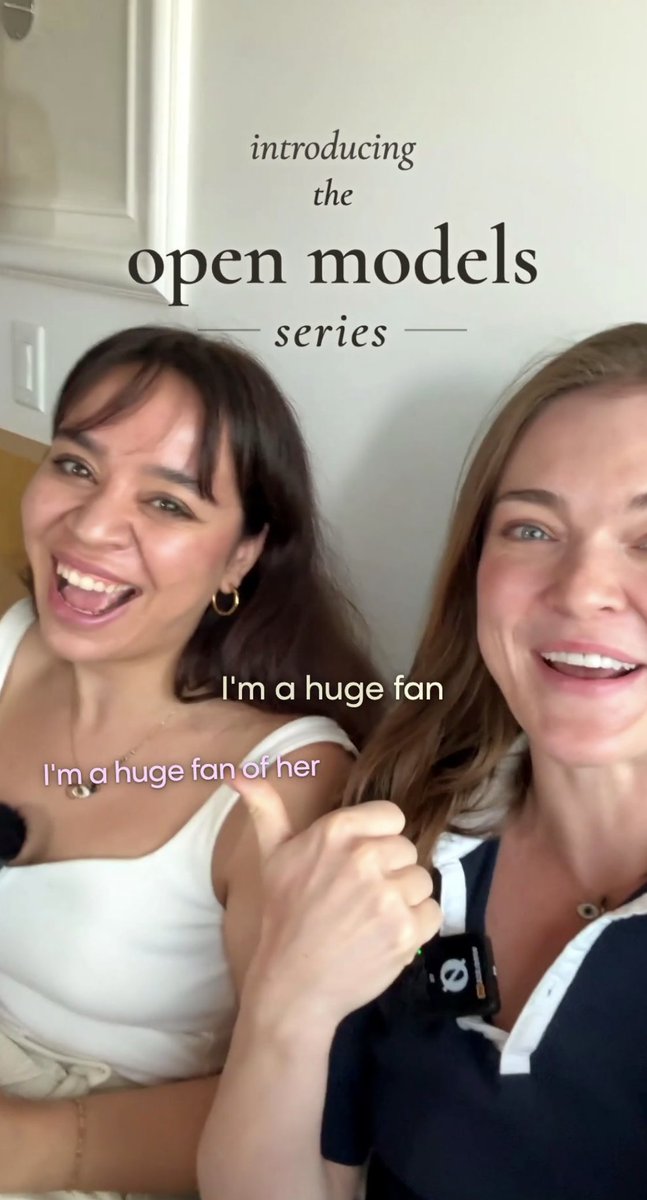
Roboflow charges you for models you have to verify yourself. Introducing Score Studio: the decentralised alternative where every model arrives already proven and ready to work in real world conditions. Every model on the platform is battle-tested through SN44's validation mechanism before you ever touch it. Miners compete, validators...

33,210 görüntüleme • 6 gün önce •via X (Twitter)

0 Yorum

Yorum bulunmuyor

Orijinal gönderinin yorumları burada görünecek

Benzer Videolar

China just released an open source AI model that matches the best closed models from OpenAI and Anthropic. Gavin Baker explained exactly how they did it and the answer should concern every American AI lab. The model is called GLM 5.2. It was built by Z. AI. You get 744 billion parameters, 1 million token context window and its MIT license, meaning anyone can download it, fork it, build a company on it, with no restrictions and no Dario. It scored 51 points on the artificial analysis intelligence index. The highest score any open weight model has ever achieved. It beat GPT 5.5 on the frontier software engineering benchmark. It trails Claude Opus 4.8 by less than one percentage point. And it costs 85% less to run than GPT 5.5 for comparable performance. Gavin Baker said on the All-In podcast that this model has challenged some of his beliefs. Then he explained how China built it. The method is called distillation. Just think of tens of thousands of phones and computers running simultaneously, all hitting the frontier model APIs through masked accounts, asking specific questions, and harvesting what happens inside the model when it answers. Every reasoning step, every token. The entire thinking process gets recorded and fed back into the Chinese model during training. It is a cheat sheet. It is the answer key to the exam. And here is the part that should worry everyone. Sacks said it plainly. China was already nine months behind American models. But now that GLM 5.2 is good enough to run its own reinforcement learning, it can improve itself without needing to distill from American models anymore. The cheat sheet let them get close enough to start writing their own answers. Sacks said we are six months behind on the model and 24 months behind on silicon and they are only a few months behind in total. The Z. AI founder told Elon Musk directly that open weight fable-level capability will be here before Q1 2027. Every restriction Anthropic lobbied for, every self-imposed safety guardrail, every month of delay in releasing American frontier models accelerated this. The Chinese labs were not under those restrictions. They were not going to wait. The composable model future Gavin described, where every enterprise runs a frontier model alongside their own fine-tuned open weight model, is coming regardless of what American labs do next. The question is just whether the open weight half of that stack is American or Chinese. Right now it is Chinese. WATCH THE FULL PODCAST ON The All-In Podcast

Ihtesham Ali

86,295 görüntüleme • 1 ay önce

Most $TAO holders are flying blind. They bought the token. They watched the price. They read the threads. But they have never opened the one tool that shows them everything happening inside the Bittensor network in real time. It is called Taostats. It is free. And after reading this, you will never look at $TAO the same way again. Here is exactly how to use it. Step 1: Start at the Subnets page. This is the heartbeat of the entire network. Every subnet running on Bittensor is listed here with: - its current emission rate - the number of active miners and validators - real-time performance data The emission rate is the most important number on this page. It tells you exactly how much TAO is flowing into each subnet every block. High emission means the network is directing significant resources toward that subnet's commodity. Low emission means the market has not yet recognised its value, or the subnet has not yet proven itself. Watch which subnets are gaining emission share over time. That movement tells you where the network believes the most valuable work is being done, before any headline announces it. Step 2: Use the Subnet pages to go deeper. Click any subnet, and you enter a complete dashboard for that individual market. - The TradingView chart shows you the alpha token price history for that subnet. Alpha tokens are the subnet-specific tokens that sit inside TAO's broader economy. Their price relative to TAO tells you how the market is valuing that subnet's specific commodity. - The Metagraph is the full list of every miner and validator currently active in the subnet: their UID, their stake, their trust score, their emission share. This is the raw intelligence layer. The miners consistently earning the most emissions are producing the work the validators collectively agree is the most valuable. - The Sentiment Index gives you a real-time community temperature reading on each subnet. Not price sentiment. Ecosystem sentiment. Whether the participants building inside the subnet believe it is healthy and improving. Step 3: Check Validators before you stake anything. This is the step most people skip and regret. The Validators page on Taostats shows you the performance history of every validator on the network: their VTrust score, their emission consistency, and their weight-setting behaviour across subnets. VTrust is the metric that matters most. It measures how closely a validator's judgments align with the honest stake-weighted majority across the network. High VTrust means the validator is doing genuine work and being rewarded for it. Low VTrust means the validator is either lazy, copying other validators' weights, or attempting to manipulate the system. When you delegate your TAO to a validator, you are trusting them with your emissions. Taostats shows you exactly which validators have earned that trust over time, and which ones have not. Never stake blind again. Step 4: Use the Blockchain explorer to track real movement. The Blockchain section of Taostats logs every transfer, every staking transaction, and every extrinsic called on the Bittensor chain in real time. This is where you track what wallets are actually doing: - Large staking transactions from unknown addresses - Subnet registration events that signal a new market is about to go live - Neuron registration burns that show demand for participation in a specific subnet is accelerating The people who read on-chain data before the narrative catches up to it are the ones who position correctly before the crowd notices the move. Step 5: Track your own portfolio inside the Dashboard. Connect your coldkey address, and Taostats builds you a complete portfolio view: - Your TAO balance - Your staking positions - Your delegation returns - Your yield over time The yield calculator is particularly useful. It shows you the actual return you are generating from your staking position in real TAO terms, not in percentage estimates that assume conditions that may not hold. If your yield is lower than the network average for your validator tier, Taostats shows you that too. Switching validators takes one transaction. The data to make that decision intelligently is right in front of you. The bigger picture. Most people holding $TAO are making decisions based on price charts and social media sentiment. Both of those inputs are downstream of what is actually happening inside the network. Subnet emission shifts. Validator VTrust changes. On-chain registration events. Neuron burn rates. Alpha token price movements relative to TAO. All of it is live on Taostats right now. All of it is free. All of it tells you something the price chart cannot. The investors who understand Bittensor at the data layer will always be positioned ahead of the investors who understand it at the narrative layer. Taostats is the data layer. Bookmark it. Open it daily. The network is telling you exactly what it is doing if you know where to look.

2xnmore

146,897 görüntüleme • 3 ay önce

anthropic's in-house philosopher thinks claude gets anxious. and when you trigger its anxiety, your outputs get worse. her name is amanda askell. she specializes in claude's psychology (how the model behaves, how it thinks about its own situation, what values it holds) in a recent interview she broke down how she thinks about prompting to pull the best out of claude. her core point: *how* you talk to claude affects its work just as much as *what* you say. newer claude models suffer from what she calls "criticism spirals" they expect you'll come in harsh, so they default to playing it safe. when the model is spending its energy on self-protection, the actual work suffers. output comes out hedgier, more apologetic, blander, and the worst of all: overly agreeable (even when you're wrong). the reason why comes down to training data: every new model is trained on internet discourse about previous models. and a lot of that discourse is negative: > rants about token limits > complaints when it messes up > people calling it nerfed the next model absorbs all of that. it starts expecting you to be harsh before you've typed a word the same thing plays out in your own session, in real time. every message you send is data the model reads to figure out what kind of person it's dealing with. open cold and hostile, and it braces. open clean and direct, and it relaxes into the work. when you open a session with threats ("don't hallucinate, this is critical, don't mess this up")... you prime the model for defensive mode before it even sees the task defensive mode produces the exact output you don't want: cautious, over-qualified, and refusing to take a real swing so here's the actionable playbook for putting claude in a "good mood" (so you get optimal outputs): 1. use positive framing. "write in short punchy sentences" beats "don't write long sentences." positive instructions give the model a clear target to hit. strings of "don't do this, don't do that" push it into paranoid over-checking where every token goes toward avoiding failure modes 2. give it explicit permission to disagree. drop a line like "push back if you see a better angle" or "tell me if i'm asking for the wrong thing." without this, claude defaults to agreeable compliance (which is the enemy of good creative work) 3. open with respect. if your first message is "are you seriously going to get this wrong again?" you've set the tone for the entire session. if you need to flag something, frame it as a clean instruction for this session. skip the running complaint 4. when claude messes up, don't reprimand it. insults, "you stupid bot" energy, hostile swearing aimed at the model, all of it reinforces the anxious mode you're trying to avoid. 5. kill apology spirals fast. when claude starts over-apologizing ("you're right, i should have been more careful, let me try harder") cut it off. say "all good, here's what i want next." letting the spiral run reinforces the anxious mode for every response that follows 6. ask for opinions alongside execution. "what would you do here?" "what's missing?" "where do you see friction?" these questions assume competence and pull richer output than pure task prompts 7. in long sessions, refresh the frame. if a conversation has been heavy on correction, claude gets increasingly cautious. every so often reset: "this is great, keep going." feels weird to tell an ai it's doing well but it measurably shifts the next 10 responses your prompts are the working environment you're creating for the model tone, trust, permission to take a position, the absence of threats... claude picks up on all of it. so take care of the model, and it'll take care of the work.

Ole Lehmann

1,928,575 görüntüleme • 3 ay önce

Mark Zuckerberg is explaining one of the most misunderstood dynamics in AI and it has direct investment implications (Save this). The concept he's describing is model distillation, and it's one of the most important techniques to emerge in AI over the past year. Here's how it works. You train a massive, enormously expensive model, in Meta's case, Llama 4 Behemoth, a 2 trillion parameter teacher model and then you use that model to teach a much smaller, cheaper model. The smaller model inherits roughly 90 to 95% of the intelligence of the giant while running at 10% of the cost and on a fraction of the compute. Meta already did this with the Llama 4 family and Behemoth serves as the teacher. Llama 4 Scout and Maverick, the publicly released open-source models were distilled from it. Scout runs on a single H100 GPU with a 10 million token context window and outperforms models that cost far more to operate. Maverick, at 17 billion active parameters, rivals DeepSeek V3 in coding at half the parameter count and beats GPT-4o on multimodal benchmarks. Both are completely free for commercial use. What Zuckerberg is pointing at is a structural shift in how AI gets deployed in the real world. Companies aren't taking a frontier model off the shelf and running it as-is but rather taking open-source models, fine-tuning them on their own proprietary data, distilling them into even smaller custom models tailored to their specific use case, and running them on infrastructure they control at a fraction of the cost of a closed frontier API. The investment implication of this is significant and runs in two directions. For Meta specifically, this is a strategic masterstroke. Every company that builds on Llama, fine-tunes it, distills it, or deploys it through their infrastructure is pulling into Meta's orbit while Meta builds the most powerful open teacher model. The ecosystem of companies using it grows and that ecosystem generates commercial activity across Meta's platforms and data services. Meta's AI research benefits from billions of real world deployment signals and it's a flywheel that closed model providers cannot replicate because their strategy requires charging per token, which is now a 65x cost disadvantage against the open-source alternative. For the broader market, distillation changes the economics of inference in a way that has barely been priced in. As intelligence becomes extractable into smaller and cheaper models, the absolute demand for compute doesn't decline but rather it explodes, because now the number of applications that are economically viable expands by orders of magnitude. Every task that was previously too expensive to automate at $3.25 per call becomes viable at $0.05 that means more total token usage, more total GPU utilization, and more demand for the infrastructure companies, the Nebiuses, the GE Vernovas, the Constellation Energies that supply the underlying compute and power.

Milk Road AI

27,908 görüntüleme • 1 ay önce

NVIDIA JUST DROPPED A FREE AI MODEL THAT READS PDFS, WATCHES VIDEOS, LISTENS TO AUDIO, AND UNDERSTANDS YOUR SCREEN SIMULTANEOUSLY. Not one at a time. ALL AT ONCE. In a single pass. It is called Nemotron 3 Nano Omni and it runs 9 times faster than every other multimodal model currently available. Think about what that actually means for how you work. Right now you are switching between tools constantly. One tool for transcribing your call recordings. A different tool for analyzing your client PDFs. Another tool for processing your training videos. A separate workflow for understanding what is happening on your screen. Four tools. Four contexts. Four different outputs you have to manually synthesize into one decision. Nemotron 3 Nano Omni does all of it in one model. One pass. One output. The use cases that just got dramatically simpler: Meeting recordings where you need the transcript, the visual context, and the document references all analyzed together. Training videos where the audio, the slides, and the on-screen demonstrations all feed into one coherent summary. Client PDFs where you need the document content cross-referenced against your screen data and your call notes simultaneously. Sales call transcripts analyzed alongside the proposals and the CRM data in one unified pass. This is not a marginal improvement on existing multimodal models. It is a 9x speed increase on a capability that was already changing how people work. Free. From NVIDIA. Available right now. Bookmark this before everyone catches on. Follow CyrilXBT for every AI capability shift the moment it drops.

CyrilXBT

37,847 görüntüleme • 3 ay önce

An entire empire was overthrown over a two percent tax on a breakfast beverage. Look at what you tolerate now. You are taxed when you earn it. Taxed when you spend it. Taxed when you save it. Taxed when you invest it. And when you die, they tax whatever is left. That is not a system. That is a harvest. You commute in a car you paid sales tax to buy. You drive it on roads you were already taxed to build. You fill it with gas taxed by the gallon. When you sell that car, the next buyer pays sales tax on it again. The same car. Taxed every time it changes hands. You arrive at a job where your salary is cut before it ever touches your hands. If you work for yourself, you pay both sides. Two people on paper. Neither one keeps what they earned. Then you go home. Every bill you open has a government standing behind it with its hand out. You buy a house with money they already took their share of. Then they charge you property tax on it every year for the rest of your life. You want to renovate your own kitchen. You need a permit. You want to build a deck on your own land. You need a permit. You pay for the property. Then you pay for permission to use it. Stop paying property tax and they seize your home. Not because you missed a mortgage payment. Because you missed a payment to the government for the privilege of keeping what is already yours. You do not own your home. You rent it from the state. If you leave something behind for your children, they are taxed on what you were already taxed to earn. The same wealth. Taxed at every stage of your life. Then taxed one final time because you had the audacity to die. They found a way to monetize your absence. We are told this is the price of civilization. It is not. It is architecture. The most effective prison ever built is the one where the inmates believe they are free. They did not take your freedom. They priced you out of it. If you kept the full value of your labor, you would be free within years. Not decades. Years. The system cannot allow that. A machine built on consumption needs a consumer that never stops. You did not sign a social contract. You were assigned one. Now pay attention. They spent decades perfecting the extraction of your productivity. Now they are building the technology to replace you. AI is not coming for your job because corporations are greedy. It is coming because a system that already takes half your output just realized it can take all of it. Without needing you in the equation. You were never the point of this arrangement. You were the input. And the moment they engineer a cheaper one, you become a rounding error on a quarterly earnings call. They did not build AI to free you. They built it to finish what the tax code started. It was never about the tea. It was about the precedent. Today we hand over half our waking lives and thank them for the potholes. You do not live in a free economy. You live in a subscription you never signed up for. And the penalty for canceling is everything you have.

Dustin

27,811 görüntüleme • 3 ay önce