Video wird geladen...

Video konnte nicht geladen werden

Zur Startseite

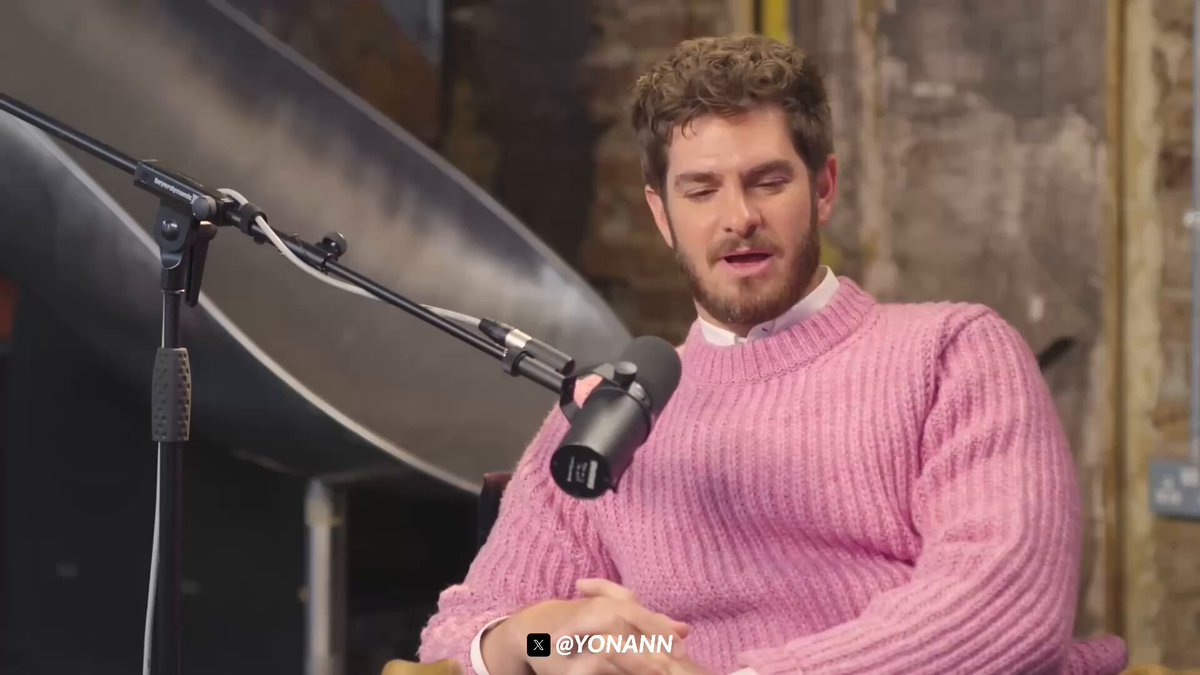
Roman Polanski explains on what Psychiatrists thought about 'Repulsion' (1965): "Interviewer: We know of several psychiatrists who like 'Repulsion'. Polanski: Psychiatrists everywhere like the film. A famous Austrian professor told me that one element of the film had greatly surprised him, that the heroine hears things with a great...

38,149 Aufrufe • vor 1 Jahr •via X (Twitter)

0 Kommentare

Keine Kommentare verfügbar

Kommentare vom Original-Post werden hier angezeigt

Ähnliche Videos

Roman Polanski explains how he filmed the famous Mirror scene in 'The Fearless Vampire Ki!!ers' (1967) "Interviewer: There is a playfulness when it comes to the techniques you used in the film, for example the scenes with the mirror where the vampires have no reflection but the non-vampires do. Polanski: But are you sure the actors without reflections weren't real vampires? Interviewer: Going by the story, the distinction between vampires and non-vampires is clear. In any case, the two main characters are not vampires because they get bitten at the end and only then become vampires. Polanski: That makes sense, but you do seem a little too sure of yourself. Anyway, how do you think we did the trick with the mirrors? Interviewer: A Jean Cocteau-style effect: you cut to the backs of the two doubles while the actors are facing forwards. Polanski: Yes, that’s the idea. I tried it out in several different ways but this was the simplest. I made a hole in the set where we fixed the mirrors, moved the sets behind to the other side, and put the doubles opposite the sets. We did the same thing in the scene with the bed when I’m sitting with the gay guy. I see you’re interested in technical things at Cahiers du Cinéma. It’s a shame you don’t print more about this as it’s actually more straightforward than what you usually write about. Interviewer: We try to write about everything. We only print what people say to us. Polanski: To be honest it’s been more than a year since I’ve held a copy of Cahiers in my hands—not since I left for America last April. And what bothers me—or used to bother me—is a certain bias, such as the one you have for me. Why is that? Interviewer: Have you seen any other good films about vampires or witches? On the whole they’re dire. Your films are something of a consolation." (Roman Polanski's interview with Michel Delahaye & Jean Narboni, Cahiers du Cinéma, 1969)

DepressedBergman

111,307 Aufrufe • vor 8 Monaten

Roman Polanski on why he took the lead role in "The Tenant" (1976) & the movie role that was offered to him by Steven Spielberg: "Interviewer: What inspired you to play the lead in The Tenant? Polanski: At that point I was working with Paramount and they had the rights to the Roland Topor novel. I thought it would be a good role for me. As a matter of fact, I found it more interesting to play the part than to direct the film. I find this with a lot of scripts, and it’s actually rare that both things appeal to me at the same time. You shouldn’t forget that I started as an actor and only became a director later. Interviewer: Have there been parts in films made by other directors you would have liked to play? Polanski: Yes, there were a few. I get a lot of these kinds of offers but I won’t name the films. Sometimes I use my other commitments as an excuse because I’m scared to work with people I don’t know. I also feel that life is too short for me to throw myself into projects that aren’t my own. But I will tell you about one part that was offered to me. A long time ago Steven Spielberg offered me a role in his first Indiana Jones film as the Nazi officer, the one who burns his hand. Unfortunately I was busy and couldn’t make it to Tunisia, the place where the film was shot, which was a shame because I would have found out just how chaotic it is to shoot there. A few years later I ended up filming Pirates in Tunisia. Interviewer: Would you have accepted the role? Polanski: I really wanted to work with Steven Spielberg." (Roman Polanski's interview with Gerhard Midding, 1990) P.S: On this day, 50 years ago, "The Tenant" (1976) premiered at the Cannes Film Festival, France.

DepressedBergman

119,082 Aufrufe • vor 3 Monaten

Andrzej Zulawski on why 'The Devil" (1972) was an important movie for him & the advice Andrzej Wajda gave him: "'The Third Part of the Night' (1971) was extremely important being the first film of course, but also for the way it is written. The flashbacks, the cuts or whatever, and the essence of the story is essentially the story of my father. Starting with that I really wanted to say Hello, I know, we know…we remember…je me souviens…like in Quebec. Stylistically it was not for me any kind of breakthrough into a different way of filmmaking, and 'The Devil' (1972) was. Wajda told me once, maybe one of the two things he said which I keep with me today, he said: "Look…be careful because the first day of the shooting of your new film, independently of the time which has passed between the two, will be the last day of the film which you just did before.” It’s so right, and so when we started 'The Devil', first day I remember, we started with this travelling shot, this elegant photography because 'Third Part of the Night' is elegant visually, anyway for me; then I said “Oh God, something is radically wrong…forget the rails, take the camera in hand and let’s do the film like a documentary about a bloody dream in which the history of Poland collapsed, etc. etc.” We did the film almost entirely with hand-held camera so it was a radical departure stylistically from the first film. This break was most important to me than anything later on, in technique." (Zulawski's interview with Donato Totaro, Offscreen, 2013)

DepressedBergman

27,247 Aufrufe • vor 5 Monaten

I KNEW THIS WOULD HAPPEN!! Proof that in 2026, the same falsehoods are still being used - despite us all being told that psychiatrists never use the brain chemical imbalance myth. In 2022, Moncrieff et al. published a major umbrella review finding no convincing evidence that depression is caused by low serotonin or a serotonin “chemical imbalance.” Psychiatrists actually responded defensively by saying ‘no one believed that anyway!!’ Courts should not be told that someone’s behaviour, violence or offending can be explained by a supposed serotonin imbalance as though this is established biological fact. When outdated or unsupported psychiatric theories are presented as scientific explanations in criminal trials, they risk misleading judges and juries and turning complex human behaviour into a simplistic story about a broken brain. A courtroom is no place for debunked neuroscience and psychiatric twaddle. Secondly though - those of us who are critical of psychiatry are told that this theory was never pushed and people were never told that they have a brain chemical imbalance! I’ve even been told that I’m making this up, and patients have never been told this by psychiatrists. So I’m posting this for proof in 2026 that this is still being used in a criminal trial. By a psychiatrist. For those of you new to this information and didn’t know that the serotonin theory was ‘abandoned’ - this is because psychiatrists and psychiatric regulatory bodies never publicly corrected the information even once they knew it was wrong. Lots of doctors are still telling their patients that they have serotonin brain chemical imbalances every single day. It is highly likely that our ‘mental health’ is not the result of some obscure brain chemical imbalance, but is instead a reaction to our circumstances - but maybe that’s not a sexy enough explanation.

Dr. Jessica Taylor

34,217 Aufrufe • vor 20 Tagen

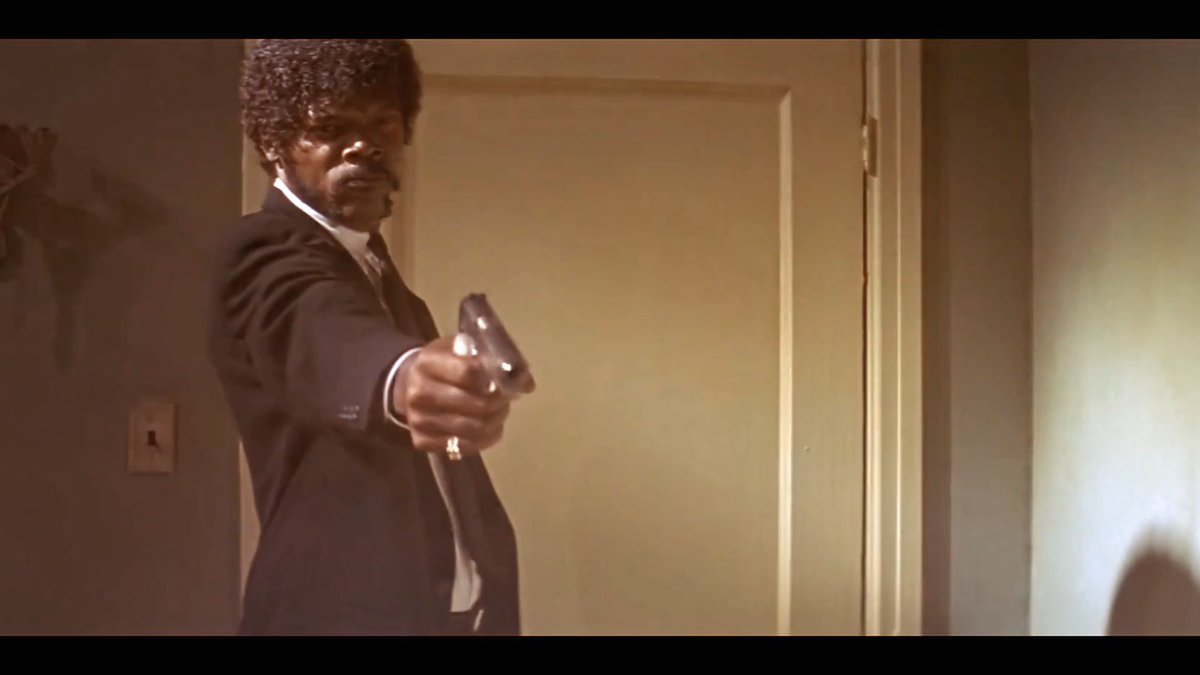
Samuel L. Jackson explains how he landed the role of Jules in Pulp Fiction, and what it was like seeing the film for the first time on the big screen: “Pulp Fiction and I came together in a very strange kind of way. I remember auditioning for Quentin for Reservoir Dogs in New York (for the role of of Detective Jim Holdaway, Mr. Orange’s police contact). And apparently I didn't get that role. But I was at Sundance the year that he screened it for the first time. I was sitting there and I watched that movie - I was awed by it. I mean, there were people running up the aisles when Michael Madsen was cutting the cop's ear off. People were going, "Oh my God, this is horrible!" All these “auteurs” were running out of the theatre. I was like, "This is good. This is happening. This is different." So after the film, I walked up to Quentin and said, "This film's amazing, man. It's great." And he looked at me and said, "Hey! How'd you like the guy who got your part?" And I was amazed that he even remembered who I was - but he remembered me. A year or so later, I got a phone call saying Quentin Tarantino wants to have dinner with you, because he'd seen Jungle Fever and he liked that Gator character. When we had dinner, we were sitting there talking. We started talking about Hong Kong films and cartoons and foreign movies and obscure things that we watched, horror movies. We found out we liked the same kind of stuff. And he told me he was writing this thing, and he was writing this part with me in mind. He was going to send it to me. I went off to do another film. I was in the backwoods of Virginia somewhere doing a film, and the script came. A little plain brown wrapper from Jersey Films. And Jersey's got these gangster images on the logo. And it said, "If you show this script to anybody, two guys named Ernie and Luigi will come and break both of your legs." Whatever. I went, "Yeah, right." So I sat down and read it. Boom. I read this thing. It's like, "Oh my God. This is awesome." And then I said to myself, "Nobody writes a script this good. There's no way that this script is as good as I thought it was." I closed it. I opened it again. I read it immediately. Okay. This is great - If whoever produces this film lets him shoot exactly what I just read, if they stay away from it, they don't try to edit any of this stuff out - this is going to be a great film. It's going to be kind of audience-specific, because I like that kind of stuff. I have friends that I knew would like it. It was a generational kind of film. I never thought it would cross over and do all this stuff. We shot it. We had a great time doing it. And the first time I actually saw the film was at the Cannes Film Festival. That night, it screened, and I was sitting there watching the film. The audience was loving this movie, loving it. About halfway through, I realized there were subtitles at the bottom of it. So I said, "Hey, these people are reading it, and they're getting it. This might be special. This really might be something special." And actually, by the time it was over, there were tears running down my face. I was just so pleased that I was part of that particular film… I never felt that satisfied, and that kind of full about a performance and about being part of something as I was in that particular moment.” Quote comes from an Interview with the American Film Institute 2010

Gangster Cinema Central

85,366 Aufrufe • vor 2 Monaten